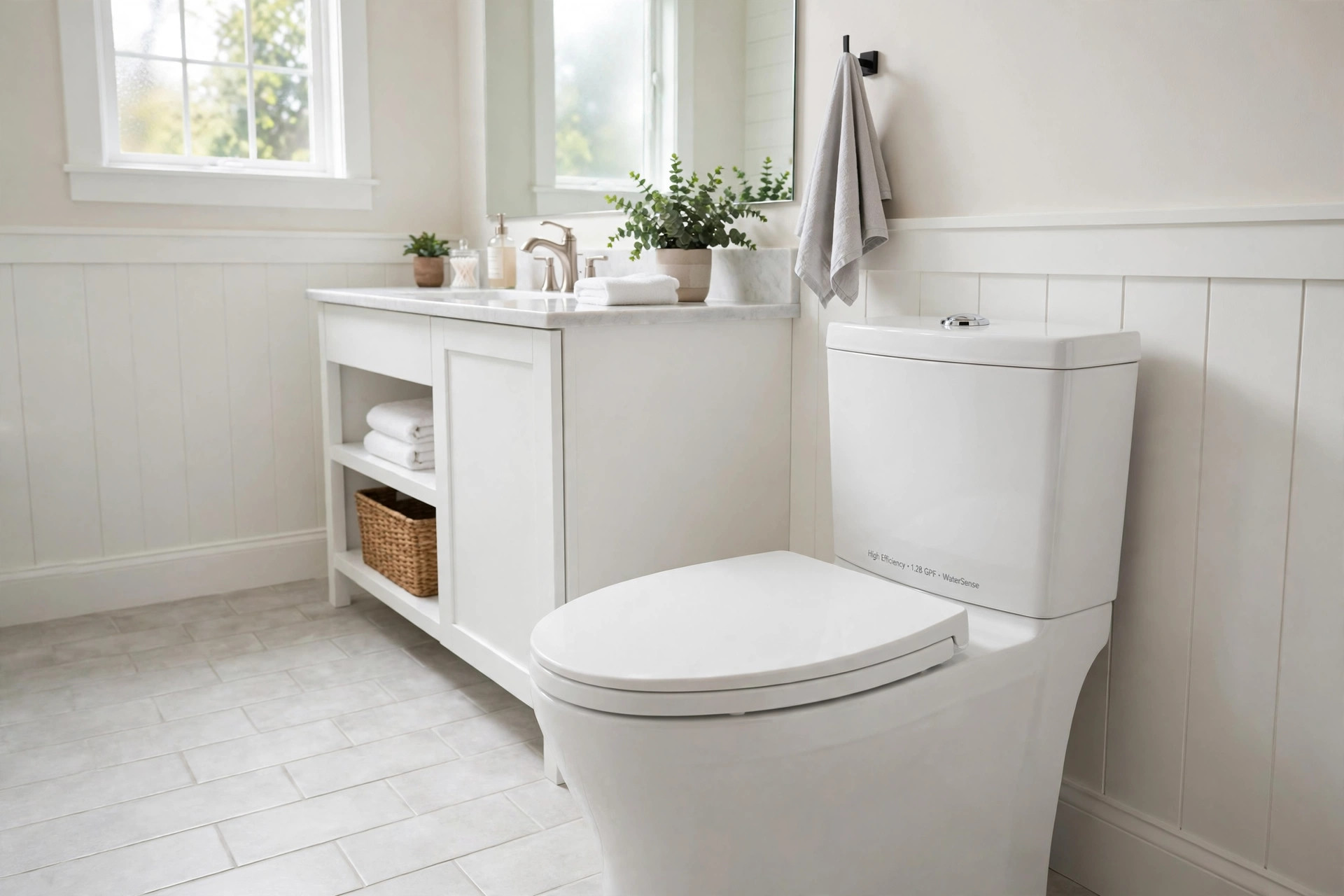
A toilet is one of the most used items in any home. It is also one of the largest users of indoor water. That is why the best high efficiency toilet reviews 2026 matter to so many homeowners. A good review tells you which models flush well, which save water, and which are worth the price. A bad purchase stays with you every single day. It clogs, it runs, and it raises your water bill.
This guide explains what high efficiency toilets are and how they work. It walks you through the features that matter most. It looks at costs, upkeep, and safety. By the end, you will know how to read a review with a trained eye and choose a model that fits your home and your budget.
Why High Efficiency Toilets Matter
An old toilet can use three and a half to seven gallons per flush. That adds up fast in a family home. A high efficiency toilet uses 1.28 gallons or less per flush. Some use even less. The savings show up on your water bill within months.
The federal government set 1.6 gallons per flush as the standard back in the 1990s. Since then, engineers have pushed further. Modern high efficiency models use 20 percent less water than that older standard. The best designs flush as strongly as the old water hogs, sometimes stronger.
There is another reason to care. Many cities now offer rebates for water saving toilets. These programs lower the cost of the upgrade. When you read the best high efficiency toilet reviews 2026, pay attention to models that carry the WaterSense label. WaterSense is a program run by the Environmental Protection Agency. It certifies toilets that save water without giving up flush performance. You can learn more about the program at Www.epa.gov.
Water is not free, and in dry parts of the country it is not cheap. A family of four can flush thousands of gallons a year. A high efficiency toilet cuts that number by a fifth or more. The planet benefits, and so does your wallet.
How to Choose the Right Model: Best High Efficiency Toilet Reviews 2026
Reviews can only help if you know what to look for. These are the features that separate a good toilet from a poor one.
Flush Systems
The flush system is the heart of the toilet. There are two common types. Gravity flush toilets use the weight of water in the tank to push waste through the bowl. They are quiet and simple. Most homes use them. Pressure assisted toilets use compressed air to push water with extra force. They flush with great power and rarely clog. But they are louder, and they cost more. If you want to learn how the two compare, read about pressure assisted toilet pros and cons before you decide.
Flush valves come in different sizes too. A three inch flush valve moves water faster than the older two inch design. A faster flush usually means a cleaner bowl.
Bowl Shape and Height
Round bowls are shorter from front to back. They fit small bathrooms. Elongated bowls are longer and more comfortable for most adults. They need a bit more space.
Height matters as well. Standard toilets sit about 15 inches high. Comfort height models sit 17 to 19 inches high. That height feels like a normal chair. Many older adults and tall people prefer it. To understand the tradeoffs, see the guide on best comfort height toilet reviews 2026 usa.
One Piece or Two Piece
A one piece toilet has the tank and bowl joined into a single unit. It is easy to clean and looks modern. It is also heavier and costs more. A two piece toilet has a separate tank and bowl. It is lighter, cheaper, and easier to carry upstairs. The one piece vs two piece toilet comparison covers this choice in detail.
Dual Flush Options
Some high efficiency toilets have two buttons. A half flush clears liquid waste. A full flush clears solid waste. This design saves even more water over time. There are tradeoffs, and the article on dual flush toilet pros and cons explains them plainly.
Types of High Efficiency Toilets Worth Knowing
Not every high efficiency toilet is built the same way. These are the main types you will meet in reviews.
Gravity flush single flush. The most common type. Simple, quiet, and reliable. Good for most homes.
Dual flush gravity. Two flush choices for extra savings. A smart pick for large families.
Pressure assisted. Strong flush, fewer clogs. Loud. Good for busy bathrooms.
Wall hung. The tank hides inside the wall. The bowl floats above the floor. Easy to clean under. Installation costs more because it needs a strong wall frame.
Upflush or macerating. These pump waste upward when there is no drain below. They are useful in basements. They need power and cost more to maintain.
When a review praises a model, check which type it is. A glowing review of a wall hung toilet may not help if your budget is tight.
What the Best High Efficiency Toilet Reviews 2026 Tell Us
Year after year, the top rated models share certain traits. They flush cleanly on the first try. They resist clogging. They have a glazed trapway, which is a smooth coating inside the drain path that helps waste slide through. They come from makers with long track records and easy to find parts.
Brand names come up often in reviews. Kohler, American Standard, TOTO, and Delta appear in many top lists. You can browse their current lines at Kohler, American Standard, and Www.deltafaucet.com. Moen also makes bathroom fixtures, and their site at Moen is worth a look.
Test scores matter more than brand pride. The best reviews cite flush performance tests. One common test drops small balls of soy paste into the bowl and sees how much weight the flush can move. A score of 600 to 1000 grams is solid. Higher is better. If a review does not mention flush tests, treat its praise with care.
Noise is another point. Gravity toilets are quiet. Pressure assisted models can wake a sleeping child down the hall. Good reviews mention sound levels. They also mention water surface area in the bowl. A larger water spot keeps the bowl cleaner between flushes.
Cost and Price
A high efficiency toilet can cost between 150 and 800 dollars. Most good models sit between 250 and 450 dollars. One piece designs cost more than two piece designs. Pressure assisted models cost more than gravity models.
The toilet is only part of the price. Installation by a plumber usually runs 200 to 500 dollars. The job is simple in most cases. It takes an hour or two. If the flange under the old toilet is broken, or if the water line needs work, the cost rises.
Rebates change the math. Many water utilities pay 50 to 150 dollars for each old toilet you replace with a WaterSense model. Some pay more. Check your local water district before you buy. A 300 dollar toilet can become a 150 dollar toilet after rebates.
Over ten years, water savings add up. A family can save 20 to 40 dollars a year on water bills, sometimes more where water is costly. That does not pay for the toilet on its own, but it helps. The real value is comfort and reliability. A toilet that never clogs is worth its price.
Big box stores carry wide selections. You can compare models in person at The Home Depot and Www.lowes.com. For advice written for homeowners, Www.thisoldhouse.com and Www.familyhandyman.com publish useful guides on toilet installation and repair.
Care and Upkeep
A good toilet needs little care. Still, a few habits keep it working well for twenty years or more.
Clean the bowl each week with a mild cleaner. Avoid harsh chemicals that harm the finish. Never pour drain cleaner into the toilet. It can damage the seals and the wax ring under the base.
Check the inside of the tank once a year. Look at the flapper and the fill valve. A worn flapper lets water leak into the bowl all day. That silent leak can waste hundreds of gallons a month. Replacement parts cost a few dollars and take minutes to install.
Do not flush wipes, even the kind labeled flushable. They cause clogs in home pipes and in city sewers. Flush only toilet paper and human waste. Keep a small trash can beside the toilet for everything else.
If the flush grows weak, the rim holes under the bowl edge may be clogged with mineral scale. Turn off the water, scrub the holes with a small brush, and turn the water back on. Hard water regions need this task more often. A water softener or filter can reduce scale buildup. For whole home water quality options, Www.aquasana.com offers filtration systems.
Tighten the seat bolts when the seat starts to wobble. Replace the seat if it cracks. These small jobs keep the bathroom safe and clean.
Safety
Toilets are safe by design, but a few risks deserve attention.
A heavy one piece toilet can weigh 100 pounds or more. Ask for help when carrying it. Lift with your legs, not your back. A dropped toilet can crack and cut skin with sharp porcelain edges.
When installing, shut off the water at the valve behind the toilet. Place old towels on the floor. A little water always spills when the old tank comes off.
Use care with small children. A child can fall headfirst into an open bowl. Keep the lid closed and the bathroom door shut when toddlers are in the house. There are also lid locks sold for this purpose.
If you remove an old toilet made before the 1980s, be aware that some old tanks used parts that are no longer sold. Take a photo of the parts before you shop. Bring the photo to the store. It saves a second trip.
For general home safety standards around fixtures and water, the Consumer Product Safety Commission publishes useful guidance at U.S. Consumer Product Safety Commission.
Frequently Asked Questions
Do high efficiency toilets clog more often? No, not if you buy a good one. Early low flow models from the 1990s had clog problems. Modern designs flush better than many old toilets. Look for models with high flush test scores in the best high efficiency toilet reviews 2026. A glazed trapway also helps.
How much water does a high efficiency toilet really save? A high efficiency toilet uses 1.28 gallons per flush or less. An old toilet uses 3.5 to 7 gallons. A family of four can save 2,000 to 4,000 gallons a year. Your exact savings depend on how old your current toilet is.
Can I install a high efficiency toilet myself? Many homeowners do. The job needs basic tools and about two hours. You remove the old toilet, set a new wax ring, set the new toilet, and connect the water line. If the flange is damaged or the floor is rotted, call a plumber. When in doubt, hire a professional.
Are dual flush toilets worth the extra cost? They can be. A dual flush toilet saves more water if everyone in the house uses the half flush when they should. In a busy family bathroom, the savings add up. But the extra button adds a part that can wear out. Read the pros and cons before you choose.
What is the WaterSense label? It is a label from the Environmental Protection Agency. It marks toilets that use 1.28 gallons per flush or less and pass strict flush performance tests. Many rebate programs require the WaterSense label. You can learn more at U.S. Environmental Protection Agency.
How long does a high efficiency toilet last? The porcelain body can last thirty years or more. The parts inside the tank wear out sooner. Flappers last three to five years. Fill valves last five to ten years. These parts are cheap and easy to replace. A well kept toilet gives decades of service.
A Final Word
The best high efficiency toilet reviews 2026 agree on the basics. Buy a model with strong flush test scores. Choose the bowl shape and height that fit your body and your bathroom. Look for the WaterSense label if you want rebates. Keep the upkeep simple, and the toilet will serve your home for many years.
A toilet is not a glamorous purchase. But few purchases affect daily life as much. Take your time. Read the reviews with care. Measure your bathroom before you order. And when the new toilet is in place, enjoy the quiet flush and the lower water bill. Both are signs of money well spent.
References
American Standard. (n.d.). Bathroom and kitchen products. https://www.americanstandard.com Aquasana. (n.d.). Water filtration systems. https://www.aquasana.com Delta Faucet. (n.d.). Kitchen and bathroom faucets. https://www.deltafaucet.com Family Handyman. (n.d.). DIY home repair and maintenance. https://www.familyhandyman.com Kohler. (n.d.). Bathroom and kitchen fixtures. https://www.kohler.com Lowe’s. (n.d.). Home improvement products. https://www.lowes.com Moen. (n.d.). Faucets and plumbing fixtures. https://www.moen.com The Home Depot. (n.d.). Home improvement products. https://www.homedepot.com This Old House. (n.d.). Home renovation guidance. https://www.thisoldhouse.com U.S. Consumer Product Safety Commission. (n.d.). Product safety information. https://www.cpsc.gov U.S. Environmental Protection Agency. (n.d.). Protecting human health and the environment. https://www.epa.gov Www. (n.d.). Home and garden information. https://www
Was this guide helpful?

About Lisa Anderson
The My Garden US editorial team writes practical, in-depth home and garden guides for American homeowners — tested advice, no fluff.