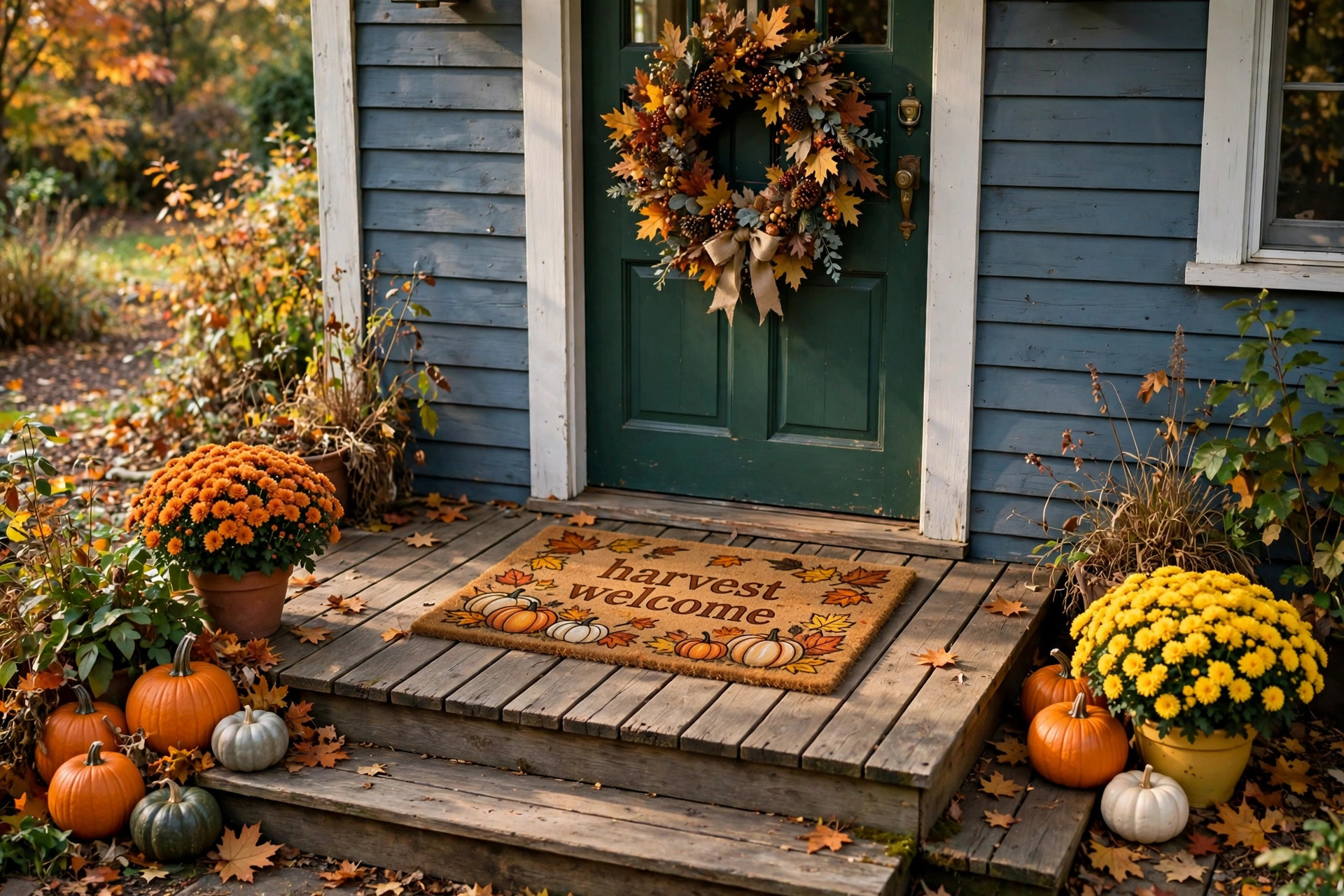

The best fall door mat for entryway harvest welcome does more than decorate a door. It keeps dirt out of the house and greets guests with the warm colors of the season. A good autumn doormat works hard from September through November, a time when leaves fall, rain comes more often, and boots track mud inside. Choosing the right one takes a little care, but the reward is an entryway that looks inviting and stays clean. This guide explains what matters most when you shop, which materials last longest, and how to keep your mat in good shape all season.
Why the Right Doormat Matters
The front entry is the first thing visitors see. A worn or faded mat sends the wrong message before the door even opens. A fresh fall mat with pumpkins, leaves, or a simple harvest welcome greeting sets a pleasant tone. It tells guests that the home is cared for.
There is also a practical side. Autumn brings wet leaves and damp soil. A good mat traps dirt, sand, and moisture before they reach the floor. Hardwood floors and rugs inside the home suffer when grit is tracked across them. A quality doormat can save hours of cleaning each week during the fall months.
Style and function should work together. The best mats do both without compromise.
What to Look for in a Fall Doormat: Best Fall Door Mat for Entryway Harvest Welcome
Materials That Hold Up
Coir is the most common material for fall door mats, and for good reason. It is made from coconut husks, which gives it a rough texture that scrapes dirt from shoes. Coir handles wet weather well and dries fast. It also takes printed designs nicely, so harvest themes like pumpkins and wheat sheaves look sharp on it.
Rubber-backed mats are another strong choice. The rubber edge keeps the mat from sliding on concrete or wood porches. Many fall designs pair a coir top with a rubber border for the best of both worlds.
Low-pile synthetic mats made from recycled rubber or polypropylene work well in heavy rain areas. They do not soak up water, and they can be hosed off with little effort. Some homeowners in wet regions prefer these over coir for the late fall season.
Avoid thin felt or fabric mats for outdoor use. They look nice for a week and then mat down under wet boots. Save those for indoor use behind the front door.
Size and Shape
A standard door mat measures about 18 by 30 inches. This fits most single doors. But many entryways look better with a larger mat. A 24-by-36-inch mat covers more ground and gives guests two full steps to wipe their feet.
Layering has become a popular fall look. Place a larger flat outdoor rug under a smaller coir mat. A simple plaid or buffalo-check rug in orange, brown, or cream pairs well with a harvest welcome mat on top. The layer adds color and catches more dirt. Just make sure the combined height does not block the door from swinging.
Measure your entry before you buy. Leave a few inches of space around the mat so it does not look crowded.
Design and Color
Harvest welcome designs come in many styles. Some mats show painted pumpkins, fall leaves, or corn stalks. Others use simple words like “Welcome,” “Harvest,” or “Hello Fall” in bold letters. Farmhouse styles with muted colors suit brick and wood homes. Brighter oranges and reds stand out against gray concrete steps.
Think about how the mat will look after rain. Darker colors hide mud stains better than light cream mats. If you choose a light design, plan to brush it clean more often.
Types of Fall Doormats
Printed Coir Mats
These are the classic choice. The design is stenciled or printed onto natural coir fibers. They offer the best balance of looks and function. Expect a good one to last one to two full fall seasons before the design fades. Many craft retailers carry wide selections each autumn, and seasonal guides from Michaels often show current harvest styles.
Molded Rubber Mats
The design is raised or cut into the rubber itself, so it never fades or peels. These mats last for years and handle ice and snow if you leave them out into winter. The trade-off is that designs are simpler. Leaf shapes and simple greetings work best in molded rubber.
Layered Rug and Mat Sets
Sold as pairs, these include a flat base rug and a coir topper. They make styling easy because the colors are matched. The base rug also adds extra scraping area. Home improvement stores such as The Home Depot stock seasonal sets each fall.
Indoor Entry Rugs
A second mat just inside the door catches what the outdoor mat misses. Low-pile cotton or washable synthetic rugs work well here. They also protect floors from the damp soles that make it past the front step.
Popular Fall Design Styles
Harvest welcome mats come in a few clear style families, and picking one that matches the house makes the entry look planned.
Farmhouse styles use muted cream, gray, and soft orange tones with simple line drawings of pumpkins or wheat. They suit brick homes and wood siding. Modern styles lean on bold single words, like “Hello Fall,” in dark letters on a plain coir background. These fit homes with clean lines and minimal trim.
Traditional homes often pair well with rich, detailed scenes: cornucopias, autumn leaves in full color, or a wreath pattern. These designs hide dirt well because of their busy patterns. Humorous mats with lines about pumpkin spice or fall leaves add personality for families that like a light touch. Whichever style you choose, keep the rest of the porch in the same mood so nothing clashes.
Cost and Price
Fall door mats are one of the most affordable seasonal updates. A basic printed coir mat costs between 15 and 30 dollars. Larger or thicker mats run 30 to 50 dollars. Molded rubber mats with lifetime designs often cost 40 to 60 dollars but need replacing far less often.
Layered sets with a base rug and topper usually fall in the 40 to 70 dollar range. Washable indoor entry rugs add another 20 to 40 dollars.
Prices rise slightly as the season peaks in October, when demand is highest. Shopping in late August or early September often brings better selection and early-season prices. Budget guides at Country Living sometimes round up affordable porch ideas that keep total spending low.
Do not overspend on a mat you plan to use for one season only. A mid-range coir mat gives the best value for a single autumn.
Care and Upkeep
A fall mat needs little care, but a few simple habits extend its life.
Shake the mat out every few days during heavy leaf season. A quick shake removes dry leaves and dust. For stuck-on mud, use a stiff brush or broom to sweep the surface. Coir mats can be vacuumed with a brush attachment.
When the mat gets soaked, stand it on edge so water drains and air reaches both sides. Do not leave a coir mat sitting in a puddle. Constant standing water breaks down the fibers and can stain the porch beneath.
At the end of the season, clean the mat and store it in a dry place if you want to reuse it next year. Wrap it in an old sheet to keep dust off. Check for mold before storing. If the design has faded badly or the fibers are matting flat, it is time to replace it.
For synthetic mats, a rinse with a garden hose and mild soap is enough. Let them dry fully before putting them back down.
Safety
Doormats should lie flat. A curled edge is a tripping hazard, especially for older guests. If a new mat curls at the corners, lay it flat with heavy books for a day or two. Rubber-backed mats curl less.
Keep the mat clear of the door swing. A mat that bunches under the door can jam it or scratch the floor. Test the door after placing the mat.
In wet weather, check that the mat has not slid out of place. Non-slip backing helps, but heavy rain can move light mats. Reposition as needed.
The U.S. Consumer Product Safety Commission (CPSC) reminds homeowners that walkway and entry safety matters most in seasons with wet leaves and early frost. Keep steps clear and lighting bright around the entry.
Where to Place Fall Mats
The front door gets the most attention, but it is not the only spot. A small harvest mat at the back door or garage entry catches dirt where family members come in. Mudrooms benefit from a washable runner that matches the fall theme.
Pair the mat with simple porch decor for a finished look. A fall wreath for front door farmhouse style above the mat creates a welcoming frame. Add a few pumpkins or a basket of mums on the steps, and the whole entry comes together. Broader fall porch decor for harvest season usa ideas can help plan the full scene.
When the seasons change, the same layering trick works with other themes. A spring wreath for front door floral welcome shows how the entry style can shift with the calendar.
Retailers like Wayfair and Lowe’s carry seasonal mats in a wide range of sizes, and craft stores such as Jo-Ann often stock harvest designs for shoppers who like to compare in person. Home blogs at The Spruce and HGTV publish yearly roundups of entryway ideas worth a look.
Frequently Asked Questions
How long does a coir fall doormat last?
A good coir mat lasts one to two fall seasons with regular care. Heavy rain, direct sun, and constant foot traffic shorten its life. Store it dry between seasons to get the most use from it.
Can I leave my fall mat out in the rain?
Yes, coir and rubber mats are made for outdoor use. But standing water shortens their life. Make sure the porch drains well and the mat can dry between storms.
What size mat should I buy for a double door?
For double doors, look for mats at least 36 inches wide, or use two standard mats side by side. A large 24-by-48-inch runner also works well across a wide entry.
Are layered mats safe on a windy porch?
Layering looks nice, but wind can shift the top mat. Use a heavier coir topper and a flat base rug with a textured back. On very windy porches, skip the topper or secure the layers with outdoor rug tape.
How do I clean a printed harvest design without fading it?
Brush gently with a dry stiff brush. Avoid harsh detergents and pressure washers, which strip the printed design. A light rinse with plain water is safe when needed.
When should I put out my fall doormat?
Late August or early September is ideal. You get the full season of use, and stores have the best selection. Take it in after Thanksgiving or when the first hard frost arrives.
A Final Word
The best fall door mat for entryway harvest welcome is one that fits your door, suits your home’s style, and stands up to autumn weather. Coir remains the top pick for most homes. Size it generously, keep it clean, and pair it with simple seasonal touches. A small change at the door can make the whole house feel ready for the season. Guests notice the effort, and you will notice the cleaner floors.
References
Country Living. (n.d.). Country home and lifestyle. https://www.countryliving.com HGTV. (n.d.). Home and garden ideas. https://www.hgtv.com JOANN. (n.d.). Fabric and craft supplies. https://www.joann.com Lowe’s. (n.d.). Home improvement products. https://www.lowes.com Michaels. (n.d.). Arts and crafts supplies. https://www.michaels.com The Home Depot. (n.d.). Home improvement products. https://www.homedepot.com The Spruce. (n.d.). Home and garden advice. https://www.thespruce.com U.S. Consumer Product Safety Commission. (n.d.). Product safety information. https://www.cpsc.gov Wayfair. (n.d.). Furniture and home goods. https://www.wayfair.com
Was this guide helpful?

About Robert Taylor
The My Garden US editorial team writes practical, in-depth home and garden guides for American homeowners — tested advice, no fluff.
You May Also Like

Best Fall Candles for Cozy Home Fragrance: A Warm Autumn Guide
August 7, 2026 0 views
Outdoor Christmas Lights for House Roofline: A Plain Guide
January 12, 2026 0 views
Memorial Day Decorations for Porch American Flag
July 21, 2026 0 views