
Chlorine has kept pools clean for over a century. It is cheap, it works, and every pool store sells it. Yet many pool owners now look for the best pool chlorine alternative systems. The reasons are plain. Chlorine can sting the eyes. It dries the skin. It leaves a sharp smell on swimwear. Some swimmers are sensitive to it. Others simply want water that feels softer and cleaner. If you count yourself among them, this guide will walk you through the main options, the costs, and the upkeep, so you can choose with confidence.
Why It Matters
Pool water must be free of germs. That is not a matter of taste. Warm standing water invites bacteria and algae. Without a sanitizer, a pool turns green in days and can make swimmers ill. Chlorine does the job, but it comes with tradeoffs. High chlorine levels bleach swimsuits. They can fade pool liners. They can irritate the lungs of people who swim in indoor pools. Outdoor pools give off strong fumes on hot days.
The best pool chlorine alternative systems aim to keep water just as safe while easing these problems. Some cut chlorine use by half or more. The result is water that feels gentler, smells milder, and may cost less to maintain over the years. The shift also matters for the environment. Less chlorine means fewer chemical drums stored in the garage and fewer harsh washouts into the yard.
There is one point to keep clear from the start. No serious system leaves a pool with zero sanitation. Every honest option still kills germs in some way. The question is never whether to sanitize. The question is how.
How to Choose a Chlorine Alternative: Best Pool Chlorine Alternative Systems
A good choice starts with your own pool and habits. A small above ground pool used on weekends has different needs than a large in ground pool that stays open six months a year. Work through the points below before you spend a dollar.
Your Pool Size and Type
Salt systems and UV units are sized by gallons. A unit built for 15,000 gallons will strain on a 30,000 gallon pool. Check your pool volume first. You can find it in the builder’s papers or estimate it from length, width, and average depth. Vinyl, fiberglass, and plaster pools all accept most alternatives, but salt water deserves a second look on older pools with certain metal parts. Salt is only mildly salty, yet over many years it can wear on cheap rails and ladders. Many owners pair a salt system with a pool filter built for saltwater systems to keep everything matched.
Your Climate and Swim Season
Hot climates grow algae fast. A system that trims chlorine use may need a helper, such as a UV lamp, in a long hot season. In cooler regions, a mineral system can often carry a pool through a short season with little help.
Your Budget and Your Time
Some systems cost more at the start and less each year. Salt systems are the classic example. Others cost little to install but need steady upkeep. Ask yourself how much weekly care you are willing to give. If you want a near hands-off pool, choose a system known for steady output and pair it with good filtration. Guides such as those on swimming pool water care can help you learn the weekly routine before you commit.
Types of Pool Chlorine Alternative Systems
Six systems dominate the market. Each has a clear way of working, and each suits a different kind of owner.
Salt Water Chlorination
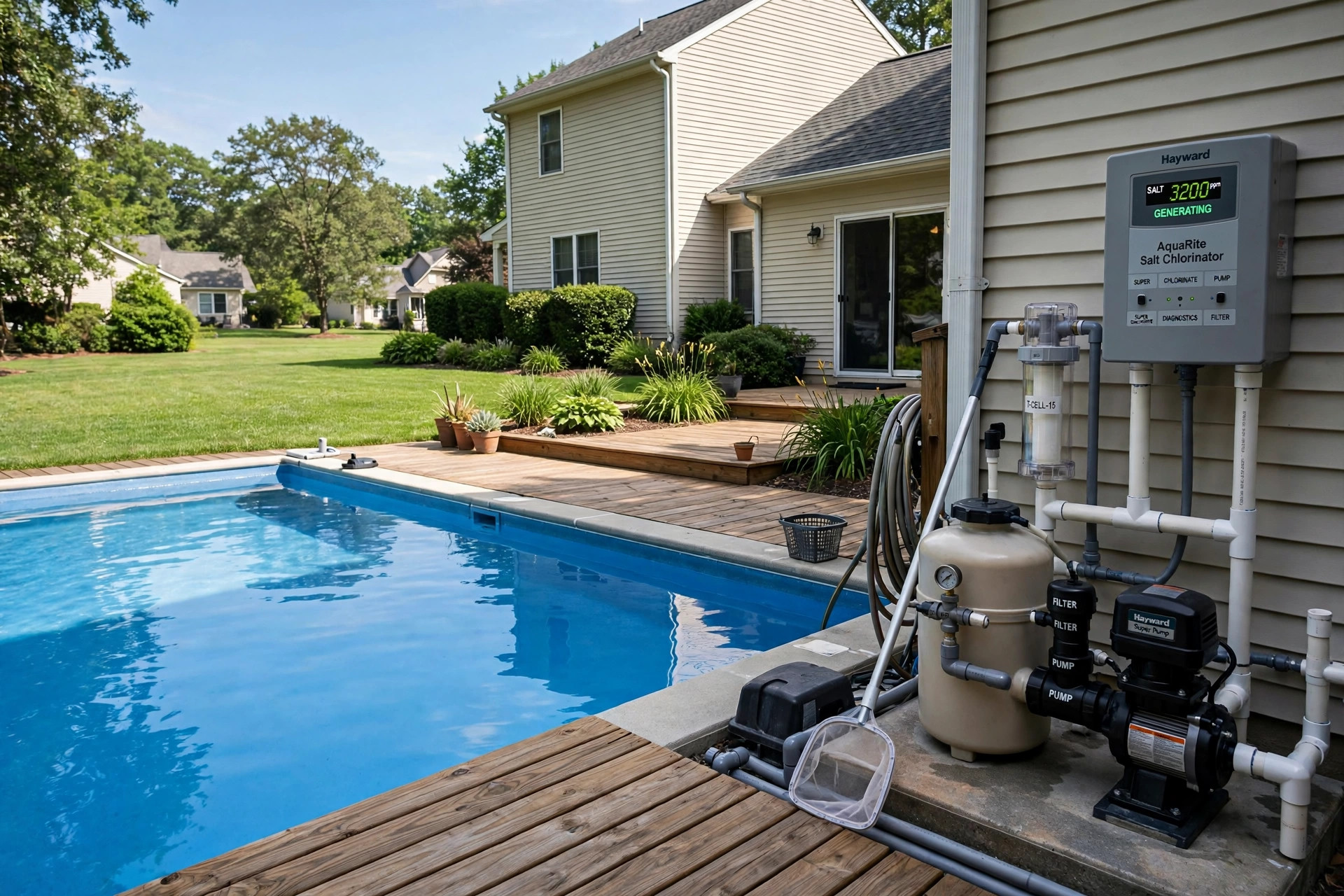
A salt system turns ordinary pool salt into chlorine through a cell wired into the plumbing. The pool feels only faintly salty, far less than the sea. The great gain is steady, automatic chlorination. You stop buying and handling tablets. Water tends to feel soft on the skin, and the harsh smell fades.
Salt systems still make chlorine, so they are not chlorine free. They are better described as a cleaner way to deliver it. Many owners call them the best pool chlorine alternative systems for daily ease of use. Installation runs in the mid hundreds to over a thousand dollars, depending on pool size. The salt cell wears out and needs replacement every three to seven years. Before you switch, read a salt water vs chlorine pool comparison and a salt water pool conversion cost guide so the numbers are clear.
Mineral Systems
Mineral systems release small amounts of silver and copper ions into the water. These metals slow the growth of bacteria and algae. Most mineral units sit in the skimmer or in a feeder on the equipment pad. They cannot sanitize a pool alone. They pair with a low dose of chlorine or bromine, often half the normal amount.
The appeal is simplicity. Cartridges last a season or a full year, and the water feels soft. Mineral systems suit owners who want to cut chlorine sharply without rewiring the equipment pad. The trade off is vigilance. You still test the water weekly, and you still add a sanitizer. Watch for copper stains on plaster if you overfeed minerals, and keep the pH in range.
Ultraviolet (UV) Systems
A UV unit passes pool water past a special lamp. The light damages the DNA of germs, so they cannot reproduce. UV is a proven helper in water treatment, used in municipal plants and hospitals. In a backyard pool, it sits in the plumbing after the filter.
UV does not leave a residual sanitizer in the water. That means it must work with a low level of chlorine or bromine to protect swimmers between turns of the pump. The gain is real: many owners cut their chlorine dose by half or more, and combined chlorine compounds that cause the sharp pool smell drop sharply. Lamps need replacement every one to two years, and the quartz sleeve needs cleaning so the light stays strong.
Ozone Systems
Ozone is a powerful form of oxygen. An ozone generator injects it into the plumbing, where it destroys germs and breaks down oils and lotions. Like UV, ozone leaves no lasting sanitizer in the pool itself. It works as a partner to a small chlorine or bromine residual.
Ozone systems are common in spas and hot tubs, where small water volumes respond quickly. For full size pools they are usually sold as add on units. They cut chemical use and they clear cloudy water well. The equipment costs more than a simple mineral feeder, and the generator needs service over time. For spa owners, makers like Hot Spring Spas and Bullfrog Spas publish helpful notes on ozone paired with low chemical routines.
Bromine
Bromine is chlorine’s close cousin. It sanitizes in a similar way but stays stable in hot water, which is why it rules in hot tubs. Bromine has a milder smell than chlorine and irritates the eyes less. It costs more than chlorine, pound for pound, and strong sun breaks it down, so outdoor pool owners often need a stabilizer or more frequent dosing.
Some owners switch a whole pool to bromine to escape the chlorine smell. Others use bromine in an attached spa while keeping the main pool on a low chlorine plan. Either way, test kits made for bromine give the truest readings, since chlorine test kits can misread it.
Enzyme and Natural Helpers
Enzyme products break down oils, lotions, and other organic matter that cloud water and feed germs. They do not kill bacteria themselves. Think of them as helpers that let your main sanitizer work less hard. Phosphate removers work on the same idea: they starve algae of food so the sanitizer faces a lighter load.
These products fit well with any of the systems above. They are simple to dose and they reduce the oily film that forms on the waterline. Do not mistake them for a full replacement for sanitation. A pool treated only with enzymes is not a safe pool.
Cost and Price
Prices vary by region and pool size, but the pattern is steady across the country. Equipment for a salt system on a typical home pool runs from about 500 to 1,500 dollars, plus installation if you hire an electrician or pool technician. A replacement salt cell later costs a few hundred dollars. Against that, you stop buying chlorine tablets, which can run several hundred dollars a season for a large pool.
Mineral feeders and cartridges are cheaper to start. Expect 100 to 400 dollars for the unit and 50 to 150 dollars per season for cartridges. UV systems run from 400 to over 1,000 dollars installed, with replacement lamps at 75 to 200 dollars every year or two. Ozone add on units fall in a similar range. Bromine costs more per season than chlorine, often by a third or more.
Running costs tell the rest of the story. Salt systems add a small amount to the electric bill. UV and ozone units do too, since they run with the pump. Mineral systems add almost no energy cost. Over five years, many owners find that a salt system breaks even against heavy chlorine use, while a mineral plus low chlorine plan stays the cheapest of all. Retailers such as Leslie’s Pool Supplies and Pool Warehouse list current prices for cells, cartridges, lamps, and chemicals, and big retailers like The Home Depot carry many of the same parts for comparison.
Do not forget the hidden costs. Any system needs a working pump and filter. If your filter is old, the new sanitizer cannot do its best work. Test kits and the odd service call belong in the budget too. A frank talk with a local pool professional, plus an honest look at your past chemical bills, will tell you which option truly saves money for your pool.
Care and Upkeep
Every one of the best pool chlorine alternative systems still needs weekly attention. The work is lighter than with old style chlorine, but it is not zero. A simple routine covers nearly all of them.
Test the water at least once a week. Check sanitizer level, pH, and alkalinity. Salt pools also need the salt level checked monthly. Write the numbers down. A notebook or a phone note beats memory, and it helps a pool store or technician spot trends.
Keep the pump running long enough each day. Most residential pools need eight to twelve hours of circulation in summer. The sanitizer can only treat water that passes through the equipment. Clean the skimmer baskets and check the filter pressure gauge weekly. Backwash or clean the filter when the pressure climbs.
Brush the walls and floor weekly. No chemical or lamp can replace the brush. Algae starts in still corners and behind ladders, and brushing breaks it loose so the filter and sanitizer can finish the job. Skim leaves daily if trees hang over the pool. Organic debris eats up sanitizer fast.
Safety
Pool chemicals demand respect, even the gentler ones. Store all chemicals in a cool, dry place, locked away from children and pets. Never mix different chemicals, and never mix old and new stock in one container. Add chemicals to water, never water to chemicals, and follow the label exactly.
Salt systems and UV units wire into household power. Hire a licensed electrician for installation and repairs. Keep the equipment pad dry and clear of clutter. Ground fault protection is a must near water.
Barriers and alarms save lives. The U.S. Consumer Product Safety Commission urges every pool owner to use fencing, self closing gates, and alarms, and its pool safety pages are worth reading before each season. No sanitizer choice changes this. A clear pool is inviting, and children are drawn to it. Layers of protection, fencing, alarms, covers, and watchful adults, are the only safe answer.
One more caution: beware of products that promise a chemical free pool with no sanitizer at all. Magnets, special filters, and miracle additives cannot kill germs. If a product cannot explain how it destroys bacteria, walk away. Safe water always has a proven sanitizer or a proven sanitizing device working with a residual.
Frequently Asked Questions
Can I really run a pool with no chlorine at all? Nearly every proven system keeps a small sanitizer residual or pairs a device like UV or ozone with low chlorine or bromine. True zero chemical pools are rare, costly, and hard to keep safe. Most owners aim to cut chlorine sharply, not to banish it entirely.
Which system is best for sensitive skin? Salt systems and mineral plus low chlorine plans get the most praise from swimmers with sensitive skin. The water feels softer and the harsh smell fades. Bromine also suits many sensitive swimmers, especially in spas. Test the water balance too, since high pH irritates skin no matter the sanitizer.
Will a salt system damage my pool? Modern pools handle salt well. The salt level is low, about a tenth of seawater. Very old metal rails, ladders, and light fixtures can show wear over many years. Many builders now use salt friendly materials as standard. If your equipment is old, have a professional look it over before converting.
How often must I test the water with an alternative system? Test weekly at minimum, twice weekly in hot weather or heavy use. Alternative systems are steadier than hand dosing, but pumps fail, cells scale up, and cartridges run out. Regular testing catches problems while they are small.
Can I combine two systems, such as salt plus UV? Yes, and many owners do. Salt plus UV is a popular pairing that lets the salt cell run at a lower output. Mineral plus ozone is common in spas. Check with the equipment makers before combining, and do not stack systems that fight each other, such as high copper minerals with certain salt cell warranties.
Do alternative systems work on above ground pools? Most do. Mineral feeders, small salt systems, and compact UV units all come in sizes for above ground pools. Match the unit to your gallon count and keep the pump sized to turn the water over fully each day. Home guides at The Spruce offer seasonal checklists that suit above ground owners well.
A Short Final Word
The best pool chlorine alternative systems are not about fashion. They are about water that feels better, smells milder, and still keeps every swimmer safe. Salt systems lead for hands off ease. Mineral feeders lead for low cost. UV and ozone lead as strong partners that cut chemical use. Bromine leads in hot tubs. Match the system to your pool, your climate, and the amount of care you will truly give. Do that, and the clear blue water will take care of the rest.
References
Bullfrog Spas. (n.d.). Hot tubs and spas. https://www.bullfrogspas.com Hot Spring Spas. (n.d.). Hot tubs and spas. https://www.hotspring.com Leslie’s Pool Supplies. (n.d.). Pool supplies and equipment. https://www.lesliespool.com Pool Warehouse. (n.d.). Pool equipment and supplies. https://www.poolwarehouse.com Swim University. (n.d.). Pool and hot tub care guides. https://www.swimuniversity.com The Home Depot. (n.d.). Home improvement products. https://www.homedepot.com The Spruce. (n.d.). Home and garden advice. https://www.thespruce.com U.S. Consumer Product Safety Commission. (n.d.). Product safety information. https://www.cpsc.gov
Was this guide helpful?

About Michael Thompson
The My Garden US editorial team writes practical, in-depth home and garden guides for American homeowners — tested advice, no fluff.
You May Also Like
Best Pool Test Strips: Accurate Reviews and a Simple Buying Guide
May 13, 2026 0 views
How to Choose the Best Robotic Pool Cleaner for Vinyl Liner Pools
March 16, 2026 0 views
Salt Water Pool Cost Per Month: What You Will Really Pay
June 6, 2026 0 views