This salt water pool conversion cost guide will help you plan your budget before you change your pool from chlorine to salt. A salt water pool is not free of chlorine. A machine called a salt chlorine generator makes chlorine from ordinary salt. Many pool owners make this change each year. They like the soft water and the simple care. But the change costs money up front. This guide explains the machine, the salt, the labor, and the yearly cost. Read it all before you call a pool shop or a service company.
Why Salt Water Pools Are Popular
Salt water pools have grown more common in the past twenty years. The main reason is comfort. Salt water feels softer on the skin. It does not have the strong smell of a chlorine pool. It is gentler on the eyes. Swimmers often say their eyes do not burn after a long swim. Clothes and hair feel less harsh too.
The second reason is ease of use. A salt system makes chlorine on its own. You do not have to add chlorine tablets or liquid every day. The machine runs while the pump runs. It keeps the chlorine level steady. That steady level can mean cleaner water. It can mean fewer algae blooms.
The third reason is cost over time. Once the system is in place, the yearly chemical bill is lower. Bags of pool salt cost little. You use far less packaged chlorine. Many owners report saving money after two or three years. That is why this salt water pool conversion cost guide looks at the full picture. The first year costs more. The later years cost less. The break even point matters.
There is also a myth to clear up. A salt pool is not chlorine free. The salt is about three thousand parts per million, far less than the ocean’s thirty five thousand. So the pool does not taste like the sea.
How a Salt Water Conversion Works: Salt Water Pool Conversion Cost Guide
A conversion is simpler than many owners expect. No one drains the pool or tears out pipes. First, a technician installs the salt chlorine generator in the line after the filter and the heater. Second, the technician adds bags of pool salt to the water. The pump stirs the salt until it dissolves. That is the whole job.
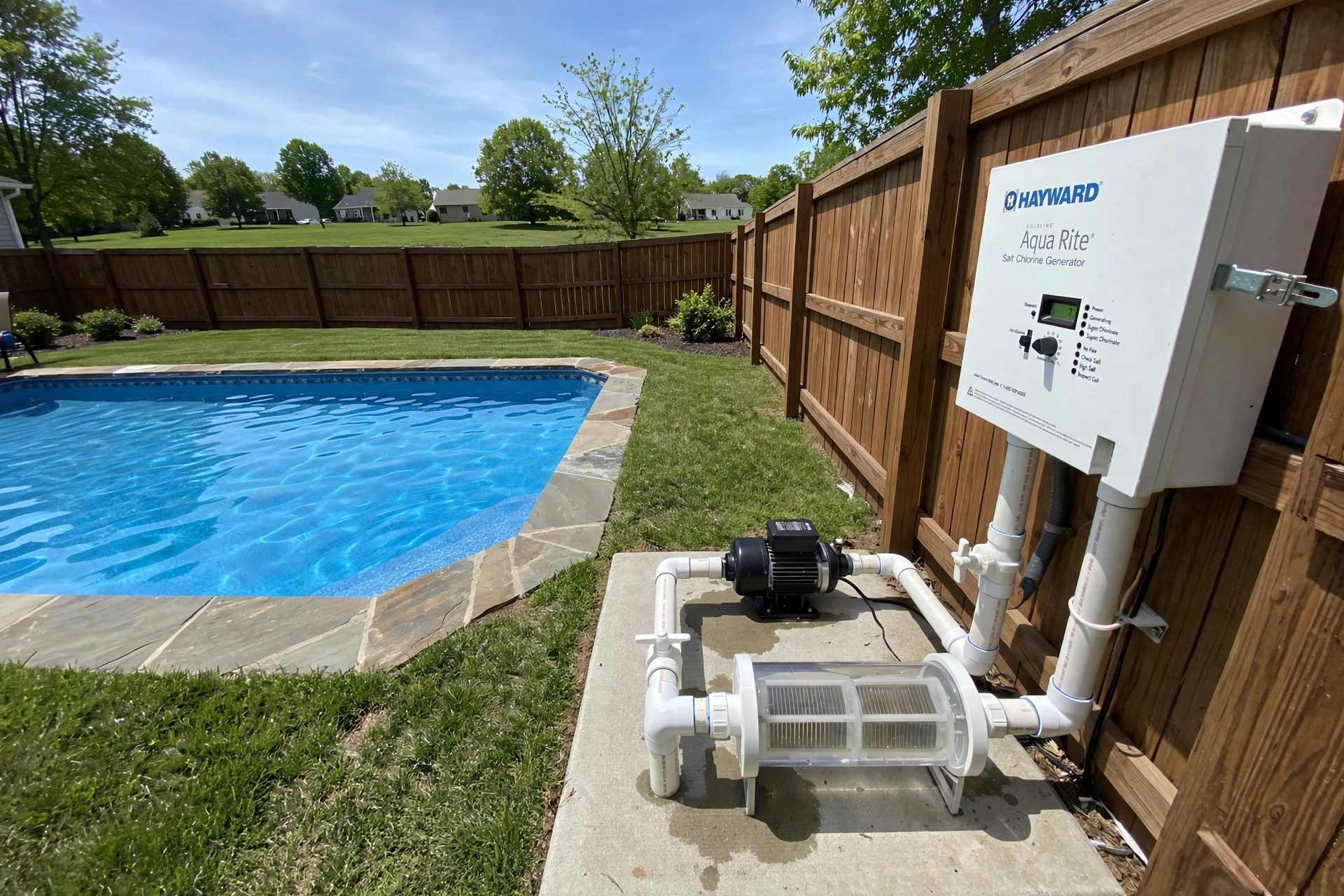
The Salt Chlorine Generator
The generator has two main parts. The control box mounts on a wall near the pool equipment. The cell sits inside the plumbing. Pool water flows through the cell. The cell uses low voltage electric current to split the salt. That process makes chlorine. The chlorine kills germs and algae. Then it turns back into salt. The cycle repeats.
The control box sets chlorine output. You turn it up in hot months and down in cool months. Most boxes show salt level and water flow. A good pool care primer can teach you how to read these numbers each week.
What the Pool Needs Before Conversion
Most pools can convert with no other change. The pool should be clean and in good shape. The water chemistry should be in normal range. The pump should run well. If the pump is old, some owners replace it at the same time. A new variable speed pump uses less power. That can cut the electric bill.
Check the pool parts before you convert. Salt water can be hard on old handrails, ladders, and light fixtures. If your pool is much older, ask a pool shop to look at the metal parts first. You can find replacement parts and cells for nearly every brand of generator.
Types of Salt Water Systems
Salt chlorine generators come in three rough groups. Each group fits a different pool size and budget.
Basic Systems for Small Pools
Basic systems suit pools up to about fifteen thousand gallons. They have simple controls. You set one dial for chlorine output. They have no digital screen. They cost the least. They work well for a first salt pool. Owners of small pools often choose these. You can buy basic salt systems at big home stores and pool shops.
Mid Range Systems for Average Pools
Mid range systems suit pools from fifteen thousand to forty thousand gallons. They have digital screens. They show salt level and cell life. They let you set output in small steps. Many have a boost mode for heavy swim days. Most pool owners pick this group. It is the best mix of price and features.
Large and Commercial Systems
Large systems suit big pools and spas. They have high output cells. Some pools use two cells in one line. These cost the most. Home owners rarely need them. Hotels and clubs do. A hot tub maker can also advise on salt systems for spas, since many spas now use small salt cells too.
Systems for Spas and Hot Tubs
Some spas use their own small salt systems. These are not the same as pool systems. They make less chlorine. They fit the small water volume of a spa. If you have a spa next to your pool, ask if it can share the system. In most cases it cannot. A spa specialist can explain which spa models work with salt water.
Cost and Price of a Salt Water Pool Conversion
Now the main question. What does it cost? This salt water pool conversion cost guide breaks the total into parts. Prices move with pool size, brand, and where you live. Labor rates differ by town. Still, the ranges below hold true for most of the country.
The Generator
The salt chlorine generator is the biggest cost. A basic unit for a small pool runs about four hundred to seven hundred dollars. A mid range unit for an average pool runs about seven hundred to twelve hundred dollars. A large unit runs twelve hundred to two thousand dollars or more. Well known brands cost more than store brands. Brand name cells often last longer. That can be worth the extra price.
Professional Installation Labor
Many owners pay a pro to install the system. The job takes one to three hours. Labor costs about two hundred to five hundred dollars. The rate depends on the area and the shop. Some shops charge a flat fee. Others charge by the hour. Ask for the full price before the work starts. If the electric panel needs a new breaker, that adds cost. Most homes do not need that.
The Pool Salt
Pool salt is cheap. A forty pound bag costs about six to ten dollars. An average pool needs about ten to fifteen bags to reach the right level. That is sixty to one hundred fifty dollars for the first fill. Later years need only a few bags. Rain and splash out lower the salt level over time. You top it up once or twice a year.
Optional Extras
Some owners add extras during the conversion. A zinc anode, which guards metal parts against corrosion, costs about thirty to sixty dollars. A good salt test kit costs about twenty to forty dollars. Test strips cost less but are less exact. Some shops sell a start up chemical kit for fifty to one hundred dollars.
Total First Year Cost
Add it up. A typical conversion for an average pool costs about one thousand to two thousand dollars. That includes the generator, labor, salt, and basic extras. A do it yourself job costs less. If you install the unit yourself, you save the labor fee. The total then runs about five hundred to thirteen hundred dollars. Only do it yourself if you know basic plumbing and safe wiring. Water and power are a risky mix.
Yearly Cost After Conversion
The yearly cost is where salt pools win. You will spend about fifty to one hundred dollars a year on salt. You will spend about one hundred to two hundred dollars on other chemicals. The generator cell wears out. A new cell costs about four hundred to nine hundred dollars. Most cells last three to seven years. Spread over time, the cell adds about one hundred to two hundred dollars a year. The total yearly cost is about three hundred to five hundred dollars. A chlorine pool often costs five hundred to eight hundred dollars a year in chemicals. That is why the change pays off.
When the Change Pays for Itself
Most owners break even in two to four years. After that, they save money each year. The exact point depends on pool size and local chemical prices. Big pools save faster. They use more chemicals now. Small pools save slower. But nearly every owner reaches the break even point. For a wider look at pool spending, see this inground pool cost breakdown by size.
Care and Upkeep After Conversion
A salt pool still needs care. The system makes chlorine, but it does not do everything. Test the water at least once a week. Check chlorine, pH, and salt level. Salt pools tend to push pH up. You will add acid more often than before. Keep pH between seven point two and seven point six. Keep chlorine between one and three parts per million. Keep salt near the level your maker suggests, often about three thousand two hundred parts per million.
Clean the generator cell when scale builds up. In hard water areas, scale forms fast. Check the cell every three months. Soak it in a mild acid mix if it looks white and crusty. Rinse it well. A clean cell works better and lasts longer. You can find cell cleaning supplies at pool supply stores.
Run the pump long enough each day. The generator only makes chlorine while water flows. In summer, run the pump eight to twelve hours. In winter, run it less. Watch the water in spring. Algae wakes up as water warms. A boost cycle on the generator can stop an early bloom. For season by season tips, a pool maintenance guide can fill in the gaps.
Do not skip the other chemicals. A salt pool still needs stabilizer. It still needs shock now and then. It still needs algaecide in tough months. The amounts are smaller. The routine is simpler. But the routine is still real.
Winter care matters too. In cold states, close the pool for winter. Drain water from the cell and the lines. Store the cell in a dry place if the maker says so. A good winter cover keeps out leaves and snow. See this best pool cover for winter snow roundup before you buy.
Safety Tips
Salt water systems are safe when used right. Still, follow a few rules. Keep the control box dry and off the ground. Do not open the box in the rain. Turn off the power before you touch the cell or the wires. Store pool salt in a dry place. Keep bags off bare concrete. Salt can stain concrete.
Never mix chemicals. Add one chemical at a time. Wait for it to spread before adding the next. Keep all pool chemicals locked away from children and pets. Read the labels. The pool safety standards from the federal safety agency set good rules for drains, covers, and fences.
Water balance is also safety. Low chlorine lets germs grow. High chlorine burns eyes and skin. Test often. Fix problems fast. A balanced pool is a safe pool. If the water turns green, do not swim in it. Shock the pool and wait until it clears.
Frequently Asked Questions
How much does it cost to convert a chlorine pool to salt water?
For an average home pool, the total runs about one thousand to two thousand dollars with pro labor. A do it yourself job runs about five hundred to thirteen hundred dollars. The generator is the main cost. Labor, salt, and small extras make up the rest.
Is a salt water pool cheaper to run than a chlorine pool?
Yes, in most cases. A salt pool costs about three hundred to five hundred dollars a year in chemicals and cell wear. A chlorine pool costs about five hundred to eight hundred dollars a year. Most owners break even in two to four years.
Can any pool be converted to salt water?
Almost any pool can convert. Inground and above ground pools both work. The pool should be clean and the pump should run well. Very old metal parts may need a check first. Salt can speed up rust on worn metal.
Does a salt pool need chlorine at all?
Yes. A salt pool still uses chlorine. The generator makes the chlorine from salt. You may still add shock chlorine now and then. You will use far less packaged chlorine than before.
How long does a salt cell last?
Most salt cells last three to seven years. Hard water shortens cell life. Cleaning the cell on time helps it last longer. A new cell costs about four hundred to nine hundred dollars. Watch for a drop in chlorine output. That is the sign the cell is wearing out.
Will salt water hurt my pool heater?
Most modern heaters handle salt water fine. Old heaters with worn parts may corrode faster. If your heater is very old, have it checked. You can read about inground pool heater installation cost to see what a new heater would run if yours needs work.
Final Word
A salt water pool is a smart upgrade for many owners. The water feels soft, the care is simple, and the yearly cost is low. The first year costs about one thousand to two thousand dollars for the generator, labor, and salt. After two to four years, the change pays for itself. Use this salt water pool conversion cost guide as your starting point. Get two or three quotes from local shops. Pick a system that fits your pool size. Keep up with weekly testing. Do that, and your salt pool will give you clear, gentle water for years.
References
Bullfrog Spas. (n.d.). Hot tubs and spas. https://www.bullfrogspas.com Hot Spring Spas. (n.d.). Hot tubs and spas. https://www.hotspring.com Leslie’s Pool Supplies. (n.d.). Pool supplies and equipment. https://www.lesliespool.com Pool Warehouse. (n.d.). Pool equipment and supplies. https://www.poolwarehouse.com Swim University. (n.d.). Pool and hot tub care guides. https://www.swimuniversity.com The Home Depot. (n.d.). Home improvement products. https://www.homedepot.com The Spruce. (n.d.). Home and garden advice. https://www.thespruce.com U.S. Consumer Product Safety Commission. (n.d.). Product safety information. https://www.cpsc.gov
Was this guide helpful?

About Michael Thompson
The My Garden US editorial team writes practical, in-depth home and garden guides for American homeowners — tested advice, no fluff.