
When you plan a pool, one choice shapes everything else. The choice is simple. Salt water or chlorine. This guide on salt water vs chlorine pool pros cons lays out both sides in plain words. It covers cost, comfort, upkeep, and safety. By the end, you can pick the system that fits your home.
Why This Choice Matters
A pool is a large purchase. You will pay for it for many years. The water system sets the tone. It sets how the water feels on your skin. It sets how much work you do each week. It sets how much you spend on chemicals and parts. A poor choice costs you time and money for a decade or more.
Many buyers pick fast. They pick what their neighbor has. That is a poor way to choose. Your yard is not their yard. Your budget is not their budget. Take one hour to learn the facts. Then decide.
The debate is not new. Chlorine pools have been common for a hundred years. Salt water systems came into wide use in recent decades. Both clean the water well when run right. Both fail when run wrong. The difference lies in how they work day to day.
How Each System Works: Salt Water vs Chlorine Pool Pros Cons
Traditional Chlorine Pools
A chlorine pool gets its sanitizer from products you add by hand or by feeder. The most common product is chlorine tablets, sold in bulk pails. You place them in a floater or an automatic feeder. You may also add liquid chlorine or granular shock. Test strips or a test kit tell you when to add more.
Chlorine kills germs by breaking them down at the cell level. It works fast. It has a long track record. Pool pros know how to manage it well. Most public pools still use it.
Salt Water Chlorine Generators
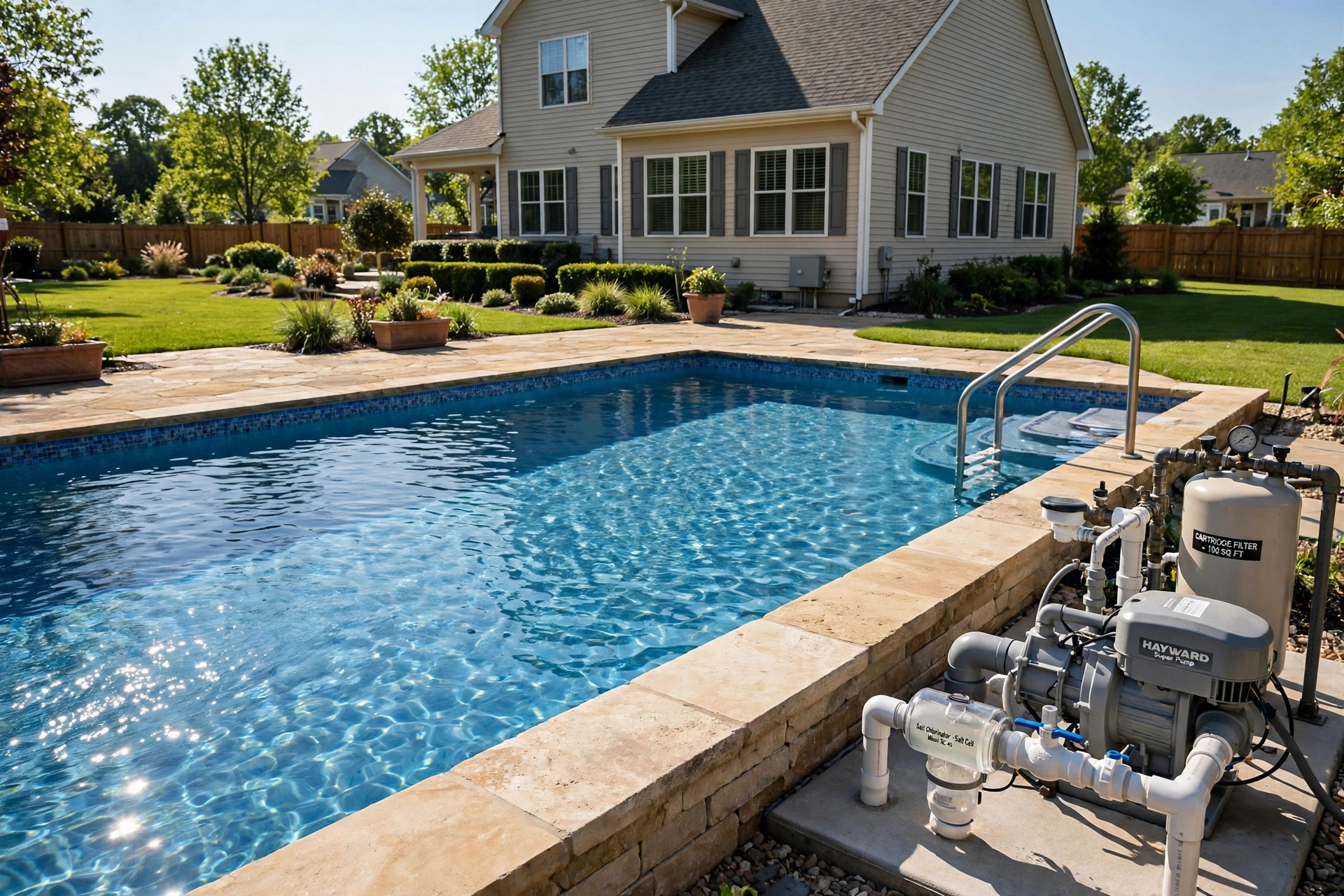
A salt water pool is not chlorine free. This is the biggest myth. The pool water holds dissolved salt. A salt chlorine generator sits in the plumbing line. As water passes through the cell, the unit splits the salt and makes chlorine. The chlorine sanitizes the pool. Then the cycle repeats.
The salt level is mild. It sits near one tenth of ocean water. You can barely taste it. The system makes a steady, low dose of chlorine all day. This smooth dose is the heart of the salt system.
Comfort and Feel
Ask swimmers which water feels better. Most pick salt water. The water feels softer on skin. Eyes sting less. Hair feels less dry after a swim. Bathing suits keep their color longer. These are the most cited pros of salt water in every salt water vs chlorine pool pros cons talk.
Why does this happen? The salt system holds chlorine at a low, even level. There are fewer spikes. Chlorine pools swing more. After you shock a chlorine pool, the level runs high for a day or two. Swimmers notice that. Salt pools rarely spike.
But comfort is not one sided. A well kept chlorine pool feels fine. Many owners never note a problem. The feel gap shows most right after treatment. If you test often and dose with care, a chlorine pool can swim soft too.
Smell is another point. Strong chlorine smell does not mean too much chlorine. It often means the wrong kind of chlorine is present. Combined chlorine, or chloramines, cause that sharp smell. Both systems can form chloramines. Salt pools form fewer of them, on average, because dosing stays even.
Cost and Price
Up Front Cost
A chlorine system costs little to start. Tablets, a feeder, and a test kit may run a few hundred dollars. You can start today with supplies from any home supply store.
A salt system costs more at the start. The generator unit and the cell often cost between one thousand and two thousand dollars, plus labor. If you convert an old pool, see a salt water pool conversion cost guide to plan the budget. The cell is the main cost. It wears out and needs a swap every three to seven years.
Year by Year Cost
Each year, chlorine pools spend more on chemicals. Tablets, shock, stabilizer, and test supplies add up. Prices shift by year, but a mid size pool may spend several hundred dollars a year on chemicals.
Salt pools spend less on chemicals each year. You buy salt once or twice a year. Salt is cheap. A forty pound bag costs a small amount. But you will pay for a new cell down the road. A new cell can cost several hundred dollars. Spread over its life, that is a real yearly cost.
Power cost is about the same. The generator draws a small amount of power. It runs while the pump runs. The difference on the power bill is slight.
The Long View
Over ten years, the two systems often cost about the same. Salt costs more up front and less on chemicals. Chlorine costs less up front and more on chemicals. The tie breaker is often labor and parts. If you pay a pool service, ask what they charge for each type. Some firms charge more to service salt systems.
Care and Upkeep
Weekly Work for Chlorine Pools
You test the water two or three times a week. You read chlorine, pH, and stabilizer levels. You add tablets to the feeder. You shock the pool every one or two weeks, or after heavy use or rain. After a storm, you may need to shock pool after rainstorm to clear debris and germs. You brush the walls and skim the surface.
The work is steady but simple. Most owners learn it in one season. A good pool test kit makes it easy.
Weekly Work for Salt Pools
You still test the water. Salt systems do not run on their own. You check salt level, chlorine level, and pH. The generator dial sets how much chlorine it makes. You turn it up in hot weeks and down in cool weeks. You add salt when rain or splash out drops the level. You clean the cell a few times a year with a mild acid bath to clear scale.
The daily dosing is gone. You no longer handle tablets each week. That is the main labor saving. But you trade it for cell care. If the cell fails and you miss it, chlorine drops fast and algae moves in.
Water Balance in Both
Both systems need balanced water. pH, alkalinity, and calcium hardness matter for both. Salt pools tend to push pH up. The generator process raises pH over time. Salt owners add more acid than chlorine owners do. This is a known con of salt systems. Keep a bottle of muriatic acid on hand and test pH each week.
Salt can also harm some pool parts. Salt water is harder on metal. Ladders, rails, and light fixtures may corrode faster. Stone coping and decking can suffer too. Some natural stones break down with salt spray. Ask your builder which materials hold up to salt before you choose.
Equipment and Parts
The pump, filter, and heater work the same in both systems. But salt pools pair well with certain parts. A good pool filter for saltwater systems resists corrosion and cleans fine particles. Heaters with cupronickel or titanium parts last longer in salt water. Standard copper heaters wear faster.
For chlorine pools, buying chlorine tablets in bulk cuts the yearly bill. Store them dry and locked away from children and pets. Heat and damp air break them down.
Automation helps both types. A timer, a salt cell controller, or a chemical feeder cuts daily chores. Smart pool controls let you check readings from your phone. These add-ons cost extra but save time.
Health and Safety
Both systems use chlorine to kill germs. Neither is chemical free. If someone tells you salt water is chemical free, that is false. The active sanitizer is the same. Salt water is gentler in dose, not different in kind.
Eye and skin comfort favors salt, as noted above. But safety rules do not change. Keep chlorine in the safe range. Keep pH in the safe range. Test often. Never mix chemicals. Store all pool chemicals in a cool, dry, locked place. The Consumer Product Safety Commission notes that pool chemicals cause thousands of injuries each year, most from poor storage and mixing.
Drowning risk is the same for both. A fence with a self closing gate is a must. Add a pool alarm for extra warning. Learn CPR. These steps matter more than the water system you pick.
Salt systems add one small risk. The cell makes hydrogen gas in small amounts. It vents out through the plumbing. Proper install handles this. Have a licensed pro install the unit. Do not wire it yourself unless you know the trade.
Which Lasts Longer
Pool surface life is about the same for both. Plaster, vinyl, and fiberglass wear from water chemistry, not from the chlorine source. Bad chemistry ruins a surface fast in either system. Good chemistry keeps it sound.
Where salt shows wear is on metal and stone, as noted. Where chlorine shows wear is on liners and covers if levels run high too often. Both can last long with care. Neither is free of upkeep.
Resale value is a wash. Some buyers love salt pools. Some fear the cell cost. A clean, well kept pool sells the home either way. Keep records of your water care. Buyers like proof.
How to Choose
Use these questions to decide.
Do you hate handling chemicals? Salt cuts weekly dosing. Pick salt if you want fewer trips to the chemical shelf.
Is up front cost tight? Chlorine starts cheaper. Pick chlorine if the budget is thin now.
Do swimmers have sensitive skin or eyes? Salt feels gentler. Families with young children often pick salt for this reason.
Is your pool near stone coping or metal rails? Salt may wear them faster. Chlorine may be kinder to the hardscape.
Do you travel often? Salt holds a steady dose while you are away. It forgives a missed week better than a tablet feeder that runs dry.
Do you like simple, known routines? Chlorine is the old standard. Every pool store stocks the supplies. Help is easy to find.
There is no wrong answer. There is only the answer that fits your home.
Frequently Asked Questions
Is a salt water pool really chlorine free? No. A salt water pool makes its own chlorine from salt. The water holds chlorine just like a standard pool. The dose is lower and steadier, which is why it feels gentler.
Does salt water damage the pool? It can wear metal parts and some stones faster than fresh water. Use salt rated parts and seal stone coping. Good water balance slows all wear.
Which costs less over ten years? They often end near even. Salt costs more to install and less on chemicals. Chlorine costs less to install and more on chemicals. Cell replacement is the big salt cost. Tablets and shock are the big chlorine costs.
Can I switch my chlorine pool to salt? Yes, in most cases. A pro adds a salt chlorine generator to the plumbing and balances the salt level. Check that your heater, rails, and coping suit salt first.
Do salt pools need less testing? No. Test just as often. The system makes chlorine for you, but you must still watch salt level, pH, and chlorine output. A salt pool with a dead cell turns green fast.
Which is better for the environment? Both use chlorine. Salt pools buy fewer chemical jugs, so they make less plastic waste. But old cells are electronic waste. Handle them through proper recycling programs.
A Short Final Word
The salt water vs chlorine pool pros cons debate comes down to trade offs. Salt gives softer water and less weekly dosing at a higher start cost. Chlorine gives a lower start cost and a simple, proven routine with more weekly work. Pick the one that fits your budget, your yard, and your patience. Then keep the water balanced. A well kept pool of either kind is a joy for years. For more pool care reading, visit The Spruce pool guides or Hot Spring Spas for hot tub care.
References
Bullfrog Spas. (n.d.). Hot tubs and spas. https://www.bullfrogspas.com Consumer Reports. (n.d.). Product reviews and ratings. https://www.consumerreports.org Hot Spring Spas. (n.d.). Hot tubs and spas. https://www.hotspring.com Leslie’s Pool Supplies. (n.d.). Pool supplies and equipment. https://www.lesliespool.com Pool Warehouse. (n.d.). Pool equipment and supplies. https://www.poolwarehouse.com Swim University. (n.d.). Pool and hot tub care guides. https://www.swimuniversity.com The Home Depot. (n.d.). Home improvement products. https://www.homedepot.com The Spruce. (n.d.). Home and garden advice. https://www.thespruce.com U.S. Consumer Product Safety Commission. (n.d.). Product safety information. https://www.cpsc.gov U.S. Environmental Protection Agency. (n.d.). Protecting human health and the environment. https://www.epa.gov
Was this guide helpful?

About Sarah Mitchell
The My Garden US editorial team writes practical, in-depth home and garden guides for American homeowners — tested advice, no fluff.
You May Also Like
Best Pool for Exercise Lap Swimming: A Homeowner’s Guide
July 23, 2026 0 views
How to Choose the Best Above Ground Pool for Families
September 5, 2026 0 views
Best Hot Tub Cover Lifter Reviews: A Plain Guide for Spa Owners
February 16, 2026 0 views