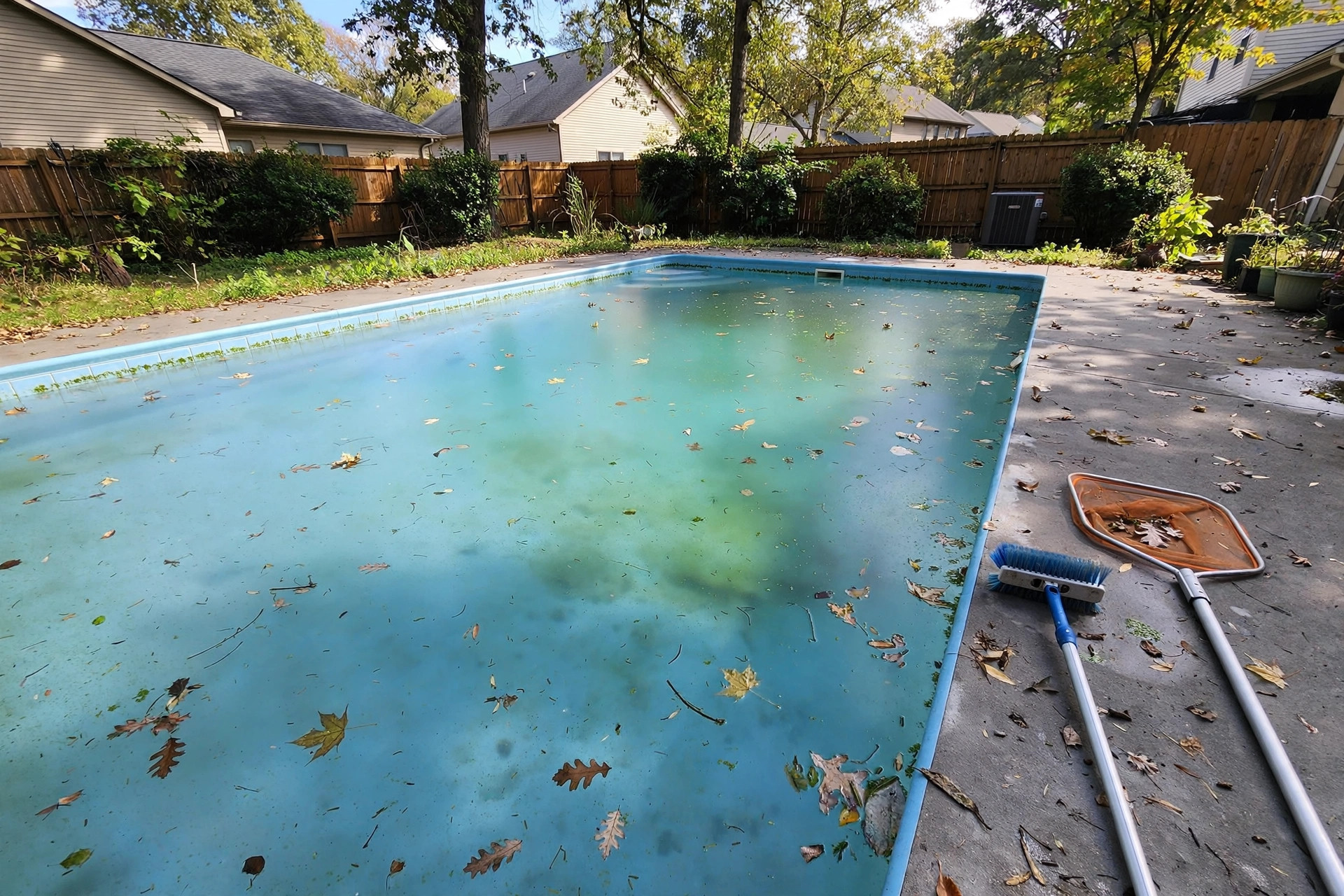

Green water can spoil a summer afternoon in no time. Many salt water pool owners are surprised when algae shows up. They thought the salt system would keep the water clean on its own. A salt water chlorine generator does help. But it is not a cure-all. When chlorine levels drop, algae can take hold in a matter of days. This salt water pool algae treatment guide explains how to fight an algae bloom, step by step, in plain terms. It also shows how to keep the problem from coming back.
Why Algae Grows in a Salt Water Pool
A salt water pool still uses chlorine. The difference is that the chlorine is made on site. A device called a salt chlorine generator sends a small electric charge through lightly salted water. This process, called electrolysis, turns the salt into chlorine. The chlorine then kills germs and keeps the water safe.
So why does algae still grow? There are several common causes.
First, the generator may not be making enough chlorine. This can happen if the salt level is too low. It can also happen if the cell that makes the chlorine is dirty or worn out. Most cells last three to five years.
Second, heavy rain can throw the water chemistry off. Rain dilutes the salt and the chlorine. It can also wash dirt and organic matter into the pool.
Third, hot weather and heavy use raise the demand for chlorine. A pool party with ten swimmers in August uses far more chlorine than a quiet pool in June. The generator may not keep up.
Fourth, low water flow starves the generator. If the filter is dirty or the pump runs too few hours, the cell cannot make chlorine fast enough.
The green color itself is a warning sign. It means free chlorine has been near zero for some time. Yellow or mustard algae and black algae are also possible. Black algae is the toughest kind. It roots into plaster and resists normal shock treatments. The Swim University site offers clear advice on identifying each type of algae, which helps you choose the right plan of attack.
Before You Treat: Test and Prepare: Salt Water Pool Algae Treatment Guide
Never pour chemicals into a pool blindly. Start with a full water test. You need to know these numbers:
– Free chlorine and total chlorine – pH – Total alkalinity – Cyanuric acid (stabilizer) – Salt level
A good test kit or a pool store water test will give you these readings. Write them down. If you are unsure how to raise alkalinity in your pool before treatment, read our guide on how to raise pool alkalinity levels for simple instructions.
Next, prepare the pool. Remove large debris with a leaf net. Clean out the skimmer baskets and the pump basket. Backwash or clean the filter so water flows freely. Brush the pool walls and floor. Brushing breaks the protective film that algae grows under. It also stirs up the algae so the chemicals can reach it.
Turn the pump on and plan to keep it running around the clock until the water is clear. Good circulation is half the battle. Check that your pool cover pump and other equipment are ready for the season too — see our notes on the best pool cover pump for winter for storage tips once the bloom is behind you.
What You Will Need
Gather your supplies before you start. Most of these are easy to find at a local pool store or at a large home center like The Home Depot.
– A reliable pool test kit – Granular or liquid chlorine shock (calcium hypochlorite or sodium hypochlorite) – A pool brush and a vacuum head or manual vacuum – Algaecide made for the type of algae you have – Pool-grade salt, if your salt level is low – A filter cleaner, if the filter is grimy
Do not use household bleach with added scents or thickeners. Plain liquid pool shock is the safer choice. Specialty retailers such as Leslie’s Pool Supplies and Pool Warehouse carry shock products sized for home pools, along with algaecides and test kits.
Step-by-Step Treatment Plan
Step 1: Adjust the pH
Bring the pH down to between 7.2 and 7.4 before you shock. Chlorine works best in slightly lower pH water. If the pH is high, add pH reducer according to the product label. Retest after a few hours of circulation.
Step 2: Shock the Pool
Add shock at dusk or after sunset. Sunlight burns off chlorine fast. Use enough to reach shock level for your cyanuric acid reading. As a rule of thumb, a green pool needs two to three times the normal shock dose. Follow the label for your pool size in gallons.
Pour the shock slowly into the pool in front of a return jet, with the pump running. Keep people out of the pool until the free chlorine falls back to a safe level.
Step 3: Brush Again
Brush the walls, steps, and floor the morning after shocking. Pay special attention to shady corners, behind ladders, and around light niches. These are the spots where algae likes to hide. Brushing a second time helps the shock reach algae that survived the night.
Step 4: Run the Filter Nonstop
Keep the pump and filter running 24 hours a day until the water clears. Check the filter pressure often. When the pressure rises 8 to 10 psi above the clean reading, backwash or clean the filter. A clogged filter slows the whole process.
Step 5: Add Algaecide
After the shock has done its main work, usually the next day, add an algaecide suited to your algae type. For green algae, a polyquat algaecide works well. For yellow or mustard algae, look for a product made for that strain. For black algae, you may need a copper-based algaecide plus direct brushing with a stainless steel brush on plaster pools.
Step 6: Vacuum the Dead Algae
As the algae dies, it turns a gray or brown color and settles. Vacuum it up. If your filter handles fine particles well, vacuum to filter. If the debris is heavy, vacuum to waste if your system allows it. Go slowly so you do not stir the dead algae back into the water.
Step 7: Rebalance Everything
Once the water is clear, test again. Adjust pH, alkalinity, and cyanuric acid to their normal ranges. Check the salt level and add salt if needed. Most generators want 2,700 to 3,400 parts per million, but check your manual. Then turn the generator back to its normal setting.
Special Notes for Salt Water Pools
Do not run the “super chlorinate” or boost mode on your generator and assume the job is done. The boost feature helps, but a true algae bloom almost always needs manual shock added by hand. The generator simply cannot make chlorine fast enough to kill a heavy bloom on its own.
Clean the salt cell if you have not done so in a while. A cell coated with scale cannot make chlorine well. Most makers suggest checking the cell every three months. Soak it in a mild acid solution made for this purpose, following the manual exactly.
Also check for phosphates. Algae feeds on phosphates. Leaves, fertilizer runoff, and even some pool chemicals add phosphates to the water. If levels are high, a phosphate remover can starve future blooms. The CPSC reminds pool owners to store all pool chemicals in a cool, dry place out of reach of children, and to follow every label direction.
How Long Will It Take?
A mild green tint may clear in two to three days. A dark green pool can take five to seven days. Black algae may take longer and may need repeat treatments. Do not rush the process. Each step builds on the last.
Keeping Algae Away for Good
Clearing the water once is only half the job. A few steady habits will keep algae from returning.
Keep the pump running long enough each day. Most pools need eight to twelve hours of filtration in summer. More is better when it is hot or the pool gets heavy use.
Test the water two to three times a week. Small problems are easy to fix. Big problems are not.
Keep the salt level in range. Test it monthly. Add salt as needed, and let it dissolve fully before retesting.
Brush the pool weekly, even when the water looks perfect. Brushing stops algae before it can get a foothold.
Clean the salt cell on schedule. A clean cell makes chlorine at full strength.
Watch the stabilizer level. Salt water pools need cyanuric acid too, usually 60 to 80 parts per million. Without it, sunlight destroys the chlorine your generator makes.
After storms, test and adjust right away. Do not wait for the water to turn green.
Good housekeeping around the pool helps as well. Keep the deck clean so dirt does not wash in. Our guide to the best pool deck cleaner for concrete shows how to keep the surrounding area free of grime and organic matter that feeds algae.
For design ideas that make upkeep easier, The Spruce covers low-maintenance pool landscaping that reduces leaf litter and runoff into the water.
Cost of Treating Pool Algae
Most homeowners spend between 50 and 150 dollars on chemicals to clear a green salt water pool. Shock is the main cost. Algaecide, test reagents, and possibly salt add to the total. A replacement salt cell is the big-ticket item, often 400 to 800 dollars, but it is needed only every few years.
Compare that with the cost of a service visit. Many pool companies charge 200 to 400 dollars for an algae cleanup. Doing it yourself saves money and teaches you how your pool works.
If you are thinking about long-term upgrades, Hot Spring and Bullfrog Spas are worth a look for hot tub and spa equipment that pairs well with a salt water setup.
Safety Reminders
Pool chemicals are strong. Always add chemicals to water, never water to chemicals. Wear gloves and eye protection when handling shock and acid. Never mix different chlorine products together. Never mix chlorine with algaecide in the same bucket. Add them to the pool separately.
Store chemicals in a cool, dry, ventilated spot. Keep them away from children and pets. Keep the containers sealed and the labels readable.
Do not swim until the free chlorine is back in the safe range of 1 to 3 parts per million and the water is clear enough to see the main drain. When in doubt, wait another day.
Frequently Asked Questions
Can I use regular shock in a salt water pool?
Yes. A salt water pool still needs chlorine shock during an algae bloom. The generator cannot make chlorine fast enough to kill heavy algae on its own. Use plain calcium hypochlorite or liquid sodium hypochlorite shock.
Will turning up the generator clear the algae?
It helps, but it is rarely enough by itself. Boost mode raises chlorine output, but a thick bloom needs a hand-added shock dose. Use both: shock by hand first, then let the generator hold the line once the water turns.
Is green salt water pool water safe to swim in?
No. Green water means chlorine is near zero. That means germs and bacteria may be present. Stay out until the water is clear and the free chlorine is back in the safe range.
Why does my salt water pool keep turning green?
The most common reasons are low salt, a dirty or old salt cell, too few pump hours, low stabilizer, or heavy rain and use. Work through them one by one. Test salt and chlorine first. Clean the cell. Then check pump run time.
Do I need algaecide if I already shocked the pool?
Shock kills the algae. Algaecide helps stop it from coming back right away. It is a useful second step, especially for yellow and black algae. Use a product made for your algae type.
How often should I clean my salt cell?
Check it every three months during swim season. If you see white scale buildup, clean it with a cell cleaner or a mild acid wash made for the job. A clean cell keeps chlorine output high and helps prevent the next bloom.
A Final Word
Algae in a salt water pool looks bad, but it is a fixable problem. Test the water. Balance the pH. Shock at dusk. Brush, filter, and vacuum with patience. Then keep up the simple habits that stop algae before it starts. Follow this guide and your pool should be clear, safe, and ready for swimmers within a week.
References
Bullfrog Spas. (n.d.). Hot tubs and spas. https://www.bullfrogspas.com Hot Spring Spas. (n.d.). Hot tubs and spas. https://www.hotspring.com Leslie’s Pool Supplies. (n.d.). Pool supplies and equipment. https://www.lesliespool.com Pool Warehouse. (n.d.). Pool equipment and supplies. https://www.poolwarehouse.com Swim University. (n.d.). Pool and hot tub care guides. https://www.swimuniversity.com The Home Depot. (n.d.). Home improvement products. https://www.homedepot.com The Spruce. (n.d.). Home and garden advice. https://www.thespruce.com U.S. Consumer Product Safety Commission. (n.d.). Product safety information. https://www.cpsc.gov
Was this guide helpful?

About Jennifer Lee
The My Garden US editorial team writes practical, in-depth home and garden guides for American homeowners — tested advice, no fluff.
You May Also Like
Best Pool for Entertaining Guests Ideas: Choosing a Backyard Pool Built for Parties
May 4, 2026 0 views
Finding the Best Pool Cover for Safety Kids and Families
January 1, 2026 0 views
Best Pool Filter Sand vs Cartridge: Which System Is Right for Your Pool?
May 3, 2026 0 views