
Clean pool water is a quiet thing. It does not call attention to itself. When the water is right, the blue is steady, the surface is clear, and there is no smell at all. When something is wrong, the water usually tells you long before a test strip does. Learning how to test pool water without kit is really learning how to read those signs.
No one should pretend that the human senses can replace a proper test. They cannot measure parts per million. They cannot give a number. But the eye, the nose, and the hand can catch real problems early, and they work even when the store is closed, the mail is late, or the kit has gone bad on the shelf. Every pool owner should know how to test pool water without kit as a backup skill.
This article walks through the old plain methods. It covers what the water looks like, smells like, and feels like when it is healthy. It covers the rough home checks that people used for years before kits were common. And it tells you plainly where these methods stop working and a real kit must take over.
Why It Matters to Read the Water Yourself
A pool is a body of water left open to the air. Leaves fall in. Rain falls in. Sunscreen washes off swimmers. Birds visit. Everything that enters the water changes it a little. Chlorine and pH drift out of balance over days, not weeks. A pool that is checked only when someone thinks of it will spend half the summer off balance.
Testing with a kit takes a few minutes. Reading the water with your eyes takes seconds, and you do it every time you walk past the pool. That is the real value of knowing how to test pool water without kit. You become the kind of owner who notices the first hint of cloud before it becomes a green wall of algae. You save money on chemicals because you treat problems small.
There is also the plain fact of being caught short. Kits run out. Reagents expire in the heat. The pool store closes at six on a Sunday. The water does not wait. A simple check with no tools keeps you safe through the gap.
Look: What Clear Water Really Looks Like: How to Test Pool Water Without Kit
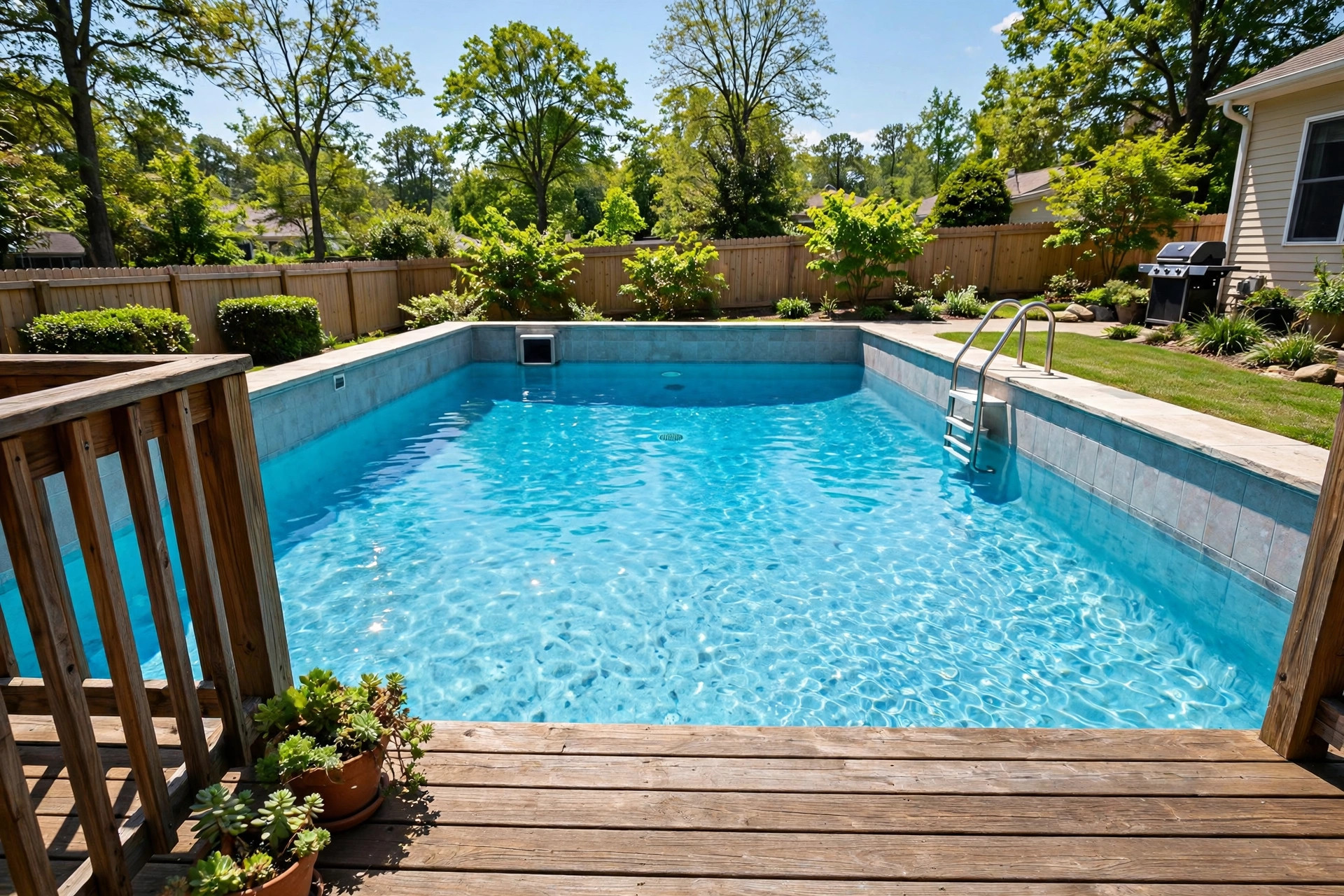
Stand at the edge of the pool and look straight down. In a healthy pool you should be able to see the bottom drain or the floor pattern clearly, even at the deep end. Guides at The Spruce describe the same daily look as the first line of pool care.
Watch for these changes:
Cloudiness. If the deep end looks hazy and you cannot make out the floor clearly, something is off. Cloud often means the chlorine is low, the filter needs backwashing, or the pH has drifted high. It is the earliest warning sign of how to clean green pool water fast becoming necessary later.
Green tint. Any green, even a light green film on the steps, means algae has started. Algae grows in hours once chlorine drops. A faint green tint today becomes a swamp in three days of heat.
A dull or gray color. Water that looks flat and lifeless, without sparkle, often has a sanitizer problem. Healthy chlorinated water has a faint bright quality to it.
Foam on the surface. A little foam after heavy use can be normal. Foam that stays for hours, or foam with an oily look, points to too much sunscreen, lotion, or algaecide in the water.
The morning look matters most. Check the pool before the sun is high and before anyone swims. Morning water tells the truth about the night before.
Smell: The Nose Knows More Than People Think
Here is a surprise to many owners: a clean pool smells like almost nothing. The strong “chlorine smell” that people link to clean pools is actually the smell of chloramines. Chloramines form when chlorine has joined with sweat, urine, and oils. A heavy chemical smell means the chlorine is busy fighting waste, not sitting ready and free.
Lean over the water at the shallow end and take a slow breath through the nose:
– No smell, or a very faint fresh smell: Good. This is what balanced water smells like. – Strong chemical or bleach smell: The pool needs shocking. The chlorine is used up and bound to waste. – Sour or swampy smell: Algae or bacteria is likely. Do not swim until the water is treated and checked properly. – Chemical smell that stings the eyes: Same answer. Heavy chloramines. The pool needs attention.
Indoor pools and hot tubs show smells more strongly because the air is trapped. Outdoor pools give a fainter signal. Learn the normal smell of your own pool when it is healthy, and the change will stand out.
Touch: The Hand Test
Your skin is an honest instrument. Run your hand along the pool wall just below the water line, and run it across the steps.
Slippery walls. If the walls or steps feel slick like wet glass, algae or bacteria is growing there. Healthy pool surfaces feel clean, not slimy. Sliminess is one of the most trusted signs in how to test pool water without kit.
Rough or gritty walls. A rough, sandpaper feel means scale is forming from hard water and high pH. Left alone, it damages the finish.
Eye and skin check. Swim for a short time and pay attention. Mild redness of the eyes or itchy skin after swimming usually means the pH is off or chloramines are high. Strong reactions mean the water should not be used until it is treated.
The towel test. Dry off after a swim and look at a white towel. A slight blue-green tint on the towel can mean metals, often copper, are in the water.
None of these tests gives a number. They give a direction: this way is trouble, that way is fine.
The Bucket and Bottle Checks
People tested water by eye long before test strips existed. A few rough home checks still work.
The clear bottle check. Fill a clean clear glass bottle with pool water and hold it up to daylight against a white sheet of paper. Water should look nearly colorless with the faintest blue. Yellow, green, brown, or orange tints point to metals, algae, or organic waste. A glass of tap water can serve as a rough comparison.
The white bucket check. Dip a white bucket into the deep end and look at the water inside it. Cloudiness shows up much better in a bucket than in the whole pool. If the bucket water is hazy, the pool needs work even if it looked fine from the deck.
Household Substitutes and What They Can and Cannot Do
Many articles on the internet suggest testing pool water with household goods: red cabbage juice as a pH indicator, baking soda to raise alkalinity, and so on. Some of this is real chemistry. Red cabbage juice does change color with pH. Vinegar and baking soda do react with acids and bases. But there are honest limits.
A home pH indicator can tell you “this water is acidic” or “this water is basic.” It cannot tell you the pH is 7.2 or 7.8, and pool balance lives in those small numbers. Using household chemicals to adjust pool water is also risky. You can overshoot badly with no way to measure the result. The best pool test strips for accurate reviews are cheap and widely sold, and they settle every argument the senses start.
What to Look For in the Pool Store Instead
Sooner or later, knowing how to test pool water without kit leads to the same conclusion: buy a kit and keep it fresh. Check the date on the bottle. Reagents go stale, especially in a hot garage. A stale kit lies with confidence, which is worse than no kit at all.
Store the kit in a cool dry place, not beside the pool. Heat and sun kill reagents. If your strips are over a year old, replace them before you trust them. Guides from Leslie’s Pool Supplies and Swim University lay out full testing schedules for owners who want a steady routine.
Reading Trouble Early: The Problems Your Senses Catch First
It helps to know which common pool problems announce themselves clearly without tools.
Low chlorine shows as dull water, a faint green tint, and the start of slippery steps.
High pH shows as cloudy water and scale on the walls. Guides on how to lower pool ph levels safely explain the careful steps once you suspect it.
Algae starting shows as slippery spots, a green film in corners and behind ladders, and water that loses its sparkle.
Heavy bather waste shows as a strong chemical smell and foamy water after a pool party. This is the classic case for shocking the pool that evening.
Metals in the water show as brown or tea-colored water that does not respond to chlorine. A store test is the way to confirm.
Cost and Price of Skipping the Kit
The cost argument cuts both ways. A basic test kit costs very little, often less than a single bag of shock. Running a pool blind and guessing at chemicals costs far more. Owners who dose by guess tend to add too much, too often, and then pay to fix the overshoot. Big retailers like Home Depot carry both the cheap kits and the chemicals, so there is no real reason to run blind for long.
Care and Upkeep of the No-Kit Routine
Make the reading habit part of the day. Each morning, write three words: clear, smell, feel. Clear means you can see the bottom. Smell means none or normal. Feel means the walls are clean. When any of the three changes, write what you did: brushed, backwashed, shocked, or called the store.
Brush the walls weekly even when they feel clean. Backwash or clean the filter on schedule. Run the pump long enough each day for the water to turn over fully. Empty the skimmer baskets often. These plain habits do more for water quality than any gadget, and they are free.
Safety: When No-Kit Testing Is Not Enough
Be honest about the limits. Your senses cannot measure chlorine levels, pH, alkalinity, or stabilizer. They cannot tell you whether the water is safe for a baby, or whether a green pool is safe to re-enter after treatment. They are an early warning system, not a clearance system.
Follow these safety rules:
– Never let children swim in water you have not properly tested with a kit or a store test after any treatment, storm, or problem. – Never swim in water that smells swampy, looks green, or feels slimy, no matter how much you want to. – After shocking the pool, wait until a real test shows chlorine has fallen back to safe levels. – Hot tubs and spas concentrate every problem. Test spa water with a kit every time before use. – If anyone gets sick with stomach or skin problems after swimming, stop using the pool and get the water professionally tested.
Safety agencies like the U.S. Consumer Product Safety Commission publish pool safety guidance worth reading, and spa makers like Bullfrog Spas and Hot Spring remind owners that small water volumes need tighter testing. Retailers such as Pool Warehouse sell the kits that make this routine easy.
Frequently Asked Questions
Can I really tell if my pool is safe without a test kit? You can tell if something is wrong, but you cannot prove the water is safe. The senses are good at catching trouble and bad at clearing water for swimming. Use the no-kit checks as a daily watch, and confirm with a kit or a store test before swimming after any problem.
How often should I read the water this way? Every day you use the pool, and every day during swim season even if no one swims. It takes less than a minute. The morning check is the one that matters most.
What is the single best no-kit sign of a problem? Slippery walls. If the steps or walls feel slick under your hand, treat the pool. It is the most trusted early warning in how to test pool water without kit.
Does a strong chlorine smell mean the pool is clean? No. A strong chemical smell means the chlorine is used up and bound to waste. A clean pool smells like almost nothing.
Can rain change the water enough to matter? Yes. A heavy storm can drop chlorine, shift pH, and wash dirt and debris into the pool. Always read the water the morning after a storm, and test with a kit before swimming.
How long can I go without a real test kit? A few days of careful watching is reasonable if the pool was balanced before. Longer than that, you are guessing. Buy a fresh kit, or take a sample to the pool store.
A Short Final Word
Knowing how to test pool water without kit is a skill every owner should carry. It costs nothing, it takes a minute a day, and it catches trouble while trouble is still cheap. Look at the water each morning. Smell it. Feel the walls. Trust what you find, and act on it early.
But respect the limits. The senses warn; the kit decides. Keep a fresh test kit on the shelf, take a sample to the store each month, and never swim on a guess after a problem. The best pool care is a simple partnership between your own daily watch and honest measurement.
References
Bullfrog Spas. (n.d.). Hot tubs and spas. https://www.bullfrogspas.com Hot Spring Spas. (n.d.). Hot tubs and spas. https://www.hotspring.com Leslie’s Pool Supplies. (n.d.). Pool supplies and equipment. https://www.lesliespool.com Pool Warehouse. (n.d.). Pool equipment and supplies. https://www.poolwarehouse.com Swim University. (n.d.). Pool and hot tub care guides. https://www.swimuniversity.com The Home Depot. (n.d.). Home improvement products. https://www.homedepot.com The Spruce. (n.d.). Home and garden advice. https://www.thespruce.com U.S. Consumer Product Safety Commission. (n.d.). Product safety information. https://www.cpsc.gov
Was this guide helpful?

About Michael Thompson
The My Garden US editorial team writes practical, in-depth home and garden guides for American homeowners — tested advice, no fluff.
You May Also Like
Best Pool Heater for Cold Climates: A Complete Buyer’s Guide
May 2, 2026 0 views
The Best Pool Filter for Above Ground Pools: A Complete Buyer’s Guide
June 27, 2026 0 views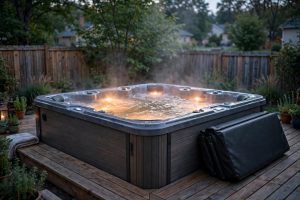
How to Choose the Best Hot Tub for Large Families
July 27, 2026 0 views