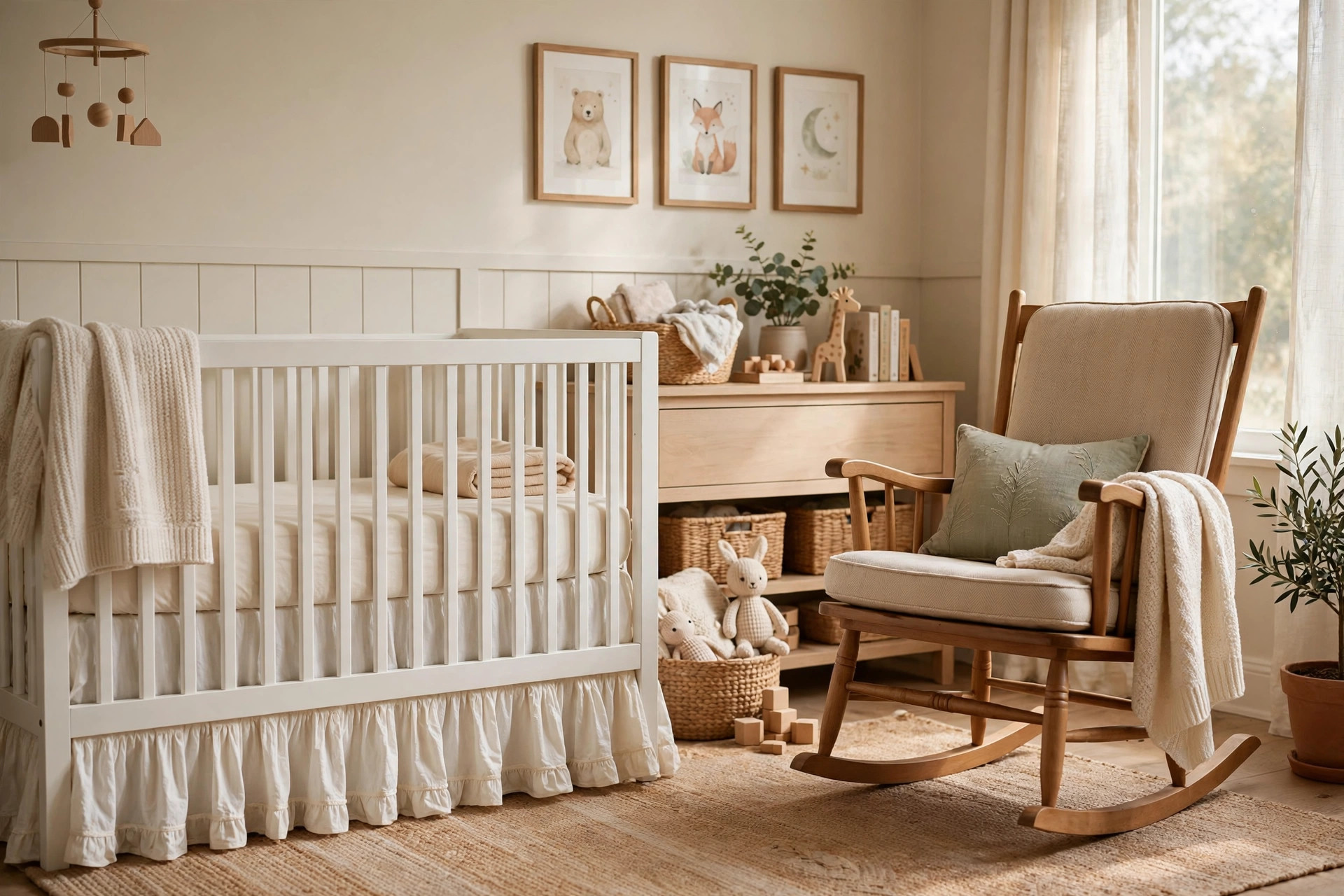

A crib skirt dust ruffle for nursery style is one of the smallest purchases in the nursery, and one of the most visible. The crib stands at the center of the room. The skirt hangs from the mattress support down to the floor. It hides the metal frame and the dark space under the bed. It gives the whole room a calm, finished look. When you choose well, the crib looks neat and quiet. When you choose badly, the crib looks messy even when the rest of the room is clean. This guide explains what to know before you buy, how to match the skirt to your nursery style, and how to keep it looking good for years.
Why a Crib Skirt Matters in Nursery Style
The crib skirt does two jobs at once. It has a practical job. It keeps dust away from the storage space under the crib. That is why many people still call it a dust ruffle. It also hides what you store under the crib, such as extra sheets, a diaper stockpile, or a small bin of toys. The second job is about looks. A bare crib frame can look cold and unfinished. A skirt softens the lines of the crib and ties it to the rest of the room.
Style starts with the crib, because the crib is the largest object in the nursery. A ruffled skirt gives a soft, classic feel. Parents who want a country or cottage nursery often choose a full ruffle with generous gathers. A tailored skirt with flat panels gives a modern, clean feel. The same crib can look like two different pieces of furniture with two different skirts. That is the value of the skirt. It is a low-cost way to set the tone of the room.
The skirt also connects the parts of your bedding set. Many parents buy a nursery bedding set for a baby girl with a quilt, a fitted sheet, and a skirt that all share one pattern. Others mix and match a plain white skirt with a patterned quilt. Both plans work. The rule is simple. The skirt should not fight with the other fabrics. A busy quilt asks for a plain skirt. A plain quilt can take a patterned skirt. This balance keeps the nursery restful, which is what a sleep room should be.
What to Look For When You Choose One: Crib Skirt Dust Ruffle for Nursery Style
Size and Fit
Crib size is nearly standard in the United States. Most full-size cribs take a skirt made for a mattress that measures about 28 by 52 inches. The drop length is the part that varies. Most skirts come with a drop of 14 to 16 inches. That length reaches the floor when the mattress is at its lowest setting. Measure from the mattress support to the floor before you order. A skirt that is too short looks unfinished. A skirt that is too long drags on the floor and collects dust.
Drop length changes as the baby grows. Parents move the mattress down as the child learns to pull up and stand. A skirt that fit perfectly with the mattress high may hover above the floor when the mattress moves down. Some parents buy a second skirt later. Others choose a wrap-around skirt that can be adjusted. If you plan to use a crib skirt for convertible crib nursery decor, check the crib manual. Some convertible cribs have a wider base than a standard crib, and the skirt must cover it cleanly.
Fabric and Feel
Cotton is the most common fabric for crib skirts. It is soft, easy to wash, and easy to iron. Percale cotton has a smooth, crisp feel. Cotton sateen has a soft sheen and feels richer. Polyester blends cost less and wrinkle less. They also wash well. Muslin gives a light, airy look that suits a farmhouse or beach nursery. Linen-look fabrics give a tailored, grown-up style, though true linen costs more and wrinkles fast.
Think about the nursery climate. A nursery that runs warm does well with thin, breathable cotton. A cold room can take a heavier fabric. Dark fabrics hide stains. Light fabrics show every mark but make a small room feel larger. If you like the look of a printed skirt, look at the print scale. Small prints read as calm from a distance. Large prints become the main feature of the room. Retailers such as IKEA and Target show skirts in real room photos, which helps you judge the print scale before you buy.
Color and Pattern
White is the safest choice. It fits every nursery style, from modern to traditional. It also shows dirt, so white skirts need more washing. Ivory and cream are warmer and hide stains a little better. Gray is a modern neutral that works for boys and girls alike. Soft blue, blush pink, and sage green are common nursery colors that pair well with many bedding sets.
Patterns need care. Stripes and small dots are easy to live with. Large florals make a strong statement. A plaid or gingham skirt gives a country look. Solid colors give you freedom to change the quilt or wall art later without replacing the skirt. When you shop, look at whole collections on sites such as Wayfair and Pottery Barn Kids. Collections group the skirt with the quilt and sheets, so you can see the full effect before you commit.
Types of Crib Skirts
Standard Dust Ruffle
The standard dust ruffle is a flat deck of fabric with ruffled panels sewn around three sides. The deck lies on the mattress support under the mattress. The mattress holds it in place. This is the oldest style and still the most common. It is cheap and widely available. The weakness is fitting. To put it on or take it off, you must lift the mattress. That is a two-person job when the baby is small and the room is tight.
Tailored Bed Skirt
The tailored bed skirt has flat panels instead of gathers. The corners are often pleated or split so the fabric hangs straight. This style suits modern and minimal nursery styles. It looks neat and crisp. It is often made of a stiffer cotton that holds its shape. Tailored skirts cost a little more than standard ruffles. They also iron more easily, since flat panels press flat. If you like clean lines in your home, this is the style to choose.
Wrap-Around Skirt
The wrap-around skirt goes around the crib frame without a deck underneath. Elastic or hook-and-loop strips hold it to the frame. This style is popular because it is easy to change. You do not lift the mattress to install it. You also adjust the height with ease. This makes it a good choice for parents who move the mattress down often. Wrap-around skirts also work well when storage boxes sit under the crib, since there is no deck in the way.
Elastic Wrap Skirt
The elastic wrap skirt is a simpler cousin of the wrap-around. A wide band of elastic pulls the fabric tight around the frame. Installation takes minutes. The look is smooth and modern. The risk is slipping. A cheap elastic band can ride up or sag over time. Read reviews before you buy this type. Shoppers on Amazon and Walmart often note whether the elastic held up after months of use. A strong, wide elastic band lasts longer than a thin one.
Cost and Price
Crib skirts are one of the cheapest parts of nursery decor. A basic cotton dust ruffle costs between 15 and 30 dollars. Mid-range skirts from baby specialty brands cost between 30 and 60 dollars. These often have better fabric and fuller gathers. Premium skirts from designer collections can cost 60 to 120 dollars. Some handmade skirts cost more than that. The price reflects fabric quality, the fullness of the ruffle, and the brand name.
Sets change the math. A four-piece bedding set with a quilt, skirt, fitted sheet, and diaper stacker may cost 100 to 200 dollars. Buying the set can save money if you like all four pieces. Many parents buy the skirt alone and use plain sheets from another brand. That is often the cheapest path to a pulled-together look. Remember that you may need two skirts if you want a spare while one is in the wash. Babies are messy, and crib skirts sit close to the floor where spills happen.
Price is not the only cost. A skirt that needs ironing after every wash costs you time. A skirt in a wrinkle-free polyester blend costs you nothing extra in care. Weigh the fabric care when you compare prices. A 25-dollar skirt that washes well may be a better buy than a 60-dollar skirt that needs hand care.
Care and Upkeep
Wash the crib skirt before you use it. New fabric can carry dust and sizing from the factory. Use a mild detergent and warm water. Most cotton skirts wash fine in a normal machine cycle. Dry on low heat and pull the skirt out while it is still a little damp. Smooth the gathers with your hands and hang it to finish drying. This keeps the ruffle full without heavy ironing.
Stains happen. Treat them fast. Blot milk and spit-up with a damp cloth before they set. A paste of baking soda and water lifts many nursery stains. Keep bleach away from colored skirts. White cotton can take a little oxygen bleach if the label allows it. Check the care tag first. Some skirts with trims, such as pom-poms or lace, need a gentle cycle or a wash bag.
Dust is the enemy of the skirt that sits near the floor. Vacuum the floor under and around the crib each week. Shake the skirt out when you change the sheets. Every few months, take the skirt down and wash it. While it is off, vacuum the mattress support and wipe the frame. This routine keeps dust down and keeps the nursery air cleaner for the baby.
Safety Notes
Safety comes first in the nursery. The skirt itself is safe because it hangs below the mattress and away from the baby. The baby cannot reach it or pull it into the crib. The U.S. Consumer Product Safety Commission sets the rules for crib safety. Their guidance focuses on the sleep surface. Keep the mattress firm and flat. Keep soft objects, loose blankets, and bumpers out of the crib. The skirt stays outside the sleep area, so it does not conflict with these rules.
Pediatric groups such as HealthyChildren.org, the parenting site of the American Academy of Pediatrics, stress the same point. A bare sleep space is the safest sleep space. The skirt, the quilt, and the crib mattress waterproof organic for newborns cover all belong below or outside the crib. None of them go where the baby sleeps. This is the key safety rule for the whole bedding plan.
Two small cautions remain. First, make sure the skirt does not block the crib hardware. Some cribs have drop-side latches or folding parts that must move freely. Check them after you install the skirt. Second, keep the skirt from touching a space heater or a hot vent. Fabric near heat is a fire risk. Place the crib away from heaters, cords, and windows with blind cords. Parenting resources such as What to Expect and nursery guides from The Spruce repeat these room layout rules often, and they are worth following.
Frequently Asked Questions
Does a crib skirt go over or under the mattress?
The skirt goes under the mattress. A standard dust ruffle has a flat deck that lies on the mattress support, and the mattress sits on top of the deck. The ruffled panels hang down around the crib. Wrap-around and elastic skirts attach to the frame instead, so the mattress never touches them. Both methods work. The under-mattress style stays in place better. The wrap style is easier to change.
What size crib skirt do I need?
Most American full-size cribs need a skirt for a 28 by 52 inch mattress with a 14 to 16 inch drop. Measure your crib before you buy. Measure the length and width of the mattress support. Measure from the support to the floor at the mattress height you plan to use. Mini cribs need a smaller skirt. Convertible cribs may need a wider skirt at the base. When in doubt, check the crib brand site or ask the retailer for the fit.
Can I use a crib skirt with a convertible crib?
Yes, in most cases. Many skirts fit both standard and convertible cribs. The base of a convertible crib is sometimes wider, so a standard skirt may look tight at the corners. Split-corner skirts handle this well because the fabric can open around the posts. Wrap-around skirts also adapt to different frames. If you buy a skirt made for your crib brand, the fit is usually clean. Read the size chart before you order.
How often should I wash a crib skirt?
Wash it every one to two months in normal use. Wash it right away after a spill or a diaper leak that reaches the floor. Babies spit up, and floors hold dust. The skirt sits between the two. If anyone in the home has allergies, wash the skirt monthly. A second skirt lets you keep the crib dressed while one is in the wash.
Do I really need a crib skirt?
No, you do not need one. The crib works fine without it. The skirt is decor and dust control. Many parents skip it and like the open look, which makes a small room feel bigger. Others feel the nursery looks unfinished without it. It is a matter of taste. If you like the finished look, a skirt is a cheap way to get it. If you prefer simple and modern, leave the frame bare.
What drop length is best?
A 14-inch drop fits most cribs with the mattress at the middle setting. A 16-inch drop reaches the floor with the mattress at the lowest setting. If your crib sits on thick carpet, add an inch. Carpet lifts the crib and shortens the reach to the floor. Measure first. A skirt that just brushes the floor looks best. One that pools on the floor collects dust and looks sloppy.
A Final Word
A crib skirt dust ruffle for nursery style is a small detail with a large effect. It hides the frame, calms the dust under the crib, and ties the bedding together. Choose the size with care. Pick a fabric you can wash without worry. Match the style to the room you want. Keep safety rules in mind, and keep the sleep space bare. Do this, and the crib will look neat and welcoming from the first day home. The baby will not notice the skirt. You will notice it every time you walk in, and that quiet pleasure is reason enough to choose well.
For more background, see Target.
References
American Academy of Pediatrics. (n.d.). HealthyChildren.org. https://www.healthychildren.org IKEA. (n.d.). Home furnishings. https://www.ikea.com Pottery Barn Kids. (n.d.). Kids furniture and decor. https://www.potterybarnkids.com Target. (n.d.). Retail store. https://www.target.com The Spruce. (n.d.). Home and garden advice. https://www.thespruce.com U.S. Consumer Product Safety Commission. (n.d.). Product safety information. https://www.cpsc.gov Wayfair. (n.d.). Furniture and home goods. https://www.wayfair.com What to Expect. (n.d.). Pregnancy and parenting guidance. https://www.whattoexpect.com
Was this guide helpful?

About Michael Thompson
The My Garden US editorial team writes practical, in-depth home and garden guides for American homeowners — tested advice, no fluff.
You May Also Like
The Best Nursery Bedding Set for Baby Girl: A Simple Buying Guide
April 22, 2026 0 views
Kids Wall Art Motivational Quotes for Teens: A Plain Guide for Parents
March 27, 2026 0 views
A Nursery Rocking Horse for Toddler Playroom: A Simple Buying Guide
February 7, 2026 0 views