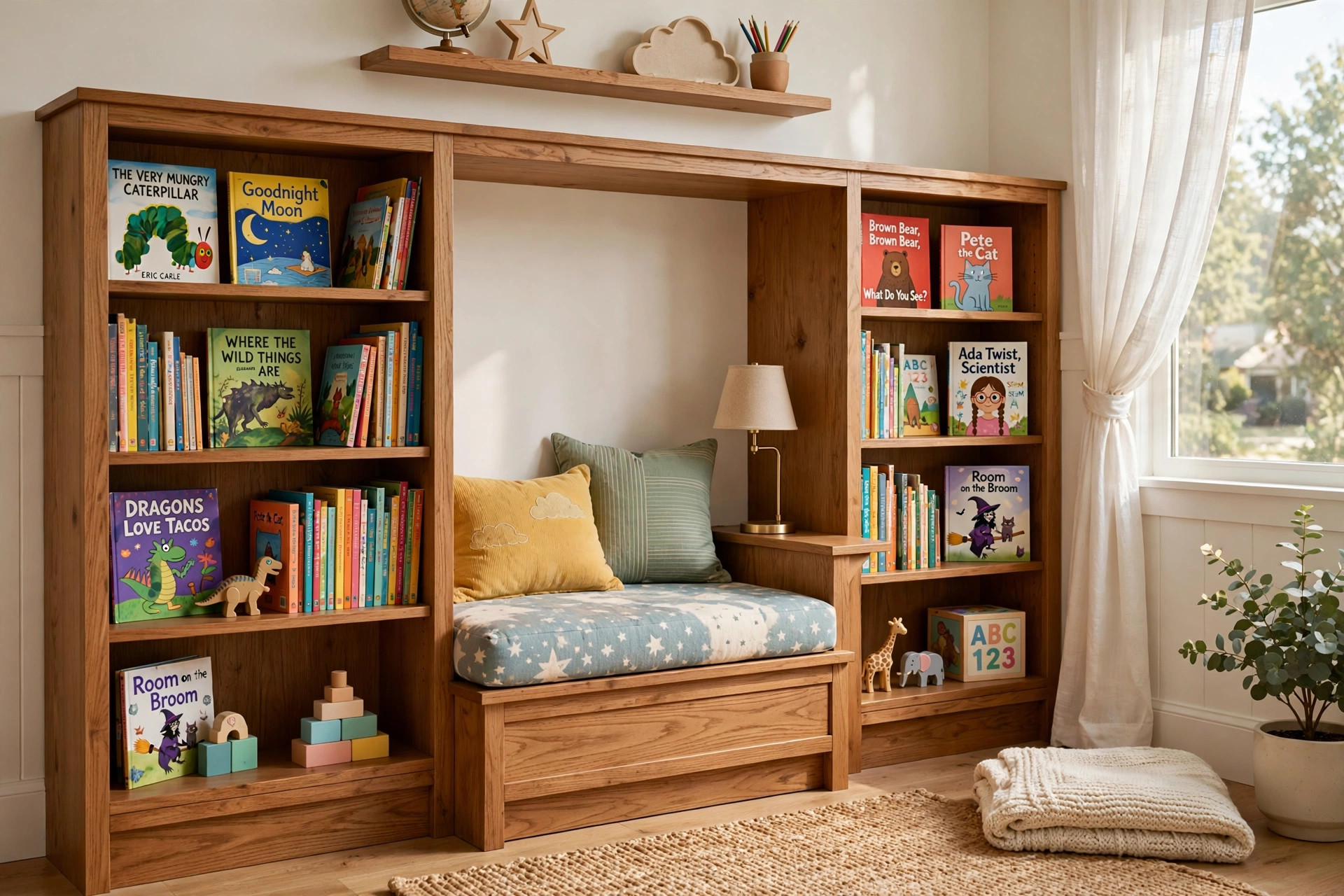

A child who keeps books near the floor will read more books. That is the simple idea behind the best kids bookshelf with reading nook. The piece holds the books. The nook holds the child. When both sit in one place, the room sends one clear message. Books belong here. Reading feels good here.
Many parents buy a tall bookcase and a small chair and push them into the same corner. That works. But a bookshelf made with a reading nook does the job better. The shelves frame the seat. The books stand close enough to touch. There is no walk across the room to find a story. There is no screen in between.
This guide walks through everything a parent should know before buying. It covers the main types, what to look for in size and build, what they cost, how to keep them clean, and how to keep them safe.
Why a Bookshelf with a Reading Nook Matters
Young children read more when books sit at eye level and within reach. Pediatricians and reading teachers have said this for years. The American Academy of Pediatrics notes on HealthyChildren.org that daily reading with a young child builds language and thinking skills. A bookshelf with a nook makes that daily reading easy. The books wait. The seat waits. There is no setup and no friction.
A nook also gives a child a small space that feels like their own. Children grow in rooms shared with siblings and toys and noise. A reading nook gives them one quiet corner. Many parents notice that a child who will not sit still for a story on the couch will sit still in a nook. The shape of the seat seems to help. The child can lean back and tuck the feet up.
For parents, the piece solves two problems at once. Book storage and reading space often fight for floor space in a small bedroom. A combo piece uses the same square feet twice. Nothing extra goes on the floor. This matters most in small bedrooms and in apartments where every corner counts.
The nook also teaches order. When the bookshelf and the seat are one piece, the child learns where each book lives. Parents who pair the piece with a kids bookshelf with bins for toy storage find that cleanup time gets shorter. Children as young as three can learn to return books to a low shelf.
What to Look For: Best Kids Bookshelf with Reading Nook
Size and Height
Measure the child, not just the room. The seat should fit the child today and for two or three years more. A toddler needs a seat about ten to twelve inches off the floor. A child of six or seven needs about thirteen to fifteen inches. If the seat is too high, the child’s legs dangle and the child slides off. If it is too low, the knees fold up and the back hurts.
The shelf part should keep books within the child’s reach. Most designs put the lowest shelf at floor level and the top shelf no higher than forty inches. A child should not need a stool to reach a book. Shelves that run too high turn into dust shelves.
Measure the room corner too. Leave at least two feet of open floor in front of the nook. The child needs room to climb in and to pull a book out. In a tight corner, look for a design that sits flush against the wall. Some designs have a curved seat that juts out. That curve feels nice but eats floor space.
Wood and Finish
Solid wood lasts longest. Pine and birch are the common choices. Pine costs less. Birch holds screws better and shows fewer dents. Plywood with a solid frame is a fair middle ground.
The finish must be smooth and non-toxic. Run a hand along every edge in the store. Sharp corners near a child’s face are a bad idea. Look for rounded or eased edges. Ask whether the paint or stain is lead-free and low in VOCs.
White and natural wood are the most popular colors. White shows scuffs but matches any room. Natural wood hides wear but may clash with painted walls. Pick the color that fits the rest of the room.
Nook Shape and Seat
The nook comes in three common shapes. A window-style nook has shelves on both sides and a bench between them. An L-shaped nook has shelves on one side and an open bench on the other. A tent-style nook adds a fabric canopy over the seat. Each has fans.
The window style feels most like a real reading nook. It holds the most books. It also blocks the most light, so place it near a lamp or window. The L shape fits tight corners and lets the child enter from the side. The tent style delights small children but the canopy collects dust. Parents who like that cozy enclosed feel can also look at a kids teepee tent for indoor playroom decor as a fun extra near the nook.
The seat itself should be firm but kind. A plain wood bench works for short reads. A two-inch foam cushion with a washable cover works for long reads. Washable matters. A cushion with a zipper cover can go straight into the machine.
Main Types and Options
Standalone bench shelf. This is the most common type. A low bookcase sits on the floor. The middle section holds a bench seat instead of shelves. Books fill the shelves on the left and right. Prices run low to mid. It fits corners and small rooms well.
Tall tower nook. Two tall towers stand on either side of a bench. This type holds many books. It suits families with large libraries. It needs a solid wall and often needs to be anchored to it. It costs more and looks heavier in the room.
Round and oval nooks. Some makers build the seat into a round frame with shelves curving around it. These look lovely in photos and in playrooms. They hold fewer books per inch of floor space. They are harder to fit against a flat wall.
Convertible designs. A few designs split apart. The bench becomes a toy box. The towers become wall shelves. One good example is to pair a simple low shelf with kids wall shelves for books and toys display above it. The display shelves hold favorite books face-out.
Reading nook with desk or table. Older children sometimes want a seat that doubles as homework space. A few combo units add a small fold-down table. This works for children over seven. For younger children, keep the nook pure. A reading nook should be for reading.
Design blogs such as The Spruce and Apartment Therapy show room photos that help parents picture each type. HGTV also runs galleries of kids reading corners.
Cost and Price
A basic bench shelf in pine runs about sixty to one hundred fifty dollars. These hold up well for one child and three to five years of use. They are light enough to move between rooms.
Mid-range units in birch or beech run one hundred fifty to four hundred dollars. The joinery is better. The finish is smoother. The seat holds more weight. Many of the best-reviewed pieces on Wayfair sit in this range. IKEA and Pottery Barn Kids also list solid options with full material details on each product page.
Premium units from specialty kids furniture makers run four hundred to nine hundred dollars. These often include a fitted cushion, a canopy, and rounded solid-wood construction. They last through several children and resell well.
Watch for hidden costs. A cushion adds twenty to sixty dollars if not included. Wall anchor kits add about ten dollars. Shipping for heavy units can add fifty to one hundred dollars. Total cost of a complete nook often runs one hundred dollars above the sticker price.
Care and Upkeep
Dust the shelves once a week. A microfiber cloth takes thirty seconds per shelf. Dust buildup makes books feel unloved and can bother a child’s allergies. Let the child help. Children who dust their own shelves treat the books with more care.
Wipe the seat weekly too. A damp cloth with mild soap handles most marks. For wood, wipe with the grain and dry right away. For painted pieces, test the cleaner on a hidden spot first.
Wash the cushion cover every two to four weeks. Check the care tag. Most zipper covers survive a warm machine wash. Air-dry or tumble low to keep the shape. Vacuum the foam pad itself to pull out crumbs and dust mites. Replace the foam if it flattens and does not spring back.
Rotate the books once a month. Move a few favorites to the back and bring new titles forward. Children read what they see. A fresh row of covers on the shelf sparks interest better than a new purchase. Libraries make this free.
Tighten the screws twice a year. Wood shifts with the seasons and screws work loose. A quick pass with a screwdriver keeps the piece solid. Check the wall anchor at the same time.
Safety
Furniture tip-over is the main risk with any bookshelf. The U.S. Consumer Product Safety Commission warns on CPSC.gov that unanchored bookcases can tip and injure a child who climbs them. Anchor every tall unit to a wall stud with a proper bracket. This rule has no exceptions. Even a low unit should be anchored if the child climbs on it.
Check the weight limit on the seat. Most bench seats hold fifty to one hundred pounds. An adult who sits to read with a small child can exceed that fast. If parents plan to join the child in the nook, pick a unit rated for adult weight or keep a separate chair nearby.
Finish safety matters for toddlers who mouth everything. Confirm the paint or stain is non-toxic and lead-free. This information should be in the product listing. When buying secondhand or handmade, ask the seller directly. If the seller cannot answer, walk away.
Place the nook away from windows with cords. Blinds cords are a known hazard for young children. Keep the nook at least three feet from any corded blind. Cordless blinds are the safer choice in any child’s room.
Good light protects young eyes. Place the nook near a window for day reading. Add a warm lamp for evening reading. A simple clip lamp on the top shelf works well.
Frequently Asked Questions
What age is a bookshelf with a reading nook best for? It suits children from about eighteen months to ten years. Toddlers use the low shelves for board books and sit in the nook with a parent. School-age children use it on their own. Expect three to five years of use before the child outgrows it. Parenting sites like What to Expect also give age-by-age room setup tips.
How much floor space does a reading nook bookshelf need? Most bench-style units need a wall space about four to five feet wide and a depth of about two feet. Add two feet of open floor in front for the child to enter and exit. Measure the corner before buying.
Can a bookshelf with a reading nook fit a small bedroom? Yes. In fact it saves space. It merges two pieces of furniture into one footprint. For very small rooms, pick a window-style unit that sits flat against the wall.
What is the best material for a kids bookshelf with reading nook? Solid birch or beech is the best all-around choice. It is strong, smooth, and holds up to years of use. Pine is a good budget choice. Plywood with a solid frame works in the middle. Skip thin particle board for any part the child sits on.
Should I buy the cushion with the bookshelf or separately? Buy the fitted cushion with the unit when you can. It is cut to the seat and the cover matches. If the unit ships without one, measure the seat and buy a bench cushion made for that size. A standard cushion that is too small will slide and annoy the child.
How do I get my child to actually use the reading nook? Make it cozy and keep it stocked. Add a cushion, a small lamp, and a stuffed animal. Keep books at the child’s level and rotate them often. Read with the child in the nook for the first few weeks. Once the habit forms, the child will go there alone.
A Short Final Word
The best kids bookshelf with reading nook is not the most expensive one. It is the one the child actually uses. Pick a sturdy frame. Pick a seat the child fits. Keep the books low and the light good. Anchor it to the wall. Then step back and let the child discover it.
Parents who compare options on Consumer Reports often find that mid-range pieces earn the best marks for the money. In the end, though, the test is simple. Put the piece in the room. Put the child in the nook. Put a book in the child’s hands. If all three stay there, you bought the right one.
References
American Academy of Pediatrics. (n.d.). HealthyChildren.org. https://www.healthychildren.org Apartment Therapy. (n.d.). Home design ideas and inspiration. https://www.apartmenttherapy.com Consumer Reports. (n.d.). Product reviews and ratings. https://www.consumerreports.org HGTV. (n.d.). Home and garden ideas. https://www.hgtv.com IKEA. (n.d.). Home furnishings. https://www.ikea.com Pottery Barn Kids. (n.d.). Kids furniture and decor. https://www.potterybarnkids.com The Spruce. (n.d.). Home and garden advice. https://www.thespruce.com U.S. Consumer Product Safety Commission. (n.d.). Product safety information. https://www.cpsc.gov Wayfair. (n.d.). Furniture and home goods. https://www.wayfair.com What to Expect. (n.d.). Pregnancy and parenting guidance. https://www.whattoexpect.com
Was this guide helpful?

About James Carter
The My Garden US editorial team writes practical, in-depth home and garden guides for American homeowners — tested advice, no fluff.
You May Also Like
Toddler Pillow for First Bed Transition: How to Pick One That Is Safe
March 23, 2026 0 views
Kids Desk with Storage for Art Supplies: A Simple Guide for Parents
March 2, 2026 0 views
Nursery Diaper Pail With Odor Lock System: A Complete Parent Guide
October 3, 2026 0 views