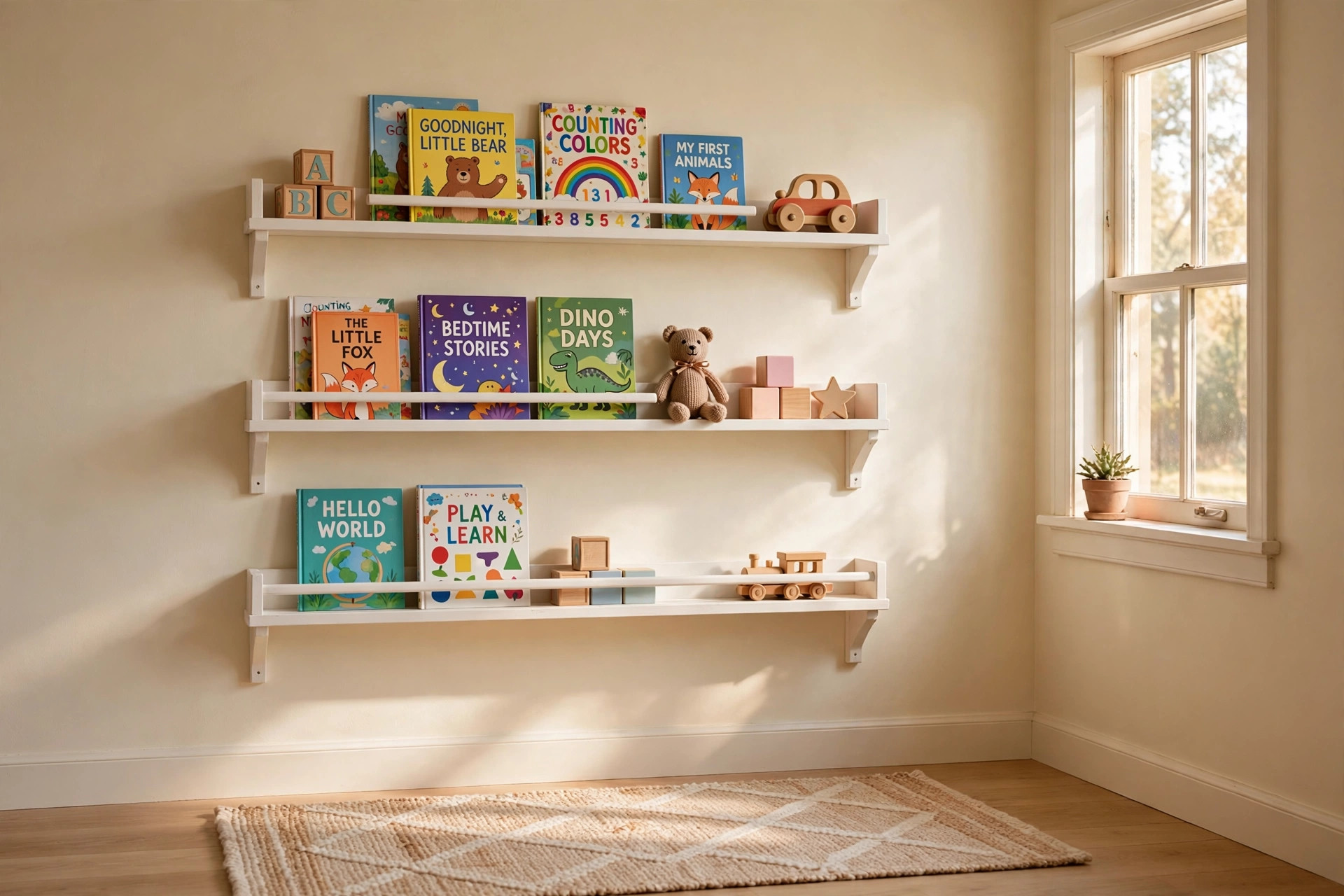

Children’s books pile up fast. Toys follow close behind. Parents face the same daily sight: books stacked on the floor, toys spread across every rug, and no clear place for any of it. Kids wall shelves for books and toys display solve this problem in a simple and pleasant way. They lift clutter off the floor, put favorite things within a child’s reach, and turn a plain wall into a small library that feels like the child’s own.
Why Wall Shelves Matter in a Child’s Room
A child’s room works best when the child can find things and put them back. Low bins and boxes help, but they hide books under toys and toys under books. A shelf that faces the book covers outward changes the habit. A child sees the bright cover, pulls the book down, and reads it. After reading, the book goes back where it belongs. This is the heart of kids wall shelves for books and toys display: they show, they do not hide.
Many teachers and librarians have noted the same point for years. Children read more when books are visible. A row of picture books with covers facing out works like a small bookstore on the wall. It invites the child to browse. A toy on a shelf gets played with more than a toy buried in a box. The shelf gives each item a home, and the child learns to return each item to its place.
Wall shelves also save floor space. A nursery or child’s bedroom is often small. A bookcase takes up nearly a square yard of floor. Wall shelves take up none. In a room shared by two children, or in a small apartment bedroom, that saved space matters. The nursery closet organizer for baby clothes helps with storage inside the closet, but shelves handle the everyday items the child reaches for many times a day.
There is also a safety angle. Piles on the floor cause trips and falls. Books underfoot are a common cause of night-time tumbles. Shelves clear the floor and reduce that risk. Mounted shelves, when fixed to the wall in a proper way, do not tip the way a tall bookcase can. This is one reason so many parents prefer them for rooms where toddlers play.
What to Look for Before You Buy: Kids Wall Shelves for Books and Toys Display
Not every shelf suits a child’s room. Adult shelves are made for looks and heavy loads. Kids wall shelves for books and toys display need different qualities. Start with size. Most children’s picture books are about eight to ten inches tall. A shelf with a lip or rail works best because the books rest upright with covers facing out. A standard flat shelf lets books slide off the front. Look for shelves with a front ledge at least one inch high.
Next comes the depth. Picture books need only three to four inches of depth. Chapter books and toy sets need five to six inches. Deeper shelves hold more, but they stick out farther from the wall and can bump small heads in tight rooms. A depth of four inches is a safe middle ground for most rooms.
Material matters a great deal. Solid wood and thick plywood are strong and last for years. Pressed wood or thin fiberboard bends under a full row of books. A shelf that bows in the middle is a sign of weak material. Metal shelves are sturdy but often sharp at the edges. For a child’s room, rounded or sanded edges are worth seeking out. Many parents check Consumer Reports ratings for children’s furniture safety before buying.
Finish is another point. Painted shelves in white, gray, or pastel colors fit most room styles and hide wear. A clear seal on painted or bare wood stops spills from soaking in. Some paints give off strong fumes when new. Look for shelves labeled low-VOC or non-toxic. A nursery shelf should meet the same care standards as any baby furniture.
Weight rating is often printed on the box or listed online. A single shelf should hold at least twenty pounds. Books are heavy. Ten picture books can weigh eight pounds. A shelf that holds only five pounds will fail in weeks.
Types and Options
Front-Facing Book Ledges
The front-facing ledge is the most popular choice. It is a narrow board with a lip. Books sit with their covers showing. Children as young as eighteen months can pull a book from a low ledge and slide it back. Two or three ledges on one wall hold thirty to fifty books. These ledges are easy to mount and fit nearly any room style.
Box Shelves and Cubes
Box shelves are open cubes or rectangles hung on the wall. They hold books stacked sideways, small toys, and stuffed animals. They look neat and give the wall depth. The best boxes for children are shallow, so items do not vanish into the back. Parents like box shelves for displaying a few prized toys next to the books.
Floating Shelves
Floating shelves mount with hidden brackets. They give a clean, modern look with no visible hardware. They hold heavier loads than they seem to, often thirty pounds or more when fixed into wall studs. They need more care in mounting. A floating shelf fixed only into drywall can pull free under a child’s full weight if a child climbs it.
Corner Shelves
Corners often sit empty in a child’s room. A corner shelf turns that dead space into storage. Triangle or L-shaped corner shelves hold books and toys where two walls meet. They work well in very small rooms where every inch counts.
Themed and Shaped Shelves
Some shelves come shaped like clouds, houses, or animals. These double as decoration. They suit a room with a clear theme. Keep in mind that a shaped shelf your child loves at age four may feel babyish at age eight. Plain shapes last longer through changing tastes.
Cost and Price
Prices vary with size, material, and brand. A simple two-pack of wooden book ledges costs between fifteen and thirty dollars. A set of three box shelves runs twenty-five to fifty dollars. Larger sets with many pieces can reach eighty to one hundred dollars. Solid wood shelves cost more than pressed wood, often twice as much for the same size.
Installation adds cost if you hire help. A handyman typically charges forty to seventy dollars to mount a full set of shelves in one room. Many parents do the job themselves in under an hour with basic tools.
Where to shop matters for price and choice. Big home stores carry wide ranges at fair prices. Parents often compare options at IKEA and Wayfair before they decide. Children’s specialty shops like Pottery Barn Kids carry shelves made for nurseries with child-safe finishes, usually at higher prices. Used shelves from resale shops or yard sales can work, but check them for lead paint if they are old and for strong joints before you hang them.
A fair budget for one wall of shelves, shelf plus mounting hardware, is fifty to one hundred twenty dollars. That buys solid shelves that will last through the childhood years.
Installation and Mounting Safety
Good shelves become unsafe shelves when they are mounted poorly. This section deserves care. Every shelf must be fixed to the wall in a way that holds the weight of books plus the pull of a curious child.
The best anchor is a wall stud. Studs are the wood beams behind the drywall, set sixteen inches apart in most American homes. A screw driven into a stud holds firm. Find studs with a stud finder or by tapping the wall and listening for a solid sound. Mark each stud with pencil before you start.
When no stud lines up with the shelf holes, use the right wall anchor for drywall. Plastic plugs are weak and pull out under load. Toggle bolts or metal anchors made for drywall hold far more weight. Follow the package rating and do not guess. The Consumer Product Safety Commission publishes guidance on anchoring furniture and shelves in homes with children, and it is worth reading before any mounting project.
Mount shelves at the child’s eye level for the lowest row. A toddler reaches about thirty inches. A four-year-old reaches about forty inches. Place the first shelf where the child can see and touch the books. Higher shelves are for items the parent wants to keep out of small hands.
Check the work when done. Pull each shelf firmly with both hands. It should not move at all. If it shifts, take it down and remount it with better anchors. Recheck shelves every few months. Children bump shelves, climb near them, and hang from them. Tighten any loose screws at once.
Teach the rule that shelves are not for climbing. Children will still try. Mount shelves so that a climbing child is less likely to be hurt: keep them away from beds, cribs, and anything a child can stand on to reach higher.
Care and Upkeep
Kids wall shelves for books and toys display need little care, but regular checks keep them safe and neat. Wipe shelves once a month with a damp cloth. Dust builds up behind books and can bother children with allergies. A mild soap solution handles sticky spots from little hands.
Inspect the mounting twice a year. Look for screws backing out, anchors loosening, or the shelf pulling away from the wall. Look for cracks in the wood or a shelf that bows downward in the middle. A bowed shelf is overloaded and should be replaced.
Rotate the books and toys on the shelves now and then. Children tire of the same covers. Moving fresh books to the front row renews interest without buying anything new. Seasonal rotation, holiday books in winter, nature books in spring, keeps the display fresh.
As the child grows, raise the shelves or add new rows. The same shelf that held picture books at age three can hold chapter books at age seven. Good wooden shelves serve for a decade or more with this kind of adjustment.
Styling the Shelves
A shelf that holds clutter still looks like clutter. A shelf that is styled with care looks like a gift to the child. Mix books with small toys, a framed photo, and one soft toy. Leave breathing room. A shelf packed tight looks messy and falls apart when the child pulls one book.
Color helps. Group books by cover color or by size. It need not be exact. A loose order looks calm and tidy. For the wall around the shelves, many parents add kids bedroom wall decals removable for renters above the shelves. The decals peel off without damage when the family moves.
Some families build a small reading nook under the shelves: a cushion, a small lamp, and the book ledges right above. The child sits, reaches up, takes a book, and reads. It is a simple setup that gets daily use for years.
Frequently Asked Questions
How high should kids wall shelves be mounted? Mount the lowest shelf at the child’s eye level. For a toddler, that is about thirty inches from the floor. For a school-age child, about forty inches. Each higher row can sit ten to twelve inches above the last.
Can wall shelves replace a bookcase in a child’s room? For most families, yes. Three rows of front-facing ledges hold as many picture books as a small bookcase. Shelves save floor space and cannot tip over. A bookcase still works better for heavy reference books or a very large collection.
Are wall shelves safe for toddlers? Yes, when mounted into studs or with strong drywall anchors and checked often. The greater risk comes from falling shelves and from heavy items placed high. Keep heavy items low, mount well, and inspect on a schedule. The American Academy of Pediatrics parenting site offers room-safety guidance that covers anchored furniture.
How much weight can a kids wall shelf hold? Most good shelves hold twenty to thirty pounds per shelf. That covers a full row of picture books. Always read the rating for your model and stay under it. Books are heavier than they look.
What is the best material for children’s wall shelves? Solid wood or thick plywood with a non-toxic finish. These hold weight without bowing and take years of daily use. Avoid thin fiberboard. Rounded or eased edges are safer than sharp square edges for small heads.
Do I need to paint shelves myself? No. Many shelves come painted in white, gray, or wood tones. If you do paint, use a low-VOC paint made safe for indoor use, and let it cure fully before the child touches it. For ideas on finishes and room styles, The Spruce and What to Expect both carry decorating guides for children’s rooms.
A Short Final Word
Kids wall shelves for books and toys display do a quiet but real job. They bring order to a child’s room, put reading within reach, and teach the habit of returning things to their place. The cost is modest. The work of mounting them takes an afternoon. The result serves the child for years.
Start with one wall and three or four shelves. Mount them well into studs. Fill them with the books your child loves most. Watch what happens. In most homes, the shelves become the most-used spot in the room. For a complete storage plan, pair the shelves with a kids bookshelf with bins for toy storage on the floor below, and the room will stay tidy with far less effort. Guides at Lowe’s and Family Handyman show mounting steps in detail, and Bob Vila covers shelf materials and finishes. The wall is there. Use it.
References
American Academy of Pediatrics. (n.d.). HealthyChildren.org. https://www.healthychildren.org Bob Vila. (n.d.). Home improvement advice. https://www.bobvila.com Consumer Reports. (n.d.). Product reviews and ratings. https://www.consumerreports.org Family Handyman. (n.d.). DIY home repair and maintenance. https://www.familyhandyman.com IKEA. (n.d.). Home furnishings. https://www.ikea.com Lowe’s. (n.d.). Home improvement products. https://www.lowes.com Pottery Barn Kids. (n.d.). Kids furniture and decor. https://www.potterybarnkids.com The Spruce. (n.d.). Home and garden advice. https://www.thespruce.com U.S. Consumer Product Safety Commission. (n.d.). Product safety information. https://www.cpsc.gov Wayfair. (n.d.). Furniture and home goods. https://www.wayfair.com What to Expect. (n.d.). Pregnancy and parenting guidance. https://www.whattoexpect.com
Was this guide helpful?

About David Wilson
The My Garden US editorial team writes practical, in-depth home and garden guides for American homeowners — tested advice, no fluff.
You May Also Like
Crib Bedding Bumper Free Safe Sleep Set: A Parent’s Guide
June 28, 2026 0 views
Best Bunk Bed With Stairs for Kids Room: A Parent’s Buying Guide
July 24, 2026 0 views
Crib Sheet Saver for Quick Diaper Changes: A Parent Guide
June 29, 2026 0 views