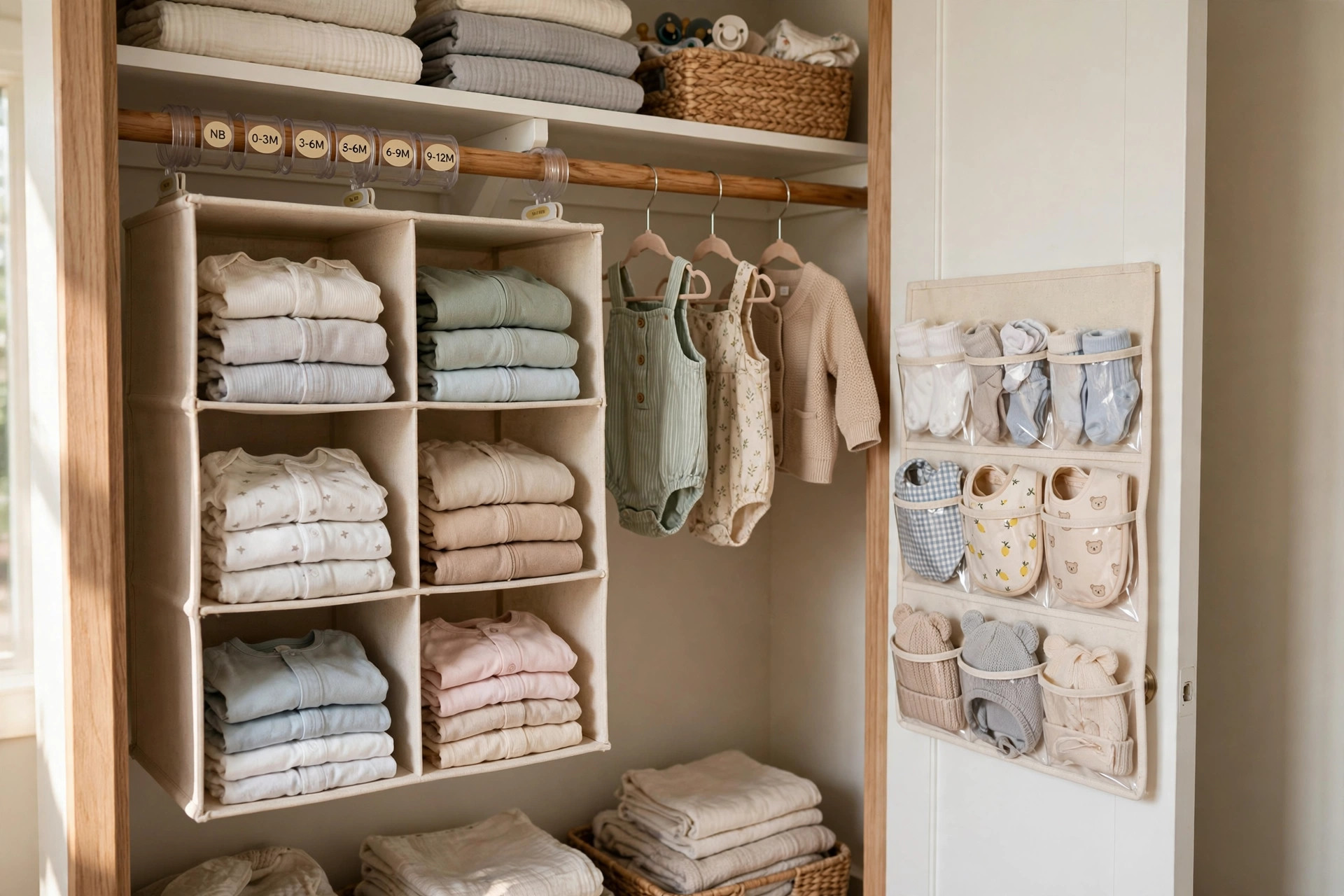

A nursery closet organizer for baby clothes is one of the simplest tools a new parent can buy. Babies own more clothes than most adults expect. Gifts arrive. Relatives send boxes. Sale racks tempt. Soon the closet is full, and nothing can be found. A nursery closet organizer for baby clothes solves this problem. It sorts tiny shirts, pants, onesies, and sleepers by size and type. It keeps the current size within reach and the next sizes waiting in order. When the baby wakes at three in the morning, the right outfit is right there.
Most parents learn this lesson fast. A pile of clothes looks fine at noon. At night, with a crying child, a pile is chaos. A good organizer ends the chaos. This guide explains why it matters, what to look for, and how to use one well.
Why a Nursery Closet Organizer for Baby Clothes Matters
Newborns grow fast. A baby can move through three sizes in three months. Clothes that fit today may be too small by next week. Without a system, parents waste time digging through drawers. They also lose track of what they own. They buy duplicates. They forget about the box of six-month clothes until the child has outgrown it.
A nursery closet organizer for baby clothes gives every item a place. Parents sort by size: newborn, zero to three months, three to six months, and so on. They sort by type: sleepers, day clothes, hats, socks. The closet becomes a map. A quick look shows what fits now and what comes next.
The organizer also saves the nursery from clutter. Small rooms fill up fast, especially when a nursery dresser changing table combo for small space already takes up wall room. A closet that holds more means fewer boxes on the floor. Fewer boxes mean a safer room for a crawling child.
Time is the third reason. Parents of newborns sleep in short shifts. Every minute counts. An organizer that puts the next outfit within arm’s reach is worth more than it costs. The design ideas at The Spruce show how a tidy closet cuts daily effort to minutes.
What to Look For When You Choose One: Nursery Closet Organizer for Baby Clothes
Not every organizer fits every closet. Measure first. Measure the width of the rod, the depth of the closet, and the height from floor to shelf. Write the numbers down. Most organizers hang from the rod or sit on shelves, so the numbers decide what will fit.
Types of Organizers
The most common type is the hanging shelf unit. It hangs from the closet rod. It has four to six fabric cubbies stacked in a row. Folded clothes go into the cubbies. This type suits parents who fold more than they hang.
The second type is the hanging divider set. Round or rectangular rings slide over the rod. Each ring holds a size label: newborn, three months, six months. Hangers go between the rings. This type suits parents who hang most clothes.
The third type is the door or wall unit. Pockets hang over the inside of the closet door. Small items go in the pockets: socks, hats, mittens, bibs. These items get lost in big cubbies, so pockets keep them visible.
The fourth type is the drawer insert set. Small fabric boxes or trays sit inside dresser drawers. They divide one big drawer into small zones. These pair well with a dresser, and guides from IKEA show how simple box dividers can double drawer space.
Many families mix two or three types. Hanging shelves hold folded clothes. Dividers sort hanging clothes by size. Door pockets hold small items. The mix costs more than one piece, but it covers everything.
Materials and Safety
Look for strong fabric that holds its shape. Canvas, reinforced polyester, and thick cotton blends work well. Avoid thin fabric that sags under weight. Baby clothes are light, but a full set of folded denim overalls is heavier than it looks.
Check all seams and straps. Straps that loop around the rod should be sewn tight. Snaps or hook-and-loop fasteners should close flat. Loose straps and long hanging cords are a risk near a crib. The U.S. Consumer Product Safety Commission warns against long cords and loose parts in nursery products, and closet items deserve the same care.
Washability matters too. Nursery closets sit near diaper stations. Smells drift. Spit-up lands on things. Choose fabric that can go in the washing machine. Read the tag before you buy. If the maker does not list wash steps, pick another maker.
Size Labels and Visibility
A nursery closet organizer for baby clothes works best when sizes are easy to see. Some units print size ranges on each cubby. Others come with blank tags that parents write on. Blank tags win, because brands size clothes differently. A “three month” onesie from one brand fits like a “six month” from another.
Clear or mesh fronts help. A parent can see inside each cubby without pulling clothes out. Open cubbies work too, as long as the stack is not too deep. Keep each stack to four or five items. Deeper stacks tip over and hide the bottom items.
How to Set Up Your Nursery Closet Organizer for Baby Clothes
Start with an empty closet. Take everything out. This sounds slow, but it is faster than sorting around the clutter. Lay the clothes on the bed in piles by size. Make one pile for each size range. Add a pile for items with no size tag.
Check each item before it goes back. Hold it up. Does it look like the right size for the label? Feel the fabric. Stained or worn items go to the rag pile. Missing-snap sleepers go to the repair pile. Only clean, working clothes earn a place in the organizer.
Now load the organizer. Put the current size at eye level. Put the next size one step up or down. Put sizes far in the future on the top shelf. Put outgrown clothes in a labeled box at the bottom or in another room. Many parents keep one box per outgrown size and store the boxes in a hallway closet.
Within each size, sort by type. Keep sleepers together. Keep day outfits together. Keep layers, like sweaters and jackets, together. This small extra step pays off when the weather changes and the parent needs a warm layer fast.
Small items need their own system. Socks vanish. Hats roll away. Mittens hide. Door pockets or small bins solve this. Label each pocket: socks, hats, bibs, headbands. Restock weekly. A two-minute weekly check keeps the system alive.
For rooms with very little floor space, pair the closet system with smart furniture. A best convertible crib for small nursery room frees wall space, and a kids bookshelf with bins for toy storage keeps toys out of the closet entirely. Each item in the room then has one job, and the closet can stay a closet.
Cost and Price: What You Should Expect to Pay
A nursery closet organizer for baby clothes costs less than most nursery furniture. Simple hanging shelf units sell for about fifteen to thirty dollars. Divider ring sets sell for about eight to fifteen dollars. Over-the-door pocket units sell for about twelve to twenty-five dollars. Drawer insert sets sell for about ten to twenty dollars.
A full mix, with one of each type, often lands between forty and eighty dollars. This is still far less than a new dresser. The budget options at Wayfair show how far a modest sum can go.
Price rises with extras. Units with wooden frames cost more. Custom closet systems with built-in shelves cost far more, often several hundred dollars. Most parents do not need these. A simple fabric unit does the job for the first two years, which is when the need is greatest.
Buy once if you can. The cheapest thin units tear within months. A mid-price unit from a known maker lasts through more than one child. Read reviews from other parents before you order. Look for reviews that mention washing, because a unit that survives the washer survives real life.
Care and Upkeep Through the First Years
A nursery closet organizer for baby clothes needs small, steady care. Without it, the system drifts. Clothes pile. Sizes mix. The fix is a short monthly routine.
Once a month, pull out the current-size cubby. Check each item against the child. Babies grow in bursts. An outfit that fit last week may pinch this week. Move outgrown items to the outgrown box at once. Do not let them sit. They take space and confuse the count.
Wash the organizer every two or three months, or sooner if it smells. Follow the maker’s tag. Most fabric units take a gentle machine cycle and air drying. Dry it fully before reloading. Damp fabric in a dark closet grows mildew.
Rotate seasonal items twice a year. In spring, move heavy winter layers to the top shelf. In fall, bring them down. This keeps the eye-level space for what the child wears now. The parenting guide at What to Expect reminds parents that seasonal swaps also reveal what sizes are missing before cold weather hits.
Check straps and hooks each season. Weight and time loosen them. Tighten or replace what is worn. A shelf that drops in the night makes noise and wakes the baby. A quick check prevents it.
When the child outgrows the nursery phase, the organizer can move on. Hanging shelves work in a toddler closet. Door pockets work on a pantry door. Drawer inserts work in any dresser. The health and safety basics from HealthyChildren.org still apply: keep small parts and cords away from young children wherever the unit goes.
Safety Notes Every Parent Should Know
The nursery is the one room where safety rules are strictest. A nursery closet organizer for baby clothes is not a toy, but it sits in the child’s room, so treat it with care.
Anchor tall or heavy units. If the organizer stands on the floor or hangs heavy with clothes, make sure it cannot tip. Use wall anchors where the maker suggests them. The nursery collections at Pottery Barn Kids pair storage with anchoring hardware for this reason.
Keep the organizer away from the crib. Clothes, straps, and fabric units should not hang over or near the sleep space. Leave clear space around the crib on all sides.
Watch for small parts. Size tags, label clips, and decorative buttons can come loose. A crawling baby finds everything. Choose units with sewn-in labels over clip-on ones where you can.
Check weight limits. Hanging shelf units list a maximum load. Do not stack adult clothes or heavy blankets in them. Overloading stretches the fabric and strains the rod. It can also pull the whole unit down.
Ventilation counts too. Closets trap air. Do not pack the organizer so tight that air cannot move. Leave small gaps. Wash stored clothes before a new season starts, because dust settles in closed closets over months.
Frequently Asked Questions
How many nursery closet organizers for baby clothes do I need?
One main unit covers most families. A hanging shelf unit with five or six cubbies holds the current size and the next size. Add divider rings if you hang many clothes, and door pockets for small items. More than that is rarely needed before the toddler years.
What size organizer fits a standard closet?
Most American closets have a rod about forty-eight to seventy-two inches wide. A hanging shelf unit is usually twelve inches wide and fits anywhere along the rod. Measure your rod and shelf depth before you order, and leave room for hanging clothes beside the unit.
Should I hang baby clothes or fold them?
Fold most of them. Baby clothes are small and light, and folding fits more into a cubby. Hang special outfits, jackets, and anything that wrinkles badly. Use divider rings on the rod so hanging clothes stay sorted by size.
How do I handle clothes with no size tag?
Hold the item against a tagged item of known size. Match by length and width, not by guess. Hand-me-downs often lose tags. When in doubt, put the item in the smaller size pile. A slightly small outfit is noticed at once; a lost outfit is not.
Can I use a nursery closet organizer for baby clothes in a shared closet?
Yes. Give the baby one section of the rod and one set of shelves. Use the dividers and labels to mark the baby’s zone clearly. Keep adult items on the other side. A shared closet works fine as long as each person’s space has a clear edge.
When should I move to the next size up?
Move up when the current size looks snug at the neck, arms, or legs, or when snaps strain. Do not wait until clothes leave marks. Keep the next size ready in the organizer so the switch takes minutes. Many parents move sleepers up first, since tight sleepers disturb sleep.
A Short Final Word
A nursery closet organizer for baby clothes is a small buy with a large effect. It turns a crowded closet into a clear system. It saves time at night and money in stores. It grows with the child and moves on to new jobs when the nursery years pass. Choose strong fabric, sort by size, and keep up a short monthly routine. The closet will stay calm, and calm closets make for calmer parents. For more storage ideas, the guides at Apartment Therapy and the repair know-how at Family Handyman are solid places to keep learning.
References
American Academy of Pediatrics. (n.d.). HealthyChildren.org. https://www.healthychildren.org Apartment Therapy. (n.d.). Home design ideas and inspiration. https://www.apartmenttherapy.com Family Handyman. (n.d.). DIY home repair and maintenance. https://www.familyhandyman.com IKEA. (n.d.). Home furnishings. https://www.ikea.com Pottery Barn Kids. (n.d.). Kids furniture and decor. https://www.potterybarnkids.com The Spruce. (n.d.). Home and garden advice. https://www.thespruce.com U.S. Consumer Product Safety Commission. (n.d.). Product safety information. https://www.cpsc.gov Wayfair. (n.d.). Furniture and home goods. https://www.wayfair.com What to Expect. (n.d.). Pregnancy and parenting guidance. https://www.whattoexpect.com
Was this guide helpful?

About Lisa Anderson
The My Garden US editorial team writes practical, in-depth home and garden guides for American homeowners — tested advice, no fluff.
You May Also Like

The Best Nursery Glider for C Section Recovery
June 24, 2026 0 views
Best Kids Bunk Bed for Low Ceilings
September 6, 2026 0 views
The Best Kids Bed With Storage Drawers Underneath: A Simple Buying Guide
July 30, 2026 0 views