
Introduction
The search for the right living room ottomans florida homes usa shoppers need begins with one honest question. What will the piece do every day? In Florida homes, an ottoman works harder than most furniture. It holds tired feet after a long day. It serves as extra seating when guests arrive. It can hide blankets, games, or remotes inside. Florida living rooms run warm, bright, and open, so the right ottoman must stand up to sun, heat, and daily use. This guide walks through every choice in plain terms, from size and fabric to price and care, so you can pick a piece that suits your home and your life.
Why Ottomans Matter in Florida Homes: Living Room Ottomans Florida Homes Usa
Florida homes face conditions that many other homes do not. The sun stays strong through much of the year. Humidity lingers in the air. Homes often open onto patios, lanais, and pool areas, so indoor furniture sees more foot traffic and more dust than usual. Living rooms in Florida tend to be bright, with tile or light wood floors and large windows. In such rooms, an ottoman does more than fill a corner. It adds a soft shape where hard surfaces rule. It gives the room a place to rest the eye and the foot.
A Small Piece With Many Jobs
An ottoman earns its place in several ways. It serves as a footrest in front of a sofa or chair. It becomes an extra seat when the family gathers. A storage ottoman hides clutter in one quick motion. Some models open into trays that hold coffee cups or books. In Florida, where homes often host visitors during the winter season, this extra seating turns a tight room into a welcoming one. One well-chosen ottoman can replace two or three smaller pieces of furniture.
How to Choose the Right Ottoman
Choosing sounds simple, but a few clear rules make the task easier. Work through them one at a time, and you will narrow the field fast.
Size and Scale
Start with the room. Measure the space where the ottoman will sit. A small ottoman, about 18 to 24 inches wide, suits a reading corner or the foot of a single chair. A medium ottoman, 28 to 36 inches wide, works well in front of a standard three-seat sofa. Large ottomans, 40 inches and wider, can stand in for a coffee table in the center of a seating group. Leave at least 18 inches of walking space around the piece. A crowded room feels smaller, no matter how fine the furniture. Height matters too. The top of the ottoman should sit near the seat height of the sofa or chair it serves, usually 16 to 19 inches from the floor. When feet rest on it, knees should bend at a soft, easy angle.
Fabric and Material
Florida heat makes fabric choice important. Look for materials that breathe. Linen and cotton slipcovers allow air to move and feel cool to the touch. Outdoor-rated fabrics, such as solution-dyed acrylic, resist sun fade and stand up to humidity. Leather looks rich and cleans with a damp cloth, but it can feel warm and sticky in a Florida summer. Microfiber resists stains and costs less than many other options. If you own pets or small children, pick a fabric with a tight weave and a stain guard. Removable covers add great value. You can wash them, and you can swap colors with the season. For homes near the coast, check that the frame uses kiln-dried hardwood or metal. Cheap frames can warp in damp air.
Color and Style
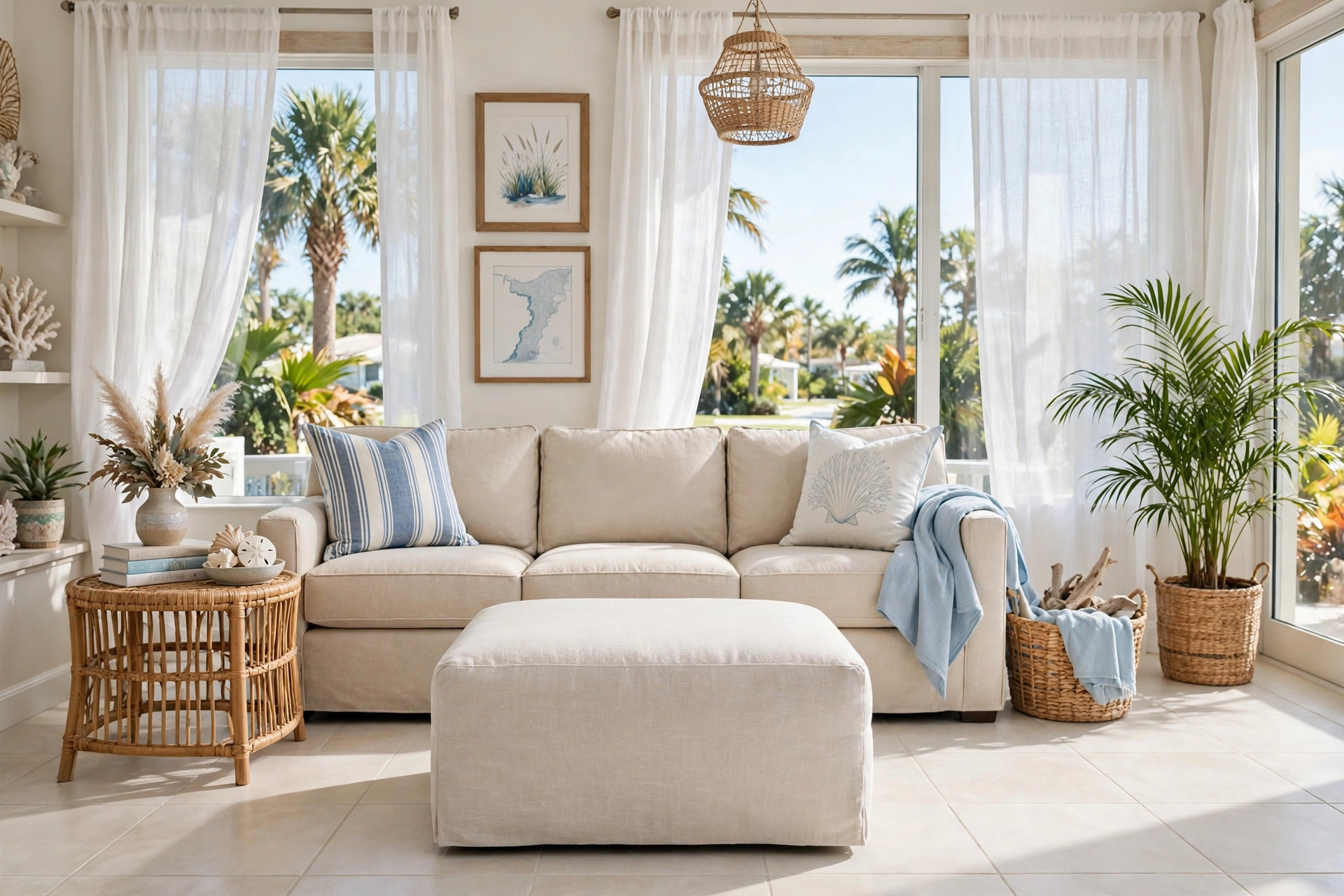
Light colors suit Florida rooms. White, sand, soft gray, and pale blue reflect the bright local mood and hide dust better than dark tones. Patterns can add life. A small stripe or a coastal print keeps the room light while giving the eye something to enjoy. Match the ottoman to the mood of the room. A clean-lined cube fits a modern space. A tufted round ottoman suits a classic or coastal room. A bench-style ottoman pairs well with long sofas. If your sofa already carries a strong pattern, choose a solid ottoman to balance it. If the sofa is plain, the ottoman can carry the pattern.
Function First
Decide the main job before you shop. A footrest needs a soft, firm top at the right height. Extra seating needs a strong frame that holds adult weight. Storage needs a hollow core with a lid that opens and closes with ease. A tray top turns the ottoman into a small table. Some ottomans roll on casters, which helps on tile floors. Others sit on short wooden legs that lift the piece off the floor and make cleaning under it simple. Write down the one job that matters most. Then shop to that need.
Types of Living Room Ottomans
Ottomans come in several main forms. Each suits a different home.
Cube Ottomans
Cubes are small, square, and plain. They tuck under a console table or line up against a wall. Two or three cubes can move around the room as needed. Many cubes open for storage. They suit small Florida condos and apartments where floor space runs short.
Round and Drum Ottomans
Round ottomans soften a room full of straight lines. A drum shape, tall and narrow, works as a side table or a single footstool. These shapes suit rooms with curved sofas or soft coastal styling. They also work well in pairs, one on each side of a chair.
Bench Ottomans
A bench ottoman is long and low. It sits well in front of a sofa, at the foot of a daybed, or under a window. Many bench ottomans open for storage, which makes them strong picks for Florida family rooms. Kids stash toys inside. Adults keep throw blankets close for cool winter evenings.
Storage Ottomans
Storage ottomans hide the everyday mess of life. Blankets, remotes, magazines, and game controls vanish inside with one motion. The lid often flips to reveal a tray on the underside. This two-in-one design saves both space and money. For Florida homes that entertain often, storage ottomans keep the living room neat between guests.
Tray-Top and Table Ottomans
Some ottomans wear a firm wooden or woven tray on top. They serve coffee, books, or a board game, then flip back to a soft seat. These pieces replace a coffee table in tight rooms. They also keep sharp table corners out of the path of small children.
Cost and Price
Prices for living room ottomans vary by size, material, and brand. Small cubes in plain fabric often cost between 40 and 120 dollars. Mid-size ottomans with storage run from 120 to 350 dollars. Large bench ottomans in leather or fine fabric can reach 400 to 800 dollars. Custom pieces cost more still. Watch for sales at major home stores, which often cut prices on seasonal furniture lines in spring and fall. Online shops run clearances through the year, and customer reviews can help you judge quality before you buy. Set a budget before you shop, and hold to it. A well-made mid-price ottoman often outlasts a cheap one by many years, so value matters more than the lowest price.
What Drives the Price Up
Several factors raise the cost. Solid hardwood frames cost more than particle board. Natural leather costs more than fabric. Hand-tufted tops cost more than plain ones. Brand names carry a premium. Imported or custom pieces add shipping and wait time. None of these are bad. They are simply facts to weigh against your budget.
Care and Upkeep in Warm Climates
Florida air asks a bit more from furniture. Heat, sun, and moisture work on fabric and frames over time. A small routine keeps an ottoman looking fine for years.
Cleaning
Vacuum the ottoman each week with a soft brush attachment. This lifts dust, sand, and pet hair before they settle into the weave. Blot spills at once with a clean cloth. Rubbing pushes stains deeper. Use a mild soap and water mix for most fabrics, and test it on a hidden spot first. For leather, wipe with a damp cloth and treat with leather conditioner twice a year. Removable covers go through the wash on a gentle cycle. Read the tag before you wash. Some covers shrink or lose color in hot water.
Sun and Moisture Protection
Move the ottoman out of direct sun when you can. Strong Florida sun fades fabric and dries leather. If the ottoman sits near a window, a sheer curtain cuts the harsh light. In humid months, good air flow helps. Run the ceiling fan or open a window for part of the day. If the frame is wood, check the legs once a year for soft spots or warping. Metal legs need a quick check for rust near the coast. A felt pad under each leg guards tile floors from scratches.
Safety Notes
Safety rarely makes the headlines for ottomans, but a few points deserve care. Storage ottomans with heavy lids can pinch fingers. Look for soft-close hinges or a lid light enough for children to lift. Keep the ottoman clear of walking paths at night to avoid trips. If the piece rolls on casters, lock the wheels when it serves as a seat. Round ottomans on slick tile can slide. A rug or non-slip pad under the piece solves the problem. For homes with small children, skip glass trays on top. Wood or woven trays do the job with less risk. Also think about pairs: an area rug and an ottoman can work together to anchor a seating group and keep the piece from drifting across smooth floors.
Styling Ideas for Florida Living Rooms
A few styling habits make the most of your ottoman. Pair it with a mid-century chair and a floor lamp to build a reading corner. Set a velvet sofa opposite and use a large ottoman as a shared coffee table with a tray on top. Layer a throw blanket over one corner for texture. In a coastal room, a white slipcovered ottoman with rope trim fits the mood at once. In a modern room, a low leather cube adds contrast to light fabric sofas. Change the look with the seasons. Light covers for summer, warm tones for the short winter, keep the room fresh with little cost. Look through design galleries and home tours for fresh ideas, and check decorating guides for color pairings that suit bright rooms. Many shoppers also browse curated furniture shops and modern design stores for ottoman styles that match Florida’s bright, open look.
Frequently Asked Questions
What size ottoman fits a standard sofa?
A standard three-seat sofa runs 78 to 84 inches wide. A medium ottoman, 30 to 36 inches wide, fits well in front of it. Leave 18 inches of walk space around the piece. For sectionals, a large ottoman or two cubes work better than one small piece.
Can an ottoman replace a coffee table?
Yes, in many rooms. Choose a large, flat-topped ottoman and add a firm tray. The tray holds drinks and books steady. The soft edge is safer for homes with children. Storage ottomans add a hidden bonus: clutter vanishes inside.
Which fabric lasts longest in Florida heat?
Solution-dyed acrylic and performance fabrics last longest. They resist sun fade, moisture, and stains. Linen and cotton feel cool but fade faster in strong sun. Leather lasts well with care but needs conditioning to fight dryness. Removable covers extend the life of any fabric choice.
How much should I spend on a good ottoman?
Most buyers do well between 120 and 350 dollars. This range buys a solid frame, decent fabric, and often storage. Under 80 dollars, expect lighter frames and shorter life. Over 500 dollars, you pay for premium materials or designer names.
Do storage ottomans hold adult weight for seating?
Many do, but check the rating. Quality storage ottomans list a weight limit, often 200 to 300 pounds. Look for a hardwood frame and a firm lid. Cheap models with thin lids may sag or crack under daily use as a seat.
How do I keep an ottoman from sliding on tile?
Florida tile floors are slick. Place the ottoman on a rug, or add non-slip furniture pads under the legs. Locking casters also help if the piece has wheels. A rug under the whole seating group anchors the ottoman and adds comfort underfoot.
A Final Word
The right living room ottomans for Florida homes are chosen with care, not haste. Measure first. Pick a fabric that breathes and resists the sun. Choose a size that serves the room. Spend what the piece is worth, and keep a simple cleaning routine. Do these things, and your ottoman will serve your home for many years. For more ideas on living room pieces, see our guides to luxury area rugs buying guide usa, mid century chairs deals near me, and velvet living sofas american homes guide.
References
Apartment Therapy. (n.d.). Home design ideas and inspiration. https://www.apartmenttherapy.com Article. (n.d.). Modern furniture. https://www.article.com CB2. (n.d.). Modern furniture and decor. https://www.cb2.com Crate and Barrel. (n.d.). Furniture and home decor. https://www.crateandbarrel.com HGTV. (n.d.). Home and garden ideas. https://www.hgtv.com Houzz. (n.d.). Home design and remodeling. https://www.houzz.com IKEA. (n.d.). Home furnishings. https://www.ikea.com The Spruce. (n.d.). Home and garden advice. https://www.thespruce.com Wayfair. (n.d.). Furniture and home goods. https://www.wayfair.com West Elm. (n.d.). Modern furniture and home decor. https://www.westelm.com
Was this guide helpful?

About Jennifer Lee
The My Garden US editorial team writes practical, in-depth home and garden guides for American homeowners — tested advice, no fluff.
You May Also Like

Velvet Living Sofas: A Practical Guide for American Homes
July 6, 2026 0 views
Leather Recliner Chairs Texas Homes USA: A Plain Buyer’s Guide
May 18, 2026 0 views
Couch Throw Pillows Texas Homes USA: A Practical Buying Guide
January 9, 2026 0 views