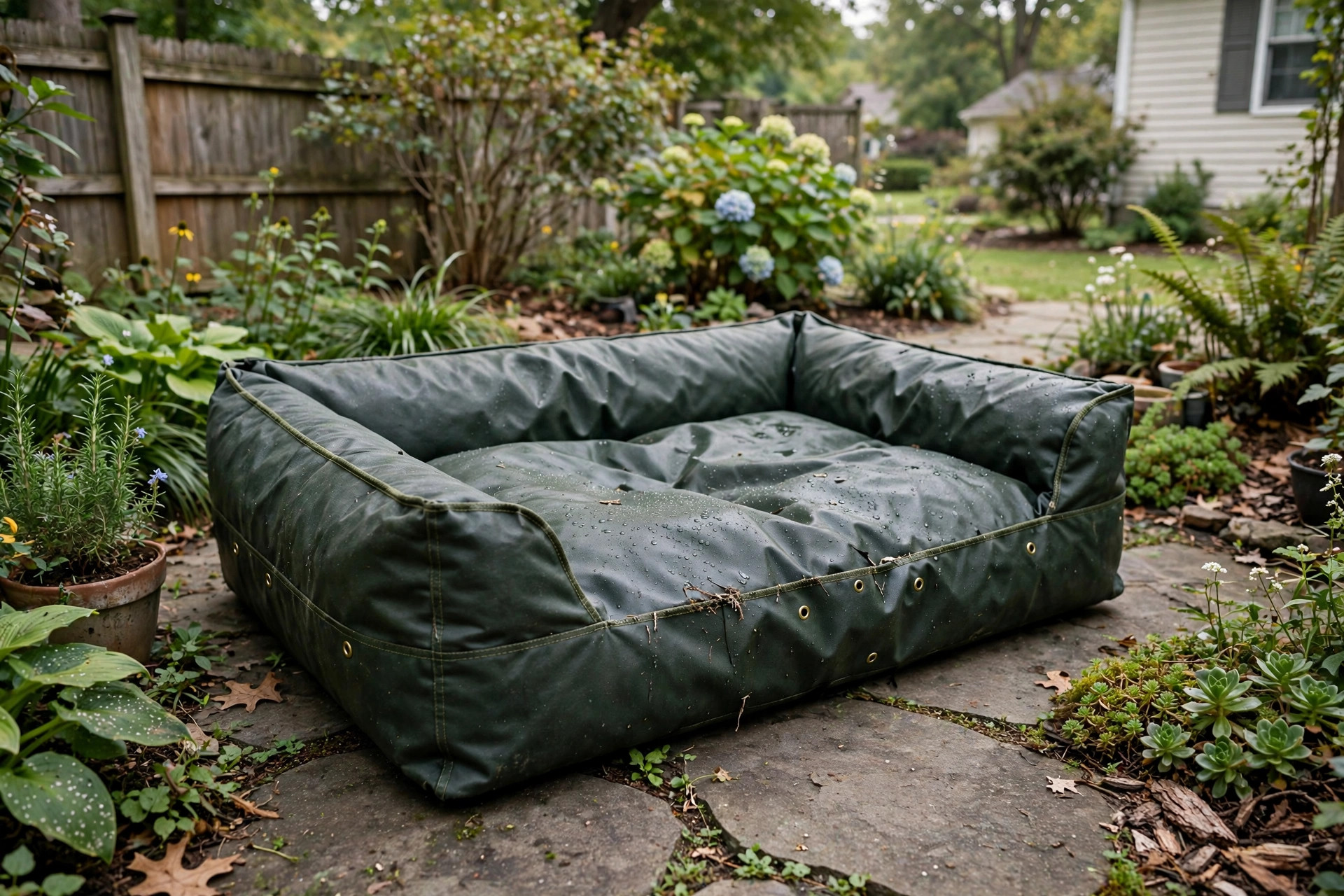

Many dogs love to rest on the patio. They like the fresh air. They like to watch the yard. A plain indoor bed will not last long in this setting. Rain, sun, and dust wear it down. That is why shoppers search for the best outdoor dog bed waterproof for patio life. This guide explains what makes a bed truly fit for the outdoors. It covers materials, types, prices, care, and safety. By the end you will know how to pick a bed that lasts.
Why a Waterproof Bed Matters Outdoors
A patio is a rough place for soft goods. Rain comes without warning. Sprinklers soak the floor. Morning dew settles on every surface. A standard fabric bed soaks up this water. It grows heavy. It starts to smell. Mold can take hold in the fill. The bed may never fully dry.
A waterproof outdoor bed solves these problems. The cover sheds rain. Water beads up and rolls off. The fill stays dry inside. The bed keeps its shape. Your dog has a clean, dry place to lie down in every season.
There are other gains. A waterproof cover is easier to clean. Mud wipes off. Pollen rinses away. The bed will not hold odors the way a cloth bed does. It also stands up to sun. Good outdoor beds use fabric that resists fading. The bed looks better for longer.
Outdoor rest is good for many dogs. Large breeds often overheat indoors in summer. A patio bed gives them a cool spot in the shade. Older dogs with stiff joints may also like a firm, dry surface outside. Pet health writers at PetMD note that a proper resting place helps dogs with joint pain sleep better.
How to Choose the Right Bed: Best Outdoor Dog Bed Waterproof for Patio
Buying the best outdoor dog bed waterproof for patio use takes some thought. Size, cover, fill, and build all count. Work through each point below.
Measure Your Dog
Measure your dog before you shop. Have the dog lie in a normal resting pose. Measure from nose to tail base. Add six to eight inches. This gives the right length for the sleeping surface. For round beds, measure the curl. For weight, know your dog’s true weight. Weight tells you how much support the bed must give. A bed made for a thirty pound dog will flatten under an eighty pound dog. Check the weight limit on the product page. The American Kennel Club offers measuring tips for crates and beds that work for outdoor beds too.
Cover Materials and Waterproof Ratings
The cover is the most important part. Look for real waterproofing. Words like “water resistant” and “waterproof” are not the same. Water resistant means light rain rolls off. Waterproof means the bed can sit in a storm and stay dry inside. Look for sealed or welded seams. Stitched seams leak unless they are taped.
Common cover fabrics include PVC coated nylon, heavy vinyl, and coated polyester. Canvas with a waterproof backing also works. Avoid thin nylon shells. They tear on concrete. Check the denier number if the maker gives one. Higher denier means thicker, tougher fabric.
Zippers matter. A waterproof cover often has a covered zipper flap. This keeps rain from working in through the teeth. Test reviews on Consumer Reports and The Spruce Pets often call out weak zippers. Read them before you buy.
Fill and Support
Fill decides comfort. Foam gives firm support. It suits large and older dogs. Memory foam molds to the body. It can hold heat, so it is better in shade. Fiberfill is light and cheap. It flattens fast under heavy dogs. Air filled pads are easy to move. They can puncture on rough patio stone.
For outdoor use, look for fill that does not hold water. Closed cell foam does not soak. Some beds use a mesh core that drains. These designs suit rainy areas. If your dog is a senior with sore joints, you may also look at our guide to heated beds for arthritic older dogs. That guide covers warm options for indoor and sheltered use.
Types of Waterproof Outdoor Dog Beds
Elevated Cot Beds
Elevated beds hold the dog off the ground on a tight fabric sling. A frame of steel or aluminum holds the corners. Air moves under the bed. The dog stays cool. Rain runs under the bed, not into it. These beds dry in minutes. They are light. You can fold most of them flat for storage.
Cot beds suit hot climates best. They also suit dogs that chew. There is no soft fill to rip out. The fabric is tough. One limit is comfort. Thin slings give little cushion. Some makers add a padded top layer. See our guide to elevated dog beds for outdoor patio use for more on this style.
Flat Pillow Beds
Pillow beds look like large flat cushions. They have a waterproof shell and a foam or fiber core. They lie right on the patio floor. They give more cushion than cots. Dogs that like to sprawl tend to love them. They are simple. There are no legs to break.
The weak point is drainage. A flat bed can sit in a puddle. The bottom may stay damp. Look for beds with mesh on the underside. Mesh lets water escape. Rotate the bed after rain. Stand it on edge to air out. Pillow beds work well under a covered porch or awning.
Bolster and Lounger Beds
Bolster beds add raised edges. Dogs that like to rest their chin on a ledge do well with them. Lounger beds are thick rectangles with no rails. Both styles come in waterproof outdoor versions. The raised edges of a bolster bed can trap rain. Choose one with drain holes in the bolster if you leave it in the open.
These beds often use thick foam. That makes them heavy to move. They are best for a fixed spot on the patio. Bring them under cover in a hard storm. Retailers like Chewy, Petco, Wayfair, The Home Depot, and Lowe’s all stock several of these styles.
Cost and Price
Prices run from low to high. Simple flat waterproof pads cost about twenty to forty dollars. Mid range foam beds cost forty to ninety dollars. Heavy duty elevated cots cost fifty to one hundred twenty dollars. Large sizes for giant breeds cost more.
Do not judge by price alone. A cheap bed with thin fabric may last one season. A well made bed can last three to five years. Look at fabric weight, seam work, and the warranty. Some makers offer a one year warranty against defects. That is a good sign.
Factor in replacement cost. If you buy a twenty five dollar bed every year, you spend more over time than on one eighty dollar bed that lasts four years. Read owner reviews for notes on long term wear. The ASPCA pet care pages remind owners to check pet products often for wear and damage.
Care and Upkeep
A waterproof bed is low care, not no care. Hose it down every few weeks. Use mild soap and a soft brush for stuck dirt. Rinse well. Let it dry in the sun. Sun kills odor and mildew. Do not use bleach. Bleach breaks down waterproof coatings.
Check the bed each month. Look for torn seams. Feel for flat spots in the fill. Tighten cot bed screws if the frame wobbles. Flip pillow beds so both sides wear even.
In winter, bring foam beds inside if you can. Deep cold can crack vinyl covers. If the bed must stay out, stand it against a wall under the eaves. A simple tarp over it on storm nights helps. In fall, shake leaves off often. Wet leaves stain covers.
Store spare covers in a dry box. If your bed has a removable cover, buy a second one. You can wash one while the dog uses the other. This extends the life of the bed.
Safety
Safety comes first with any pet product. Buy beds made for pets. Human pool floats and air mattresses are not dog beds. They can pop. They may hold chemicals that are not safe for chewing.
Watch for small parts. Buttons, tags, and loose piping can come off. A bored dog may chew them. Remove hang tags before first use. Check that the fill is listed as non toxic.
Heat is a real risk on patios. Dark covers get hot in full sun. Place the bed in shade. Touch the cover with your hand on a hot day. If it is too hot for your hand, it is too hot for your dog. Move it to a cooler spot.
Cold is a risk too. A waterproof shell can feel cold on a chilly night. Add a blanket in fall and spring. Bring the dog inside when the night turns harsh. No outdoor bed replaces a warm indoor spot in deep winter.
If your dog stays out for long hours, give fresh water and shade. A dog kennel with a roof pairs well with a patio bed for long outdoor days. See our guide to outdoor dog kennels for large breeds for shelter ideas.
Frequently Asked Questions
Will a waterproof bed make my dog too hot?
It can in full sun. Waterproof fabrics do not breathe as well as cotton. Place the bed in shade. Elevated cot beds run cooler than flat foam beds. On very hot days, bring the dog inside for the afternoon.
How do I clean a waterproof outdoor dog bed?
Hose it off first. Scrub with mild dish soap and a soft brush. Rinse until the water runs clear. Stand it on edge in the sun to dry. Most beds need a full dry before the dog uses them again.
Can the bed stay out all winter?
Light rain and cold air are fine for a true waterproof bed. Hard freeze, ice, and deep snow are not kind to covers or foam. Store the bed under cover or indoors from late fall to early spring if your winters are harsh.
What size should I buy for a large dog?
Measure the dog lying down and add six to eight inches to the length. For dogs over seventy five pounds, buy beds rated for one hundred pounds or more. When in doubt, size up. A bed that is too small goes unused.
Are elevated beds better than flat beds for patios?
Elevated beds drain and dry faster. They keep the dog cooler. Flat beds give more cushion and suit dogs that like to sprawl. Many owners keep one of each and let the dog choose.
How long will a good outdoor bed last?
A well made waterproof bed lasts three to five years with basic care. Cheap thin beds may last one season. Sun is the main cause of wear. Beds kept in shade last longer than beds in full sun.
A Final Word
The best outdoor dog bed waterproof for patio use is the one that fits your dog, your climate, and your patio. Measure first. Pick a true waterproof cover with strong seams. Match the fill to your dog’s weight and age. Keep the bed in shade. Hose it down now and then. Do these simple things and the bed will serve your dog well for years. A dry, clean resting place is a small gift that a dog uses every single day.
References
American Kennel Club. (n.d.). Dog care and training resources. https://www.akc.org ASPCA. (n.d.). Pet care and animal welfare resources. https://www.aspca.org Chewy. (n.d.). Pet supplies. https://www.chewy.com Consumer Reports. (n.d.). Product reviews and ratings. https://www.consumerreports.org Lowe’s. (n.d.). Home improvement products. https://www.lowes.com Petco. (n.d.). Pet supplies and services. https://www.petco.com PetMD. (n.d.). Pet health information. https://www.petmd.com The Home Depot. (n.d.). Home improvement products. https://www.homedepot.com The Spruce Pets. (n.d.). Pet care guides and product reviews. https://www.thesprucepets.com Wayfair. (n.d.). Furniture and home goods. https://www.wayfair.com
Was this guide helpful?

About Michael Thompson
The My Garden US editorial team writes practical, in-depth home and garden guides for American homeowners — tested advice, no fluff.
You May Also Like

Dog Raincoat for Large Breeds: A Waterproof USA Buying Guide
June 10, 2026 0 views
Best Pet Food Mat for Messy Eaters Floor
July 11, 2026 0 views
Cat Window Perch for Sunny Window Lounging
August 7, 2026 0 views