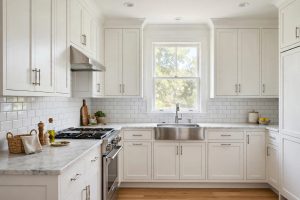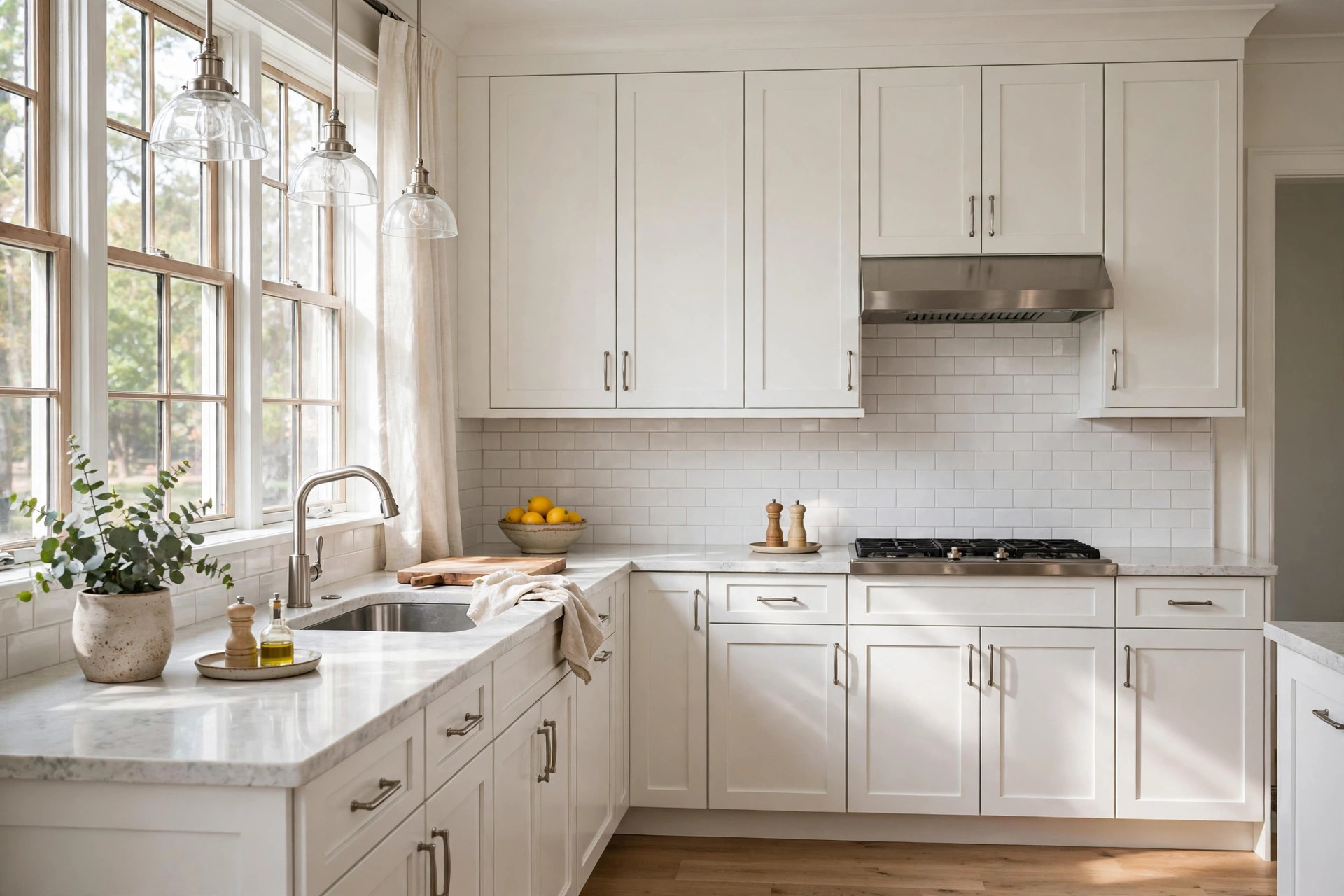
If you are reading a shaker cabinet doors buying guide usa shoppers trust, you are likely planning a kitchen update. Cabinet doors decide how the whole room looks. They are the first thing the eye meets. They also take the most daily wear. This guide walks through every choice you must make. It covers style, wood, build quality, sizing, price, fitting, care, and safety. Read it through before you order, and you will avoid the common mistakes that cost time and money.
Why Shaker Doors Suit So Many American Homes
Shaker style comes from the Shaker communities of the 1700s and 1800s. Their work valued honesty, simple lines, and fine craft. A shaker door has a flat center panel set inside a four piece frame. That is all. No carved fronts. No heavy moldings. The result looks calm and clean.
The style fits modern kitchens because it adds texture without noise. It fits farmhouse kitchens because it feels honest. It fits traditional kitchens because the proportions are old and proven. Painters love it because the frame takes paint well, and the flat panel shows wood grain to good effect under stain.
Another point in its favor is value. Shaker doors are among the most common door styles in the United States. High demand keeps prices fair. Stock is easy to find. Replacement parts are easy to get. If one door is hurt by water or heat years later, you can buy one more door in the same style without tearing out the whole kitchen.
What to Look for When You Shop: Shaker Cabinet Doors Buying Guide Usa
Construction of the door
A true shaker door is a five piece door. Four rails and stiles form the frame. One center panel sits inside it. The panel may be solid wood or veneered. Solid wood moves with heat and moisture. Veneered panels resist movement and often cost less.
Watch how the panel is joined to the frame. In good doors the panel floats in a groove. This lets it expand and contract. In cheap doors the panel may be glued or stapled. Those doors can crack at the joints when the seasons change.
Check the back of the door as well. A finished back means you can flip the door if one side is damaged. Some budget doors have a raw back that shows in open kitchens.
The frame and its joints
The corners of the frame tell you much about quality. A mitered joint, cut at 45 degrees, looks smooth but can open up in damp kitchens. A cope and stick joint, or a mortise and tenon joint, holds better over time. Run your finger across the joint. It should feel level. If you feel a step or a sharp edge, the work is rough.
Finish quality
Painted shaker doors should have a smooth, even coat. Look at the inside corners of the frame. Paint that is thick there or full of drips shows poor work. Factory finishes are baked on and last longer than field paint in most cases. For stained doors, the color should be even across panel and frame. The frame pieces are cut from different boards, so some shade change is normal. Large blotches are not.
Hardware fit
Ask whether the doors come pre drilled for hinges. The standard in the United States is the cup hole for concealed hinges, 35 millimeters wide. Doors without holes give you freedom but ask more skill. Doors with holes must match your hinge spacing. Measure your boxes before you order. A helpful overview of kitchen planning can be found in the kitchen remodeling guides at This Old House.
Types and Options
Solid wood
Maple, oak, cherry, and hickory are the common American choices. Maple paints best because its grain is tight and calm. Oak shows strong grain that looks rich under stain but can fight a smooth paint job. Cherry darkens with age to a deep red brown that many owners prize. Hickory is hard and rustic, with bold color swings between boards.
Solid wood costs the most. It also takes refinish best. If you plan to sand and restain in fifteen years, solid wood earns its price.
Medium density fiberboard
MDF doors are smooth, stable, and cheap. They take paint beautifully because there is no grain to fight. They are heavy. They can swell if water stands on them. For a painted kitchen on a budget, MDF is a sound pick. Keep it away from the sink base where leaks happen.
Veneer over plywood or particle board
These doors give the look of real wood at a lower price. The veneer is a thin skin of real wood over a stable core. Quality varies. Thick veneer can be touched up. Paper thin veneer cannot. Ask about the veneer thickness before you buy.
Painted versus stained
Painted shaker doors read fresh and clean. White, soft gray, and navy lead sales. Paint shows fewer sins of grain but will show chips at the edges over time. Stained doors show wood character and hide small marks better. A stained door in oak or cherry can look right in a home where painted doors would feel too new.
Panel detail
Most shaker doors are plain. Some add a small step or bead on the inside edge of the frame. This is called a shaker with a bead or a modified shaker. The bead adds shadow and interest. It also adds dust traps and a higher price. In a very modern room, stay plain. In a cottage or farmhouse room, the bead often helps.
Sizing and Measuring
Measure twice and order once. For each opening, measure width and height at two points. Use the smaller number. Subtract the reveal, the gap you want between doors. A common reveal is one eighth of an inch on each side.
Decide between full overlay, half overlay, and inset. Full overlay doors cover most of the cabinet face. This is the modern standard and the most forgiving to measure. Half overlay shares one frame post between two doors and is common in older kitchens. Inset doors sit inside the frame. They look fine but need exact work and cost more.
Note the hinge boring pattern. If your boxes already have hinges, buy doors bored to match. If you are starting fresh, choose your hinges first, then order doors bored to fit them. The Bob Vila home project guides explain hinge types in plain terms.
Matching existing boxes
Many buyers only replace doors and drawer fronts. This is called refacing. It works when the boxes are solid and level. Check that each box front is flat and plumb. A door cannot fix a crooked box, and swollen particle board boxes make refacing money wasted. Before you place a full order, buy one sample door: finish, color, and build quality are hard to judge from a screen. Hold it in your kitchen light, which differs from showroom light and shifts colors more than buyers expect.
Cost and Price
Prices for shaker cabinet doors in the United States run wide. Painted MDF doors from a large online seller may cost thirty to sixty dollars per door. Solid maple doors from a cabinet shop may cost ninety to two hundred dollars per door. Custom sizes, inset fitting, and premium stains push higher.
A full kitchen of twenty doors and ten drawer fronts often lands between one thousand and four thousand dollars for doors alone. Hinges, pulls, and paint add more.
Watch the shipping terms. Doors are heavy and long. Freight can add a real sum. Some sellers ship free above a set order value. Others charge per door. Factor this in before you compare prices. The kitchen departments at Home Depot and Lowe’s both list door options with local pickup, which can save freight cost.
Where price comes from
Wood species is the first driver: cherry and walnut cost more than maple and oak. Build quality is the second: cope and stick joints, thicker panels, and baked finishes cost more to make. Finish is the third: custom colors and hand glazing add labor. Do not chase the lowest price per door alone. A door that warps in two years is the most costly door of all. Consumer Reports tests home products for long term value, and its kitchen coverage can help you weigh brands.
Fitting and Installation
Most shaker doors hang on concealed European hinges. These hinges adjust in three directions. That adjustment is your friend. It lets you set even gaps after the doors are hung.
Start with the boxes. Clean the hinge plates and replace stripped screws. Hang the tall doors first, then the wall doors, then the base doors. Set the height first, then the side gaps, then the depth so all fronts sit in one plane.
Leave a small gap at the range and the dishwasher. Heat and steam move doors, and a tight fit today can bind next summer. Plan the whole kitchen as one system. If you are also updating cooking appliances, the appliance guides at Whirlpool help you match sizes before you order doors around them.
Painting your own doors
If you buy unfinished doors and paint them, prep matters most. Sand to 150 grit, prime with a bonding primer, sand lightly again, then apply two top coats of cabinet grade enamel with a fine roller or sprayer. Let each coat cure fully. Rushing the cure is the most common cause of a soft finish that marks in the first month.
Hiring the work
A good installer charges per door or per day. Get two or three quotes, and ask each one how they handle uneven boxes and what gap they aim for. A careful answer marks a careful worker. If your project includes new lighting over the island, our kitchen island hanging lights buying guide pairs well with this door guide.
Care and Upkeep
Shaker doors are easy to keep. Wipe them with a soft cloth and mild soap and water. Dry them after. Do not soak them. Water that sits in the frame joints will find a way in.
Avoid harsh cleaners, bleach, and scouring pads. They dull the finish. Wipe the doors by the cooktop each week, since a thin film of grease left for months turns sticky and traps dust.
Tighten hinge screws once a year. Doors sag a little with use. A quarter turn of the adjustment screw brings the gaps back. Touch up paint chips with a small artist brush. Small chips left open let moisture in and grow.
If you cook with gas, steam and heat are higher than with electric. Our gas kitchen ranges for sale guide covers what to expect from gas cooking, and the range makers at Bosch Home publish clearance advice worth reading before you finalize door placement near the cooktop.
Safety
Cabinet doors are heavy enough to hurt a child if one falls. Use all hinge screws. Use the right screw length for your box material. Particle board needs coarse thread screws made for it.
Keep cleaners out of low cabinets or fit child locks. Store sharp tools up high and lock away chemicals if toddlers visit.
Watch the heat zones. Do not put a foil wrapped door tight against a range or a toaster oven. Foil peels in high heat. Keep a few inches of clearance and use a heat shield if the layout is tight.
If your remodel touches wiring for new lights, plan the circuits early. The energy saving tips at Energy Star cover efficient kitchen lighting that pairs well with new cabinet fronts.
Frequently Asked Questions
Are shaker cabinet doors going out of style?
No sign of it. Shaker has held strong for decades because it is simple. Trends swing between plain and fancy, but shaker sits in the middle and suits both. A plain frame will not date your kitchen the way a heavy carving can.
What is the best wood for shaker cabinet doors?
For paint, hard maple is the top pick. Its tight grain paints smooth. For stain, cherry and white oak lead. Cherry deepens in color over time, white oak takes stain evenly, and hickory suits rustic rooms.
Can I mix shaker doors with other styles?
Yes, with care. A common mix is shaker doors on the bases and glass front doors on a few wall cabinets. Keep the frame width the same so the mix looks planned. The decor ideas at The Spruce show mixed kitchens that stay balanced.
How long do shaker cabinet doors last?
Well made solid wood doors last twenty to thirty years or more. MDF and thermofoil doors last ten to fifteen years in a busy kitchen. Hinges often wear before doors do. Good hinges can be replaced while the doors stay.
Should I buy doors online or from a local shop?
Both can work. Online sellers offer lower prices and wide choice. Local shops offer samples you can hold, true custom sizes, and help when a door arrives wrong. For inset doors or odd sizes, a local shop earns its keep. For standard overlay doors, online is often fine.
Do shaker doors work with quartz countertops?
They pair well. The clean frame lines of shaker doors sit calmly under the bold or quiet patterns of stone. If you are planning counters too, see our quartz countertop installation guide for what the stone work involves.
A Short Final Word
Shaker cabinet doors reward the careful buyer. Choose solid joinery. Pick a finish that fits your kitchen habits. Measure with care. Order a sample. Set the doors with patience. Do these things and the doors will serve for decades. They will look right through paint trends and appliance changes. That is the quiet strength of the style, and it is why this shaker cabinet doors buying guide usa homeowners use keeps pointing to the same honest door.
References
Bob Vila. (n.d.). Home improvement advice. https://www.bobvila.com Bosch. (n.d.). Home appliances. https://www.bosch-home.com Consumer Reports. (n.d.). Product reviews and ratings. https://www.consumerreports.org ENERGY STAR. (n.d.). Energy efficient products. https://www.energystar.gov Lowe’s. (n.d.). Home improvement products. https://www.lowes.com The Home Depot. (n.d.). Home improvement products. https://www.homedepot.com The Spruce. (n.d.). Home and garden advice. https://www.thespruce.com This Old House. (n.d.). Home renovation guidance. https://www.thisoldhouse.com Whirlpool. (n.d.). Home appliances. https://www.whirlpool.com
Was this guide helpful?

About Michael Thompson
The My Garden US editorial team writes practical, in-depth home and garden guides for American homeowners — tested advice, no fluff.