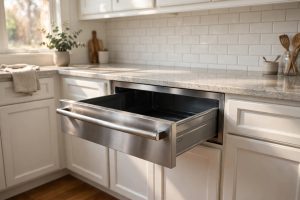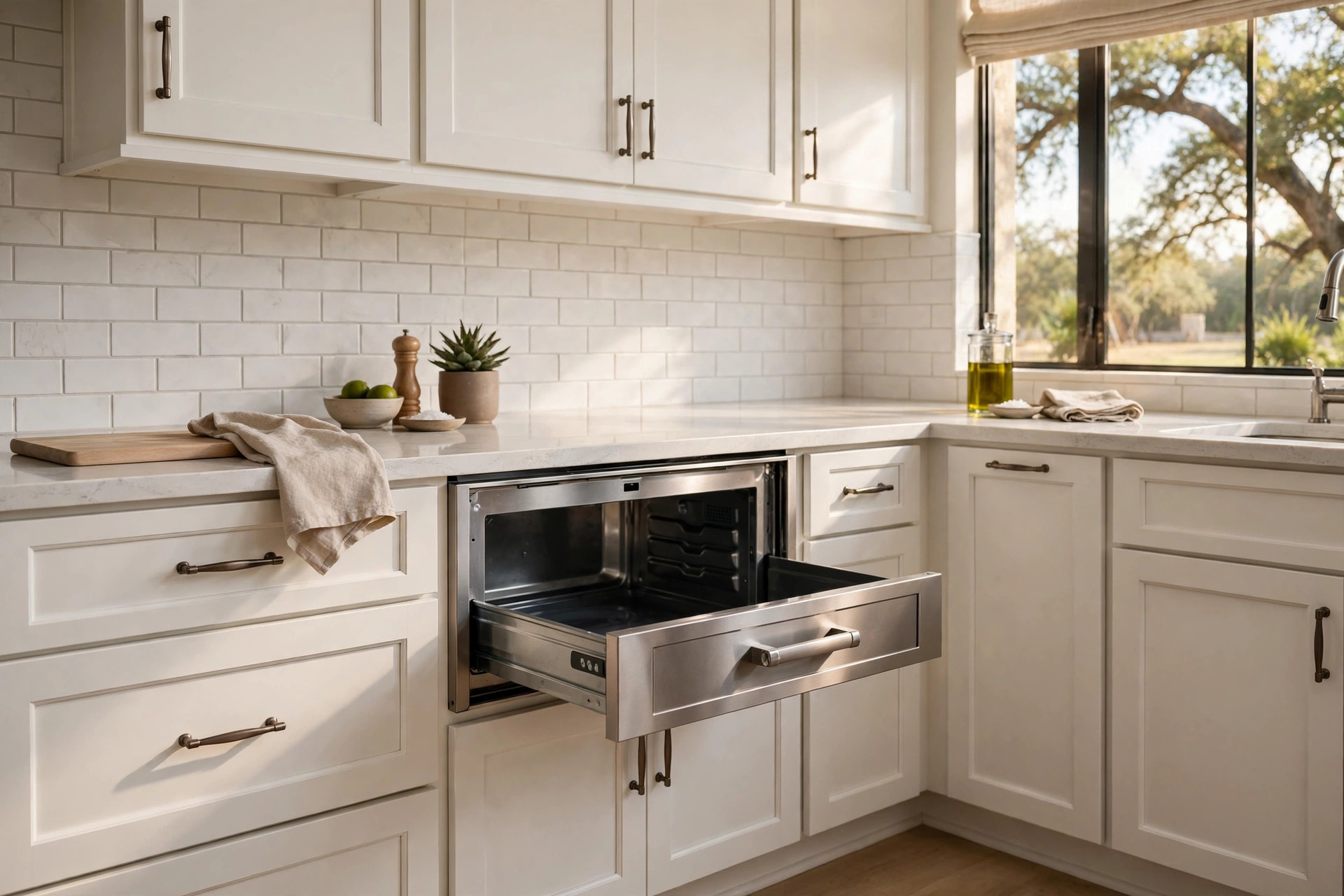

Owners of microwave drawer units texas homes usa are moving the microwave down from over the stove and out of the upper cabinets. The microwave drawer, which sits in a base cabinet below the counter and opens with a smooth pull, has become a common sight in new kitchens and full remodels across the state. It is easy to reach, easy to clean, and it keeps the kitchen looking calm and open. This guide explains what these units are, why they suit so many Texas homes, how to pick the right one, what they cost, and how to keep one working well for years.
Why Microwave Drawers Matter in Texas Kitchens
The standard Texas kitchen has changed. Open floor plans join the kitchen to the family room. Wide islands take the place of walls. Big windows let in the strong southern light. In such a kitchen, a microwave that hangs over the range or blocks an upper cabinet can spoil the clean lines. A microwave drawer hides in the lower cabinetry. The front of the unit matches the other cabinet drawers. The eye moves across the room without stopping on an appliance.
There is also a practical reason. Many Texas homes are built for long-term living. Retirees in the suburbs of Houston, Dallas, Austin, and San Antonio want kitchens that stay usable as they age. Reaching up to lift a heavy bowl of hot soup from a high microwave is hard on shoulders and risky for burns. A drawer that opens at hip height lets the cook slide food in and lift it out with little strain. This is one reason home designers now list accessibility among the first benefits of a microwave drawer.
Families with small children see another benefit. The controls on most drawers sit on the front edge or the top lip, out of reach of toddlers. Many models add a child lock. The door of a countertop microwave can swing open and hit a child standing near the counter. A drawer opens sideways or pulls out flat, which keeps the hot surface close to the cabinet and away from little hands.
The warm Texas climate matters too. Most homes in the state run air conditioning most of the year. A microwave mounted over the range with a recirculating fan does a poor job of moving cooking heat and smoke out of the kitchen. When the microwave moves to a base cabinet, the space over the range is free for a real vent hood that moves air outside. Owners can then follow the stainless range hood buying guide to pick a hood that suits their stove. The result is a cooler kitchen and less grease on the cabinets.
What to Look for When You Choose: Microwave Drawer Units Texas Homes Usa
A microwave drawer is not the same as a microwave that sits on a counter. It is built to be fixed into a cabinet. Start with the width. Most units come in 24-inch and 30-inch widths. Measure the cabinet opening before you shop. The drawer must fit the cabinet with the right clearances around it for air flow. A cabinet maker or installer should confirm the cutout size in the manual.
Capacity comes next. Drawers usually hold between 1.1 and 1.2 cubic feet. That is enough for a full-size dinner plate, a casserole dish, or a large bowl of popcorn. Check the interior height as well. Tall mugs and soup pitchers need room. Some owners find that a drawer fits their daily use just as well as a countertop unit did.
Power is measured in watts. Most microwave drawers run between 950 and 1,000 watts. That is enough to cook, reheat, and defrost food at normal speed. A higher wattage cooks food faster and more evenly. Look for models with at least ten power levels. The extra levels let you simmer sauce or soften butter without burning it.
The way the drawer opens matters in daily life. Some units open with a touch of the control panel. Others have a handle that you pull by hand. Touch-to-open drawers feel smooth and modern. Handle models work even if the power fails, so the door can be opened by hand when needed. Pick the style that suits your habits.
Controls should be simple to read. Backlit panels are easier to see in a dim kitchen. Angled control panels on the top edge of the drawer face the cook directly. Make sure the panel shows the time, the power level, and the remaining minutes in clear numbers.
Sensor cooking is a useful extra. The unit reads the steam that rises from the food and sets the time itself. This helps with vegetables, rice, and frozen meals. A keep-warm setting holds food at serving temperature after the cooking stops. A child lock, as noted above, is worth having in any home with young children.
Trim kits matter for the finished look. A trim kit frames the drawer and fills small gaps between the unit and the cabinet. Some brands sell trim kits in stainless steel, black stainless, or white to match the rest of the kitchen. Ask your dealer for renovation advice on matching finishes if you are mixing brands.
Types and Options on the Market
The main choice is between a dedicated microwave drawer and a speed oven with drawer features. A dedicated microwave drawer does one job: it heats food with microwaves. It is the simplest and most common choice.
A convection microwave drawer adds a heating element and a fan. It can brown and crisp food, which a plain microwave cannot do. This type costs more and needs more care. It suits cooks who want to bake small dishes without heating the full-size oven. For owners who are also shopping for a main oven, the gas range buying guide covers the full-size cooking choices.
Stainless steel is the most popular finish. Black stainless hides fingerprints better. Panel-ready units take a wood panel that matches the cabinet doors, so the microwave almost disappears.
Height placement deserves thought. Most installers set the drawer in the base cabinet below the counter, which puts the food surface about two feet off the floor. Some owners place it in an island. An island placement keeps the main cooking wall free and lets two people work at once. Either way, keep the drawer away from the main sink so that water and steam do not reach the controls.
Cost and Price in Texas
Prices for microwave drawer units in the United States usually run from about 1,200 dollars to 2,500 dollars for the unit alone. Basic models sit at the low end. Units with convection, sensor cooking, and premium finishes sit at the high end. Texas prices follow the national range. Major appliance makers such as GE Appliances, Whirlpool, and Bosch list several models in this price band.
Installation is a separate cost. If the kitchen is new or under full remodel, the cabinet maker builds the opening to fit and the electrician runs the line. This part of the job may cost a few hundred dollars. In an existing kitchen, cutting an opening into a base cabinet costs more. The installer must check that the cabinet can hold the weight and that the drawer gets enough air around it. Some installers charge 400 to 800 dollars for a retrofit, depending on the cabinet work and the wiring.
A dedicated electrical circuit is required. Most drawers need a 120-volt, 15-amp circuit of their own. Get a written quote before the work starts.
Running costs are small. A microwave uses power only when it is running. A drawer used for ten minutes a day costs a few dollars a month to run. Shoppers who want to compare energy use can check the ENERGY STAR site for general guidance on efficient appliances.
Retailers across Texas stock these units. The Home Depot and Lowe’s both carry major brands and can arrange delivery and basic installation. Local appliance stores often give better advice and better service after the sale. Kitchen design guides can help you compare features before you visit a showroom.
Care and Upkeep
A microwave drawer is easy to keep clean because the flat interior has no turntable to remove. Wipe spills soon after they happen. Dried food is harder to remove and can burn in the next heating cycle. Use a soft cloth and warm soapy water. Avoid steel wool and harsh cleaners, which can scratch the interior coating.
The drawer slides deserve care. Crumbs and grease can work into the rails. Wipe the rails every few months. If the drawer starts to stick, check the manual for the right food-safe lubricant.
The vent filter needs attention. Some drawers have a small grease filter that should be washed in soapy water every few months. A clogged filter makes the unit work harder and can shorten its life.
Check the door seal now and then. The seal keeps microwaves inside the unit. If it is cracked or loose, stop using the drawer and call for service. This is rare, but it is worth a look once a year.
Odor is a common complaint. Fish, popcorn, and strong spices can leave a smell. Heat a bowl of water with lemon slices for a few minutes, then wipe the interior. The steam loosens stuck food and the lemon freshens the air.
A well-kept microwave drawer lasts ten years or more. Keep the manual in a drawer nearby so that you can look up error codes and cleaning steps when you need them. Step-by-step upkeep guides from This Old House can also help when a small job is new to you.
Safety Points for Your Home
Microwave safety starts with the basics. Never run the unit empty. Never heat sealed containers, which can burst. Never put metal, foil, or dishes with gold trim inside. Use containers marked as microwave safe.
Place the drawer where children cannot easily reach the controls, and use the child lock. Teach older children the rules: stir hot food, test the temperature, and carry hot bowls with both hands on a tray.
Keep the area above the drawer clear. Do not set paper, cloth, or plastic on top of the unit inside the cabinet. Leave the air clearances that the manual calls for. A drawer that cannot breathe will overheat.
Have a licensed electrician do the wiring. A microwave drawer draws real power, and a bad connection is a fire risk. Do not plug the unit into an extension cord. It should have its own outlet on its own circuit.
If the drawer is damaged, such as a bent frame or a cracked seal after a hard knock, stop using it and call the maker for service. Independent product testers stress that a damaged microwave should never be used until it is repaired.
Frequently Asked Questions
Can I put a microwave drawer in an existing kitchen? Yes, in most cases. An installer cuts an opening in a base cabinet and fits the drawer. The cabinet must be wide enough and strong enough to hold it. An electrician runs a dedicated circuit if one is not already there. A retrofit costs more than a new-build installation, so get a quote first.
Is a microwave drawer better than an over-the-range microwave? It depends on your kitchen. A drawer frees the space over the range for a real vent hood, which moves heat and smoke out of the house. It is easier to reach and safer for children. An over-the-range unit costs less and needs no cabinet work. Many Texas remodels choose the drawer for the better ventilation and the cleaner look.
What size microwave drawer do I need? Most homes use a 24-inch or 30-inch model. Measure your cabinet opening and check the cutout size in the manual before you buy. Inside, 1.1 to 1.2 cubic feet fits a full-size dinner plate. If you heat large casserole dishes often, check the interior height as well.
Do microwave drawers need special cabinets? They need a base cabinet with the right opening and enough depth. Many cabinet makers offer a microwave drawer cabinet as a standard option. In a retrofit, a skilled installer can cut a standard base cabinet to fit. The cabinet must support the weight of the unit, which can be 70 pounds or more.
Are microwave drawers hard to repair? No harder than other built-in appliances. The unit slides out of the cabinet for service. Keep the manual and the model number where you can find them. Most repairs are done by an appliance technician.
Can the drawer be installed in a kitchen island? Yes. An island is a popular spot because it keeps the main wall free and lets two cooks work at once. The island cabinet needs the same opening, support, and wiring as any other base cabinet. Plan the island depth so that the drawer and its cord fit with room to spare.
A Short Final Word
A microwave drawer is a quiet upgrade that changes how a kitchen feels and works. It puts hot food at a safe, easy height. It keeps the sight lines clean across an open Texas floor plan. It frees the range for real ventilation. The cost is higher than a countertop unit, and it needs a proper cabinet and its own circuit. For owners planning a remodel, or building new, it is worth a serious look. Measure your space, compare two or three models, read the French door refrigerator guide and other appliance guides while you plan, and pick the drawer that fits your kitchen and your budget. With simple care, it will serve the home for a decade or more.
References
Bob Vila. (n.d.). Home improvement advice. https://www.bobvila.com Bosch. (n.d.). Home appliances. https://www.bosch-home.com Consumer Reports. (n.d.). Product reviews and ratings. https://www.consumerreports.org ENERGY STAR. (n.d.). Energy efficient products. https://www.energystar.gov GE Appliances. (n.d.). Kitchen and home appliances. https://www.geappliances.com Lowe’s. (n.d.). Home improvement products. https://www.lowes.com The Home Depot. (n.d.). Home improvement products. https://www.homedepot.com The Spruce. (n.d.). Home and garden advice. https://www.thespruce.com This Old House. (n.d.). Home renovation guidance. https://www.thisoldhouse.com Whirlpool. (n.d.). Home appliances. https://www.whirlpool.com
Was this guide helpful?

About Emily Rodriguez
The My Garden US editorial team writes practical, in-depth home and garden guides for American homeowners — tested advice, no fluff.
You May Also Like
Pot Filler Faucets American Homes Guide: A Plain Guide to Choosing One
April 2, 2026 0 views
Butcher Block Countertops: A Guide for American Homes
July 25, 2026 0 views
Kitchen Pantry Cabinets for Sale USA: A Practical Buying Guide
June 22, 2026 0 views