A pool should bring joy, not hours of work. Yet many owners spend more time skimming leaves than swimming. The best automatic pool cleaner reviews 2026 USA show that this does not have to be the case. New robotic pool cleaner models scrub floors, climb walls, and filter fine dirt while you rest. This guide walks through what matters, what the main types do, and what each class costs in the United States this year. It draws on the review habits used by major test labs and pool pros. By the end, you will know how to read a review with a clear eye and how to pick a cleaner that fits your pool.
Why an Automatic Pool Cleaner Matters
A pool left alone gathers leaves, dust, algae, and grit within days. Manual vacuuming takes one to two hours each week for an average backyard pool. That time adds up over a season. An automatic cleaner works while you are at work or at rest. It keeps the water clear and the finish smooth.
Clean water is also safe water. Dirt and debris feed algae. Algae make the water cloudy and the walls slippery. A pool cleaner with wall climbing cuts the need for heavy chemical shock, because it brushes the walls each day. Your filter lasts longer too, since the cleaner catches what the filter would have to trap.
For owners who travel, an automatic cleaner is close to a must. It runs on a timer and keeps the pool ready for the day you return home.
A cleaner also protects the pool finish. Grit that sits on plaster or vinyl acts like sandpaper when feet stir it around. Daily pickup keeps that grit moving into the basket instead of grinding into the surface. Over years, that gentle daily care shows in a finish that looks newer for longer.
What to Look for in an Automatic Pool Cleaner: Best Automatic Pool Cleaner Reviews 2026 Usa
Cleaning coverage
Check whether a model cleans the floor only, or the floor plus the walls and waterline. Wall climbing is the single most useful feature for most inground pools. The waterline holds grease and sunscreen that a floor-only unit will never reach. A robotic pool cleaner for inground pools should reach at least the tile line on every run.
Power source
Suction and pressure models plug into your pool system. They use your pump and filter. Robotic models carry their own motor and filter. They plug into a standard outlet or charge on a dock. Corded robots cost less than cordless ones, but cordless robots avoid tangled cables. Tech reviewers at CNET often note that cable tangles are the most common owner complaint, so check how a model stores its cord.
Filter capacity
Look for models with a top-loading filter basket. It is easy to lift out and rinse. Units with very fine filter screens catch sand and pollen. That matters in areas with dust and tree debris. Reviewers at PCMag and other tech press cover the smart features of newer robots, but the basket size still decides how often you must stop and clean.
Pool type and size
Match the cleaner to your pool. The best pool vacuum for above ground pools is a light unit that does not pull hard on soft walls. Inground pools can take heavier robots with strong wall-climbing motors. Check the stated pool size rating and stay within it. Pool supply chains like Leslie’s list the pool size rating on every product page, which makes side-by-side shopping easy.
Timer and smart controls
Many modern robots ship with a weekly timer. You set the days and the run length once, and the unit follows the plan. App control goes a step further. It lets you start a spot clean from your phone or steer the robot to a dirty corner. Some apps log run time and filter status. For an automatic pool cleaner for large inground pools, scheduling matters more, because one cycle may not cover the whole floor. Cordless robotic pool cleaner reviews often praise the free movement of battery models, but note the trade: you must charge the battery and the run time is fixed by the battery size.
Types of Automatic Pool Cleaners
Suction-side cleaners
Suction-side cleaners hook to the pool skimmer or a dedicated suction line. They move at random and use your filter to trap debris. They are cheap and simple. They strain your pump and filter, and they miss fine particles. They suit small pools on a tight budget. They also need the pump to run at full speed while they work, which raises the power bill in homes with single-speed pumps.
Pressure-side cleaners
Pressure-side cleaners attach to a return jet or a booster pump. They sweep debris into their own bag. They move faster than suction models and put less load on your filter. They need decent water pressure and cost more than suction units. Their bags hold large debris such as acorns and twigs very well, which suits pools under trees. Homeowners who want app-based schedules for the whole pool often read smart pool pump with app control reviews before they upgrade their pump to match.
Robotic cleaners
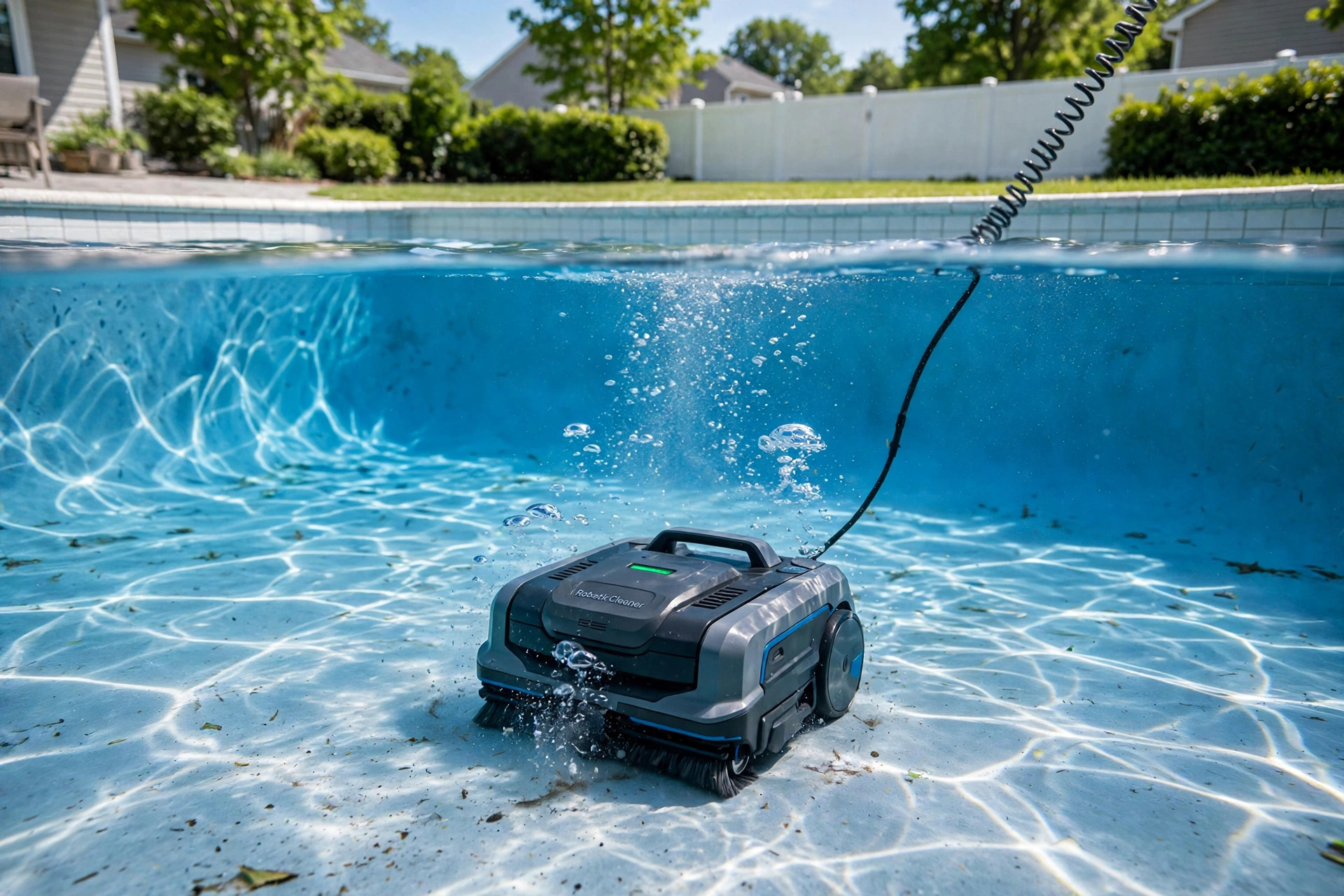
Robotic cleaners are self-contained. They have their own pump, filter, and motors. Most models now include smart features such as app control and cleaning schedules. That is why they sit near the top of the best automatic pool cleaner reviews 2026 USA. They clean faster, filter finer, and use less energy than pump-driven models. They cost more up front. Because they do not use the pool pump at all, they shine in homes with variable-speed pumps that run at low speed most of the day. Technology press like The Verge covers the wider smart home trend that these app-connected cleaners belong to.
Cost and Price in 2026
Prices in the United States this year fall into clear bands. Suction-side models run from about 150 to 450 dollars. Pressure-side models run from about 400 to 900 dollars. Robotic cleaners run from about 400 to 1,600 dollars. High-end robots with app control and smart mapping can reach 2,000 dollars. Retailers such as The Home Depot list current street prices, so check the shelf price before you trust a review from last year.
Replacement parts add cost over time. Filter baskets, brushes, and cables wear out. Budget 50 to 120 dollars per year for a robotic unit in heavy use. Energy cost is low. Most robots draw about the same power as a small bulb while running.
A cheap unit that misses the walls may cost more in chemicals than a pricier robot saves. Review sites such as Consumer Reports test cleaning time and debris pickup under set rules, which helps you compare true value across brands.
Think in terms of total cost over five years, not just the box price. A 900-dollar robot that cuts chemical use and pump hours can cost less over its life than a 250-dollar suction cleaner that forces the pump to run long hours each day. Check the warranty length too. Most good robots carry a two to three year warranty. A short warranty on a costly robot is a warning sign.
Care and Upkeep
Rinse the filter basket or bag after each run. A full basket cuts suction fast. Once a month, hose down the brushes and check the tracks or wheels for wear. Store the unit in the shade when not in use. Sun breaks down cables and plastic.
In the off season, bring a robotic cleaner indoors. Let it dry fully before storage. Keep the cable loosely coiled. A tight coil sets kinks that shorten cable life. For suction and pressure units, check the hose sections for leaks each spring.
Test your water each week even with a cleaner running. A cleaner removes debris but does not balance pH or chlorine. Pairing a cleaner with a smart pool monitor gives you an early warning when chemistry drifts, and guides from Swim University walk through the weekly care routine step by step.
If the cleaner starts missing spots, check three things in order. First, empty and rinse the basket. Second, look for a worn brush or a stuck wheel. Third, check the power supply and cable for loose plugs. Most faults trace back to the first item. Keep a spare set of brushes on hand so a worn part never sits for weeks.
Many owners top up the pool with a garden hose while the cleaner runs. Smart hose timer reviews can help you time top-ups so the pool does not overflow while you are away.
Safety Around Automatic Pool Cleaners
Remove the cleaner from the pool before anyone swims. Cords and hoses can trip or tangle a swimmer. Switch off the power supply at the outlet before you handle a robotic unit in the water. Never let children play with the cleaner or its cable.
The U.S. Consumer Product Safety Commission publishes pool safety guidance each year. Its notes cover drains, covers, and alarms. A pool alarm or a smart camera adds a layer of watchfulness when children are near the water. Smart cameras from Ring or the Google Store watch the pool area from your phone, and home systems from SimpliSafe or ADT can fold pool-area sensors into the same alerts as the rest of the house.
Frequently Asked Questions
How long should an automatic pool cleaner run each day? Most pools need one to three hours per day in the swim season. Heavy leaf fall may need two cycles. Watch the basket. When it comes out clean twice in a row, cut back the run time.
Can an automatic pool cleaner replace manual brushing? Almost. Daily robot runs cut manual brushing to a light monthly task. You should still brush steps and corners now and then. No robot reaches every niche.
Which is better for an above ground pool, suction or robotic? Light robotic units made for above ground pools clean better than most suction models. They do not stress the pump. Make sure the model is rated for soft walls and for your pool size.
Do robotic pool cleaners work with a pool cover? Remove the cover before a run. A cleaner can snag a cover and tear it. Run the robot with the cover off, then replace the cover after the cycle.
How do I know which reviews to trust? Look for reviews that state test methods, pool size, and debris types. Labs that run the same test on each model give fair comparisons. Short user comments that praise a brand without detail are less useful.
Can I leave the cleaner in the pool all week? You can, but it is better to take it out between runs. Constant sun and chlorine age the plastic and the cable. Lift the unit out, rinse it, and store it in the shade. Your cleaner will last years longer with this small habit.
A Final Word
An automatic pool cleaner is one of the best buys a pool owner can make. Read the reviews with care, match the machine to your pool, and keep up with simple care. Your water will stay clear, your weekends will stay free, and your pool will be ready whenever you are.
References
ADT. (n.d.). Home security and automation. https://www.adt.com CNET. (n.d.). Technology news and reviews. https://www.cnet.com Consumer Reports. (n.d.). Product reviews and ratings. https://www.consumerreports.org Google Store. (n.d.). Smart home devices. https://store.google.com Leslie’s Pool Supplies. (n.d.). Pool supplies and equipment. https://www.lesliespool.com PCMag. (n.d.). Technology product reviews. https://www.pcmag.com Ring. (n.d.). Smart home security devices. https://www.ring.com SimpliSafe. (n.d.). Home security systems. https://www.simplisafe.com Swim University. (n.d.). Pool and hot tub care guides. https://www.swimuniversity.com The Home Depot. (n.d.). Home improvement products. https://www.homedepot.com The Verge. (n.d.). Technology news and reviews. https://www.theverge.com U.S. Consumer Product Safety Commission. (n.d.). Product safety information. https://www.cpsc.gov
Was this guide helpful?

About Michael Thompson
The My Garden US editorial team writes practical, in-depth home and garden guides for American homeowners — tested advice, no fluff.