
Homes that run on a private well often face one common problem: low well water pressure. The shower turns to a weak trickle when someone runs the tap in the kitchen. The washing machine takes twice as long to fill. A garden hose barely reaches the flower beds. This guide explains low well water pressure solutions for homes in plain terms, from quick checks you can do today to larger upgrades that fix the problem for good.
Why Low Water Pressure Matters
Low pressure is more than a small annoyance. When water flow drops, daily tasks take longer. Showers feel weak and unpleasant. Dishwashers and washing machines may not fill fast enough, and some models show an error or stop the cycle. Sprinklers fail to cover the lawn, so grass dies in patches. Over time, mineral scale can build up inside pipes when flow is poor, which makes the problem worse. For homes on a well, low pressure can also signal that part of the system is wearing out. A pump that runs too long, a pressure tank that has lost its air charge, or a clogged filter can each raise the electric bill and shorten the life of the equipment. Fixing low well water pressure solutions for homes early protects both comfort and the well system itself.
Low pressure can also create a health risk. When pressure drops very low or stops for a time, contaminated water can be drawn into pipes through small cracks or loose joints. The Environmental Protection Agency offers plain guidance on keeping private wells and home water systems safe, which is worth reading alongside any pressure fix.
First Checks: Simple Causes of Low Well Water Pressure: Low Well Water Pressure Solutions for Homes
Before spending money, run through a few basic checks. Many homes find a simple answer here.
Check one faucet or all of them. Turn on the cold and hot water at several faucets. If only one faucet is weak, the problem is likely a clogged aerator or a blocked valve at that fixture. Unscrew the aerator, rinse out the grit, and screw it back on. This takes five minutes and costs nothing.
Look at the whole house. If every faucet is weak, the problem is in the main system: the pressure switch, the pressure tank, a filter, or the pump itself. Knowing that the trouble is system-wide tells you where to look next.
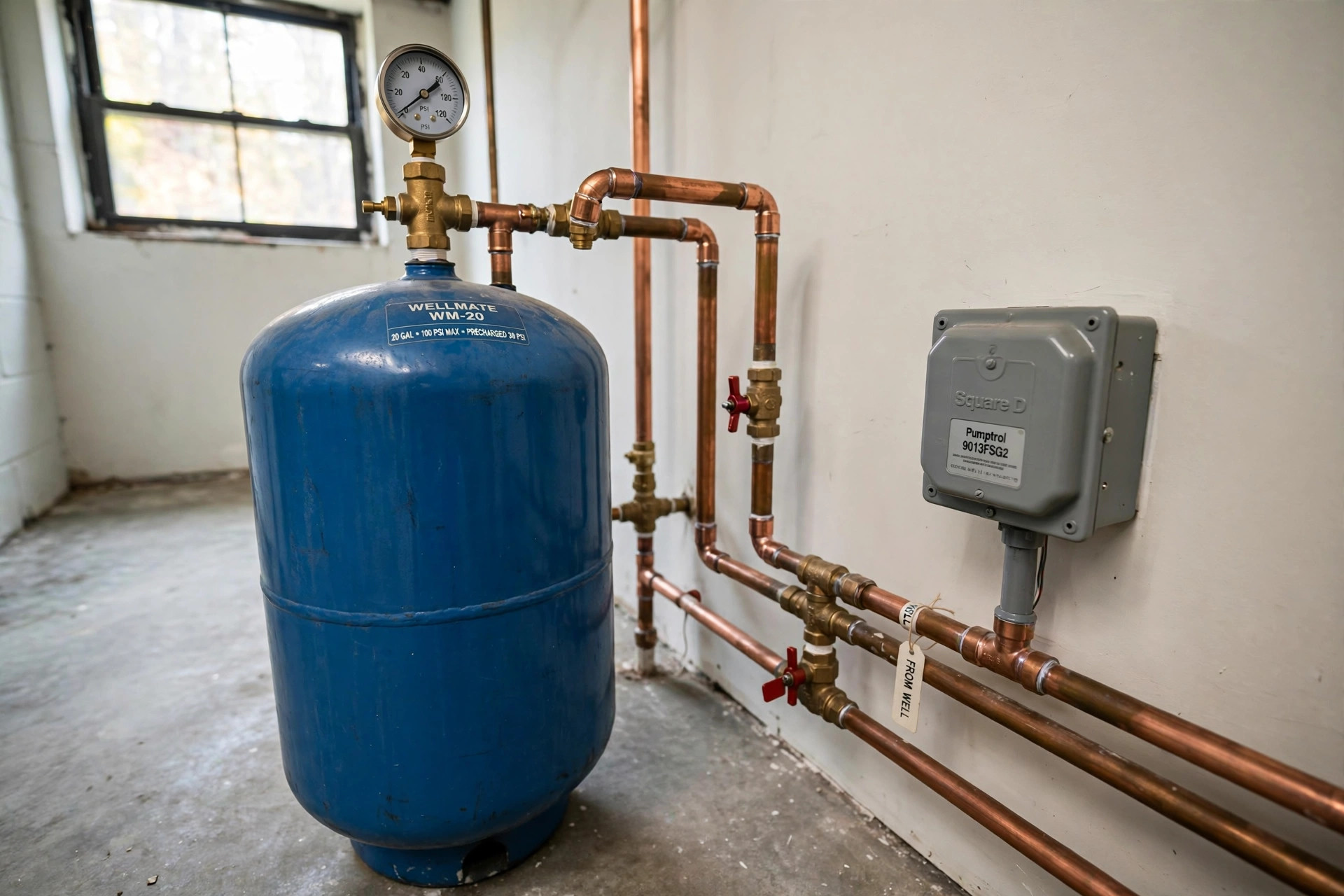
Check the pressure gauge. Most well systems have a gauge on the pressure tank. It should read between 40 and 60 psi in most homes. If it reads below 30 psi while the pump is running, the pump may be struggling or the tank may need attention. Write down the cut-in and cut-out readings. These numbers help a well technician diagnose the system fast.
Inspect filters and screens. A whole-house filter, a sediment filter, or the screen on the pump intake can clog with sand, rust, or silt. A clogged filter can drop pressure by 20 psi or more. Replace or clean the filter, then check the pressure again. This single step solves the problem in many homes.
Check for leaks. Walk around the house and yard. Look for wet spots, soft ground, or the sound of running water when no tap is open. A leak in the line between the well and the house can steal pressure. Also check the pressure tank for drips at the fittings.
What to Look For: How to Choose the Right Fix
The right fix depends on the cause. Use the checks above to narrow it down, then match the cause to the fix below.
If the pressure gauge swings up and down in a wide range, the pressure tank may have lost its air charge. A healthy tank gives smooth, steady water. If the pump clicks on and off every few seconds while a tap runs, the tank is likely waterlogged. You can test this with a tire gauge on the tank’s air valve, with the pump off and the tank drained. Most tanks need about 2 psi below the pressure switch cut-in setting. If the tank will not hold air, it needs replacement.
If the pressure drops only when the washing machine, dishwasher, or sprinklers run, the system may simply be too small for the demand. Older homes with added bathrooms often outgrow their pump or tank. A larger pressure tank or a higher-capacity pump may be the right answer.
If the water is cloudy or gritty, sediment is the likely cause. Sand and silt wear out pump parts and clog filters fast. In this case a sediment filter or a larger tank with a sediment tap can help, but the well itself may need service to reduce the sand coming up.
If the pipes are old, scale and corrosion may narrow them from the inside. Galvanized steel pipes from the 1950s through the 1970s are known for this. A plumber can check a section of pipe to confirm. Replacing the worst runs of pipe often restores full flow.
The Family Handyman site has clear step-by-step guides for testing pressure tanks and switches, and This Old House covers well system repairs in plain language. Both are good references before you decide on a fix.
Types of Solutions: From Quick Fixes to Full Upgrades
Clean or replace filters. Start here. Swap in fresh sediment filters and clean any screens. This is the cheapest fix and should be done on a regular schedule.
Adjust the pressure switch. The pressure switch controls when the pump turns on and off. Most switches are set to 30/50 or 40/60 psi. A technician can raise the setting a few pounds if the system can handle it. Do not set the cut-out higher than the pump’s rating. Small adjustments are safe; large jumps are not.
Replace a failed pressure tank. A waterlogged tank cannot be fixed with air for long. A new bladder tank in the 40 to 80 gallon range suits most homes. Larger tanks mean the pump cycles less often, which saves wear and electricity.
Install a constant pressure system. Older well systems swing between cut-in and cut-out pressure, so the shower changes strength while you use it. A variable speed pump controller keeps pressure steady at one level, often 60 psi. It costs more up front but gives city-like water feel. Retailers like Lowe’s and The Home Depot carry several brands of these controllers.
Add a booster pump. If the well itself is fine but the house sits far from the well or high above it, a booster pump on the house line can raise pressure. This is common on farms and in hilly areas. The booster sits near the house and pushes water at a steady, higher pressure.
Clean or replace old pipes. Where scale has choked the pipes, replacement with copper or PEX restores flow. PEX is flexible, costs less than copper, and resists scale. Replacing only the worst runs often brings pressure back without a full repipe.
Service the well and pump. A worn pump, a clogged intake screen, or a falling water table can all cut pressure. A licensed well driller can measure the well’s yield, clean the screen, or lower the pump. If the water table has dropped in dry years, the pump may need to sit deeper.
Cost and Price: What to Expect
Prices vary by region and by how far a well crew must travel, but these ranges give a fair picture for American homes.
Cleaning or replacing filters costs very little, often under $50 in parts. A new pressure gauge is about the same. Adjusting a pressure switch during a service call usually runs $100 to $250, depending on your area.
A new pressure tank, installed, typically costs $500 to $1,500. Larger tanks and stainless steel fittings push the price up. A variable speed constant pressure controller, installed, usually runs $1,000 to $2,500 including labor.
A booster pump installation commonly costs $500 to $2,000. Replacing a section of pipe runs $1,000 to $3,000 for most homes, while a full repipe can reach $5,000 or more for a large house.
Servicing a well and pump is the most variable cost. A simple service call may be $200 to $500. Replacing a submersible pump and wire often runs $1,500 to $3,500, depending on the depth of the well. Always get two or three written quotes from licensed well contractors before approving large work.
For planning other home water projects, it helps to see related guides, such as this comparison of tankless RO systems or reviews of the best farmhouse kitchen sinks, both of which deal with household water flow and fixtures.
Care and Upkeep: Keeping Pressure Strong
Regular upkeep keeps pressure high and repairs rare.
Check the pressure gauge once a month. Note the cut-in and cut-out readings. A slow drift downward over months warns that the tank or switch needs attention.
Change sediment filters on schedule, often every two to three months. In sandy wells, monthly changes may be needed. A clean filter protects the pump and keeps pressure up.
Test the tank’s air charge once a year. Drain the tank, check the air valve with a tire gauge, and add air if needed. Replace the tank if it will not hold air.
Sanitize and test the well water once a year. The Environmental Protection Agency recommends yearly testing for bacteria and nitrates, plus testing after any flood or long pressure loss.
Keep the area around the wellhead clean and dry. Do not pile chemicals, fuel, or paint near it. A good well cap keeps insects and surface water out.
Listen to the pump. A pump that runs longer than usual, starts and stops too often, or sounds rough needs a service call soon. Catching wear early is far cheaper than replacing a burned-out pump.
Safety: Working With Well Systems
Water and electricity mix badly, so take care around well equipment. Turn off power at the breaker before opening the pressure switch cover or touching pump wiring. The switch cover hides live terminals that can shock.
Never set the pressure switch above the rated pressure of the tank, pipes, or water heater. Typical home tanks are rated to 125 psi, but water heaters have relief valves set at 150 psi or less. Staying in the 40 to 60 psi range is safe and comfortable for most homes.
If you drain the tank to check the air charge, be sure the water heater breaker is off until the tank refills. Running a water heater element dry will burn it out in minutes.
When the pressure drops to near zero or the water stops, assume the water may not be safe until you test it. Boil water for one minute before drinking or cooking until a test shows it is clean.
For safe drinking water beyond pressure fixes, many homes add a point-of-use filter. Brands such as Aquasana sell home filtration systems, and fixture makers like Kohler, Moen, and Delta Faucet publish care guides for keeping faucets and valves flowing freely.
If you are buying a home with a well, a pressure check belongs on the inspection list. It pairs well with the septic inspection cost guide that many rural buyers read at the same time.
Frequently Asked Questions
What is normal water pressure for a home on a well? Most well systems are set to 40 to 60 psi. Some are set to 30 to 50 psi. Anything below 30 psi will feel weak at the shower and taps. Anything above 80 psi can damage fixtures and the water heater, so pressure above that level should be reduced.
Why does my shower go weak when someone flushes a toilet? This is a sign the system cannot keep up with demand. A small pressure tank, a weak pump, or a clogged filter can each cause it. A constant pressure controller or a larger tank usually fixes this complaint.
How long does a well pressure tank last? A good bladder tank lasts 10 to 15 years. Cheap tanks may fail in 5 to 7 years. If the tank loses air often or the pump short-cycles, the tank is likely at the end of its life.
Can I raise the pressure switch myself? You can, but be careful. Adjust the large nut inside the switch cover in small turns, and never go above the ratings of your tank and pipes. If you are unsure, pay for one service call and watch the technician do it.
Does low pressure mean my well is running dry? Not always, but it can. If the pump runs constantly and pressure never builds, the well may not be yielding enough water. A well driller can run a yield test to confirm. Filter clogs and tank problems are more common causes, so check those first.
Should I install a booster pump or a constant pressure system? A constant pressure controller works best when the pump is healthy but pressure swings bother you. A booster pump works best when the well pump is fine but the house is far from or high above the well. A well technician can advise which fits your layout.
A Short Final Word
Low well water pressure has many causes, but most of them are fixable without great cost. Start with the free checks: faucets, filters, and the gauge. Move on to the tank and switch. If the system is simply too small or worn out, a new tank, a constant pressure controller, or a booster pump can give your home steady, strong water for years. Keep up with filters and yearly tests, and your well will serve the house well.
References
Aquasana. (n.d.). Water filtration systems. https://www.aquasana.com Delta Faucet. (n.d.). Kitchen and bathroom faucets. https://www.deltafaucet.com Family Handyman. (n.d.). DIY home repair and maintenance. https://www.familyhandyman.com Kohler. (n.d.). Bathroom and kitchen fixtures. https://www.kohler.com Lowe’s. (n.d.). Home improvement products. https://www.lowes.com Moen. (n.d.). Faucets and plumbing fixtures. https://www.moen.com The Home Depot. (n.d.). Home improvement products. https://www.homedepot.com This Old House. (n.d.). Home renovation guidance. https://www.thisoldhouse.com U.S. Environmental Protection Agency. (n.d.). Protecting human health and the environment. https://www.epa.gov
Was this guide helpful?

About David Wilson
The My Garden US editorial team writes practical, in-depth home and garden guides for American homeowners — tested advice, no fluff.
You May Also Like
How to Unclog Garbage Disposal Safely: A USA Homeowner Guide
June 28, 2026 0 views
Best Sediment Filter for Well Water USA: A Plain Guide for Homeowners
August 28, 2026 0 views
Best Filter for Lead Removal Reviews USA: A Plain Guide for Homeowners
June 24, 2026 0 views