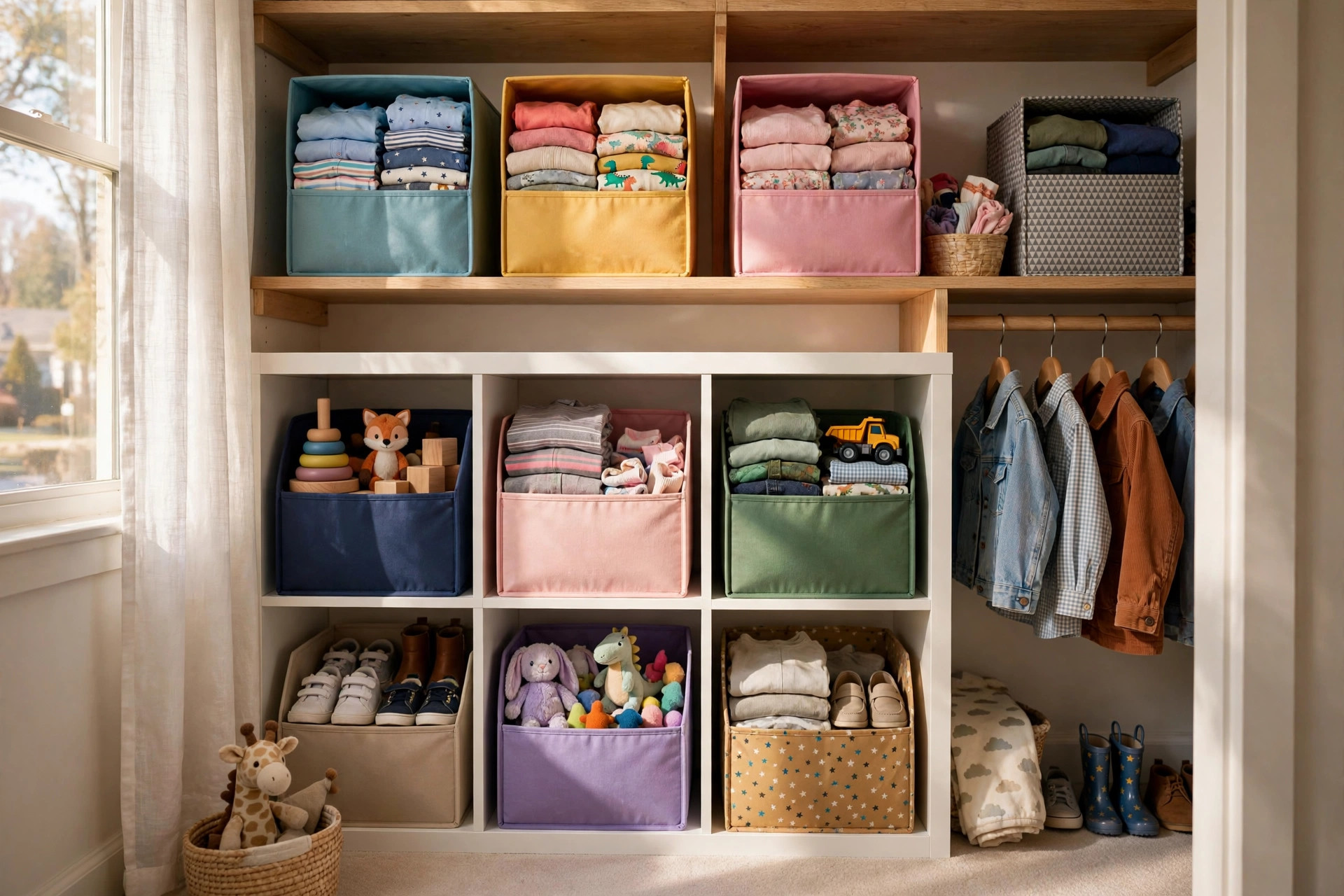

Every parent knows the sight. You open the closet door in your child’s room, and folded shirts slide off a shelf, toys roll out from a corner, and shoes pile up in a heap. The best kids storage cubes for closet organization solve this common problem in a simple way. A storage cube is a small box, usually made of fabric, wire, or wood, that slides into a closet shelf or a cube shelf frame. Each cube holds one type of item: socks in one, books in another, small toys in a third. With labels and bright colors, even a young child can learn where things belong. This guide explains what makes a good storage cube, how to pick the right type for your child’s closet, what prices to expect, and how to keep the cubes safe and clean.
Why a Tidy Closet Matters for Kids
A neat closet does more than please the eye. It changes how a child starts the day and how a family runs the home. When clothes and toys have a clear home, a child can find them without help. This builds a habit of order that lasts into adult life.
Helps Children Learn Order
Children learn by copying what they see and by using systems that are easy to follow. Storage cubes work well because each cube is a small, clear task. Put the blocks in the blue cube. Put the socks in the red cube. The job is simple and the result is easy to see. Child care guides often note that simple, labeled storage helps children take part in clean-up time. When a child can reach the cubes and see the labels, the closet becomes a tool for learning, not just a place to hide a mess.
Makes Mornings Faster
Many parents lose time each morning to a search for a missing shoe or a clean shirt. When a closet is sorted by cube, the search ends. Shirts live in one cube, pants in another, and the favorite jacket hangs in a known spot. The family leaves the house on time more often, and the mood of the morning improves. The best kids storage cubes for closet organization earn their cost in the minutes they save every single day.
What to Look for When You Buy: Best Kids Storage Cubes for Closet Organization
Not all cubes are the same. Some sag under a load of books. Some smell of chemicals when new. Some have handles that tear after a month. Take time to check these points before you buy.
Size and Fit
Measure the inside of the closet shelves before you shop. Most fabric cubes are sold in standard sizes, such as 11 inches by 11 inches, that fit into common cube shelf frames. Measure the depth of the shelf too, so the cube does not stick out. A cube that fits well stays in place and looks neat. If you plan to stack cubes on a closet floor, check that the height allows the closet door to close.
Material and Build
Fabric cubes are the most popular choice for kids closet storage organizer bins. They are light, soft, and come in many colors. Look for thick fabric with stitched seams and a firm base board at the bottom. Thin fabric will bow out when full. Wire cubes are strong and let air move through, which suits sports gear or damp items. Wood and laminate cubes look like small drawers and suit an older child’s room. For toddlers, soft fabric cubes are the safest pick because they have no hard edges.
Handles and Labels
A good cube has handles on at least two sides so a child can pull it out and push it back with ease. Some cubes come with a label window or a card holder on the front. Labels help children read and sort. You can also sew or glue your own labels with pictures for children who cannot read yet. Handles should be sewn deep into the fabric, not just glued, so they do not tear under a heavy load.
Types of Kids Storage Cubes
Shoppers will find three main types on the market. Each has strengths and weak points. The right choice depends on the age of the child, the weight of the items, and the look you want.
Fabric Cubes
Fabric storage cubes are made of canvas, polyester, or a cotton blend. They fold flat when not in use, which makes them easy to store. They are soft to the touch and quiet when a child moves them. Many come in bright prints with animals, stars, or sports themes that suit a kid’s room. Retailers like IKEA and Target carry wide lines of these cubes in standard sizes. The main weak point is strength: a fabric cube can sag if you fill it with heavy books or large toys. Use fabric cubes for clothes, stuffed animals, and light toys.
Wire and Metal Cubes
Wire cubes are built from coated metal grids that snap or clip together. They hold heavy items without bending and they let you see what is inside from the side. This can help a child find a toy fast. The coated finish comes in white, black, and bright colors. One drawback is the hard edge of the metal frame, which is less kind to small hands than soft fabric. Wire cubes suit a garage corner of the closet or a teen’s room where strength matters more than softness. Home stores such as Wayfair list many sets with stackable frames.
Wood and Laminate Cubes
Wood cubes are solid boxes, often sold as part of a cube shelf unit. They look like fine furniture and they last for years. A wood cube with a door or drawer keeps dust out and hides clutter well. The cost is higher than fabric or wire, and the boxes are heavy, so they suit a fixed shelf rather than daily handling by a small child. Pottery Barn Kids and The Container Store both sell wood cube systems designed for children’s rooms. These are a good pick when the closet doubles as a display space for books and keepsakes.
Cost and Price
Storage cubes are one of the least costly ways to organize a closet. A single fabric cube often sells for five to fifteen dollars. A set of six cubes can cost twenty to fifty dollars, depending on the brand and the fabric weight. Wire cube sets run a bit higher, often thirty to eighty dollars for a set of six to nine cubes. Wood cube shelf units cost the most, from eighty dollars for a small unit to several hundred for a large one.
You do not need to buy the most costly set to get a good result. A mid-priced fabric cube with thick walls and sewn handles will last through years of daily use. Watch for sales at large home retailers, where cube sets often drop in price at the start of the school year. For ideas on nursery storage, see our guide on nursery storage baskets for diapers and wipes. Buying a few cubes at a time also spreads the cost across months, which suits a tight family budget.
Care and Upkeep
Storage cubes need little care, but a bit of upkeep keeps them looking fresh and working well.
Dust the cubes once a month with a dry cloth or a vacuum brush. Fabric cubes can be wiped with a damp cloth and mild soap. Let them dry fully before you slide them back into the shelf, since trapped dampness can cause a musty smell. Most fabric cubes are not machine washable, so check the care tag first. Wire cubes can be wiped with a damp cloth and dried right away to stop rust on any bare spots in the coating. Wood cubes need only dusting and, once a year, a check of screws and joints. Tighten any loose screws so the unit stays firm.
Teach children to pull a cube out by its handles, not by the fabric front, since yanking on the front can tear the seams over time. Once a season, take all the cubes out, sort the contents, and give away items the child has outgrown. This keeps the closet from filling past the point where the cubes can do their job. A quick seasonal sort also helps you spot cubes that need repair or replacement. For larger toy storage needs, our piece on kids bookshelf with bins for toy storage covers shelf-based options.
Safety Comes First
Safety is the most vital part of any child’s closet. The U.S. Consumer Product Safety Commission gives clear advice on nursery and child room products, and many of the same rules apply to storage cubes.
First, check for small parts. Cubes for very young children should have no small buttons, clips, or tags that a child could pull off and swallow. Second, avoid tip-over risk. Do not stack heavy cubes high where a child could climb them. If you use a tall cube shelf frame, anchor it to the wall with the straps or brackets that come in the box. Third, check the fabric for strong chemical smells. Air new cubes out for a day or two in a well-vented room before you place them in a child’s closet. Look for products that meet common safety standards and carry clear labels about materials.
Keep heavy items, such as books and large toy sets, in the lowest cubes. Put light items, such as hats and scarves, in the top cubes. This keeps the center of weight low and the unit steady. Child health resources such as HealthyChildren.org and parenting guides at What to Expect both stress that a child’s room should be free of climbable, unsteady furniture. The same care applies to cube units. Finally, cut or remove any long cords, ribbons, or pull strings near the cubes, since these pose a strangle risk to young children. Design ideas and safety tips are also covered by home editors at The Spruce.
Frequently Asked Questions
How many storage cubes does a child’s closet need?
Most small closets need six to nine cubes. Start with six: two for clothes, one for shoes, one for toys, one for books, and one spare. Add more only when the first set fills up. A child’s needs grow fast, so leave one empty cube for new items.
What size cube fits a standard closet shelf?
The most common fabric cube is about 11 inches on each side, made to fit standard cube shelf frames. Measure your shelf height, width, and depth before you buy. Leave half an inch of space on each side so the cube slides in and out with ease.
Are fabric or wire cubes better for kids?
For young children, fabric cubes are better. They are soft, light, and safe for small hands. For older children or heavy items like books and sports gear, wire cubes are stronger and hold their shape. Many families use both: fabric cubes up high for soft items and wire cubes down low for heavy ones.
How do I get my child to use the cubes?
Make the system simple and fun. Use picture labels so a small child can sort by image. Give each cube a clear job and praise the child when the job is done. Keep the cubes at the child’s height so clean-up takes no help from an adult. For baby clothes specifically, see our guide to a nursery closet organizer for baby clothes.
Can storage cubes hold heavy books?
Light fabric cubes can sag under books. If you plan to store books, pick cubes with stiff side walls and a firm base, or use wire or wood cubes instead. Spread books across several low cubes rather than loading one cube to the top.
How often should I replace kids storage cubes?
Good fabric cubes last two to four years of daily use by a child. Replace a cube when the seams tear, the base board warps, or the handles pull loose. Wire cubes last longer but should be replaced if the coating chips and bare metal shows.
A Short Final Word
The best kids storage cubes for closet organization are not the most costly or the most stylish. They are the cubes that fit your shelves, suit your child’s age, and get used every day. Start with a small set, label each cube, and let your child take part in the sorting. A closet that a child can manage is a closet that stays neat. With the right cubes, a bit of care, and safe setup, that messy closet door can open on a calm, orderly space that makes family life a little bit easier.
References
American Academy of Pediatrics. (n.d.). HealthyChildren.org. https://www.healthychildren.org IKEA. (n.d.). Home furnishings. https://www.ikea.com Pottery Barn Kids. (n.d.). Kids furniture and decor. https://www.potterybarnkids.com Target. (n.d.). Retail store. https://www.target.com The Container Store. (n.d.). Storage and organization products. https://www.containerstore.com The Spruce. (n.d.). Home and garden advice. https://www.thespruce.com U.S. Consumer Product Safety Commission. (n.d.). Product safety information. https://www.cpsc.gov Wayfair. (n.d.). Furniture and home goods. https://www.wayfair.com What to Expect. (n.d.). Pregnancy and parenting guidance. https://www.whattoexpect.com
Was this guide helpful?

About James Carter
The My Garden US editorial team writes practical, in-depth home and garden guides for American homeowners — tested advice, no fluff.
You May Also Like
Crib Bedding Set Gender Neutral for Nursery: A Parent’s Buying Guide
May 11, 2026 0 views
Kids Bedroom Wall Decals Removable for Renters
March 20, 2026 0 views
Nursery Wall Art for Twin Babies Room: A Complete Guide for Parents
February 17, 2026 0 views