
Every new parent learns the same lesson in the first week. A baby needs a fresh diaper many times a day, and the supplies are never where they should be. You reach for a wipe with one hand while the other hand holds a kicking infant. The diaper box is on the floor. The cream has rolled under the dresser. This is why nursery storage baskets for diapers and wipes matter so much. They are simple tools, but they bring order to one of the busiest corners of the home.
A good basket does three things. It keeps diapers clean and dry. It keeps wipes within arm’s reach. And it keeps everything else, the creams, the spare clothes, the burp cloths, in one place you can see at a glance. This guide will walk you through what to buy, what to skip, and how to keep the whole setup safe for a curious baby.
Why Storage Baskets Matter in the Nursery
The changing table is the busiest station in the nursery. Most parents change a newborn eight to twelve times a day. Each change takes a few minutes. Over a year, that adds up to hundreds of hours spent standing at the same small table. When supplies are scattered, every change takes longer. The baby gets fussy. The parent gets tired. A simple basket fixes much of this trouble.
Baskets also keep the nursery looking calm. A nursery with open boxes, loose diapers, and scattered clothes feels messy even when it is clean. Baskets give every item a home. When everything has a home, cleanup takes seconds. Visitors see a tidy room. Parents feel less stressed. Order in the room helps bring order to the day.
There is another reason that matters just as much. Safety. During a diaper change, one hand must stay on the baby at all times. You cannot walk away from the table, even for a second. If the wipes are across the room, you have a problem. Baskets placed at the table solve this. They let you reach everything you need without moving your hand from the baby’s belly.
What to Look for When You Choose: Nursery Storage Baskets for Diapers and Wipes
Not all baskets are made the same. A basket for the nursery has a harder job than a basket for the living room. Here are the points to check before you buy.
Size and Depth
Measure your changing table or shelf first. Most baskets that work well are about twelve to sixteen inches long, eight to ten inches wide, and six to eight inches deep. That size holds a stack of diapers on one side and a tub of wipes on the other. Baskets that are too deep hide supplies at the bottom. You will dig and dig. Shallow baskets let you see everything at once.
Sturdy Material
The basket should hold its shape when it is full. Soft cloth bins can flop over and spill. Look for woven cotton rope, seagrass, wicker, or firm canvas with a stiff frame. These materials stand upright. They also look warm and natural in a nursery. Many parents start with fabric cubes in a shelf unit, then move to woven baskets at the table itself.
Easy to Clean
Diaper cream leaks. Lotion spills. A basket near the changing table will get dirty. Choose a material you can wipe down with a damp cloth. Woven plastic or lined cotton works well. Bare wicker can soak up stains, so a basket with a removable fabric liner is a smart pick. The liner goes in the wash. The basket stays in use.
Smooth Edges and Handles
Babies grab everything. The basket will sit at the baby’s eye level on the changing table. Check for rough spots, loose strands, and sharp wire ends. Handles should be strong enough to carry a full load. A handle that breaks while you carry the basket across the room makes a mess you will remember.
No Small Loose Parts
Decorative beads, small buttons, and glued-on trim can come loose. A crawling baby will put anything in the mouth. Choose plain baskets without small parts. Simple is safer and also easier to clean.
Types and Options for the Changing Area
Woven Seagrass Baskets
Seagrass baskets are a nursery favorite. They are light, strong, and soft to the touch. They come in round and rectangular shapes. The natural tan color fits most nursery themes, from farmhouse to coastal. A rectangular seagrass basket about fourteen inches long is perfect for a changing table shelf. Just check the weave for loose ends before you set it near the baby.
Cotton Rope Baskets
Cotton rope baskets are made from thick braided rope, often in white, cream, or soft gray. They are sturdy and fully washable. Many parents like them because they feel gentle and look clean. They work well for folded cloth diapers, which need a basket that breathes. The rope weave lets air move through, which helps cloth diapers stay fresh.
Canvas and Fabric Caddies
Some baskets are really caddies, open-topped boxes with divided sections and a handle in the middle. These are made for diaper duty. One section holds diapers. One holds wipes. One holds cream and a spare onesie. A changing table organizer caddy like this can move from the nursery to the living room in one trip. Look for one with a wide base so it does not tip.
Stacking Shelf Baskets
If your nursery has an open shelf above the changing table, matching baskets in a row give you room for more. Use one basket for newborn-size diapers, one for the next size up, one for wipes refills, and one for spare clothes. Labels help. A small tag on each basket tells any caregiver where things go. This setup pairs well with a nursery dresser changing table combo for small space, where every inch of storage must earn its place.
Wicker Nursery Storage Baskets
Classic wicker never goes out of style. Wicker baskets with lids are good for items you use less often, like extra wipe packs or diapers in the next size. Open wicker baskets work for daily supplies. Because wicker can snag, place a folded cloth inside as a liner. This protects the diapers and makes cleanup easy. Decor ideas and room photos on sites like Apartment Therapy show how wicker fits into many nursery styles.
How Many Baskets Do You Need
Start with two. One basket holds diapers and wipes at the changing table. The second holds extras: cream, spare clothes, burp cloths, and a small toy for distraction. Many families end up with a third basket in the closet for bulk supplies. Diapers bought in large boxes from Costco or Walmart can go straight from the box into a closet basket, and you refill the table basket as needed.
If you change diapers in more than one room, a small portable caddy earns its keep. Keep one basket upstairs and one downstairs. Midnight changes go faster when you do not climb stairs with a crying baby.
Cost and Price
Nursery storage baskets for diapers and wipes are kind to the budget. Most single baskets cost between five and twenty-five dollars. A set of three matching baskets often costs fifteen to forty dollars. Woven seagrass and wicker sit at the low end. Hand-braided cotton rope and nursery-brand caddies cost a bit more.
You do not need the most expensive basket. A ten-dollar basket that is the right size beats a thirty-dollar basket that tips over. Spend your money on getting the size right. Many parents find good baskets at IKEA and Pottery Barn Kids, which both carry nursery storage lines in several sizes. If you want to compare styles before you buy, What to Expect publishes parent-tested lists of nursery gear that include storage picks.
Watch for sales in late winter and early spring, when stores clear nursery lines. Second-hand baskets from a trusted friend are fine too, as long as you wash them well and check for damage. Do not use a basket with mold, a broken frame, or peeling paint.
Setting Up Your Baskets
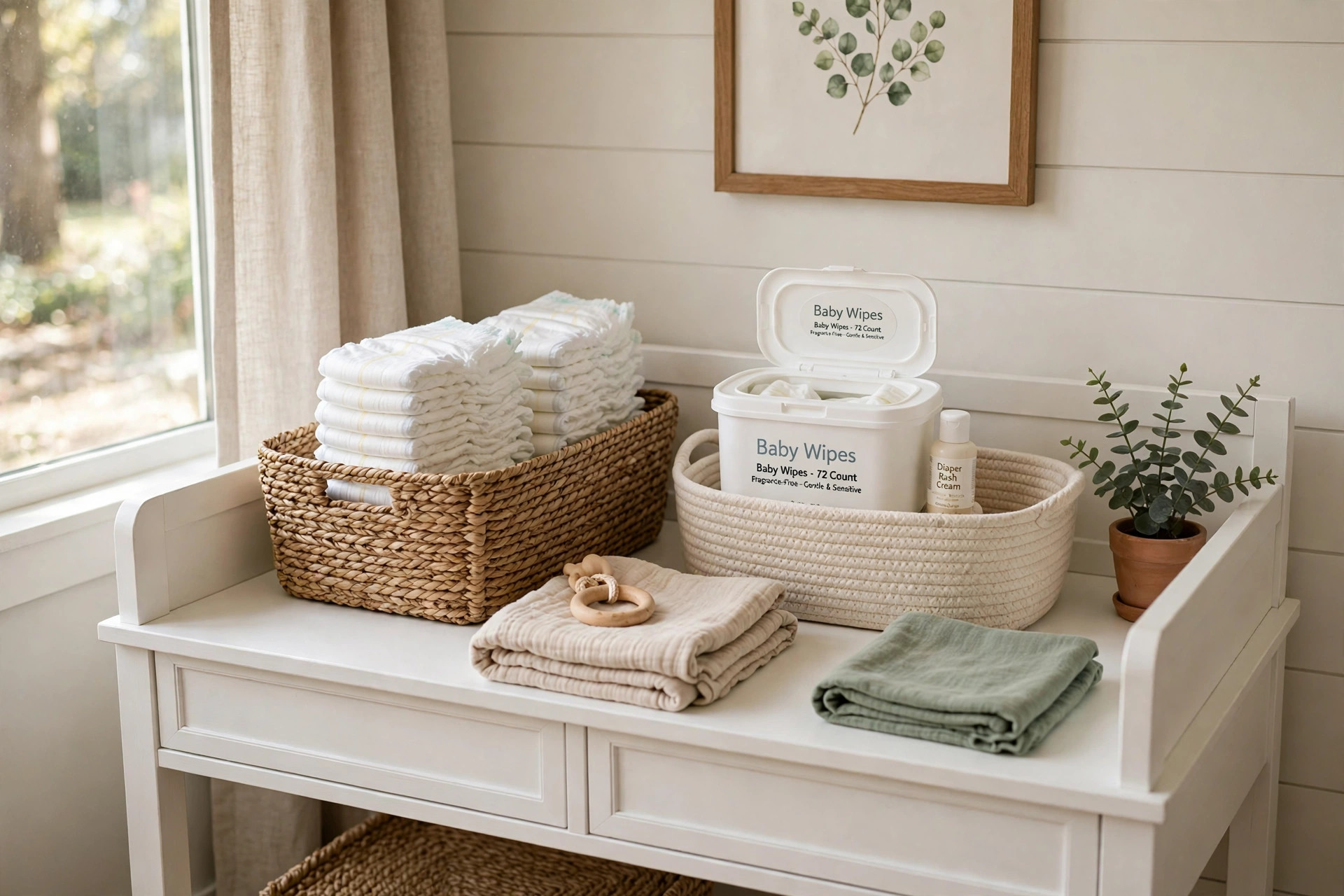
A good setup takes ten minutes. Put the changing table basket on the side of your dominant hand. If you are right-handed, the basket goes to the right of the changing pad. Stack diapers upright like files in a drawer, so you can pull one out with two fingers. Lay the wipe tub or pack flat on top or beside the stack. Stand the cream tube where you can grab it without looking.
Refill the basket every evening or every morning. A basket that runs empty at 3 a.m. is no help at all. Make refilling part of the bedtime routine. It takes one minute. Keep bulk supplies in a closet basket so the refill is fast. A nursery closet organizer for baby clothes nearby keeps the whole refill station in one corner.
Keep a small trash plan next to the table too. A lidded pail or a nursery hamper for dirty baby clothes handles dirty diapers and soiled clothes. The basket holds the clean supplies. The pail holds the mess. Never mix the two.
Care and Upkeep
Baskets in the nursery need regular cleaning. Wipe hard surfaces once a week with a damp cloth and mild soap. Wash fabric liners and cotton rope baskets in the washing machine once a month, or sooner if something spills. Let everything dry fully before you put diapers back in. Damp baskets can grow mildew, and mildew near a baby’s supplies is not safe.
Check the baskets every few months for wear. Look for broken weave, loose handles, and rough spots. Babies grow stronger and more curious each month. A basket that was fine for a newborn may need repair once a seven-month-old starts pulling up on the furniture. Replace any basket that is coming apart.
Rotate baskets as your needs change. When the baby outgrows newborn diapers, move that basket to the closet for the next size. When potty training starts, one basket can hold training pants and spare clothes instead. Good baskets serve the family for years.
Safety in the Nursery
Safety comes first with everything in a baby’s room. The U.S. Consumer Product Safety Commission offers guidance on nursery products and safe sleep, and its advice extends to how you set up the changing area. Keep these rules in mind.
Keep baskets stable. A heavy basket on a high shelf can fall. Place daily-use baskets at or below the changing table surface, never stacked high above the baby. Make sure shelves are anchored to the wall. A climbing toddler can pull a shelf down.
Keep small items out of reach. Diaper pins, if you use cloth diapers, should never sit loose in an open basket. Cream tubes with small caps are fine on the table during a change, but store them in the basket afterward, pushed to the back.
Watch for recalls. From time to time, a storage product is recalled for a safety defect. You can check recall lists on the CPSC site before you buy second-hand gear. It takes two minutes and gives real peace of mind.
Finally, never leave the baby alone on the changing table, even if the basket is right there. The basket makes supplies easy to reach. It does not make the table safe to walk away from. Keep one hand on the baby. Always.
Frequently Asked Questions
How many diapers should a basket hold?
A day’s worth is a good target. Newborns use eight to twelve diapers a day. A basket that holds twelve to fifteen diapers plus one pack of wipes will get you through a full day. Refill each evening so you start the morning ready.
Can I use the same basket for cloth and disposable diapers?
Yes, but keep them separate inside. Use one basket for clean cloth diapers and another for disposables, or use a divided caddy. Cloth diapers need air flow, so a woven basket works better than a sealed plastic box. The parenting health experts at HealthyChildren.org note that clean, dry storage helps keep diapering supplies sanitary.
What is the best basket material for a nursery?
Cotton rope and lined seagrass are the most popular picks. Both are sturdy, washable, and soft enough for a baby’s room. Avoid baskets with rough splinters or chemical smells. If a basket smells strongly when you open the box, air it out for a day before you use it.
Where should I put the basket if I have no changing table?
Use a dresser top with a changing pad, a crib-side shelf, or a rolling cart. A portable caddy with a handle works best here because you can carry it to wherever the change happens. Many small-space parents keep the caddy on a low shelf and bring it to the couch or bed for changes.
How do I keep wipes from drying out in a basket?
Keep wipes in their original resealable pack or tub, and set the pack inside the basket. Do not dump loose wipes into an open basket. If the pack seal weakens, move the wipes to a tub with a snap lid. A dried-out wipe is useless at 2 a.m.
Are expensive nursery baskets worth it?
Rarely. The job is simple: hold supplies where you can reach them. Mid-priced baskets from stores like Crate and Barrel or IKEA do the job as well as costly boutique brands. Spend the savings on diapers instead.
A Short Final Word
Nursery storage baskets for diapers and wipes are small things with a big job. They turn a frantic search into a calm reach. They keep the nursery tidy and the changing table safe. Choose baskets that are sturdy, washable, and the right size for your space. Set them up within arm’s reach. Refill them daily. The first weeks with a baby are hard enough. Let the baskets carry a little of the load.
References
American Academy of Pediatrics. (n.d.). HealthyChildren.org. https://www.healthychildren.org Apartment Therapy. (n.d.). Home design ideas and inspiration. https://www.apartmenttherapy.com Costco. (n.d.). Wholesale retailer. https://www.costco.com Crate and Barrel. (n.d.). Furniture and home decor. https://www.crateandbarrel.com IKEA. (n.d.). Home furnishings. https://www.ikea.com Pottery Barn Kids. (n.d.). Kids furniture and decor. https://www.potterybarnkids.com The Spruce. (n.d.). Home and garden advice. https://www.thespruce.com U.S. Consumer Product Safety Commission. (n.d.). Product safety information. https://www.cpsc.gov Walmart. (n.d.). Everyday low prices. https://www.walmart.com What to Expect. (n.d.). Pregnancy and parenting guidance. https://www.whattoexpect.com
Was this guide helpful?

About Emily Rodriguez
The My Garden US editorial team writes practical, in-depth home and garden guides for American homeowners — tested advice, no fluff.
You May Also Like

Crib Mobile Projector With Lullaby Music: A Complete Guide for New Parents
April 3, 2026 0 views
Nursery Wall Sconce for Soft Ambient Light: A Parent’s Guide
June 11, 2026 0 views
Nursery Rocker With Lumbar Support Pillow: A Parent’s Complete Guide
April 25, 2026 0 views