
When cold weather arrives, a pool owner must prepare the pool for months of rest. This salt water pool winterizing guide explains the full process in plain terms. It covers the chemistry, the salt cell, the plumbing, and the cover. Follow these steps, and your pool will open clean and clear in the spring.
Why Winterizing a Salt Water Pool Matters
A salt water pool works the same as any pool when winter comes. Water freezes. Pipes can crack. A A salt cell left in place can be damaged by ice. Algae can grow under the cover if the water chemistry is wrong. Good winter care protects your equipment and saves money.
Many owners think a salt water pool closes itself. It does not. The salt system only makes chlorine while the water is warm and the pump runs. Once the pool sits still and cold, you must take over. A careful closing in autumn means an easy opening in spring.
When to Close the Pool: Salt Water Pool Winterizing Guide
Timing matters. Close too early and algae can grow in warm water under the cover. Close too late and ice can damage the pool. Most pool care experts say to close when water stays below about 60 degrees Fahrenheit day and night.
Check the water temperature for several days. Use a pool thermometer, not a guess. In most of the northern United States, this point arrives in October or November. In warmer southern states, some owners keep the pool open all year. This guide is for owners who close for the winter season.
What You Will Need
Gather your supplies before you start. The job goes faster when everything is at hand. A standard closing needs the following:
– A good winter test kit for chlorine, pH, and alkalinity – Shock treatment for pools – A quality algaecide made for winter – Pool antifreeze or air pillow plugs for lines – A pool cover in good repair – Water tubes or cover weights if you use a standard cover – A winter cover for the skimmer and return line plugs – A wrench set and screwdriver for the salt cell – A clean place to store the salt cell indoors
You can find most of these at a local pool shop or a home center like Home Depot. Buy winter chemical kits made for salt water pools when you can.
Step One: Test and Balance the Water
Start with the water. Bad chemistry under the cover causes stains, scale, and algae. Test the water one week before you plan to close. Then test again on closing day.
Bring each reading into the right range:
– pH between 7.2 and 7.6 – Total alkalinity between 80 and 120 parts per million – Calcium hardness between 200 and 400 parts per million – Salt level in the range your cell maker suggests, often 2700 to 3400 parts per million
Do not add salt at closing time to raise the level for next spring. It can settle and stain. Adjust salt in spring when the pump runs again. For more detail on pool water care, sites like Swim University offer clear guides.
Step Two: Clean the Pool Well
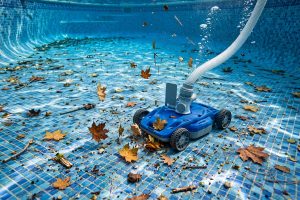
A dirty pool grows algae under the cover. Vacuum the pool floor with care. Brush the walls and steps. Skim the surface. Empty the skimmer baskets and the pump basket.
Clean the filter too. Backwash a sand or DE filter. Rinse a cartridge filter with a hose. A clean filter will sit in better shape through winter and start up faster in spring.
Remove ladders, rails, and toys from the water. Store them in a dry place. They last longer out of the weather. If your family also uses pool toys for toddlers, rinse and dry them before storage so mold does not grow.
Step Three: Shock the Pool and Add Algaecide
On closing day, shock the pool. Use a chlorine shock that works with salt water systems. Follow the dose on the label for your pool size. Run the pump all day so the shock spreads through the water.
That evening, add a winter algaecide. Pour it around the edge of the pool while the pump runs. Give it an hour or two to mix. The shock kills what lives in the water now. The algaecide keeps algae from starting during the cold months.
Step Four: Protect the Salt Cell
The salt cell is the heart of a salt water pool. It needs special care at closing time. Turn off the power to the salt system at the breaker. Never work on the cell with power on.
Open the cell housing. Pull the cell out. Rinse it with a garden hose to remove scale and debris. Look at the plates inside. If you see heavy white buildup, soak the cell in a mild acid wash made for salt cells. Follow the maker directions exactly. Wear gloves and eye protection when you use acid.
Store the cell indoors for the winter. A garage or basement shelf works well. Hot Spring spa owners follow the same rule for their equipment. Keep it upright and dry. Do not leave it outside in the cold. Replacement cells cost several hundred dollars, so this step matters.
Close the cell housing with a winter bypass cap or plug so debris stays out of the line. Some owners buy a dummy cell or a straight pipe to keep water out of the housing.
Step Five: Lower the Water and Blow the Lines
Lower the water to below the skimmer mouth. For most inground pools, drop it about 4 to 6 inches below the skimmer. Some owners lower it below the return jets too. Check your pool type and your local frost line before you decide.
Drain the pump, filter, heater, and salt system housing. Remove the drain plugs and store them in the pump basket so you can find them in spring. Open any valves so water can drain out.
Blow the lines with a shop vacuum or a blower. Push air through the skimmer line, the return lines, and the main drain line. When water stops coming out, plug each line at the pool. Use winter plugs that fit tight. This step keeps trapped water from freezing and cracking the pipes.
Add pool antifreeze to the lines if your area gets hard freezes. Pour it in before you plug the line. This is cheap insurance in cold states.
Step Six: Install the Cover
A good cover keeps leaves and dirt out of the pool. It also blocks sunlight, which slows algae growth. There are two main types of winter covers.
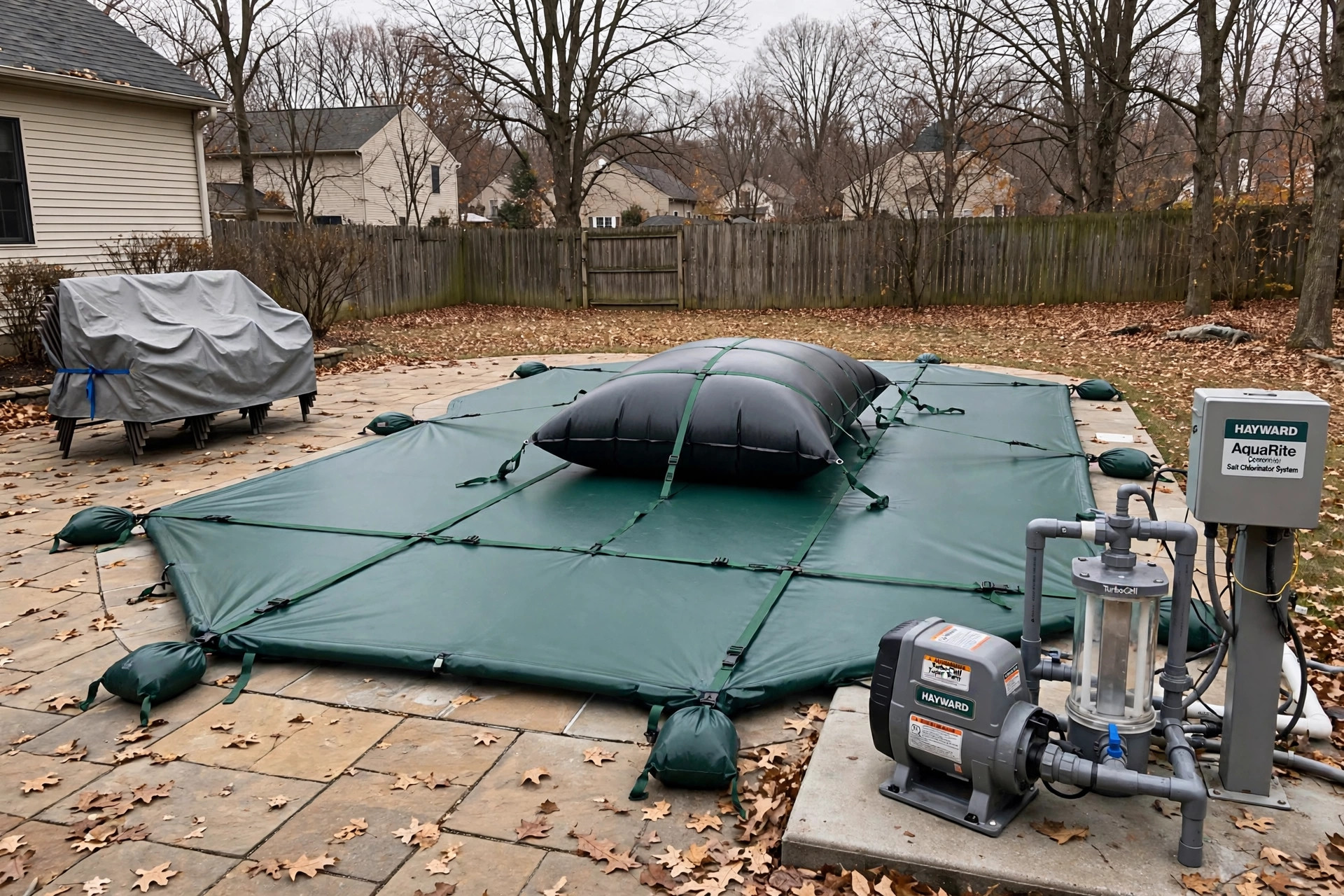
Standard winter covers float on the water and anchor to the deck with water tubes. They cost less and work for most pools. Safety covers attach to anchors in the deck and stretch tight over the pool. They cost more but hold more weight and keep children and pets safer.
Stretch the cover over the pool. Center it well. Fill the water tubes only about three quarters full so ice can expand. Place them around the edge with no gaps. If you use a safety cover, attach each strap to its anchor and pull it snug.
Lay an air pillow in the center of the pool under a standard cover. The pillow takes the pressure of ice as it forms. It helps the cover last longer.
Check the cover once a month in winter. Pump off standing water after heavy rain. Clear heavy snow with care. Do not walk on the cover.
Cost and Price of Winterizing
Many owners close the pool themselves. The chemical kit and supplies cost about 50 to 150 dollars. A new standard winter cover costs 100 to 400 dollars, depending on pool size and quality. A safety cover costs much more, often 800 to 2500 dollars, but it lasts many years.
Hiring a pool company to close the pool costs about 200 to 400 dollars in most areas. They bring their own blower and chemicals. Some owners do the chemistry themselves and hire help only for the lines and cover. This middle path saves money and lowers risk.
Replacing a cracked pump or a damaged salt cell costs far more than a proper closing. The winter work is cheap compared to a spring repair bill.
Care and Upkeep During Winter
The pool does not need much care under the cover, but it should not be ignored. Check the cover each month. Keep the water level right. If the pool water rises high after rain, pump some out from under the cover.
Watch for a torn cover or loose straps. Fix small tears with a cover patch kit. A small tear grows into a large one under wind and snow.
Do not add chemicals through the winter unless you test first. Most closed pools hold their balance well if they were closed right. If you open the cover in early spring and see green water, act fast. The longer algae grows, the harder it is to clear.
Safety Around a Closed Pool
A closed pool still needs safety care. A safety cover that meets industry standards holds weight and keeps people and animals from falling in. Standard winter covers do not hold weight. Keep children and pets away from them.
Fence rules still apply in winter. Keep gates locked. Store chemicals in a cool, dry place away from children. Read safety advice from the U.S. Consumer Product Safety Commission on pool barriers and drain safety.
Never mix chemicals. Store shock and algaecide apart. Keep the containers closed and dry. Wear gloves and eye protection when you handle pool chemicals.
Common Mistakes to Avoid
Many spring problems start with closing mistakes. Watch for these:
– Closing with warm water. Wait for the water to cool so algae stays quiet. – Skipping the algaecide. Shock alone does not protect for months. – Leaving the salt cell outside. Ice and cold shorten its life. – Forgetting to drain the heater. Trapped water can crack the heat exchanger. – Using a torn cover. Leaves and light feed algae all winter. – Adding salt at closing. It can stain the pool surface over the winter.
Take your time with each step. A careful hour in autumn saves many hours in spring.
Types of Winter Covers and Options
Not every pool needs the same cover. A small above ground pool may use a simple tarp style cover with a cable and winch. An inground pool uses either a standard or safety cover. Owners who upgrade pool lights or add a heat pump should still close the same way each autumn. For general pool care how-to guides, The Spruce has clear seasonal checklists.
If your winters are mild, you might run the pump on cold nights instead of closing. This is called winter running. It works only where freezes are light and rare. In most of the country, a full closing is the safer choice.
What to Do in Spring
When warm weather returns, open the pool before the water warms past 60 degrees. Remove the cover and clean it before you fold and store it. Fill the pool to normal level. Reinstall the salt cell, ladders, and rails.
Start the pump and filter. Test the water. Adjust pH and alkalinity first, then bring the salt level back to the right range. Only then should you turn on the salt system. Shock the pool once more if the water is cloudy. Your pool should be swim ready within a few days.
Frequently Asked Questions
Should I turn off the salt system before closing?
Yes. Turn off the salt system at the breaker before you remove the cell. The cell should not run while the pool is closed. Running it in cold water wears it out fast.
Can I leave the salt cell in the pool over winter?
You can, but it is not wise. Ice, cold, and still water can damage the plates. Store the cell indoors. It takes ten minutes and protects a costly part.
Do I need to drain a salt water pool for winter?
No. Do not drain the whole pool. Draining can damage the liner or pop the shell out of the ground. Lower the water a few inches below the skimmer and no more.
Will salt damage the cover?
Normal pool salt levels do not harm a winter cover. Rinse the cover before you store it in spring. Keep the cover straps and tubes clean and dry.
Can I close the pool myself?
Most owners can. The steps are simple and the tools are basic. If your plumbing is complex or you have a heater and spa combo, hiring a professional for the first year is smart. Watch and learn, then do it yourself next time.
What if I open to green water in spring?
Test the water first. Brush the walls. Shock the pool and run the filter around the clock. Clean the filter often. A salt system alone will not clear a green pool fast. Use shock and patience, and the water will clear.
A Final Word
A salt water pool rewards steady care. Winterizing is part of that care. Test the water, clean the pool, protect the salt cell, drain the lines, and cover it well. Each step is simple on its own. Together they guard your pool through the cold months.
If you are shopping for parts or a new pool filter this season, compare options at a retailer like Leslie’s Pool Supplies or a warehouse source like Pool Warehouse. For hot tub owners facing the same seasonal work, Bullfrog Spas has winter care tips too. Plan your closing for a calm dry day, and work through the steps in order. Come spring, your salt water pool will be ready for a new season.
References
Bullfrog Spas. (n.d.). Hot tubs and spas. https://www.bullfrogspas.com Hot Spring Spas. (n.d.). Hot tubs and spas. https://www.hotspring.com Leslie’s Pool Supplies. (n.d.). Pool supplies and equipment. https://www.lesliespool.com Pool Warehouse. (n.d.). Pool equipment and supplies. https://www.poolwarehouse.com Swim University. (n.d.). Pool and hot tub care guides. https://www.swimuniversity.com The Home Depot. (n.d.). Home improvement products. https://www.homedepot.com The Spruce. (n.d.). Home and garden advice. https://www.thespruce.com U.S. Consumer Product Safety Commission. (n.d.). Product safety information. https://www.cpsc.gov
Was this guide helpful?

About Robert Taylor
The My Garden US editorial team writes practical, in-depth home and garden guides for American homeowners — tested advice, no fluff.
You May Also Like
How to Shock Hot Tub After Use: A Clear Guide
September 9, 2026 0 views
How to Balance Pool Water Chemistry: A Clear Guide for Pool Owners
June 3, 2026 0 views
Best Pool Vacuum for Leaves Reviews: A Plain Guide for Pool Owners
January 18, 2026 0 views