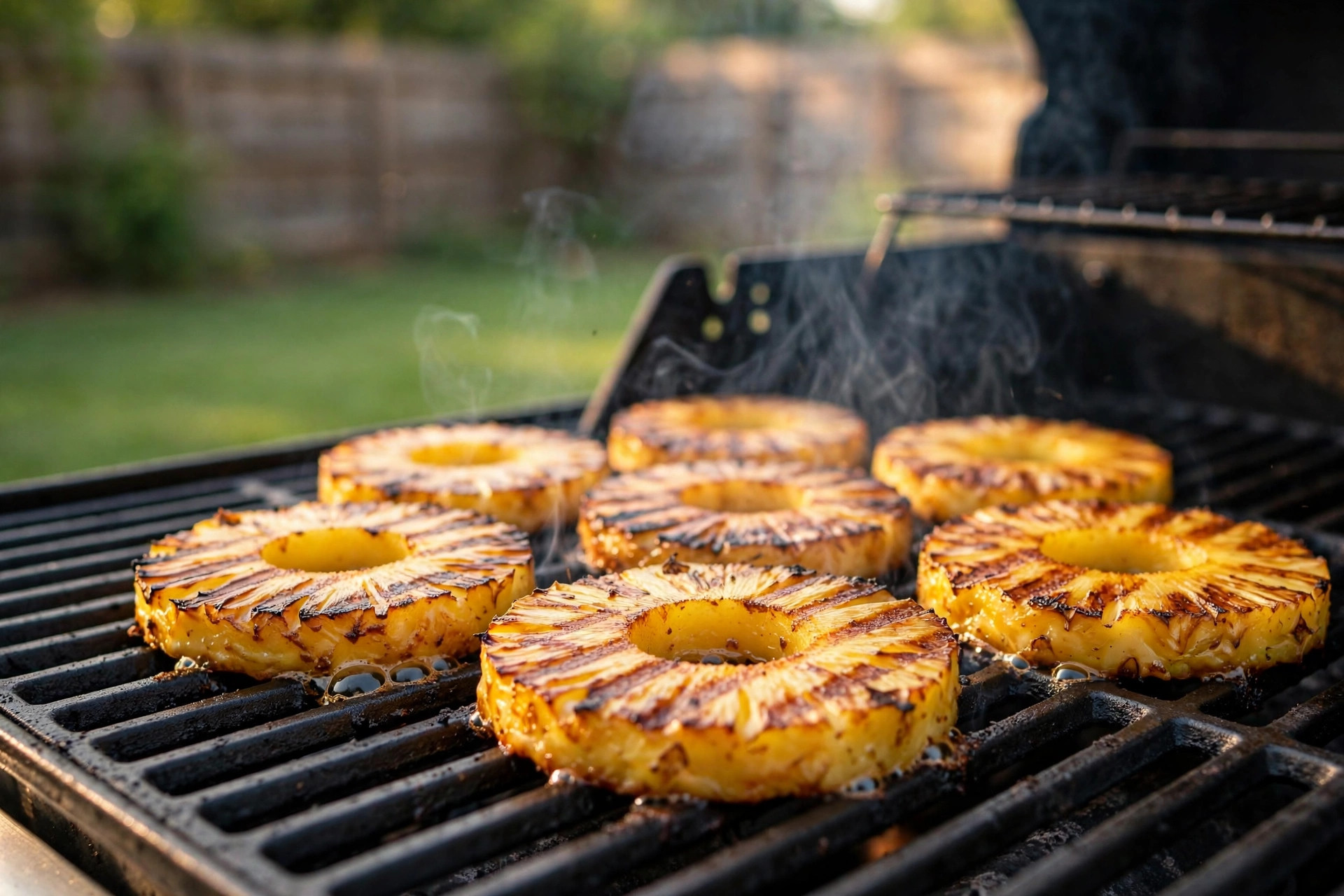
Learning how to grill pineapple for dessert is one of the easiest upgrades a home cook can make to a backyard cookout. The hot grates turn plain fruit into something warm, sweet, and rich. The natural sugars in the pineapple caramelize, the edges pick up gentle char, and the flesh grows soft and juicy. Served warm with ice cream or a drizzle of honey, it tastes like a treat from a restaurant kitchen. The good news is that it takes only a few minutes and a few simple tools. This guide walks through every step in plain terms, from picking the right fruit to cleaning the grill when the meal is done.
Why Grilled Pineapple Deserves a Place at Dessert
Most desserts come from the oven. Grilled pineapple comes from the fire, and that makes all the difference. Direct heat works fast on fruit. In two to four minutes per side, the outside of each slice develops golden grill marks while the inside turns tender. The flavor changes too. Raw pineapple is bright and sharp. Cooked pineapple is mellow and round, with a deep sweetness that feels almost like brown sugar.
There is a practical side as well. After the main course is done, the grill is already hot. Instead of letting the heat go to waste, cooks can slide on a tray of fruit and have dessert ready before the table is cleared. That is why grilled pineapple has become a classic finish to summer meals. It pairs well with almost anything served at a cookout, from burgers and ribs to grilled pizza on a gas grill.
Guests often remember it. A plate of warm pineapple rings with grill marks looks impressive, yet the work behind it is small. For new grill owners, it is also a low-risk way to practice heat control. Fruit is cheap, the cooking time is short, and mistakes are easy to fix. That makes this dessert a fine training ground before moving on to longer, harder cooks.
Choosing the Right Pineapple: How to Grill Pineapple for Dessert
The final dessert is only as good as the fruit that goes on the grill. A little care at the store pays off later.
How to Pick a Ripe Pineapple
Look for a pineapple that feels heavy for its size. Heaviness means juice. The skin should be golden yellow across most of the fruit, with green tones mostly gone. Press the bottom gently with a thumb. It should give just a little. A strong sweet smell at the base is a good sign. Avoid fruit with soft dark spots, mold around the crown, or a sour smell. Those marks point to overripe or spoiled flesh that will turn mushy on the heat.
Fresh fruit matters more here than in baking. When you grill pineapple for dessert, there is no batter or frosting to hide a bland or woody slice. The grill magnifies what is already in the fruit. A ripe, sweet pineapple becomes sweeter. A green, sour one stays sour, even with grill marks.
Fresh Versus Canned Pineapple
Fresh pineapple is the best choice. Its slices are thick, firm, and hold together on the grates. Canned pineapple works in a pinch, but the thin rings tear more easily and the texture is softer. Canned fruit also sits in syrup, which can make the grill sticky and cause flare-ups. If canned is all that is on hand, drain the rings well and pat them dry with paper towels before grilling. Keep the heat moderate so the extra sugar does not burn.
Cored fresh pineapple is the sweet middle ground. Many stores sell it peeled and cored, which saves the hardest prep work while keeping the firm fresh texture.
What You Will Need
The tool list is short. Most grill owners already have everything.
Tools and Equipment
– A grill, gas or charcoal, with clean grates. A guide to cleaning stainless steel grill grates is worth a look before fruit touches the metal, because sticky sugar residue burns fast. – Long tongs for turning the slices without piercing them. – A sharp chef’s knife and a cutting board for slicing. – A pastry brush for applying glaze. – A plate or tray for carrying the finished dessert.
Optional but helpful: a grill basket or a perforated grill pan. These keep small pieces from slipping through the grates and are handy when working with skewers or cubes.
Glazes and Toppings
Plain grilled pineapple is already good. A light glaze makes it better. Brown sugar mixed with melted butter is the classic choice. Honey works too, and a pinch of cinnamon or nutmeg adds warmth. Some cooks brush on a little rum or coconut milk for a tropical note. Keep the glaze thin. Thick coats drip, burn, and cause the very flare-ups that careful grillers work to avoid.
For serving, vanilla ice cream is the most loved partner. The cold cream against the warm fruit is a fine contrast. Other options include coconut whipped cream, a scoop of sorbet, crushed macadamia nuts, toasted coconut flakes, or a spoonful of Greek yogurt for a lighter plate.
Types and Options: Rings, Spears, and Skewers
There are three common ways to cut pineapple for the grill. Each has its uses.
Rings are the classic cut. Slice the peeled fruit into rounds about three-quarters of an inch thick. Rings are wide and stable, so they sit flat on the grates and pick up even grill marks. They also make the prettiest plate. Remove the tough core from each ring with a small round cutter or a paring knife before grilling.
Spears come from cutting the peeled pineapple lengthwise into long wedges. Spears are thick and sturdy, which makes them the easiest cut for beginners to handle with tongs. They brown well on all sides if turned twice.
Skewers use one-inch cubes threaded on soaked wooden sticks or metal skewers. This style suits parties, since each guest can take one stick. It is also a good way to mix in other fruit, such as peach halves or mango chunks. Keep the cubes large so they do not dry out, and turn the skewers often.
Whichever cut is chosen, keep the pieces even in size. Even thickness means even cooking, and no slice turns to mush while another is still raw in the middle.
Step by Step: How to Grill Pineapple
1. Heat the grill. Aim for medium to medium-high heat, about 350 to 400 degrees Fahrenheit. Let the grates get fully hot before the fruit goes on. 2. Clean and oil the grates. Scrub with a grill brush, then wipe the hot grates with a folded paper towel dipped in a little vegetable oil, held with tongs. Clean, oiled grates stop the sugary fruit from sticking. 3. Prep the fruit. Peel, core, and slice the pineapple into rings, spears, or cubes. Pat the pieces dry so they sear instead of steam. 4. Optional glaze. Brush a thin layer of melted butter and brown sugar on both sides. A dusting of cinnamon can go on now too. 5. Place on the grates. Lay the pieces in a single layer with a little space between them. Do not crowd the grill. 6. Cook two to three minutes. Leave the fruit still so the grates leave clean marks. Then turn each piece with tongs. 7. Cook the second side. Two to three minutes more. The fruit is done when it has clear grill marks, softened edges, and a glossy, caramelized surface. 8. Rest and serve. Move the pineapple to a plate and let it rest for two minutes. Serve warm.
Heat, Timing, and Temperature
Heat control is the whole craft. Medium heat gives the best result. Too little heat and the fruit steams and goes limp without color. Too much heat and the sugar burns black before the inside softens. On a gas grill, set the burners to medium and let the lid stay open for direct grilling. Many guides to gas grill heat control stress this same point: steady medium heat beats bursts of high heat.
On a charcoal grill, wait until the coals are covered in light gray ash, then spread them in an even layer. Makers of ceramic charcoal cookers share similar advice for steady direct heat in their charcoal grill guides. A pellet grill works well too, though it shines at lower temperatures; pellet grill makers note that high direct heat needs the right setting in their pellet grill resources.
Timing stays short in every case. Two to three minutes per side is the rule. Fruit with more sugar, or fruit brushed with glaze, may need the heat turned down slightly. Watch for flare-ups when drips fall on hot coals or burners. If flames jump up, move the fruit to a cooler spot for a moment. Temperature control is a skill that carries over to every other cook, and sites like AmazingRibs explain the science of heat and sugar in useful depth for curious grillers.
Cost and Price
This dessert is kind to the wallet. A whole fresh pineapple usually costs between three and six dollars, depending on the season and the region. One fruit yields about eight to ten rings, enough for four to six servings. Glaze ingredients like butter, brown sugar, and cinnamon add only pennies per serving when taken from a stocked pantry.
There is no special gear to buy. The same tongs, brush, and grill used for the main course do this job. Compared with bakery desserts or store-bought sweets, grilled pineapple may be the cheapest impressive dessert a cook can make. Home cooks comparing the cost of cookout gear often turn to grill buying guides and independent grill reviews to plan their budgets, and fruit desserts add almost nothing to the total.
Care and Upkeep of Your Grill
Sugar is the enemy of clean grates. After grilling pineapple, the grates will carry sticky caramel residue. While the grill is still warm, scrub the grates with a sturdy brush. For stubborn spots, close the lid and let the heat burn off the residue for ten minutes, then brush again. Grill care guides from makers like Char-Broil recommend this burn-off step after every sugary cook.
Check the drip tray or grease cup after dessert is done. Sweet drippings can collect there and smoke on the next cook. Empty and wipe it while it is still easy to clean. Once a season, give the whole grill a deep clean: remove the grates, wash them with warm soapy water, and check the burners or coals for buildup. Guides to direct and indirect heat setups often include care tips, since a clean grill holds heat more evenly.
Good upkeep does more than keep the grill pretty. Clean grates release food cleanly, which means cleaner grill marks on the next batch of pineapple. For more ideas on what to cook on a well-kept grill, The Spruce Eats keeps a wide collection of grilled fruit and dessert ideas.
Safety
Grilling is safe when a few basic rules are followed.
Keep the grill on a flat, stable surface away from the house, railings, and overhanging branches. Never use a grill indoors or in a closed garage. Charcoal grills give off carbon monoxide, which is deadly in closed spaces.
Watch for flare-ups. Sugary drips from pineapple can catch fire on hot burners or coals. Keep a spray bottle of water nearby for small flames, and know where the grill’s shut-off or vent controls are. Long tongs and heat-safe gloves keep hands away from the heat while turning fruit.
Let the grill cool fully before covering it or moving it. Keep children and pets at a safe distance while the grates are hot, and never leave a lit grill unattended.
Frequently Asked Questions
Can I grill pineapple on a gas grill?
Yes. A gas grill is ideal for this dessert because the heat is easy to control. Preheat to medium, about 350 to 400 degrees, clean and oil the grates, and grill the slices for two to three minutes per side. The steady heat gives even grill marks without burning the sugar.
Should I use fresh or canned pineapple?
Fresh is best. It is firmer, sweeter, and holds its shape on the grates. Canned pineapple can work if drained and patted very dry, but the thin rings are fragile and the syrup can cause sticking and flare-ups. If using canned, watch the heat closely.
How do I keep pineapple from sticking to the grill?
Clean grates are the first defense. Scrub them while hot, then oil them with a paper towel held in tongs. Pat the fruit dry before it goes on, and do not move the slices for the first two minutes so a sear can form. A light brush of oil or butter on the fruit also helps.
What goes well with grilled pineapple?
Vanilla ice cream is the classic partner. Coconut whipped cream, sorbet, Greek yogurt, toasted coconut, and crushed nuts all work well. A drizzle of honey or a squeeze of lime brightens the plate. It also pairs nicely with pound cake or angel food cake.
How long does grilled pineapple keep?
Refrigerate leftovers in a covered container. They keep for three to four days. The texture softens in the fridge, so leftovers are best chopped into yogurt, oatmeal, or salads rather than served on their own. Reheat gently in a skillet if a warm serving is wanted.
A Short Final Word
Grilled pineapple for dessert asks little and gives much. A ripe fruit, a hot grill, and a few quiet minutes are all it takes. The result is warm, caramelized, and memorable, the kind of simple dish that guests ask about long after the cookout ends. Try it once, and it may become the regular finish to every grilling season.
References
AmazingRibs.com. (n.d.). Barbecue and grilling science. https://www.amazingribs.com Big Green Egg. (n.d.). Kamado grills and outdoor cooking. https://www.biggreenegg.com Char-Broil. (n.d.). Gas and charcoal grills. https://www.charbroil.com Consumer Reports. (n.d.). Product reviews and ratings. https://www.consumerreports.org Napoleon. (n.d.). Fireplaces, grills, and heating products. https://www.napoleon.com The Home Depot. (n.d.). Home improvement products. https://www.homedepot.com The Spruce Eats. (n.d.). Recipes and cooking guides. https://www.thespruceeats.com Traeger. (n.d.). Wood pellet grills. https://www.traeger.com Weber. (n.d.). Grills and outdoor cooking. https://www.weber.com
Was this guide helpful?

About Michael Thompson
The My Garden US editorial team writes practical, in-depth home and garden guides for American homeowners — tested advice, no fluff.