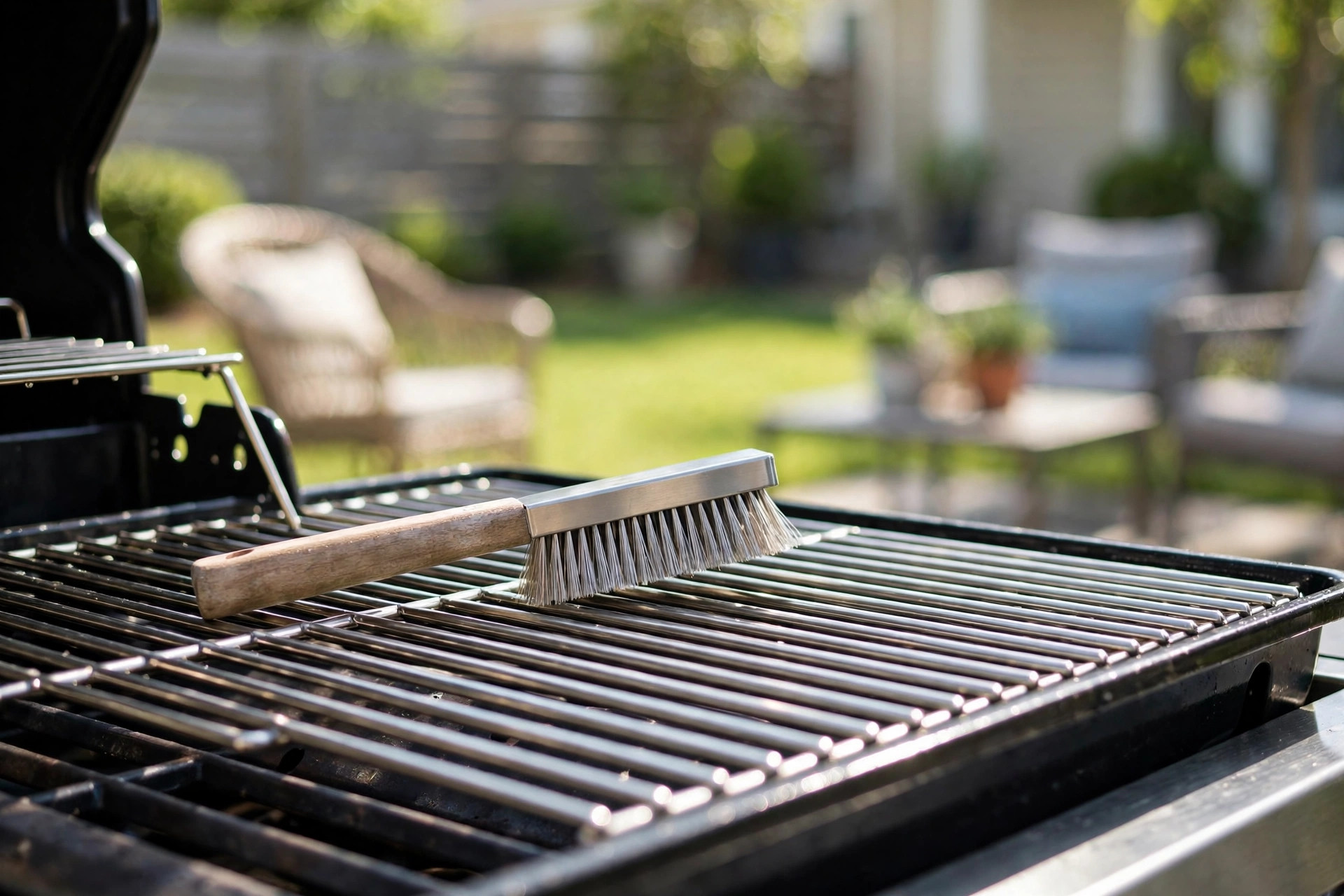

Every grill owner faces the same problem at some point. The grates are covered with old grease and stuck bits of food. The shine is gone. Smoke rises each time the lid opens. Learning how to clean stainless steel grill grates the right way brings the grates back to life and makes every meal taste better.
Stainless steel is a strong and trusted material. It resists rust better than plain iron. It heats well and holds its shape for years. But it is not self cleaning. Grease and food bake onto the bars each time you cook. If you leave them, the layer grows thick. Food sticks to it. Flare-ups grow worse. The flavor of last month’s burgers seeps into tonight’s chicken. A clean set of grates solves all of this in less than an hour.
Why Clean Grates Matter
Clean grates are not only about looks. They change how the food cooks. Bare steel passes heat fast and even. A thick crust of old grease slows the heat and makes hot spots worse. Steaks sear less well. Vegetables stick and tear.
Old grease is also a fire risk. Layers of fat can catch fire during a long cook. A grease fire is fast and hard to control. Clean grates lower that risk a great deal.
Health is another reason. Rancid grease smells bad and can carry old char that no one wants on fresh food. A short cleaning routine keeps the cooking surface fresh and safe. Good habits here protect the grill too. When you also clean gas grill burners properly, the whole unit runs cooler, safer, and longer.
What You Need Before You Start: How to Clean Stainless Steel Grill Grates
Gather your tools before the grates cool down from the last cook. Warm grates are easier to clean than cold ones.
You will need:
– A stiff grill brush with stainless steel or brass bristles – A plastic putty knife or wooden scraper – A bucket of hot water – Dish soap – Baking soda – White vinegar – Heavy rubber gloves – Clean rags or shop towels
Some people skip the wire brush and use a grill brush made for cast iron grates or a brass brush instead. Brass is softer than steel and safe on most grates. Avoid cheap wire brushes with loose bristles. Loose bristles can break off and end up in food, which is a real danger. Guides from Weber and Char-Broil both warn against worn brushes for this reason.
Do not use oven cleaner or harsh acids on stainless steel. They can stain the metal and leave residues that are hard to rinse. Simple cleaners do the job.
The Quick Method: Heat and Brush
This method takes ten minutes and works well for light to medium buildup. Do it after every cook and you may rarely need a deep clean.
1. Close the lid and turn all burners to high for ten to fifteen minutes. The heat will burn off most stuck food. 2. Turn the burners off. Open the lid carefully. 3. While the grates are still hot, scrub them with a stiff grill brush. Use firm, even strokes along the bars, not across them. 4. Dip the brush in water now and then. The steam helps lift grease. 5. Let the grates cool a little. Wipe each bar with a damp rag wrapped around your brush or tongs. 6. Finish by wiping a thin coat of high heat cooking oil on the bars with a folded rag. This helps food release next time.
This burn-off method is the standard advice from makers such as Napoleon and Broil King. It is fast, it uses no chemicals, and it works on gas and charcoal grills alike.
The Deep Clean Method: Soak and Scrub
When the buildup is thick, the quick method is not enough. A deep clean takes more time but restores grates that look ruined.
1. Remove the grates from the grill once it is fully cool. 2. Fill a large tub or laundry sink with hot water and a few drops of dish soap. Add one cup of baking soda per gallon of water. 3. Lay the grates in the tub. Let them soak for one to two hours. For heavy buildup, soak overnight. 4. Lift the grates out and scrub each bar with your brush and a paste of baking soda and water. Use the plastic scraper on thick spots. 5. Spray or wipe the grates with white vinegar. The fizzing action helps lift the last film. 6. Rinse well with clean hot water. Dry each bar fully with a towel. Never leave stainless steel wet in the air, or water spots will form. 7. Put the grates back in the grill. Heat the grill on high for ten minutes to dry the metal fully, then oil the bars lightly.
Many grill care guides, including those at Traeger and Big Green Egg, favor this soak-and-scrub approach for seasonal cleaning. The Spruce Eats (The Spruce Eats) offers similar step-by-step care advice for home cooks.
Types of Stainless Steel Grates
Not all stainless steel grates are the same. Knowing your type helps you clean it right.
Solid rod grates. These are round bars of solid steel. They are heavy and hold heat well. They can take firm scrubbing with a steel brush. Most high-end gas grills use these.
Stamped or wire grates. These are thinner and lighter. They cost less and appear on many budget grills. Use a brass brush or a soft pad on these to avoid bending the wires.
Porcelain-coated steel grates. These look like stainless steel but carry a glass-like coating. Never use a steel brush on them. The coating can chip. Use a brass brush or a nylon pad only.
If you are not sure which type you have, check the manual or the maker. A quick look at the model page on sites like Home Depot often shows the grate material in the specs.
Cost of Cleaning: What It Takes
One of the best things about this job is the low cost. You need no special machines and no costly chemicals.
– A good grill brush: 10 to 25 dollars – Dish soap, baking soda, and vinegar: under 10 dollars, and you likely own them – Rubber gloves: about 5 dollars – Replacement grates, if yours are too far gone: 30 to 120 dollars depending on size and brand
Consumer testing groups such as Consumer Reports often note that steady care is cheaper than replacement. A set of grates can last a decade or more with regular cleaning. Skip the care and you may buy new ones every few years.
Deep cleaning supplies from the hardware store, such as grate cleaning sprays, run 8 to 15 dollars a bottle. They work, but the baking soda method costs far less and avoids strong fumes. Reviews and technique tips at AmazingRibs often favor simple methods over costly products.
Common Mistakes to Avoid
Many grill owners hurt their grates by accident. The most common error is using a paint scraper or a screwdriver on stuck food. Sharp steel tools gouge the bars and leave rough spots where food sticks worse than before. A plastic scraper or a wooden paddle does the job without damage.
Another mistake is skipping the rinse. Baking soda and soap left on the bars will smoke and taste bitter on the next cook. Always rinse with clean water and dry the grates fully. Water left standing on steel leaves spots and can start small pits over time.
Some people clean only the top of the bars. The sides and the underside collect grease too. Turn each grate over during a deep clean and scrub the bottom. Grease fires often start in the grease no one sees.
A fourth mistake is oiling cold grates with too much oil. Heavy oil drips onto the burners and flares up on the next lighting. A thin wipe is enough. If the rag drips, you used too much.
Finally, do not use the same brush on porcelain-coated grates and bare steel grates without checking. A brush that is fine for solid rod steel can chip a coating. Keep a soft brush for coated grates and a stiff one for bare steel. Mark them so you do not mix them up.
Care and Upkeep Through the Season
A grill works best with a small routine.
– After each cook: burn off and brush, then oil lightly. Ten minutes. – Each month in grilling season: check for grease in the drip tray and under the burners. Empty and wipe the tray. – Each spring: do the full deep clean. Remove the grates, soak, scrub, and inspect. Look for loose wires, deep pitting, or warped bars. Replace any grate that is cracked or deeply pitted. – Each fall: clean before storage. Oil the grates lightly to guard against moisture over winter. Cover the grill with a fitted cover.
If you own a cast iron grate as well as steel, note that care differs. Cast iron needs seasoning after cleaning. A guide to seasoning cast iron grill grates walks through that separate process. Do not soak cast iron; it will rust.
Safety Notes
Safety comes first with any hot work.
– Always wear heat-safe gloves when brushing hot grates. – Keep a spray bottle of water nearby to calm small flare-ups. – Work in open air. Never heat a grill in a garage or under a low roof. – Check your brush before each use. If bristles are loose or the head is worn, replace it at once. Loose bristles are the top grill safety issue each summer. – Rinse all soap and vinegar off the grates fully. Leftover cleaner can smoke and taste bad. – Let cleaners work, but never mix bleach with other cleaners. You do not need bleach for grates at all.
Keep children and pets away from the grill while it is hot and while you clean. Hot metal stays hot longer than most people expect.
Frequently Asked Questions
How often should I clean stainless steel grill grates? Brush the grates after every cook. Do a deep soak-and-scrub clean two to four times per grilling season. Grills used daily may need deep cleaning once a month.
Can I put stainless steel grates in the dishwasher? No. Most grates are too large, and the harsh detergent can dull the steel. The sink soak method cleans better and is safer for the metal.
Will a wire brush scratch stainless steel grates? A steel brush can leave light marks on solid rod grates, but this is normal and harmless. On thin wire grates, use a brass brush to avoid damage. On porcelain-coated grates, never use a wire brush at all.
What is the best homemade cleaner for grill grates? A paste of baking soda and water, followed by a wipe with white vinegar, handles most buildup. It is cheap, safe, and rinses clean. Dish soap and hot water do the rest.
How do I stop food from sticking to clean grates? Heat the grill fully before the food goes on. Oil the grates lightly with a rag and tongs. Put the food down and leave it alone for a minute before moving it. Most sticking happens when food is moved too soon on a cool grate.
When should I replace stainless steel grates instead of cleaning them? Replace grates that are warped, cracked, deeply pitted, or rusted through. Surface stains and light rust can be cleaned. Structural damage cannot. New grates restore even heating at once.
A Final Word
Clean grates are the simplest upgrade any grill owner can make. The tools cost little. The work takes minutes after each cook. The reward is better sear, cleaner flavor, and a grill that lasts years longer.
Start tonight. Burn off the old layer, brush the bars clean, and oil them lightly. Then keep the habit. Your grill will thank you with every meal.
References
AmazingRibs.com. (n.d.). Barbecue and grilling science. https://www.amazingribs.com Big Green Egg. (n.d.). Kamado grills and outdoor cooking. https://www.biggreenegg.com Broil King. (n.d.). Gas and charcoal grills. https://www.broilkingbbq.com Char-Broil. (n.d.). Gas and charcoal grills. https://www.charbroil.com Consumer Reports. (n.d.). Product reviews and ratings. https://www.consumerreports.org Napoleon. (n.d.). Fireplaces, grills, and heating products. https://www.napoleon.com The Home Depot. (n.d.). Home improvement products. https://www.homedepot.com The Spruce Eats. (n.d.). Recipes and cooking guides. https://www.thespruceeats.com Traeger. (n.d.). Wood pellet grills. https://www.traeger.com Weber. (n.d.). Grills and outdoor cooking. https://www.weber.com
Was this guide helpful?

About James Carter
The My Garden US editorial team writes practical, in-depth home and garden guides for American homeowners — tested advice, no fluff.
You May Also Like

Best Outdoor Smoker for Apartments: A Practical Guide
March 17, 2026 0 views
Best BBQ for Labor Day Cookout: A Plain Guide to Picking the Right Grill
July 28, 2026 0 views
Best Outdoor Spice Rack for Grill Station: What to Know Before You Buy
February 3, 2026 0 views