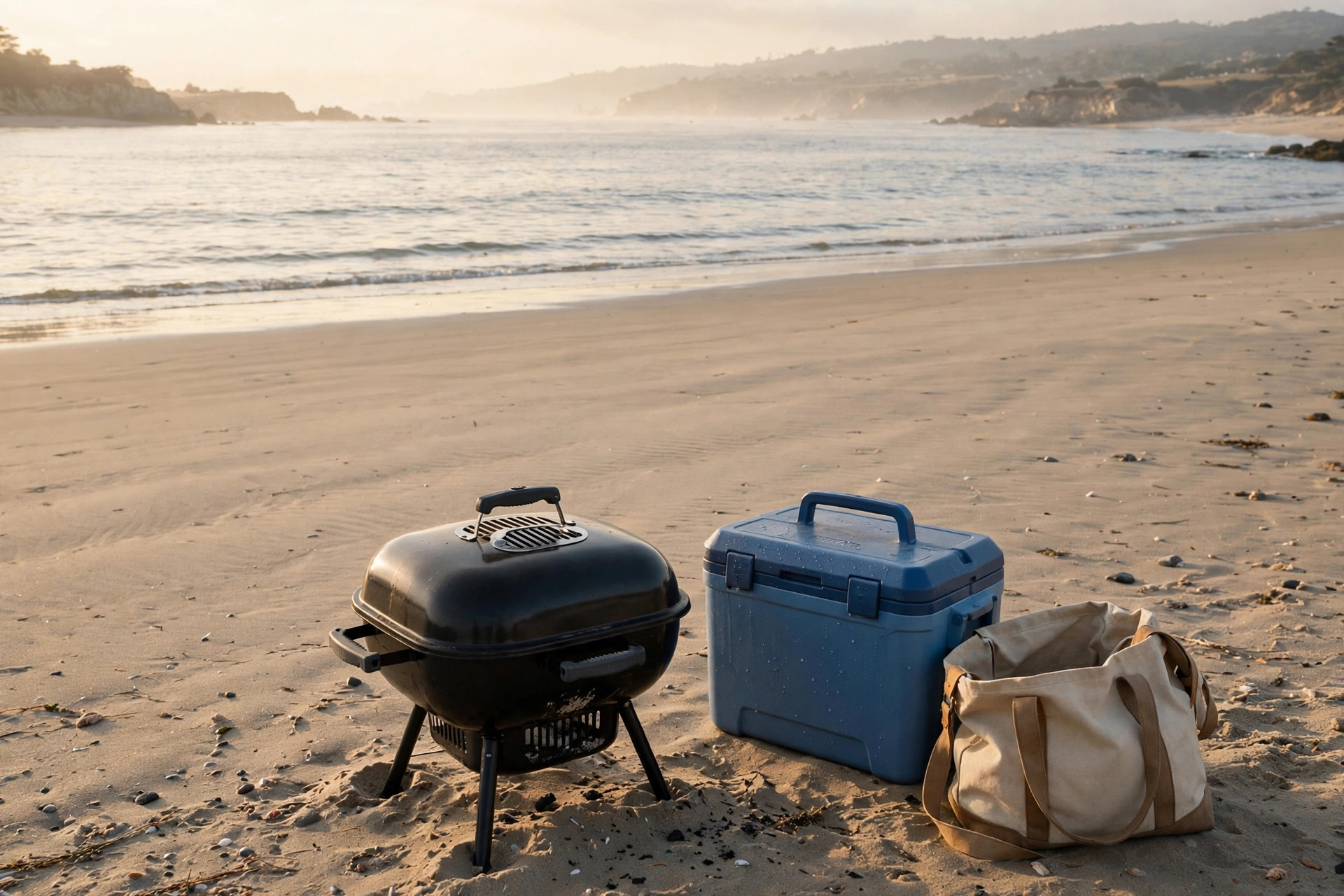

Few pleasures match a hot meal by the sea. You pack a cooler, a folding chair, and a towel. Then the smell of cooking food drifts over the sand. A good beach day grows even better when lunch comes off the grill. But not every grill belongs at the beach. Sand, wind, salt air, and crowds all make demands. That is why choosing the best portable charcoal grill for beach use takes a little thought.
A grill built for the backyard may be too large or too heavy for the shore. A grill built for the beach must travel well. It must light fast in a sea breeze. It must keep hot ash off the sand. And it must clean up in a way that leaves the beach as you found it. This guide walks through each point. By the end you will know what to look for, what to spend, and how to cook safely by the water.
Why a Portable Grill Matters at the Beach
A beach day lasts for hours. Morning swimmers grow hungry by noon. Kids want food now, not after a long drive home. A small grill turns a snack into a meal. You can cook burgers, hot dogs, chicken, and corn without leaving the water.
Restaurants near the beach cost a great deal. Parking may be far. Lines may be long. A grill gives you freedom. You cook what you like, when you like it. You eat with your feet in the sand.
Portable models weigh little. Many fold flat. Most fit in a car trunk next to a cooler. That ease of travel is the whole point. The best portable charcoal grill for beach days is one you actually carry with you, not one that stays in the garage because it is too much trouble.
Charcoal has its own appeal. It adds a smoky taste that gas cannot match. It also needs no fuel line and no heavy tank. A small bag of briquettes weighs little and cooks for a long time. For a group of four to six people, one bag is usually enough for lunch.
What to Look for in a Beach Grill: Best Portable Charcoal Grill for Beach
Size and Weight
Think about the walk from the car to your spot. Sand is heavy to cross. Every pound counts. Most good beach grills weigh between 10 and 25 pounds. A grill under 15 pounds suits one or two people. A family of four or five may need a grill near 20 pounds with more cooking space.
Cooking area matters too. A round grate about 14 inches wide cooks for two or three people. An 18-inch grate feeds four or five. Do not buy more space than you need. Extra size means extra weight and extra charcoal.
Look for a grill with a lid. A lid locks in heat and shortens cooking time. It also shields food from blowing sand. Many beach cooks swear by a portable charcoal grill with lid because it keeps grit out of the food.
Wind and the Sea Breeze
Wind is the great enemy of beach cooking. It cools the coals and scatters ash. Some grills come with wind screens or tight-fitting lids that guard the fire. A kettle shape works well because the deep bowl shelters the coals.
Set the grill behind a car or a dune if you can. Even a beach umbrella can break the worst gusts. Never cook in a strong gust right on the open sand. The fire will burn unevenly and the ash will fly.
Ash Control and Cleanup
Sand must stay clean. Hot ash on bare sand can burn feet long after you leave. A grill with an ash catcher or a closed pan is a must. The ashes stay inside the grill until they are cold.
After cooking, close the vents and let the coals die out. Then pour the cool ash into a metal pail or a heavy bag. Take it home or use the park bins if the rules allow. Never bury hot coals in the sand. Many beach fires rules ban ground fires for this reason.
Rust and Salt Air
Salt air eats metal. A beach grill should use porcelain-coated steel or stainless steel parts. Plain steel rusts fast near the ocean. A coat of paint alone will not last a season.
After each trip, brush the grates and wipe the bowl. Rinse the grill with fresh water when you get home. Dry it well before you store it. A little oil on the grates keeps them smooth and slows rust.
Types and Options
Kettle Grills
The kettle is the classic shape. A round bowl holds the coals. A round lid sits on top. Wheels or short legs make it easy to move. Kettle grills heat evenly and work well in wind. Their deep bowl keeps ash contained. A small 14-inch kettle is a fine choice for the beach. Many makers build one, and the design has changed little in forty years because it works.
Barrel and Drum Grills
These have a small drum or box shape with a hinged lid. They often come with legs that fold flat. The flat top suits burgers and hot dogs. They pack well in a car. Ash pans sit under the fire bed for easy cleanup. They can be a bit heavy for their size, so check the weight before you buy.
Hibachi and Tabletop Grills
A hibachi is a small open grill with a shallow fire bed. It is light and simple. It cooks fast and hot, which suits thin cuts of meat. It has no lid, so it struggles in strong wind. A small beach grill with ash catcher is the better pick for open sand, since a hibachi may spill ash.
Tabletop grills sit on a picnic table or a tailgate. They are short and wide. They work well if your beach park has tables. If you cook right on the sand, choose a model with tall enough legs to keep heat off the ground.
Disposable Grills
Single-use grills come ready to light. They are cheap and light. But they are flimsy in wind. They cannot be reused, which adds cost over a summer. They also leave waste behind. Most regular beach cooks move on to a small reusable model after one season.
For recipes and technique ideas, many cooks start simple: burgers, sausages, and corn in the husk. A compact charcoal grill for camping and beach days handles all of these with ease.
Cost and Price
Portable charcoal grills cost less than most people expect. Prices run from about 20 dollars for a basic hibachi to 150 dollars or more for a top kettle with extras. The sweet spot for beach use sits between 40 and 90 dollars. At that price you get a lid, a decent ash pan, and coated grates.
Charcoal is the main running cost. A small bag of briquettes costs a few dollars and covers one or two beach lunches. Natural lump charcoal burns hotter but costs more. For short beach cooks, standard briquettes light fast and hold steady heat.
Do not forget the extras. A chimney starter costs about 15 dollars and lights coals with newspaper instead of lighter fluid. A long-handled brush keeps grates clean. A small metal pail for ash costs little and saves trouble. These add-ons pay for themselves in one season.
Read independent test notes before you spend at the top of the range. Price alone does not tell you how a grill handles wind.
Care and Upkeep
A beach grill needs care after every trip. Salt and sand shorten its life if you let them sit. Build a short habit and the grill will last for years.
First, burn off food while the grill is still hot. Close the lid and open the vents for five minutes. Then brush the grates with a stiff brush. This takes little time.
Second, empty the ash once it is fully cold. Ash holds moisture, and moisture breeds rust. Keep the ash pan dry between trips.
Third, rinse the outside with fresh water at home. Salt spray settles on every surface. A quick rinse and a towel dry go a long way.
Fourth, oil the grates lightly before storage. A thin coat of cooking oil blocks rust.
Store the grill in a dry place with the lid slightly open. Trapped damp air rusts steel from the inside. A cover helps if the grill lives in a garage or shed.
When the time comes to clean the grill parts well, do it at home with soap and water, not at the beach. Leave the sand where it is.
If you also cook at home on a larger unit, knowing how to clean pellet grill after use keeps both grills in good shape through the summer.
Safety at the Beach
Safety comes first whenever fire meets a crowd. Keep these rules in mind.
Check local rules before you light a grill. Many beaches ban open fires but allow small portable grills. Some allow grills only in set areas. A few ban charcoal entirely. Call the park office or check its site. Fines are common.
Place the grill on stable ground away from foot traffic. Keep it at least ten feet from towels, umbrellas, and dry grass. Never put a grill inside a tent or under a low canopy. Carbon monoxide from charcoal can kill in a closed space.
Keep children and dogs well back from the grill. Mark a circle around it with chairs or a cooler. Hot metal looks harmless. It is not.
Bring water or a small extinguisher. A gallon jug of water puts out stray sparks. It also cools the coals at the end.
Never leave a lit grill alone. Wind can tip a light grill. A gust can scatter embers across dry grass. One adult should watch the fire at all times.
Wear shoes near the grill. Sand hides hot spots. Use long tools and heat-proof gloves when you move coals or adjust vents.
The safety commission notes that grill fires injure thousands of people each year. Most of these fires start from simple mistakes. Care and attention prevent nearly all of them.
Frequently Asked Questions
Can I use a charcoal grill on any beach?
No. Rules differ by beach and by town. Many beaches allow small portable grills in marked areas. Some ban all charcoal fires. Always check the posted signs or the park website before you go. If you are unsure, call ahead.
How much charcoal do I need for a beach lunch?
For two to four people, about 30 to 40 briquettes will cook a full lunch. Light them in a chimney starter. They will be ready in about 20 minutes. Bring a few extra in a sealed bag in case the wind runs long.
What is the best way to light charcoal in the wind?
A chimney starter is the best tool. Fill it with newspaper and briquettes, then light the paper from below. The chimney shelters the flame from the wind. Avoid lighter fluid. It adds a chemical taste to food and can flare in gusts.
How do I keep sand out of the food?
Use a grill with a lid. Keep the lid on as much as you can. Set the grill upwind of your cooking area so blowing sand moves away from the food. Cover platters and buns with a towel while they wait. Serve food fast once it comes off the grate.
How do I put out the coals when I am done?
Close all vents and put the lid on tight. The fire will die for lack of air. This takes 30 minutes or more. Do not pour water on hot coals at the beach unless you must. Steam and flying ash can burn you. Once the ash is fully cold, pack it out in a metal pail or heavy bag.
Can I leave the grill to cool while I swim?
No. Never leave a lit or warm grill unattended at the beach. Wind can tip it. Children or dogs can wander into it. Wait until the coals are fully out and cool before you swim or pack up.
For weekend cooks who want to try slow smoking at home later, pellet smoker recipes for beginners are a good next step, and a pulled pork guide covers one of the most popular long cooks.
A Short Final Word
The best portable charcoal grill for beach days is light, tough, and easy to clean. It has a lid to fight the wind. It has an ash catcher to keep the sand clean. It costs little and asks for little care. With the right grill and a bag of briquettes, any beach day can end with a hot meal and a fine view.
Pack light, check the rules, watch the fire, and leave the sand as clean as you found it. The sea will take care of the rest.
Buying guides are also published by The Home Depot and The Spruce Eats.
References
Char-Broil. (n.d.). Gas and charcoal grills. https://www.charbroil.com Consumer Reports. (n.d.). Product reviews and ratings. https://www.consumerreports.org Family Handyman. (n.d.). DIY home repair and maintenance. https://www.familyhandyman.com The Home Depot. (n.d.). Home improvement products. https://www.homedepot.com The Spruce Eats. (n.d.). Recipes and cooking guides. https://www.thespruceeats.com Traeger. (n.d.). Wood pellet grills. https://www.traeger.com U.S. Consumer Product Safety Commission. (n.d.). Product safety information. https://www.cpsc.gov Weber. (n.d.). Grills and outdoor cooking. https://www.weber.com
Was this guide helpful?

About Lisa Anderson
The My Garden US editorial team writes practical, in-depth home and garden guides for American homeowners — tested advice, no fluff.
You May Also Like
How to Clean Stainless Steel Grill Grates
July 30, 2026 0 views
Outdoor Pizza Oven for Beginners Reviews: What First-Time Buyers Should Know
February 25, 2026 0 views
How to Clean Grill Grates with Onion: A Simple Guide
February 19, 2026 0 views