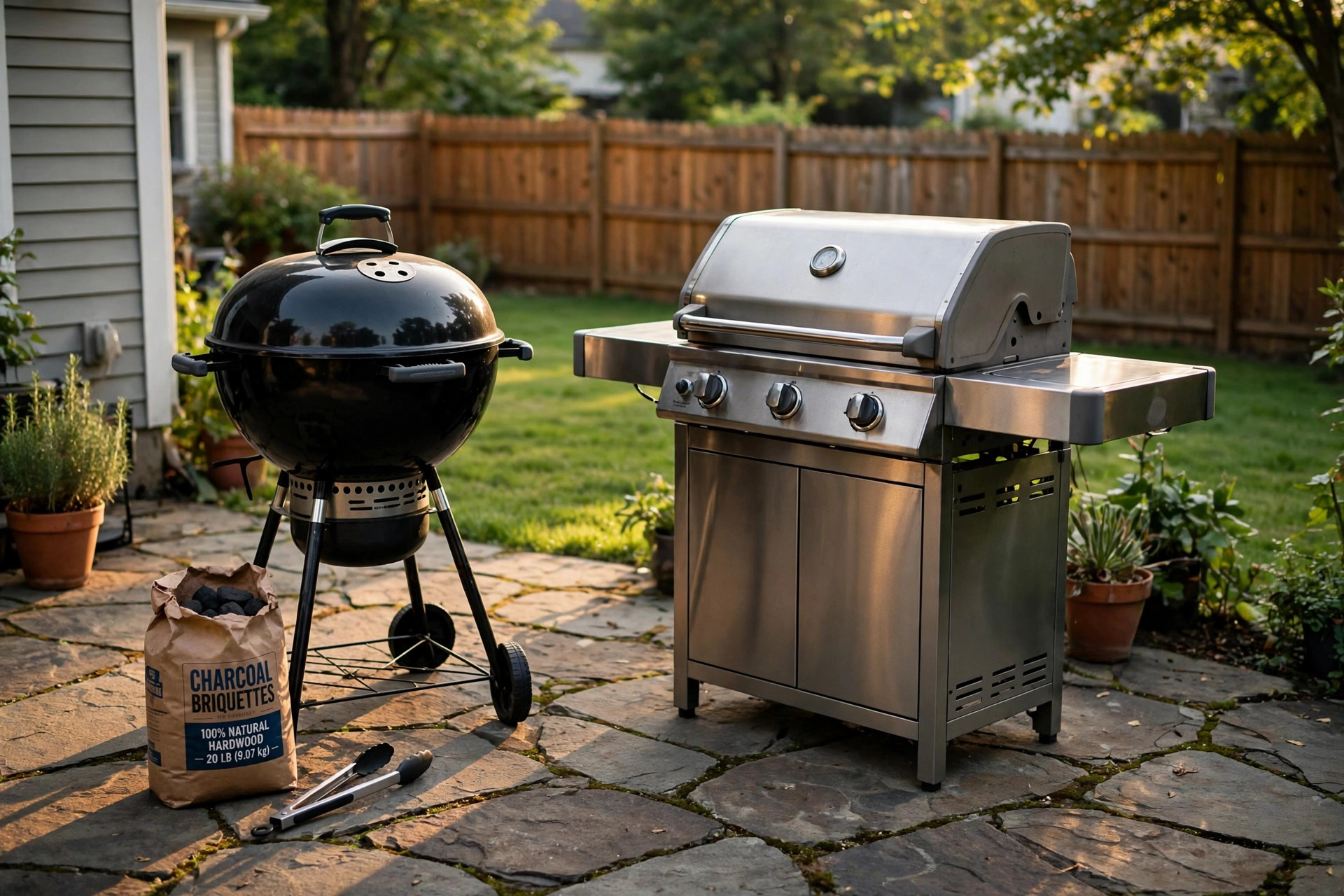

A new grill owner faces one big question first. The question is not which brand to buy. It is not which color to pick. The real question is about fuel. When you ask for the best grill for beginners, gas vs charcoal, you are really asking how you want to cook your food.
Both types of grills cook meat, vegetables, and fish. Both can give you a good meal. But they work in very different ways. Gas grills light with a knob and heat up in minutes. Charcoal grills take longer to start. They also take more care and skill. Each one has clear strengths and clear weak points.
This guide compares the two types in plain terms. It looks at cost, ease of use, taste, cleaning, and safety. It is written for people who have never owned a grill before. By the end, you should know which one fits your home and your way of cooking.
Why the Choice Matters
The first grill you buy sets your habits. A gas grill owner cooks on weeknights because the grill is ready in ten minutes. A charcoal grill owner often saves grilling for weekends, when there is time to build a fire and wait for the coals.
The fuel you pick also changes what you learn. Charcoal teaches you about heat zones, air flow, and timing. Gas teaches you about temperature control and quick cooking. Neither lesson is better than the other. But one will feel easier to you than the other.
Money matters too. A small charcoal grill can cost less than fifty dollars. A gas grill of fair quality starts at a much higher price. But charcoal has a fuel cost every time you cook. Gas burns cheap for years. The true cost shows up only after many meals.
Think of this choice as a habit you are buying, not just a piece of steel. The best grill for beginners is the one they will use often and enjoy.
How Gas Grills Work: Best Grill for Beginners Gas vs Charcoal
A gas grill burns propane from a tank or natural gas from a line. You turn a knob. You press a button. The burner lights. In about ten minutes, the grill is hot enough to cook.
Heat comes from one or more burners under the cooking grates. Most home models have two to four burners. You control each one with its own knob. This gives you direct control over hot and cool spots on the grill.
A lid with a thermometer on top traps heat. Many models add side tables, tool hooks, and a warming rack. The whole machine is made to be simple. Even a child can light one with an adult nearby, though only an adult should ever do the cooking.
For many first-time buyers, the search for the best gas grill under 500 for beginners is the natural next step after reading this guide. That price range holds many honest, well-made models.
How Charcoal Grills Work
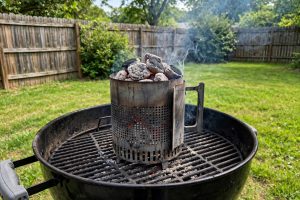
A charcoal grill burns briquettes or lump charcoal. You pile the fuel in a bowl or basket. You light it with a starter or a chimney. Then you wait. The coals need about twenty to thirty minutes to turn gray and hot.
Air vents control the heat. Open vents feed the fire and make it hotter. Closed vents slow it down. You learn to read the coals by their color. White ash means full heat. Orange glow means the coals are waking up.
Most beginners buy a kettle grill first. It is round, with a lid and wheels. It is simple and cheap. Some buyers also read about the best charcoal grill for backyard bbq before they decide.
Charcoal also gives the cook one big gift: smoke. The fuel itself adds a light smoke flavor to the food. Gas cannot do this on its own. Some gas owners add wood chips in a metal box, but the taste is never quite the same.
Gas vs Charcoal: The Main Differences
Starting time. Gas wins. Ten minutes against thirty. On a busy night, this gap is everything.
Control. Gas wins again. Knobs give steady, even heat. Charcoal heat moves up and down. The cook must adjust vents and move coals to fix hot spots.
Taste. Charcoal wins for most eaters. The smoke adds a depth that gas lacks. A steak off charcoal tastes different from a steak off gas. Many cooks call it the true grilled taste.
Cost to start. Charcoal wins. A kettle grill costs little. A fair gas grill costs three to six times more.
Cost per cook. Gas wins. A tank of propane lasts for many meals. Charcoal costs money every single time. Over a full summer of grilling, the gap can be large.
Cleaning. Gas wins. You burn off the grates, brush them, and empty a small grease cup. Charcoal leaves ash. You must wait for it to cool, scoop it out, and throw it away. Ash gets on hands and clothes.
Cooking range. Tie. Both can sear a steak hot and both can roast low and slow. Charcoal does slow cooking more naturally. Gas needs more care to hold low heat for hours.
If you like to read full head-to-head debates, the pellet grill vs gas grill pros cons article covers a third option that some beginners also consider.
What to Look for as a Beginner
Start with your own habits. Do you cook often during the week? Do you like to follow simple steps? Gas will serve you well. Do you cook on weekends? Do you enjoy the process itself, fire and all? Charcoal will make you happy.
Next, look at your space. A gas grill needs room for the tank and safe space from walls. A charcoal grill needs room for ash disposal and more care with sparks. Apartment balconies often ban both, so check your building rules first.
Then look at the build. A thin grill loses heat and rusts fast. Look for grates made of cast iron or heavy steel. Cast iron holds heat well and gives good sear marks. A sturdy lid with a tight fit keeps heat where it belongs. Solid wheels matter if you will move the grill around.
Check the size. A family of two to four needs about 400 to 500 square inches of cooking space. Bigger is not always better. A large grill that is never full wastes fuel.
Types and Options in Each Camp
Gas grills. The common types are two-burner, three-burner, and four-burner models. Two burners suit small patios and small families. Three burners give room for indirect cooking. Four burners serve big groups. Some models hook to a home gas line, which removes the need to buy tanks.
Charcoal grills. The kettle grill is the classic start. It costs little and does a lot. Barrel grills hold more food and suit smoking. Kamado grills are thick ceramic cookers that hold heat for many hours. They cost much more but last a very long time.
Other fuels. Pellet grills burn wood pellets with electric help. Electric grills use a heating element and suit places where open flame is banned. These are honest options, but gas and charcoal remain the two main roads for beginners.
Cost and Price Guide
A good kettle charcoal grill costs between 30 and 200 dollars. Lump charcoal costs more than briquettes but burns hotter and cleaner. A chimney starter costs about 20 dollars and removes the need for lighter fluid, which you should never use near food.
A fair gas grill costs between 200 and 600 dollars. Cheap models under 150 dollars often rust in one or two seasons. A full propane tank costs about 20 to 25 dollars and gives roughly 18 to 25 hours of cooking, depending on the grill and the heat level.
Accessories add up. A cover is worth the money for either type. It can double the life of the grill. A long brush, long tongs, and a meat thermometer are the three tools every beginner needs. The thermometer matters most. It is the only true way to know when meat is done.
Care and Upkeep
Gas grill care is simple. After cooking, turn the heat high and close the lid for ten minutes. The heat burns off the mess. Brush the grates with a wire brush. When the grill is cool, empty the grease cup. Check the burners once a season for clogs. Spiders love to build nests in burner tubes, which can block gas flow.
Charcoal grill care takes more work. Wait until the ash is fully cold. This can take many hours. Scoop the ash into a metal can with a lid. Oil the grates before each cook to stop rust. Keep the grill covered and dry. A kettle grill left in rain will rust at the leg joints first.
Both types last longer with a cover. Both should sit on a flat, hard surface. A grill on soft grass can tip. A drip pan under a charcoal grill protects a wood deck from hot ash.
Safety Rules Every Beginner Must Know
Never use a grill inside a house, garage, or closed tent. Both gas and charcoal give off carbon monoxide, a gas you cannot see or smell. It can kill. Use grills outside only, in open air.
Keep the grill at least ten feet from the house, from railings, and from anything that can burn. Keep children and pets at least three feet away while the grill is hot and for an hour after.
For gas, check the hose and connections before each season. Rub soapy water on the joints and open the gas. Bubbles mean a leak. If you smell gas and the grill is off, close the tank valve and step away. Do not light the grill to test it.
For charcoal, never use gasoline or lighter fluid to start the fire. A chimney starter with paper is safer and gives cleaner heat. Never move a lit charcoal grill. Let the coals cool fully before you throw out the ash.
Frequently Asked Questions
Which is easier for a true beginner? Gas is easier. You turn a knob and cook. Charcoal asks you to learn fire, air, and timing. Start with gas if you want your first meals to succeed without stress.
Which gives better taste? Most eaters pick charcoal. The smoke from the coals adds a flavor that gas cannot match on its own. Gas is still good. It just tastes cleaner and milder.
Is gas or charcoal cheaper over time? Gas is cheaper over time for a regular cook. The grill costs more at the start, but the fuel costs less per meal. Charcoal costs less at the start, but each cook burns bought fuel.
Can I smoke meat on a gas grill? You can add light smoke flavor with wood chips in a smoker box. The result is mild. For real smoking, charcoal or a dedicated smoker does a better job.
How long does a grill last? A well-kept gas grill lasts five to ten years. A kettle charcoal grill can last ten years or more with a cover. Cheap models of either type fail much sooner.
Do I need a cover? Yes. Rain and sun wear down every grill. A cover is the cheapest way to add years to the life of your cooker.
A Short Final Word
There is no wrong answer in the gas vs charcoal question. There is only the answer that fits your life. If you want fast, clean, and easy weeknight meals, gas is your tool. If you want deep smoke flavor and you enjoy the fire itself, charcoal is your tool.
Many grill owners end up with both over the years. They start with one, learn its ways, and later add the other for what it does best. You do not need to make that choice now. Start with the one that sounds like you. Cook often. Learn the heat. The food will take care of the rest.
For more background, see Char-Broil, Traeger, and Napoleon. For more background, see Big Green Egg, Broil King, and The Home Depot. Buying guides are also published by The Spruce Eats and AmazingRibs.com.
References
AmazingRibs.com. (n.d.). Barbecue and grilling science. https://www.amazingribs.com Big Green Egg. (n.d.). Kamado grills and outdoor cooking. https://www.biggreenegg.com Broil King. (n.d.). Gas and charcoal grills. https://www.broilkingbbq.com Char-Broil. (n.d.). Gas and charcoal grills. https://www.charbroil.com Napoleon. (n.d.). Fireplaces, grills, and heating products. https://www.napoleon.com The Home Depot. (n.d.). Home improvement products. https://www.homedepot.com The Spruce Eats. (n.d.). Recipes and cooking guides. https://www.thespruceeats.com Traeger. (n.d.). Wood pellet grills. https://www.traeger.com
Was this guide helpful?

About Robert Taylor
The My Garden US editorial team writes practical, in-depth home and garden guides for American homeowners — tested advice, no fluff.
You May Also Like
Best Grill Brush Without Bristles Reviews: A Simple Guide for Safer Grates
July 16, 2026 0 views
How to Clean Outdoor Griddle After Cooking: A Simple Step-by-Step Guide
March 30, 2026 0 views
Best BBQ Tool Set Stainless Steel: A Plain Guide
July 10, 2026 0 views