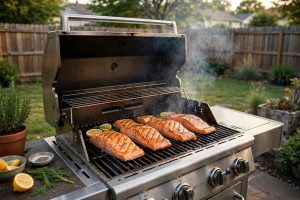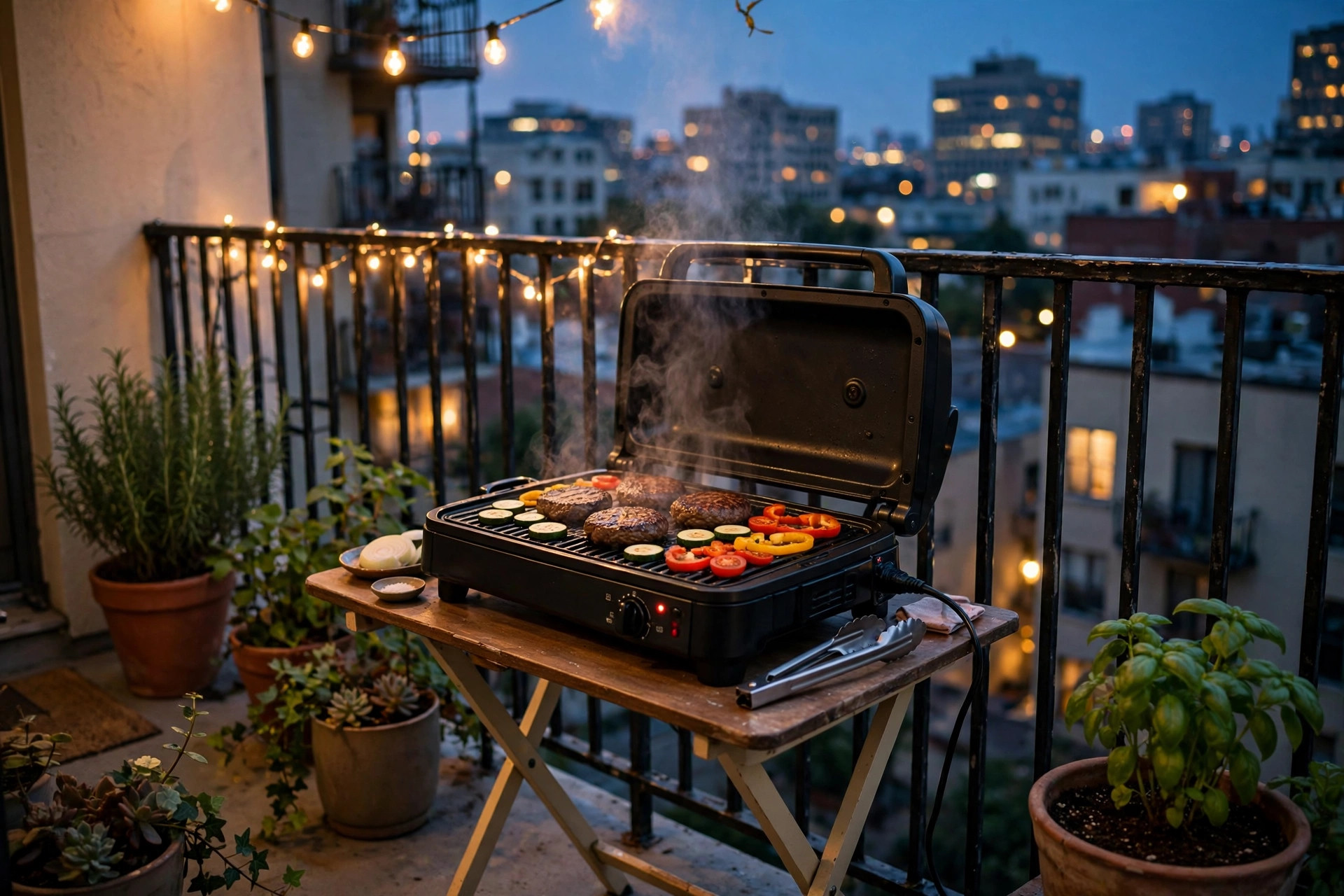

Living in an apartment does not mean giving up the taste of grilled food. Many people dream of cooking outdoors on a warm evening. They picture burgers, corn, and skewers. But an open flame grill is not allowed on most balconies. Fire codes often ban them. Landlords do too. The best electric grill for apartment balcony use solves this problem. It plugs into a wall outlet. It gives off little or no smoke. It heats fast. It fits in a small space. This guide explains what to look for before you buy one.
Why an Electric Grill Fits Balcony Life
Apartment balconies are small. A gas grill takes up too much room. It also needs a propane tank. A charcoal grill makes heavy smoke. That smoke drifts into neighbors’ windows. Most cities and lease agreements ban both types on balconies. An electric grill is different. It makes almost no smoke. There is no open flame. There is no gas tank to store. Many fire codes allow electric grills where other grills are banned.
Electric grills are also easy to use. You plug the unit in and turn the dial. The grill heats up in about ten minutes. There is no charcoal to light. There is no match to strike. When you finish, you turn the dial off. The grill cools down on its own. This simple process fits busy apartment life.
Another plus is the small footprint. Many electric grills are tabletop models. You can set one on a folding side table. Larger models stand on a small cart. They take less room than a bicycle. You can store the grill inside when it rains. This keeps it dry and extends its life.
What to Look For When You Shop: Best Electric Grill for Apartment Balcony
Shopping for the best electric grill for apartment balcony cooking takes some care. The market has many models. Here are the features that matter most.
Size and Cooking Surface
Measure your balcony first. A grill that is too large will crowd your space. A grill that is too small will cook too little food. Most balcony grills have between 120 and 250 square inches of cooking space. That is enough for four to six burgers. Check the product’s depth and width too. Make sure it fits your table or cart. Leave room around the grill for safe use.
Power and Heat
Look at the wattage. Electric grills usually run from 1,200 to 1,800 watts. More watts mean higher heat. High heat gives a good sear on meat. Most models reach about 450 to 550 degrees. That is enough for burgers, chicken, and vegetables. Some models have adjustable heat zones. That lets you cook hot on one side and warm on the other.
Drip Tray and Grease Control
Grease is the main mess when grilling. Good grills have a deep drip tray. The tray sits under the cooking plate. It catches fat as it drips. Some trays hold a small amount of water. The water keeps grease cool and cuts smoke. A good drip system makes cleanup much easier. It also keeps smoke low. Your neighbors will thank you.
Smokeless Design
The best models for balconies use smokeless technology. Some place the heating element above the food. The grease never touches the hot element. This cuts smoke almost to zero. Other models use infrared plates. These plates spread heat evenly. They also reduce smoke. If your balcony is small and close to neighbors, smokeless design is worth the extra cost.
Build Quality
Look for sturdy grills. The body should feel solid. The lid should fit well. Cast aluminum lasts long and holds heat. Stainless steel parts resist rust. Nonstick cooking plates should be thick. Thin plates warp over time. Check the power cord too. A longer cord gives you more options for placement.
Types of Electric Grills
Electric grills come in several styles. Each style has strengths and limits.
Tabletop Electric Grills
These are small and light. They sit on any flat surface. They are the cheapest option. Many cost under one hundred dollars. They are easy to store inside a closet. Their limit is size. They cook food for two to four people at most.
Stand and Cart Electric Grills
These come with their own legs or cart. They stand at a comfortable cooking height. The cooking surface is larger. They suit a family of four or more. Many have side shelves for plates and tools. They take more space. They cost more than tabletop models. Compare electric models with portable gas options before you decide which style fits your life.
Infrared Electric Grills
Infrared models use a special heating element. The element glows hot and gives steady heat. Food cooks evenly. Flare-ups are rare. These grills reach high heat fast. They cost more. They often have better temperature control. Many serious home cooks prefer them.
Open Grate and Plate Styles
Some electric grills have open grates like a real barbecue. Others have flat plates like a griddle. Open grates give grill marks. They let fat drip away. Plate styles are easier to clean. They are good for eggs, pancakes, and small vegetables. Some models let you swap the plates. That gives you both options.
Cost and Price
Electric grills fit many budgets. Small tabletop models cost between 60 and 120 dollars. Mid-size cart models cost between 150 and 300 dollars. Large infrared models can cost 300 to 500 dollars. Premium brands charge more for build quality and longer warranties.
Think about long-term costs too. Electricity is cheap for a grill. One cookout may use one or two kilowatt-hours. That costs less than a dollar in most cities. You never buy charcoal or propane. That saves money over time.
Check what is included. Some grills come with a cover. A cover protects the grill from rain and dust. A good cover keeps your grill like new for years. Some models include drip pans or extra plates. Buying these later adds cost. Read reviews before you buy. Consumer Reports tests many grills and rates their heat, ease of use, and safety.
Care and Upkeep
An electric grill is easy to keep. A few simple habits will make it last for years.
Clean the grill after each use. Wait until it is cool. Remove the drip tray. Empty the grease into the trash, not the sink. Grease clogs pipes. Wipe the tray with warm soapy water. Wipe the cooking surface with a damp cloth. Do not use harsh scrubbers on nonstick plates. They scratch the coating.
Cover the grill when it is not in use. Rain can damage the electric parts. Dust gets into the vents. A simple cover takes only seconds to put on. Store the grill inside during winter if you can. Cold and snow wear out electric parts faster.
Check the power cord once in a while. Look for cracks or frayed spots. A damaged cord is a fire risk. Stop using the grill if the cord looks worn. Contact the maker for a replacement.
Empty the drip tray before each cookout. Old grease can turn rancid. It can also smoke when hot. Fresh water in the tray helps too. These small steps take only minutes.
Steak needs special care when you grill. Let it rest before slicing. That keeps the juices inside. The same rule works on an electric grill.
Safety Rules for Balcony Grilling
Safety comes first on a balcony. The space is small. A mistake can affect your whole building.
Read your lease before you buy. Many leases ban all grills on balconies. Others allow electric grills only. Get the rule in writing if you can. A quick talk with your landlord avoids trouble later.
Check local fire codes. Many cities follow national fire codes. These often ban charcoal and gas grills on balconies. Electric grills are often allowed. But rules differ from city to city. A call to your local fire department clears this up.
Never leave the grill alone while it is on. Stay near it the whole time. Keep children and pets away from it. The outside of the grill gets hot. A small child can burn a hand fast.
Keep the grill away from walls and railings. Most makers say to keep at least three feet of clear space. Curtains, plants, and paper must stay far from the grill. Wind can blow heat onto these items.
Do not use extension cords if you can avoid it. Most makers tell you to plug the grill right into the wall. A weak extension cord can overheat. If you must use one, buy a heavy-duty cord rated for outdoor use. Home Depot sells outdoor-rated cords in many lengths.
Let the grill cool before you store it. This takes 30 to 60 minutes. Do not rush it. Store it where rain cannot reach it.
Cooking Tips for Great Results
Electric grills cook a little differently than flame grills. These tips help you get the best food.
Preheat the grill. Give it a full ten minutes. A hot surface sears meat better. Cold food sticks more than room-temperature food. Let meat sit out for 15 minutes before grilling.
Pat meat dry before cooking. Dry meat browns better. Wet meat steams instead of searing. Season simply. Salt and pepper go a long way. Char-Broil shares simple recipes that work well on small grills.
Do not press burgers down. Pressing squeezes out the juices. Let the meat cook untouched. Flip it once. Use a thermometer for chicken and pork. Safe food is worth the extra step.
Vegetables grill fast on electric grills. Zucchini, peppers, and onions take five to eight minutes. Brush them with a little oil. They will not stick.
Fish cooks well too. Use a piece of foil or a grill basket. Thin fish breaks apart on grates. A basket keeps it together. The Spruce Eats has clear guides for grilling fish without breaking it.
What Brands to Consider
Many good brands make electric grills. Weber is known for strong build quality. Their grills heat evenly and last for years. Napoleon makes models with good temperature control. Traeger is famous for pellet grills but also offers electric options.
Big Green Egg focuses on ceramic cookers. Their electric models hold heat very well. Read side-by-side comparisons before you choose. Amazing Ribs tests grills in depth and explains the science of heat.
Do not forget smaller brands. Some sell only electric grills. They focus on smokeless design. Read customer reviews on several sites. Look for reviews from balcony owners. Their experience matches yours best.
FAQ
Can I use an electric grill on my apartment balcony?
In most cases, yes. Electric grills make little smoke and have no open flame. Many leases and fire codes allow them. Still, check your lease and local rules first. Rules differ by city and building.
How much smoke does an electric grill make?
Very little. Grease drips into a tray instead of onto hot coals. Some smoke may rise when fat hits a hot plate. Smokeless models cut this almost to zero. Your neighbors should barely notice.
Can an electric grill sear a steak?
Yes, if the grill is hot enough. Preheat it fully. A grill that reaches 500 degrees or more will give a good sear. Dry the steak first. Flip it once. Let it rest before you cut it.
How do I clean an electric grill?
Wait until it cools. Remove the drip tray and empty it. Wash the tray with warm soapy water. Wipe the cooking surface with a damp cloth. Never soak the heating element or the plug in water.
Is an electric grill expensive to run?
No. A cookout uses about one to two kilowatt-hours of power. That costs well under a dollar in most places. You save the cost of charcoal or propane over time.
Can I use my grill in the rain?
No. Water and electricity do not mix. Unplug the grill if rain starts. Move it under cover or inside. Always store it dry.
Final Word
The best electric grill for apartment balcony cooking brings the joy of grilling to small spaces. It is safe, simple, and kind to neighbors. Measure your space. Check your lease. Pick a size that fits your needs. Clean it after each use. Follow the safety rules. With a little care, your balcony can become your favorite place to cook.
References
AmazingRibs.com. (n.d.). Barbecue and grilling science. https://www.amazingribs.com Big Green Egg. (n.d.). Kamado grills and outdoor cooking. https://www.biggreenegg.com Char-Broil. (n.d.). Gas and charcoal grills. https://www.charbroil.com Consumer Reports. (n.d.). Product reviews and ratings. https://www.consumerreports.org Napoleon. (n.d.). Fireplaces, grills, and heating products. https://www.napoleon.com The Home Depot. (n.d.). Home improvement products. https://www.homedepot.com The Spruce Eats. (n.d.). Recipes and cooking guides. https://www.thespruceeats.com Traeger. (n.d.). Wood pellet grills. https://www.traeger.com Weber. (n.d.). Grills and outdoor cooking. https://www.weber.com
Was this guide helpful?

About Robert Taylor
The My Garden US editorial team writes practical, in-depth home and garden guides for American homeowners — tested advice, no fluff.
You May Also Like
Gas Grill vs Charcoal Taste Difference: What Every Cook Should Know
January 16, 2026 0 views
Best Grill Brush Without Bristles Reviews: A Simple Guide for Safer Grates
July 16, 2026 0 views
How to Grill Lobster Tails at Home Like a Cookout Pro
July 27, 2026 0 views