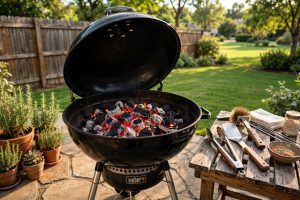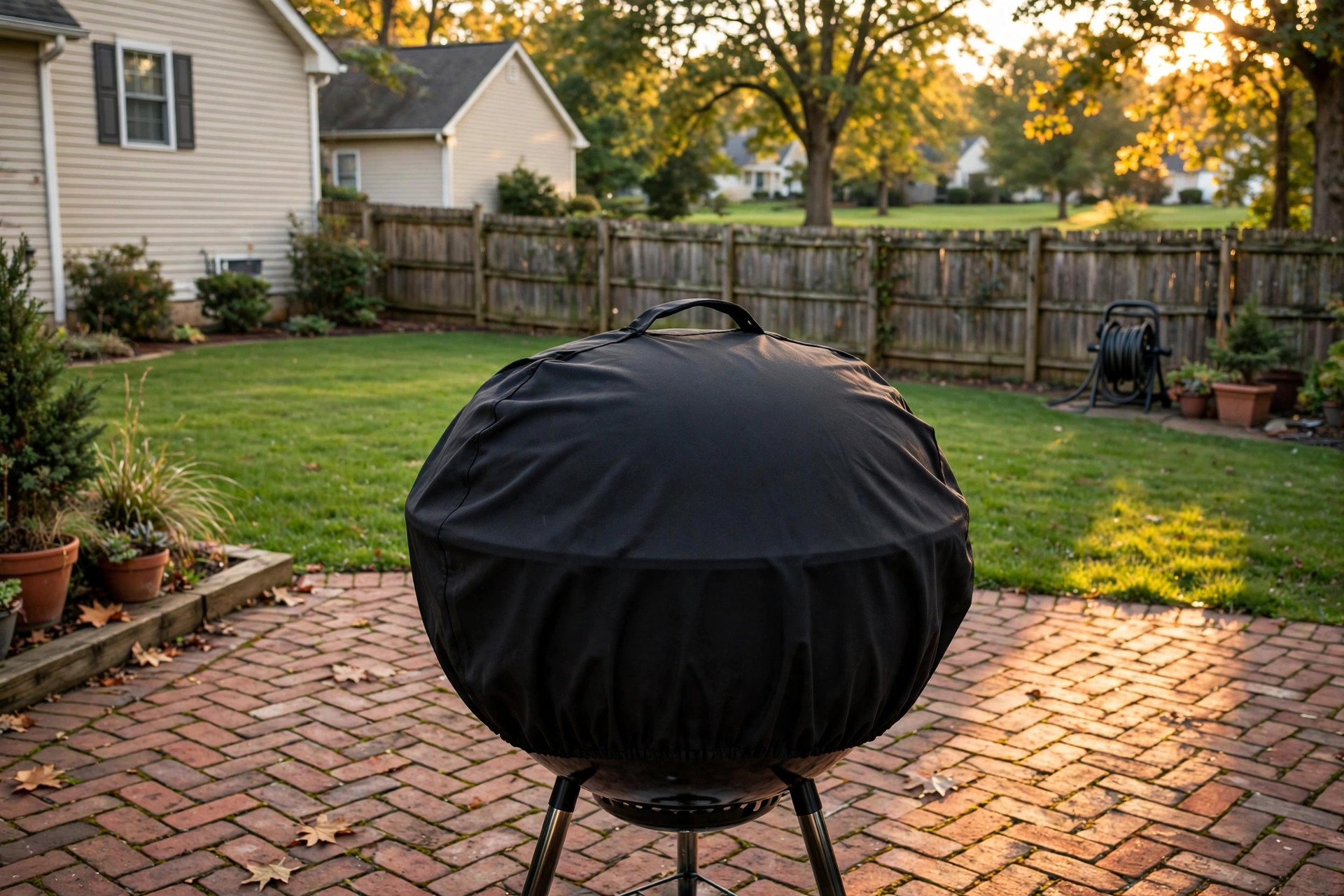
A Weber kettle grill is built to last. Many owners cook on the same kettle for ten or twenty years. The best grill cover for Weber Kettle owners is the one that keeps rain off the steel and lets moisture escape. Without a cover, sun and rain wear down the finish. The vents collect water. The legs rust. The wheels stick. A good cover stops all of that before it starts.
Finding the right cover is not hard. You need the correct size for your kettle. You need fabric that stands up to sun and snow. You need a fit that stays on in wind. This guide walks through each choice in plain terms. It also shows how much to spend and how to care for the cover once it is on.
Why a Cover Matters for Your Kettle
A kettle grill lives outside. Rain falls on it. Morning dew settles on the lid. Summer sun beats on the porcelain enamel. Over months, water works into small chips and scratches. Rust forms under the finish and spreads. Legs weaken. Ash sweep handles seize up. Wooden handles dry and crack.
A cover acts as a raincoat. It sheds water away from the bowl and lid. It blocks ultraviolet light that fades the finish. It keeps leaves and seeds out of the vents. It keeps dust off the cooking grate so the next cook starts clean.
Some owners store their kettle in a garage. A cover still helps there. It keeps dust off. It stops spider webs from forming in the legs. If you roll the grill onto a patio only when you cook, a fitted cover makes the trip worth it. The grill stays ready.
Cheap covers often fail within one season. They crack in winter. They tear at the seams. The best grill cover for Weber Kettle grills lasts three to five years or more. The extra few dollars buy thicker fabric and stronger seams.
How to Choose the Right Cover: Best Grill Cover for Weber Kettle
Size comes first. Weber kettles come in several sizes. The most common is the 22-inch model. There is also an 18-inch model and a larger 26-inch model. Measure your grill across the lid handle. Then check the cover size on the label. A 22-inch kettle needs a cover made for 22-inch kettles.
The shape matters as well. Kettle grills are round and squat. They have three legs and two wheels. A good cover follows this shape. It should reach down past the wheels. It should leave little slack to catch the wind.
Look at how the cover closes. Many covers have an elastic hem. It pulls tight around the base. Some add Velcro straps or drawstrings. Straps are worth having in windy yards. They keep the cover from blowing off at night.
Check the vents. Moisture can gather under any cover. The best designs add mesh vents near the bottom. These let damp air out. They reduce mold and mildew on the inside.
Think about weight. Heavy covers resist wind. They drape well and stay put. Light covers fold small for storage. A middle weight works for most yards.
Finally, look at the handle. The lid handle on a kettle stays warm after cooking. Let the grill cool fully before covering it. This is a safety rule, not a suggestion. A cover placed on a hot grill can melt.
Types of Grill Covers for Kettle Grills
Fabric covers are the most common. They use woven polyester with a vinyl or PVC coating. The coating sheds water. The weave gives strength. These covers fold easily and fit snug. Most owners choose this type.
OEM covers come from Weber itself. They match the kettle shape exactly. The fit is clean around the legs and wheels. Many carry the Weber name on the side. They cost a little more than generic covers. Owners report that they fit better and last longer.
Aftermarket covers cost less. They fit many brands of round grills. Some fit well. Others run loose or tight. Read the size range before buying. A loose cover flaps in wind and wears faster.
Canvas covers are a third option. Heavy canvas breathes well. It sheds water if treated. It costs more and weighs more. It suits owners who leave grills out all year in harsh weather.
Vinyl covers are cheap and light. They work as a short term answer. They often crack after one winter. Do not expect a long life from them.
Material Quality: What to Look For
Thickness counts. Fabric is measured in denier or in ounces per yard. A higher denier means a thicker yarn. Covers rated 300 denier or more handle weather well. Covers rated 600 denier are heavy duty.
The coating matters too. PVC coating is common and cheap. It blocks water well but can crack in cold. Polyurethane coating stays flexible longer. It costs more. In cold climates, polyurethane is worth the price.
Seams should be double stitched. Single stitching pulls apart under strain. Look for bound edges. They resist fraying.
The inside of the cover tells a story. A soft inner lining protects the enamel finish. A rough inside can scratch the lid over time. Felt or soft polyester linings are a plus.
UV treatment helps in sunny states. Sun breaks down plastic coatings. A cover with UV stabilizers lasts longer in Florida, Texas, and Arizona. If your patio gets full sun, this feature matters.
Many grillers trust the advice on Weber’s official site for care products. Retailers such as The Home Depot stock both OEM and aftermarket covers so you can compare fabric weights side by side.
Cost and Price: What to Expect
Grill covers for kettle grills range from about ten dollars to about eighty dollars. Price follows quality.
Budget covers cost ten to twenty dollars. They are thin vinyl or light polyester. They fit okay. They often last one season. Buy one if you need cover fast and plan to replace it soon.
Mid range covers cost twenty to forty dollars. This is the sweet spot. The fabric is thicker. Seams are stronger. Vents and straps are common. Many covers in this range last three years.
Premium covers cost forty to eighty dollars. They use heavy fabric with strong coatings. The fit is exact. Vents, straps, and linings are standard. They can last five years or more with care.
The OEM Weber cover sits near the top of the mid range. Many owners find it worth the price. The exact fit reduces wind wear. The fabric matches the kettle shape.
Price is not the whole story. A thirty dollar cover that lasts four years costs less per year than a twelve dollar cover replaced yearly. Think in years, not dollars.
Care and Upkeep of Your Grill Cover
A cover needs care too. Hose it down every few months. Brush off leaves and seeds. Do not use harsh soap. Mild dish soap and water are enough. Rinse well.
Let the cover dry fully before putting it back on. A damp cover traps moisture. It can grow mildew on the inside. Hang it in the sun for an hour.
Inspect the seams once a year. Look for pulled threads. Small tears can be fixed with outdoor fabric tape. Fix them early before they spread.
In winter, brush snow off the cover. Heavy snow can stretch the fabric. It can also pull the hem loose. A quick sweep after a storm helps.
Store the cover clean and dry in the off season if you grill less in winter. Fold it loosely. Keep it in a shed or garage. Do not cram it into a tight bag while damp.
Owners who smoke meats as well as grill should read about how to winterize a gas grill for storage. The same careful steps apply to charcoal kettles. Cover makers like Traeger and Napoleon also publish seasonal care tips that work for any outdoor cooker.
Safety Tips When Using a Grill Cover
Never cover a hot grill. Wait until the coals are fully out and cold. Touch the lid with your hand. If it feels warm, wait longer. This rule prevents melted covers and fires.
Keep the cover away from open flame. Do not set it on a side table near a lit chimney starter. Sparks can burn holes in fabric.
Store lighter fluid far from the covered grill. Keep it in a shed. A cover does not make fuel safe to store nearby.
Check that the cover does not block the ash catcher. Some covers fit tight at the base. Make sure air can still move. Stale air breeds rust.
If you have small children, keep the cover on when the grill is idle. It hides the sharp vents. It also keeps little hands off the soot.
Safety guidance from groups such as Consumer Reports stresses cool down times for all outdoor cookers. The AmazingRibs community also shares practical checklists for safe grill storage.
How Kettle Covers Differ From Other Grill Covers
Round kettle grills need round covers. Gas grill covers are square and tall. They will not fit a kettle. Do not try to save money with the wrong shape. A bad fit lets water pool.
Pellet grill covers are also shaped for tall hoppers. They are too tall for kettles. Stick with covers made for round charcoal grills.
If you own several cookers, cover each one. A best charcoal grill for backyard bbq roundup will show how many shapes exist. Each shape needs its own cover.
Kamado grills are heavy ceramic eggs. Their covers are thick and round. Some fit kettles in a pinch. Check the size chart first. Big Green Egg fans can compare notes at Big Green Egg, where cover shapes are discussed for round cookers.
Wind, Rain, and Snow: Weather by Season
Spring brings wind and sudden rain. Tighten the straps. Check the elastic hem. A loose cover fills like a sail. It can blow across the yard and tear.
Summer brings sun and heat. UV rays are the main enemy. A cover with UV treatment pays off. Keep the grill in partial shade if you can. Shade and a cover together give the best protection.
Fall brings leaves and seeds. They gather on top of the cover. They hold moisture against the fabric. Brush them off weekly. Clean gutters above the patio so water does not drip on the grill.
Winter brings snow and ice. Brush snow off after storms. Ice can stick the cover to the lid. Let it thaw before pulling. Forcing it can tear seams or chip enamel.
Broil King publishes weather hardiness notes for its covers at Broil King. The advice fits kettle grills as well. Serious Eats style recipe sites like The Spruce Eats also remind readers that a covered grill is a ready grill in any season.
Common Mistakes to Avoid
The first mistake is buying the wrong size. An 18-inch cover will not stretch over a 22-inch kettle. A 26-inch cover will swim on a 22-inch grill. Measure first. Buy once.
The second mistake is covering a warm grill. Even a little heat can melt thin vinyl. Patience saves the cover and the grill.
The third mistake is skipping the straps. Elastic alone fails in strong wind. Use the straps every time. It takes ten seconds.
The fourth mistake is never cleaning the cover. Dirt holds moisture. Mildew grows. A quick wash each season doubles cover life.
The fifth mistake is storing the cover wet. Wet fabric mildews in a bag. Dry it in the sun. Then fold and store.
Beginners learning how to start a charcoal grill without lighter fluid often learn cover habits at the same time. Good habits pair well together.
Frequently Asked Questions
What size cover fits a 22-inch Weber kettle?
A cover made for 22-inch kettle grills fits best. Look for labels that say 22 inch or 55 centimeter. The cover should reach past the wheels and cinch tight at the base.
Can I use a generic round grill cover?
Yes, if the size matches. Generic round covers cost less. They may fit loose. A loose fit flaps in wind. It wears faster. If the price gap is small, the OEM cover is often the better buy.
Will a cover cause rust by trapping moisture?
A good cover does not trap moisture. It sheds rain and vents damp air. Cheap covers without vents can trap damp. Look for mesh vents near the hem. Always let the grill cool and dry before covering.
How long should a grill cover last?
A mid range cover lasts two to four years. A premium cover lasts four to six years. Sun and wind shorten life. Cleaning and proper storage lengthen it. Replace the cover when seams split or the coating flakes.
Should I cover my kettle in winter?
Yes. Winter is the hardest season. Snow, ice, and freeze cycles attack the finish. Cover the grill. Brush off snow. Check the straps after storms. If you store the grill in a garage, a cover still keeps dust off.
Do I need to cover the grill between cooks in summer?
Yes. Even one night of rain can start rust in a paint chip. Covering takes less than a minute. It keeps the grate clean for the next cook. Make it a habit like closing the vents.
A Final Word
The best grill cover for Weber Kettle owners is simple. It fits the right size. It uses thick fabric. It vents moisture. It straps down in wind. It costs twenty to forty dollars in most cases. That small spend protects a grill that can cook for decades.
Buy the cover. Use it every time. Clean it each season. Your kettle will repay you with steady heat and good food for many years.
References
AmazingRibs.com. (n.d.). Barbecue and grilling science. https://www.amazingribs.com Big Green Egg. (n.d.). Kamado grills and outdoor cooking. https://www.biggreenegg.com Broil King. (n.d.). Gas and charcoal grills. https://www.broilkingbbq.com Consumer Reports. (n.d.). Product reviews and ratings. https://www.consumerreports.org Napoleon. (n.d.). Fireplaces, grills, and heating products. https://www.napoleon.com The Home Depot. (n.d.). Home improvement products. https://www.homedepot.com The Spruce Eats. (n.d.). Recipes and cooking guides. https://www.thespruceeats.com Traeger. (n.d.). Wood pellet grills. https://www.traeger.com Weber. (n.d.). Grills and outdoor cooking. https://www.weber.com
Was this guide helpful?

About Jennifer Lee
The My Garden US editorial team writes practical, in-depth home and garden guides for American homeowners — tested advice, no fluff.