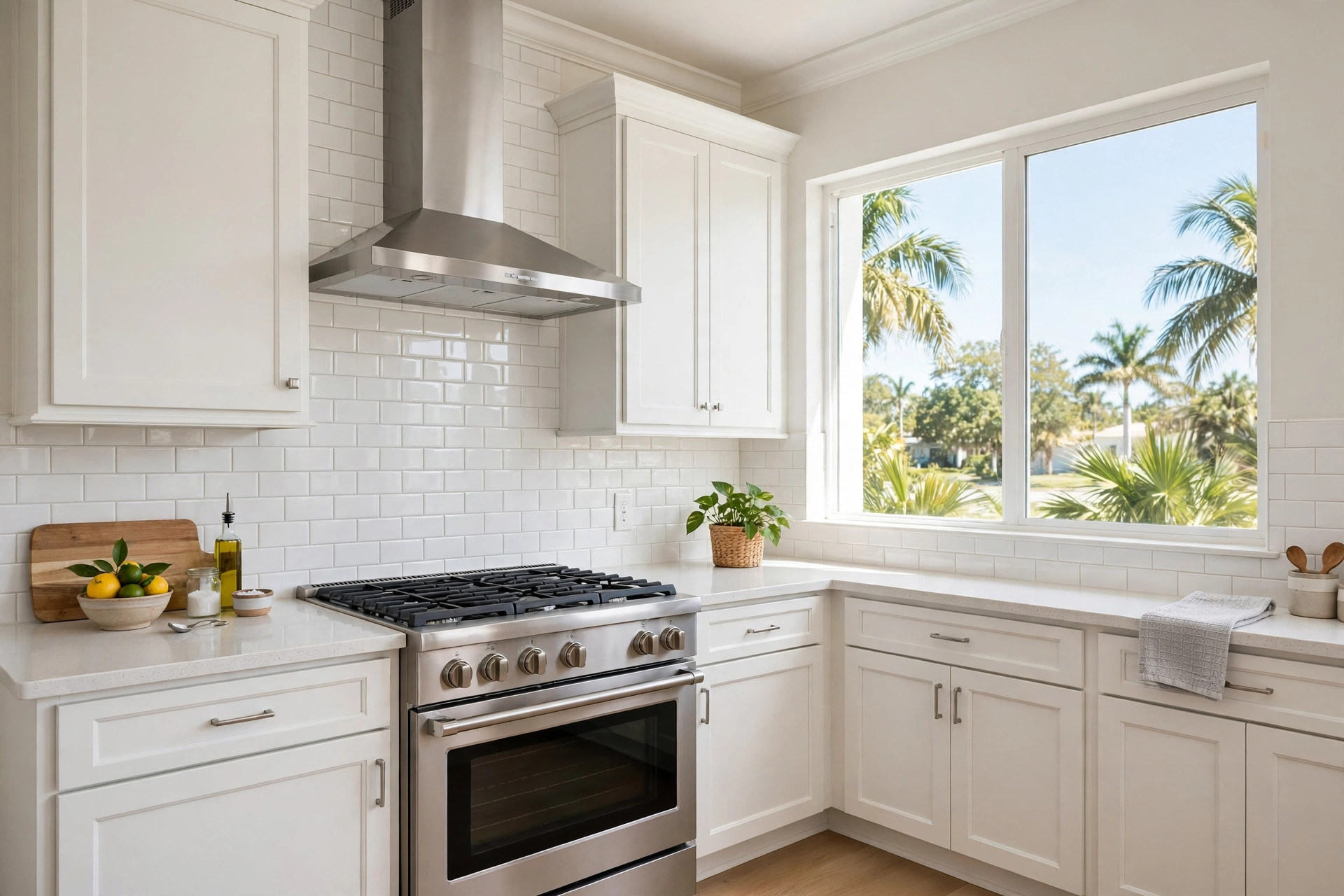

The backsplash is the strip of wall between the counter and the upper cabinets. It takes the spray of hot oil, the steam of boiling pots, and the splash of the faucet. In many kitchens it is an afterthought. Yet kitchen backsplash tiles florida homes usa shoppers study this surface with care, because the warm climate, the bright sun, and the salt in the air shape every choice they make.
Florida kitchens face long summers and high humidity. A tile that fails in such a setting does more than look tired. It lets moisture reach the drywall. It gives mold a place to grow. This guide explains why tile choice matters here, what to look for, the main types, the cost, and the upkeep. It is written in plain terms for the ordinary homeowner.
Why It Matters in Florida Homes
Florida homes live with heat most of the year. Kitchens run hotter still when the stove is on. Steam rises and settles on the wall. In northern states the dry air pulls moisture out of the wall. In Florida the air already holds moisture, and it has nowhere to go.
A good backsplash keeps water out. It shields the wall from daily cooking. It also fights mold. Mold loves warm, damp surfaces. Tile with tight grout and sealed joints denies mold a foothold.
Style matters as well. Many Florida homes use open plans, and the kitchen shows from the living room. A clean, light tile reflects sun from the windows. It makes the whole room feel larger and cooler. Dark or busy tile can make a small kitchen feel cramped. For that reason the best kitchen backsplash tiles buying guide for this state stresses both looks and duty.
The salt air matters too. Homes near the coast breathe in fine salt spray, and it settles on every surface. Some metal tiles and some grouts suffer from it. A tile that resists salt will last longer near the shore.
What to Look For When You Choose: Kitchen Backsplash Tiles Florida Homes Usa
Start with the moisture rating. Tile falls into classes by how much water it absorbs. Porcelain absorbs almost none. Glazed ceramic absorbs little. Natural stone absorbs more. In a Florida kitchen, lower absorption is better.
Look at the glaze. A hard, fired glaze resists stains from tomato sauce, oil, and coffee. A soft or unsealed surface stains fast. Ask the seller for the glaze rating, or test a sample tile at home with a drop of cooking oil.
Check the grout line. Thin grout lines mean less grout to seal and clean. Larger tiles leave fewer joints. A subway tile with tight joints is easy to wipe. A mosaic with wide joints needs more care.
Think about the finish. Glossy tile shows splatter clearly, so you wipe it at once. Matte tile hides daily smudges but can hold grease. In a busy kitchen, glossy is often the simpler choice.
Size matters. A small galley kitchen looks best with small or medium tile. A large open kitchen can carry bigger formats. Take a sample home. Tape it to the wall. Look at it in morning light and in evening lamplight before you buy.
Finally, buy ten percent more than you measure. Cuts waste tile. Broken pieces happen. Future repairs need matching tile. When you plan the whole room, this quartz countertop installation buying guide will help you pair the tile with the right counter.
Types and Options
Ceramic and Porcelain Tile
Ceramic is the most common choice. It costs little. It comes in many colors and shapes. The classic subway tile is ceramic, and it suits Florida homes well. Glazed ceramic wipes clean with a damp cloth.
Porcelain is denser. It absorbs almost no water. It costs more than ceramic but less than stone. Porcelain suits the space behind the range, where heat and steam are worst. Large porcelain panels give a modern look with few grout lines.
Glass Tile
Glass tile reflects light, and it is a good pick for dark kitchens. It comes in sheets of small pieces on mesh. The color sits in the glass, so it never fades in bright sun. Glass needs a skilled setter, and the thin-set must be white or it shows through the glass. Sheets of glass tile appear in many kitchen backsplash tiles for sale listings at fair prices. For fresh kitchen design ideas, browse the photo galleries at The Spruce.
Natural Stone Tile
Marble, travertine, and slate bring a rich look. They are softer than porcelain. They stain and etch. Florida kitchens with heavy cooking wear stone fast. Stone must be sealed before grouting and sealed again each year. Near the coast, salt can pit some stones. Stone fits best in homes where the kitchen is for light cooking.
Metal and Stainless Tile
Stainless steel tile resists heat well, and it suits modern kitchens. Near the sea, choose marine-grade steel or accept the risk of rust spots. Brushed copper and tin tiles look warm but scratch. Metal tile pairs well with stainless appliances from makers such as Whirlpool.
Peel and Stick Tile
Peel and stick panels cost the least and need no mortar. They suit renters. They do not like steam. In a Florida kitchen the adhesive can soften behind a boiling pot. Use them on walls away from the range. Treat them as a short-term fix, not a lifetime surface.
Handmade and Decorative Tile
Handmade tile carries small flaws, and that is its charm. Each piece differs a little in color and edge. In a Florida home these tiles catch the light in a lively way. They cost more than factory tile. They also set slower, because the setter must sort them by shade.
Patterned cement tile is another choice. It brings bold color and old-world style. Cement tile is porous, so it needs sealing on all sides before grouting. In a humid kitchen that step is not optional. If you love the look but fear the upkeep, look for porcelain copies of cement patterns. They give the same design with a wipe-clean face.
Cost and Price
Cost runs from the tile itself, the setting material, and the labor. Plain ceramic tile sells for a few dollars per square foot. Porcelain runs higher. Glass and stone run higher still. Setting material, thin-set, grout, and sealer add several dollars per square foot.
Labor often costs as much as the tile. A simple grid of subway tile sets fast. A herringbone pattern or a mosaic takes longer and costs more. Cutting around outlets adds time.
A typical Florida kitchen needs about 30 to 50 square feet of backsplash. At common rates, a full job runs from several hundred dollars for basic ceramic to several thousand for stone or glass. Get three written quotes. Check that the quote lists tile, material, labor, and sealer apart. Consumer Reports advises comparing like with like when you read reviews and ratings.
You can cut cost by doing the demo yourself. Old tile removal is hard, dusty work, but it saves labor. Leave the setting to a pro if you have never tiled. A crooked backsplash shows every day.
Care and Upkeep
Wipe the backsplash each week with warm water and a soft cloth. For grease, add a drop of dish soap. Do not use harsh acids on natural stone. Do not scrub glass tile with steel wool.
Seal the grout. Cement grout drinks in stains. A penetrating sealer stops that. Seal new grout after it cures, then reseal each year. In Florida, the yearly seal matters more. Steam and salt work on the grout around the clock.
Watch the caulk line. The joint where tile meets counter should be caulk, not grout. Caulk bends as the house settles. Grout cracks. Replace cracked caulk at once. Water enters through the smallest crack.
Keep the range hood clean. Grease floats up and lands on the tile. A clean filter pulls the grease out. Energy Star rated hoods move air well and use less power.
Match the tile to the fixtures around it. A pot filler over the range throws steam, so the tile behind it needs a strong seal and easy cleaning. This pot filler faucets buying guide shows which styles suit tile walls best.
Safety
Tile work is not free of risk. Cutting tile throws chips, so wear safety glasses. Wet saws throw less dust. A dust mask helps when you mix thin-set, because the powder is fine and harsh on lungs.
Old kitchens may hide lead paint. Homes built before 1978 need care during demo. The renovation guides at This Old House explain safe demo steps in plain terms.
Heavy stone tile needs a strong wall. If the drywall is soft from old leaks, fix the wall first. The home guides at Bob Vila cover wall repair before tiling.
Electrical outlets sit in the backsplash zone. Turn off the breaker before you remove outlet covers. Push the outlet boxes out to meet the new tile depth. Call an electrician if the wiring looks old.
Peel and stick tiles are the safest pick for do-it-yourself work. No saw, no mortar, no dust.
Frequently Asked Questions
Do I need special tile for Florida humidity?
Standard glazed ceramic or porcelain works well. The key is low water absorption, tight grout, and a sealed caulk line. No special Florida-only tile exists. Good setting practice matters more than the brand name. Big home improvement stores stock moisture-rated tile with clear labels on the box.
Can I tile over my old backsplash?
You can, if the old tile is sound and flat. Clean it well. Roughen the glaze so the new mortar grips. This adds thickness, so outlet boxes must come forward. Many pros prefer a full tear-out for a lasting job. The cabinets set the final look as well, so this shaker cabinet doors buying guide helps the whole kitchen read as one.
What grout color works best?
Light grout shows stains. Dark grout hides them but can fade in strong sun. A mid-tone gray is the safe pick. It matches most tile and hides daily grime. Seal it well.
How long does a tile backsplash last?
A well-set ceramic or porcelain backsplash lasts twenty years or more. Glass lasts as long. Stone lasts if sealed each year. Peel and stick lasts two to five years in a steamy kitchen. Appliance makers such as GE Appliances and Bosch note that kitchens are rebuilt around the ten-year mark, so a lasting backsplash is a sound bet.
Does tile add home value?
A clean, modern backsplash helps a kitchen show well. Buyers notice a stained or dated wall. Tile alone rarely pays back its full cost, but it lifts the whole room. Pair it with sound lighting and working appliances from trusted retailers such as Lowe’s.
A Final Word
A backsplash is a small surface with a big job. In Florida it must face heat, steam, salt, and sun. Choose a low-absorption tile. Set it tight. Seal the joints. Keep the grout clean. Do those four things and the wall will serve for decades.
Start with samples. Hold them against your counters in your own light. Pick the tile that looks right at breakfast and at dinner. Then hire a careful setter, or set it yourself with patience. Your kitchen will thank you every time you cook.
References
Bob Vila. (n.d.). Home improvement advice. https://www.bobvila.com Bosch. (n.d.). Home appliances. https://www.bosch-home.com Consumer Reports. (n.d.). Product reviews and ratings. https://www.consumerreports.org ENERGY STAR. (n.d.). Energy efficient products. https://www.energystar.gov GE Appliances. (n.d.). Kitchen and home appliances. https://www.geappliances.com Lowe’s. (n.d.). Home improvement products. https://www.lowes.com The Home Depot. (n.d.). Home improvement products. https://www.homedepot.com The Spruce. (n.d.). Home and garden advice. https://www.thespruce.com This Old House. (n.d.). Home renovation guidance. https://www.thisoldhouse.com Whirlpool. (n.d.). Home appliances. https://www.whirlpool.com
Was this guide helpful?

About Emily Rodriguez
The My Garden US editorial team writes practical, in-depth home and garden guides for American homeowners — tested advice, no fluff.
You May Also Like

Butcher Block Countertops for Texas Homes: A Complete Guide
April 17, 2026 0 views
Garbage Disposal Installation in Florida Homes USA: A Full Guide
May 11, 2026 0 views
Dishwasher Third Rack for Sale USA: A Complete Buying Guide
June 9, 2026 0 views