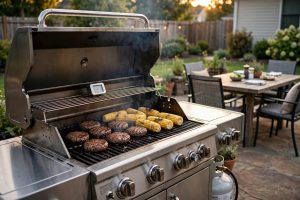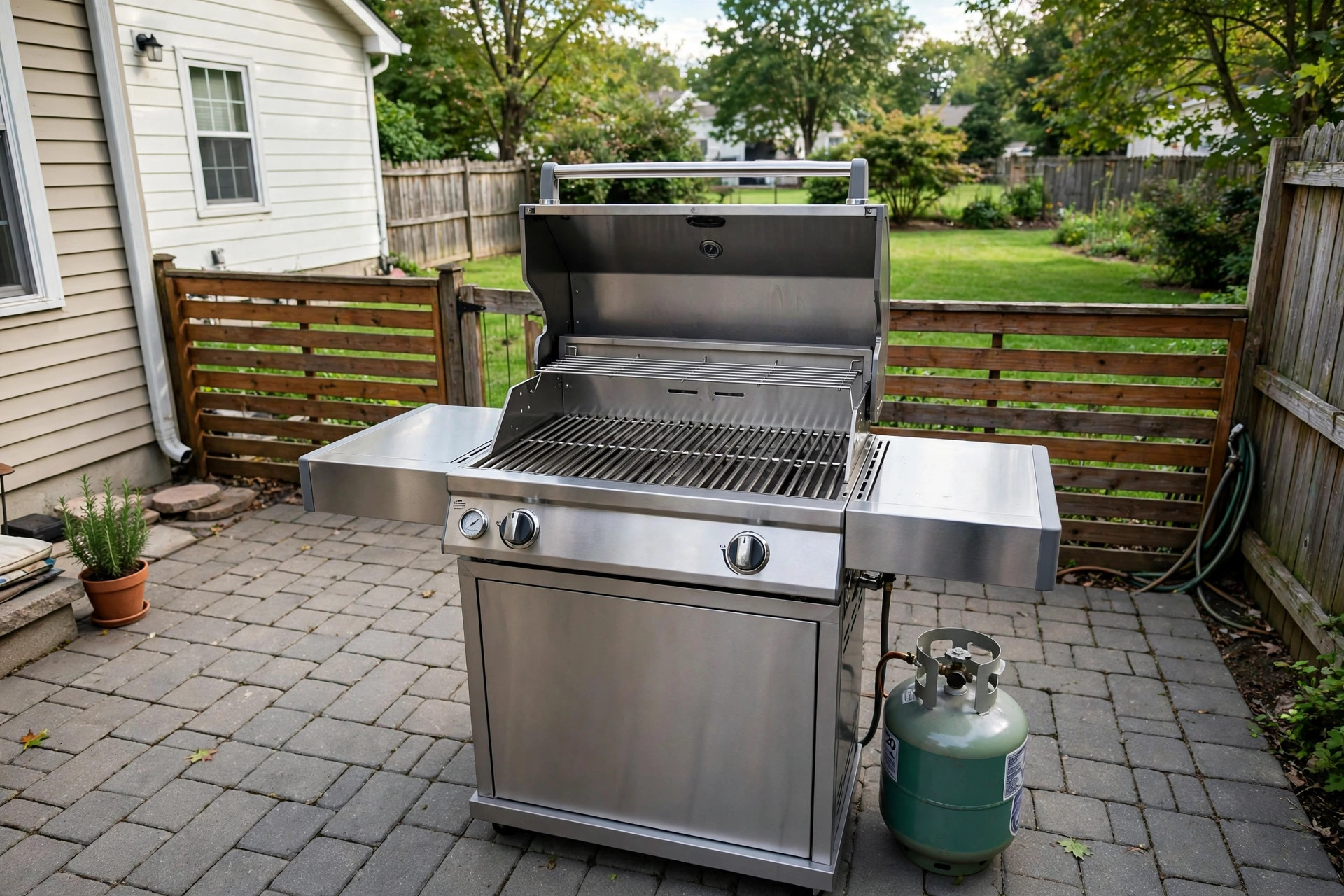

Millions of American families cook on gas grills each week. A grill is a fine tool. It is also a device that burns fuel. These gas grill safety tips for homeowners will help you enjoy cookouts without fire, injury, or damage. Read them once a season. Then make them habits.
Why Gas Grill Safety Matters
A gas grill uses propane or natural gas. Both burn fast and hot. A small leak can fill the air under the lid with fuel. One spark can then cause a flash fire. That is the main danger of a gas grill.
Burns are the most common grill injury. A flare-up can catch a sleeve or a hand. Propane tanks add another risk. A cracked hose or a loose fitting can release gas. In a closed space the gas can build up. The result can be an explosion.
Property damage is also real. A grill set too close to siding or a rail can melt or scorch it. Hot grease can drip and start a deck fire. Most of these events are easy to prevent. Good habits cost little and take only a few minutes.
Where to Place Your Grill: Gas Grill Safety Tips for Homeowners
Distance from the House
Set the grill at least ten feet from the house. Keep it away from the garage, the shed, and the deck rail. Never grill under a roof, an awning, or a low branch. Heat rises fast and can scorch wood or fabric above it.
A grill on a wooden deck needs care. Heat can build up under the firebox. Many owners place a grill mat under the unit. The mat catches grease and shields the deck boards.
Ventilation and Wind
Outdoor air is your friend. Never use a gas grill in a closed garage, even with the door open. Do not use one on a covered porch with low clearance. Carbon monoxide from the burners has no color and no smell. It can sicken a person fast.
Watch the wind. A gust can blow flames out through the burner ports. It can also push heat toward a table or a child. If the day is very windy, cook later or move the grill to a sheltered corner that still has open air on all sides.
Before Every Cookout: The Five-Minute Check
Check the Propane Tank and Hose
Look at the hose from the tank to the grill. Look for cracks, stiff spots, or chew marks. Rodents can gnaw on hoses in storage. Flex the hose gently. If it feels brittle, replace it before you cook.
Check the tank itself. A tank should sit upright and steady. If it is dented, rusted, or past its recertification date, have it inspected or exchanged. Guidance on safe tank handling appears in many manufacturer guides from Weber. Fresh hardware is cheap insurance.
The Soapy Water Leak Test
Do this test at the start of each season and after you swap a tank. Mix a little dish soap with water. Brush the mix on the hose, the fittings, and the tank valve. Open the tank valve slowly. If bubbles form and grow, gas is leaking.
Tighten the fitting and test again. If bubbles still appear, close the valve. Do not light the grill. Replace the part that leaks. Detailed propane care advice can be found in the safety resources at Char-Broil. A five-minute test can stop a dangerous fire.
Burners, Ports, and the Drip Tray
Lift out the grates and the heat tents. Look at the burner tubes. Spider webs and insect nests love to form inside them. A blocked tube can send gas out the air vent instead. That gas can then ignite behind the grill. Brush the ports with a vent brush.
Empty the grease tray. Old grease is a fire starter. Many grill fires begin in a tray that has not been cleaned in months. Scrape the tray into the trash and wipe it down. A short guide on how to clean gas grill burners properly can help with this task.
Lighting the Grill Safely
The Open-Lid Rule
Always open the lid before you turn on the gas. This is the single most important rule. Gas can pool under a closed lid. When you light it, the flame can surge out at you.
Turn on the tank valve first. Then turn on one burner knob and press the igniter. If the burner does not light in a few seconds, turn everything off. Wait at least five minutes for the gas to clear. Then try again. This advice is repeated in the grill operation tips at Napoleon and nearly every owner manual.
What to Do If the Igniter Fails
Many owners light a weak grill with a match or a long lighter. That is fine if you do it right. Open the lid. Turn on the gas. Hold the flame near the burner ports with a long tool. Keep your face and arms back. Light it quickly. If it does not catch, shut off the gas and wait five minutes.
Never use lighter fluid on a gas grill. The fluid can pool and cause a sudden fireball. Keep a flashlight near the grill for evening cooks so you can see the knobs.
While You Cook
Stay at the Grill
Never leave a lit grill alone. A child or a pet can reach it in seconds. A flare-up can grow fast. If you must step inside, turn the burners down or ask someone to watch the grill.
Keep the grill clean while you cook. Trim fat from meat before it goes on. Fat drips cause flare-ups. If flames rise, move the food to a cool zone and close the lid for a few seconds. Do not throw water on a grease fire. Water can spread burning grease.
Tools and Clothing
Use long-handled tools. They keep your hands away from the heat. Wear short sleeves or roll your sleeves up. Tie back long hair. Avoid loose aprons and hanging jewelry near the burners.
Keep a fire extinguisher close. A small ABC-rated extinguisher works for most grill fires. Many hardware stores, including the grill safety section at The Home Depot, carry them near the grill aisles. A box of baking soda also helps smother small grease flames.
Types of Gas Grills and Their Safety Points
Freestanding Propane Grills
This is the most common backyard grill. It runs on a 20-pound tank. The main risks are the tank, the hose, and the regulator. Store spare tanks upright, outside, away from the house. Never store a spare tank in a garage or a basement.
Built-In Natural Gas Grills
These grills connect to the home gas line. There is no tank to swap, but the connection is permanent. Have a licensed plumber or gas fitter check the line every few years. If you smell gas near the grill, shut off the supply valve at once. Call the gas company from a safe spot.
Portable and Tabletop Grills
Small grills use one-pound cylinders. They are easy to carry, but they tip over more easily. Set them on a flat, stable surface. Keep them away from the edge of a table. Let the cylinder cool before you remove it. Reviews of small models appear in the outdoor cooking tests at AmazingRibs, which also discuss safe heat control.
Cost and Price of Staying Safe
Safety gear is not costly. A new hose and regulator kit runs about twenty to forty dollars. A fire extinguisher runs about twenty-five to fifty dollars. A grill mat runs about thirty to sixty dollars. A vent brush and a good scraper cost under twenty dollars.
Compare that with the cost of a fire. A deck fire can cost thousands. A burn injury can cost far more. Good gas grill maintenance tips also extend the life of the grill. A well-kept grill can last ten years or more. That saves money over time.
When you shop for a new unit, safety features are worth the price. Look for heat tents that shield the burners. Look for flame tamers that spread heat. Look for a stable cart with a lock for the tank. Price comparisons from independent testers at Consumer Reports can help you weigh value.
Care and Upkeep Through the Year
Seasonal Deep Cleaning
Clean the grill deeply twice a year. Once in spring before the heavy season. Once in fall before you store it. Remove the grates, the tents, and the burners. Scrub them with a wire brush and warm soapy water. Rinse and dry them fully.
Check every part as you clean. Look for rust holes in the firebox. Look for cracked knobs. Replace worn parts before the next cook. Many replacement parts are easy to find in the grill parts aisle at Lowe’s.
Winter Storage
If you live where winter is cold, store the grill right. Clean it first. Disconnect the propane tank. Store the tank upright, outside, in a ventilated spot. Never bring a propane tank indoors.
Cover the grill with a fitted cover. The cover keeps rain off the burners and the ignition. Some owners keep the grill in a shed. That is fine as long as the tank stays outside. For general outdoor living advice, the backyard guides at The Spruce Eats cover storage routines.
Safety for Children and Pets
Set a Safe Zone
Draw a line three feet from the grill. Tell children to stay behind it. Teach them that the grill is hot even when it looks cool. A grill stays hot for an hour after you cook.
Pets need the same boundary. A dog can knock a grill over by pulling the hose. Keep leashes short near the cooking area. Put food scraps where pets cannot reach them.
After the Cook
Turn off the burner knobs first. Then close the tank valve. This order burns off gas left in the hose. Let the grill cool with the lid closed. Clean the grates while they are still warm. They clean best at that point.
Frequently Asked Questions
How often should I check my gas grill for leaks? Test the hose and fittings at least once a season. Test again every time you change or reconnect the tank. It takes five minutes.
Is it safe to grill on a wooden deck? It can be safe with care. Keep the grill away from rails and walls. Use a grill mat under it. Never leave it alone. Many grill makers, including those profiled in the brand guides at Broil King, warn against grilling under low roofs.
What should I do if I smell gas? Do not light anything. Do not flip a switch. Turn off the tank valve if you can do it safely. Move everyone away from the area. Call the fire department or the gas company from a phone that is far from the smell.
Can I store my propane tank in the garage? No. Store propane tanks upright and outside in the open air. Garages can trap leaking gas. That creates a real explosion risk.
Should I buy a new grill if the burners rust through? You can often replace burners instead of the whole grill. Burner kits are sold by most brands. If the firebox itself is rusted through, a new grill is the safer choice.
Are natural gas grills safer than propane grills? Each type has its own risks. Natural gas removes the tank, but the home line must be installed and checked by a pro. Propane adds tank handling, but a careful owner can manage it. Follow the maker guidance, such as the safety pages at Traeger, for either type.
A Final Word
A gas grill rewards the careful cook. Place it in the open air. Check it before each use. Open the lid before you light it. Stay close while it burns. These gas grill safety tips for homeowners take little time. They protect your family, your home, and your neighbors.
If you are new to grilling, start with a simple unit. A good best gas grill under 500 for beginners guide can help you pick one. Keep the manual in a safe place. Read it once. The safest grill is the one its owner understands.
References
AmazingRibs.com. (n.d.). Barbecue and grilling science. https://www.amazingribs.com Broil King. (n.d.). Gas and charcoal grills. https://www.broilkingbbq.com Char-Broil. (n.d.). Gas and charcoal grills. https://www.charbroil.com Consumer Reports. (n.d.). Product reviews and ratings. https://www.consumerreports.org Lowe’s. (n.d.). Home improvement products. https://www.lowes.com Napoleon. (n.d.). Fireplaces, grills, and heating products. https://www.napoleon.com The Home Depot. (n.d.). Home improvement products. https://www.homedepot.com The Spruce Eats. (n.d.). Recipes and cooking guides. https://www.thespruceeats.com Traeger. (n.d.). Wood pellet grills. https://www.traeger.com Weber. (n.d.). Grills and outdoor cooking. https://www.weber.com
Was this guide helpful?

About Lisa Anderson
The My Garden US editorial team writes practical, in-depth home and garden guides for American homeowners — tested advice, no fluff.
You May Also Like
Pellet Grill Not Heating: A Troubleshooting Guide
July 10, 2026 0 views
Smoker for Sale Near Me Used: A Practical Guide to Buying Secondhand
January 8, 2026 0 views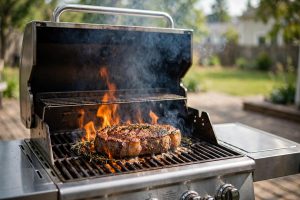
How to Grill Steak on Gas Grill: A Plain Guide to Juicy Steaks
January 9, 2026 0 views