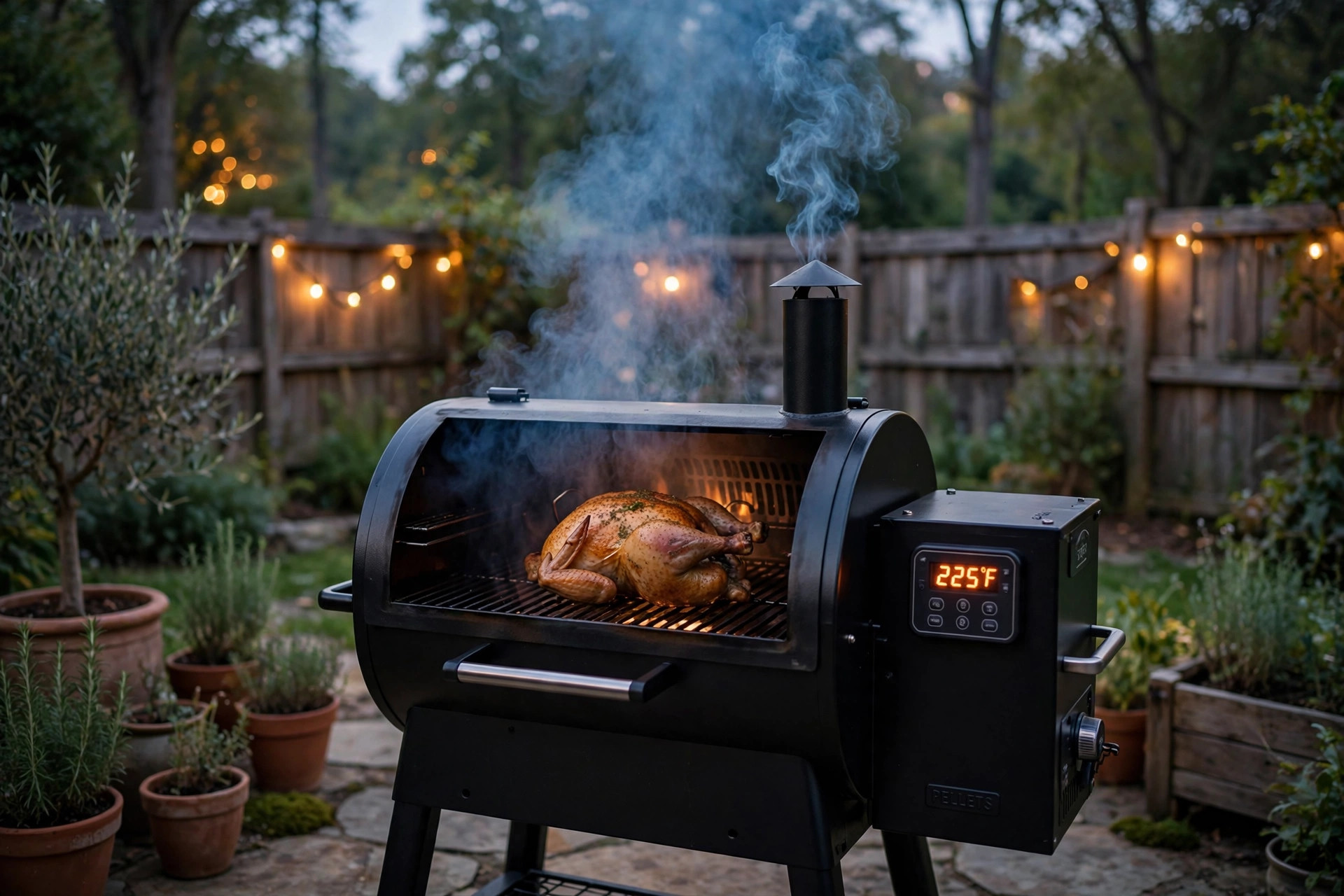
Pellet smoker recipes for beginners work best when they are simple and forgiving, with clear times and temperatures. A pellet smoker is a grill that burns small wood pellets to make heat and smoke. A dial or digital panel sets the temperature, and the machine feeds the pellets on its own. You can focus on the food instead of the fire. That is why so many new cooks start with one. The seven recipes below use short ingredient lists and plain steps. They also teach the basic skills of smoke cooking: seasoning, watching the temperature, and resting the meat before you cut it.
Why Pellet Smokers Suit New Cooks
Pellet smokers remove the hardest part of smoking, which is fire control. On a charcoal or wood smoker, the cook must watch the fire for hours and adjust air vents to hold the heat steady. A pellet smoker does this work with an auger and a fan. The auger moves pellets from the hopper to the fire pot. The fan feeds air to the flame. A controller reads the temperature and adjusts the feed. You set 225 degrees, and the smoker holds 225 degrees. This steadiness makes pellet smoker recipes for beginners reliable. A chicken that might dry out on a hot grill stays moist because the heat never spikes.
Pellet smokers also excel at low and slow cooking, the heart of barbecue. Tough cuts like pork shoulder turn tender after hours of gentle heat and smoke while you go about your day. Many cooks keep a regular grill for hot and fast food like steaks. If you are weighing your options, this guide on pellet grill vs gas grill pros cons can help you choose.
What to Look for Before You Cook: Pellet Smoker Recipes for Beginners
Start with the right pellets. Buy food-grade hardwood pellets made for pellet smokers, not heating pellets. Heating pellets may hold binders that are not safe for food. Common woods include hickory, oak, apple, cherry, and pecan. Mild woods like apple and cherry suit chicken and fish. Stronger woods like hickory suit pork and beef. A blend is a fine choice for your first cooks.
Keep the hopper full and the fire pot clean. Ash builds up after every few cooks, and too much ash can choke the flame. Buy a good meat thermometer too. The built-in probe on many smokers helps, but a second instant-read thermometer gives peace of mind. Temperature tells you when food is done. Time alone does not.
Preheat before the food goes on. Run the smoker at the target temperature for ten to fifteen minutes with the lid closed. Thick white smoke can taste bitter. Thin blue smoke is what you want. When the smoke looks light and steady, it is time to cook. For help picking the right unit, see this roundup of the best smoker for beginners under 300.
Recipe 1: Smoked Whole Chicken
A whole chicken is the best first smoke. It is cheap, it cooks in a few hours, and it is hard to ruin. Buy a bird of three to four pounds. Do not rinse it; food safety experts advise against rinsing raw poultry because it spreads germs around the sink. Pat it dry with paper towels. Dry skin takes smoke and browns better.
Rub the chicken with a thin coat of olive oil, then season with salt, black pepper, garlic powder, and paprika. Use about one tablespoon of salt and one teaspoon of each of the rest. Place a halved lemon and a few sprigs of thyme in the cavity if you like. Preheat the smoker to 275 degrees with apple or cherry pellets. Set the chicken breast side up on the grate and close the lid.
Cook until the thickest part of the thigh reads 165 degrees. That takes about two to two and a half hours. Open the lid as little as possible. When the temperature is right, rest the chicken for fifteen minutes before carving. The skin turns golden, and the meat carries a gentle smoky taste.
Recipe 2: Smoked Baby Back Ribs
Ribs are the classic barbecue test, and a pellet smoker makes them easy. Buy a rack of baby back ribs. Pull off the thin membrane on the back of the rack: slide a butter knife under it, grab it with a paper towel, and peel it away.
Use the 3-2-1 method. Season the rack with brown sugar, salt, paprika, garlic powder, and black pepper, about two tablespoons per side. Set the smoker to 225 degrees with hickory pellets. Smoke the ribs unwrapped for three hours, bone side down. Then wrap them in foil with a tablespoon of butter, a drizzle of honey, and a splash of apple juice. Smoke wrapped for two hours. Unwrap and smoke one more hour, brushing with barbecue sauce in the last twenty minutes if you like it sauced. The ribs are done when the meat has pulled back from the bone ends and the rack bends easily in the tongs. Rest ten minutes before cutting.
Recipe 3: Smoked Salmon Fillets
Fish smokes fast and gives a beginner a quick win. Buy skin-on salmon fillets about one inch thick. Mix four cups of cold water with a quarter cup of kosher salt and a quarter cup of brown sugar. Brine the fillets in the refrigerator for four hours.
Rinse, pat dry, and let the fillets sit uncovered in the refrigerator for one hour. A sticky surface called the pellicle forms and grabs the smoke. Preheat the smoker to 200 degrees with alder or apple pellets. Smoke skin side down for one and a half to two hours, until the thickest part reads 145 degrees. The fish should flake with a fork. Serve warm, or chill and flake it over a salad.
Recipe 4: Smoked Hamburgers
Use ground beef that is 80 percent lean. Form patties three quarters of an inch thick and press a small dimple in the center of each with your thumb so they cook flat. Season with salt and pepper just before cooking.
Set the smoker to 225 degrees and smoke the burgers for about one hour. Then raise the heat to 450 degrees to finish with a sear. Cook until the inside reads 160 degrees. Add cheese in the last two minutes for cheeseburgers. Rest five minutes. The two-step method gives smoke flavor plus the browned crust that makes a burger taste like a burger.
Recipe 5: Smoked Pork Shoulder
Pork shoulder, also called pork butt, is the most forgiving large cut. Buy a bone-in shoulder of six to eight pounds. Rub it with yellow mustard, then coat with salt, pepper, paprika, garlic powder, and brown sugar. The mustard helps the rub stick and leaves no mustard taste.
Set the smoker to 225 degrees with oak or hickory pellets. Place the shoulder fat side up. Smoke until the inside reads 195 to 205 degrees, about ten to twelve hours. When the meat probes like soft butter, wrap it in foil and rest it in a cooler for one hour. Pull it apart with two forks. The bone should slide out clean. Serve on buns with coleslaw. This cook needs no skill beyond patience.
Recipe 6: Smoked Turkey Breast
A boneless turkey breast smokes in about half the time of a whole turkey. Buy a three to four pound breast. Dry brine it with one tablespoon of kosher salt per pound, rubbed over the surface the night before.
Brush off the salt, rub with olive oil, and season with pepper, sage, and thyme. Preheat the smoker to 275 degrees with pecan or apple pellets. Smoke until the thickest part reads 165 degrees, about two to two and a half hours. Tent loosely with foil and rest twenty minutes before slicing. The result is juicy turkey for sandwiches and dinners, with a light smoke ring at the edge of each slice.
Recipe 7: Smoked Baked Beans
Mix two large cans of drained pork and beans with half a cup of barbecue sauce, a quarter cup of brown sugar, a chopped onion, and half a pound of cooked bacon pieces. Pour into a disposable aluminum pan.
Set the pan in the smoker at 250 degrees for two to three hours, uncovered, stirring once halfway through. The beans are done when the sauce has thickened and the top is browned. This recipe shows a key lesson: a pellet smoker is an outdoor oven. Anything you can bake inside, from beans to macaroni and cheese, you can bake in the smoker with added flavor.
Types of Wood Pellets to Know
The pellet sets the flavor. Apple and cherry are mild and slightly sweet, good for poultry, fish, and pork. Pecan is a step stronger and suits turkey. Hickory is the classic barbecue wood with a strong taste for ribs and pork shoulder. Oak is a steady middle ground for almost anything, including beef. Mesquite is the strongest common wood and can taste bitter in excess. Beginners should wait on mesquite.
Store pellets in a dry place in a sealed container. Pellets soak up moisture and crumble when wet. Wet pellets jam the auger and kill the fire. Never leave pellets in the hopper through a rainy week if the smoker sits outside uncovered.
Cost and Price of Smoking at Home
Entry-level smokers start around a few hundred dollars. Wood pellets cost roughly one dollar per pound, and a long smoke can use one to two pounds per hour. A ten-hour pork shoulder might burn fifteen to twenty pounds of pellets. But the meat is far cheaper than restaurant barbecue. A pork shoulder that costs twenty dollars at the store feeds a crowd for less than two restaurant platters.
Chicken and pork shoulder are the cheapest ways to start. Brisket costs the most and takes the longest, so save it for later. When you are ready, this guide on how to smoke brisket on pellet grill walks through the full method. A meat thermometer costs little and lasts for years. Over a year of regular cooking, home smoking pays for itself against eating out.
Care and Upkeep of Your Smoker
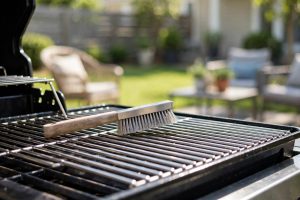
After every cook, brush the grates while warm. Every few cooks, vacuum the ash from the fire pot. Once a season, scrape the grease tray, wipe the temperature probe, and check the auger for stuck pellets. Grease fires happen when grease builds up, so a clean drip tray is a safety step, not just a chore.
Cover the smoker when not in use. Rain rusts steel and ruins pellets. Empty the hopper if the smoker will sit unused for weeks in damp weather. Check the lid gasket now and then. A worn gasket leaks smoke and heat. A little care each month keeps the machine steady for years.
Safety Basics
Place the smoker on a flat, non-flammable surface, away from the house and anything that can burn. Never use it in a garage or under a low roof. Carbon monoxide builds up in closed spaces. Keep children and pets at a safe distance while it runs.
Cook meat to safe temperatures. Poultry needs 165 degrees. Ground beef needs 160 degrees. Pork needs 145 degrees with a three-minute rest, though barbecue cuts go higher for tenderness. Fish needs 145 degrees. Wash hands, boards, and tools after touching raw meat. Do not leave raw meat at room temperature for more than two hours. Guides from AmazingRibs and The Spruce Eats repeat these rules because they matter more than any recipe.
Frequently Asked Questions
How long does it take to smoke a chicken on a pellet smoker?
A three to four pound chicken takes about two to two and a half hours at 275 degrees. Go by temperature, not time. Pull it when the thigh reads 165 degrees, then rest fifteen minutes.
Do I need to soak wood pellets before smoking?
No. Pellets are pressed sawdust made to feed through the auger dry. Soaking makes them swell and jam. Pour them straight from the bag into the hopper. Maker guides from Traeger and Weber say the same.
What is the best pellet flavor for a beginner?
A mild blend or a fruit wood like apple. Mild smoke is hard to overdo. Strong woods like mesquite can turn bitter in beginner hands. Tests from Consumer Reports often cover pellet quality alongside smoker performance.
Can I smoke in cold or windy weather?
Yes, but the smoker burns more pellets to hold temperature. Wind steals heat faster than cold air. Place the smoker out of the wind but still safely away from anything flammable. Allow extra cooking time on very cold days.
Why is my food not getting much smoke flavor?
Thin blue smoke at low temperature gives the most flavor. High heat burns too clean to make much smoke. Cook at 225 degrees, or use the smoke setting for the first hour. Check that your pellets are fresh and dry. Advice from Char-Broil and Broil King agrees: low and slow is where smoke flavor lives.
How do I clean a pellet smoker?
Brush the grates after each cook. Vacuum ash from the fire pot every few cooks. Scrape the grease tray so grease cannot build up. Deep clean once a season. Retailers like The Home Depot sell brushes, vacuums, and covers for most models.
A Short Final Word
Pellet smoker recipes for beginners share one secret: the machine does the hard work, and the cook brings the patience. Start with chicken or burgers. Move to ribs when ready. Save the long brisket cook for the day you want a project. Makers like Big Green Egg and Napoleon offer more reading as your skills grow. Keep notes on what you cook, what wood you used, and how it tasted. In a few months you will have your own book of recipes, written in smoke.
References
AmazingRibs.com. (n.d.). Barbecue and grilling science. https://www.amazingribs.com Big Green Egg. (n.d.). Kamado grills and outdoor cooking. https://www.biggreenegg.com Broil King. (n.d.). Gas and charcoal grills. https://www.broilkingbbq.com Char-Broil. (n.d.). Gas and charcoal grills. https://www.charbroil.com Consumer Reports. (n.d.). Product reviews and ratings. https://www.consumerreports.org Napoleon. (n.d.). Fireplaces, grills, and heating products. https://www.napoleon.com The Home Depot. (n.d.). Home improvement products. https://www.homedepot.com The Spruce Eats. (n.d.). Recipes and cooking guides. https://www.thespruceeats.com Traeger. (n.d.). Wood pellet grills. https://www.traeger.com Weber. (n.d.). Grills and outdoor cooking. https://www.weber.com
Was this guide helpful?

About Jennifer Lee
The My Garden US editorial team writes practical, in-depth home and garden guides for American homeowners — tested advice, no fluff.