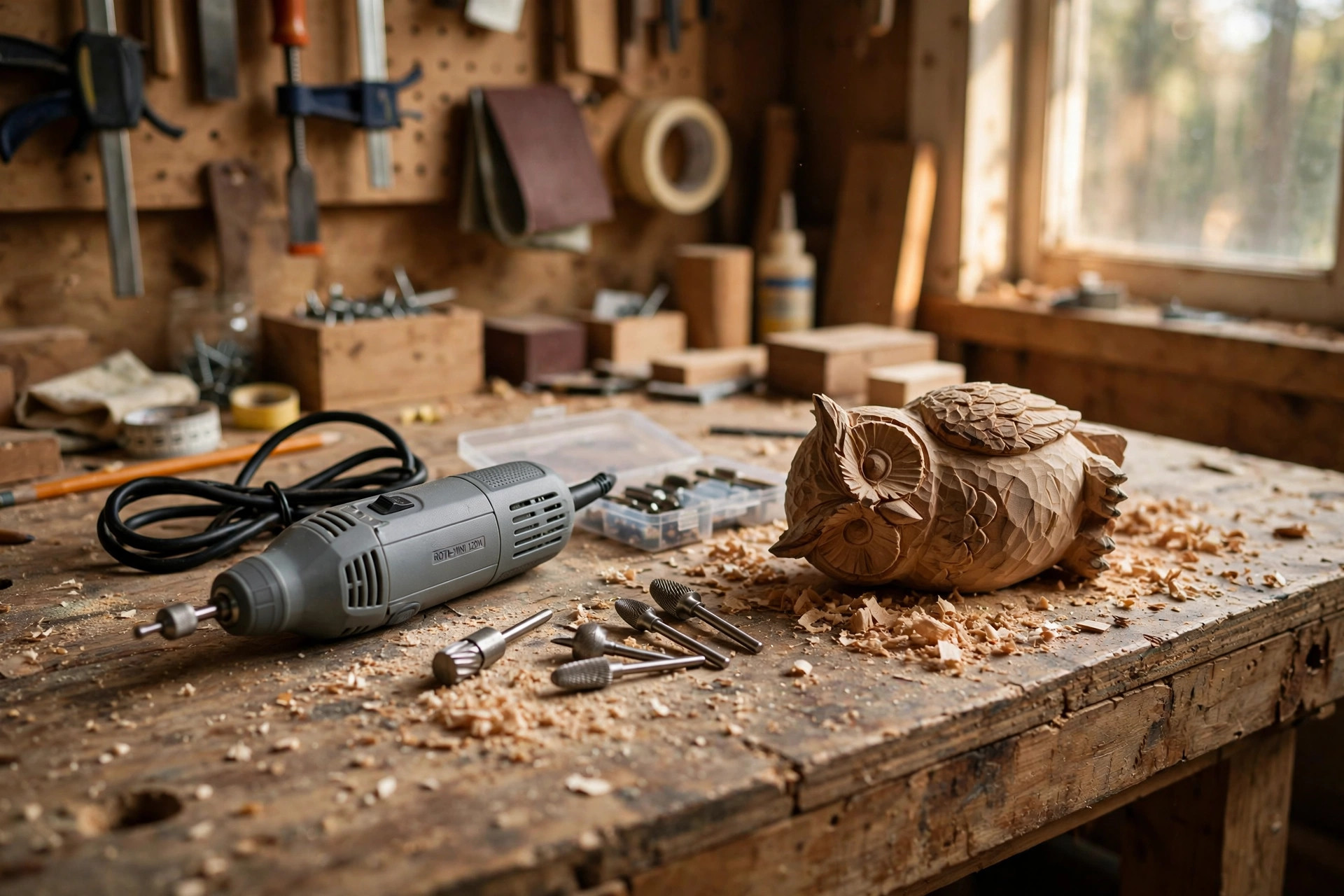

Wood carving with a rotary tool is a craft that rewards patience and care. Many makers in the United States start with simple hand tools such as a wood carving kit for beginners, then move to power tools when they want finer detail and faster results. A small rotary tool has changed this craft more than any other device. Project ideas and starter supplies are easy to find at craft stores like Michaels or Jo-Ann. It cuts, sands, grinds, and polishes with one motor and a set of bits. This guide explains how to pick the best Dremel tool for wood carving crafts and how to use it well.
Why It Matters
A good rotary tool turns rough ideas into finished pieces. It lets a carver shape soft woods like basswood in minutes and add fine detail to harder woods like oak and walnut. The right tool also protects your hands. A tool with smooth speed control and low vibration reduces strain on the wrist during long sessions.
The wrong tool can burn the wood, break bits, or wobble so much that fine lines become rough. When buyers search for the best dremel tool for wood carving crafts, they want a tool that starts true, holds its speed under load, and fits the hand well. Quality here is not about the most expensive model. It is about the right mix of power, control, and comfort for the work you plan to do.
What to Look For When You Choose: Best Dremel Tool for Wood Carving Crafts
A rotary tool is rated by several simple facts. Each one matters for wood carving.
Motor Power and Speed
Look at the amp rating and the speed range. Most carving work uses speeds between 10,000 and 30,000 revolutions per minute. Soft wood carves well at lower speeds. Hard wood and heavy shaping need higher speed and more power. A tool with variable speed gives you control for both rough work and fine detail. Avoid tools with only one or two fixed speeds. They force you to carve too fast for delicate work.
Size and Weight
Wood carving often takes hours. A tool that feels like a fat pen is easier to hold than a bulky drill body. Many carvers add a flex shaft attachment, which moves the motor away from the hand and leaves only a slim handpiece to guide. If you plan to carve small figures, signs, or jewelry, this slim grip matters more than raw power.
Collet System
The collet is the small chuck that holds each bit. A good collet grips the bit tight with no wobble. Most rotary tools use standard sizes such as 1/8 inch and 1/32 inch. Quick-change collets save time when you switch from a cutting bit to a sanding drum. A loose collet causes vibration, and vibration ruins fine detail.
Ventilation and Dust
Wood dust is not harmless. Fine dust from sanding and grinding can harm the lungs. Some tools have better cooling vents that blow dust away from the work area, but none of them replace a dust mask. Plan to wear a mask and eye protection every time you carve. Work near an open window or use a small fan to move dust away from your face.
Corded or Cordless
Corded tools give steady power and never run out of charge. They are the common choice for home workshops. Cordless tools free you from the outlet and work well for outdoor carving or craft fairs. Cordless power has improved a great deal, but a corded tool still runs longer at full power. Pick corded for the bench and cordless for travel work.
Types of Rotary Tools for Wood Carving
Standard Two-Speed Models
The classic two-speed tool is simple and low cost. It suits beginners who carve soft wood and learn basic shapes. The limit is control. Two speeds are too coarse for mixed work, and most carvers soon want a variable speed dial.
Variable Speed Models
A variable speed tool is the heart of most home carving shops. It runs from a few thousand up to 35,000 revolutions per minute. You can start slow to rough out a shape, then speed up for sanding and detail. For the search for the best dremel tool for wood carving crafts, these models are the usual answer. They handle many bits and many woods without complaint.
High-Performance Professional Models
Professional tools use stronger motors, often above 1.6 amps, and sturdier housings. They hold speed better when you press a cutting bit into hard wood. They cost more and weigh more. A serious carver who sells work or carves daily may need this level of tool. A hobby carver usually does not.
Flex Shaft Attachments
A flex shaft is a long flexible cable that links the motor to a slim handpiece. The motor hangs or sits on the bench while your hand guides a pen-sized tool. This setup cuts fatigue and improves fine control. Many carvers say a flex shaft is the single best add-on for detail work such as faces, feathers, or lettering.
The Bits That Matter Most
The tool is only half the story. The bits do the cutting. A basic carving set should include:
– High-speed cutters. Small carbide or steel cutters remove wood fast for rough shaping. – Carving and engraving bits. Fine pointed and ball shapes cut detail lines and textures. – Sanding drums and discs. These smooth curves and flats after the rough work. – Polishing points. Felt and rubber points give a clean finish before stain or oil. – Cut-off wheels. Thin wheels cut slots and slice small pieces to size.
Start with a starter set from a known maker — Dremel and the woodworking suppliers Rockler and Woodcraft all sell carving bit sets — then buy single bits as you learn which shapes you reach for most. Dull bits burn wood and slip. Replace them when they stop cutting cleanly. If you also enjoy pyrography, a wood burning kit for crafts pairs well with rotary carving, and spare wood burning pen tips keep that tool in service too.
Cost and Price Guide
Prices in the United States fall into clear bands. A basic corded rotary tool kit often sells for 40 to 70 dollars. A mid-range variable speed kit with a case of bits sells for 70 to 120 dollars. Professional kits and cordless systems with batteries run 120 to 200 dollars or more. A flex shaft attachment usually costs 30 to 50 dollars on its own.
Starter bit sets run from 15 to 40 dollars. Safety gear adds about 20 dollars for a dust mask, safety glasses, and ear protection. A carving glove for the holding hand is a smart buy at 10 to 15 dollars. Do not buy the cheapest no-name tool to save 20 dollars. A poor motor burns out in months, while a sound tool lasts for years. The Home Depot and This Old House publish buying guides that compare real models side by side.
How to Carve With a Rotary Tool
Good habits make the difference between a clean carve and a rough one.
Prepare the Wood
Draw your design on the wood with a pencil first. Soft woods such as basswood, butternut, and pine are kind to beginners. Hard woods such as maple, cherry, and walnut carve cleanly but need more patience. Clamp the piece to the bench so it cannot move. Never hold small work in your free hand while the bit spins. Workshop safety guides from Family Handyman and Bob Vila cover clamping and bench setup in plain terms.
Rough Out the Shape
Start with a coarse cutter at medium speed. Remove the waste wood and block in the main shapes. Keep the tool moving. Holding the bit in one spot too long burns the wood and leaves dark marks. Work from large shapes to small ones, and check your progress often from arm’s length.
Add the Detail
Switch to fine engraving bits and lower the speed. Detail work goes best with light pressure. Let the bit do the cutting. Pressing hard slows the motor and makes the cut rough. A flex shaft helps here because the slim handpiece moves like a pen.
Sand and Finish
Move to sanding drums and discs. Sand with the grain where you can. Wipe the dust off with a cloth, then feel the surface for rough spots. Repeat until the piece feels smooth. Finish with oil, wax, or varnish to protect the wood and bring out its color. Blick stocks finishing supplies alongside carving tools for craft makers.
Care and Upkeep
A rotary tool needs little care, but what it needs is important. Blow dust out of the vents after each session with a short burst of air. Check the brushes on corded models once a year and replace them when they wear short. Keep bits clean and dry, and store them in a case so the cutting edges do not chip. Oil the flex shaft lightly as the maker directs. A tool kept clean runs cooler and lasts longer.
Store the tool in its case away from damp air. Moisture rusts bits and harms the motor over time. If the tool starts to smell hot or lose speed, stop and let it cool. Running a hot motor shortens its life.
Safety Rules
Wood carving is safe when you follow a few firm rules.
– Wear safety glasses every time the tool runs. Chips fly farther than you expect. – Wear a dust mask or respirator, above all when sanding. – Tie back long hair and remove loose sleeves, rings, and watches. – Keep both hands on the tool or the clamp, never near the spinning bit. – Unplug the tool before you change bits or clean the vents. – Work in good light so you can see the cut line clearly. – Keep children and pets out of the work area.
If a bit catches and kicks, let go of the switch and set the tool down. A kick usually means you were cutting too deep or too fast. Slow down and take a smaller cut.
Frequently Asked Questions
What is the best Dremel tool for wood carving crafts for a beginner?
A variable speed corded tool in the mid price range is the best start. It has enough power for soft woods, enough control for detail, and a wide range of bits. Add a basic bit set, safety glasses, and a dust mask, and you have a full starter shop.
Can a rotary tool carve hard wood?
Yes. Hard woods like walnut, maple, and cherry carve well with carbide cutters at higher speeds. The work goes slower than with soft wood, and bits wear faster. Take light cuts and let the tool cool between passes on long sessions.
Do I need a flex shaft for wood carving?
You do not need one to start, but most carvers buy one later. It moves the weight of the motor off your hand, which helps with fine detail and long sessions. It is one of the best value upgrades for detail work.
How long do rotary tool bits last?
It depends on the wood and the bit. Steel cutters dull faster in hard wood. Carbide bits last much longer. Sanding drums wear with use and should be replaced when they stop cutting. Store bits dry and clean to get the most life from them.
What wood is best for rotary tool carving?
Basswood is the favorite for beginners because it is soft, pale, and cuts cleanly. Butternut and pine are also kind to new carvers. Cherry and walnut are good next steps. Avoid pressure-treated lumber, which holds chemicals you should not breathe.
How do I stop the wood from burning?
Burn marks come from dull bits, too much pressure, or too high a speed for the cut. Use a sharp bit, light pressure, and a lower speed. Keep the bit moving across the surface instead of dwelling in one spot.
A Short Final Word
Finding the best dremel tool for wood carving crafts comes down to your hands and your plans. A variable speed tool with a true-running collet, a sound set of bits, and proper safety gear will serve most carvers for years. Start with soft wood, learn the speeds, keep the dust out of your lungs, and let the tool do the work. The skill grows with every piece.
Wood carving rewards the maker twice: once in the making, and once in the finished piece that lasts for decades. Choose your tool with care, and enjoy the craft.
References
Blick Art Materials. (n.d.). Art and craft supplies. https://www.dickblick.com Bob Vila. (n.d.). Home improvement advice. https://www.bobvila.com Dremel. (n.d.). Rotary tools and accessories. https://www.dremel.com Family Handyman. (n.d.). DIY home repair and maintenance. https://www.familyhandyman.com JOANN. (n.d.). Fabric and craft supplies. https://www.joann.com Michaels. (n.d.). Arts and crafts supplies. https://www.michaels.com Rockler. (n.d.). Woodworking tools and supplies. https://www.rockler.com The Home Depot. (n.d.). Home improvement products. https://www.homedepot.com This Old House. (n.d.). Home renovation guidance. https://www.thisoldhouse.com Woodcraft. (n.d.). Woodworking tools and supplies. https://www.woodcraft.com
Was this guide helpful?

About Jennifer Lee
The My Garden US editorial team writes practical, in-depth home and garden guides for American homeowners — tested advice, no fluff.
You May Also Like
Best Heat Press Machine for Home T Shirts: A Complete Buyer’s Guide
February 28, 2026 0 views
How to Find the Best Embroidery Floss Organizer for Thread Storage
May 7, 2026 0 views
Best Yarn for Crochet Blankets: Soft Picks for USA Crafters
May 14, 2026 0 views