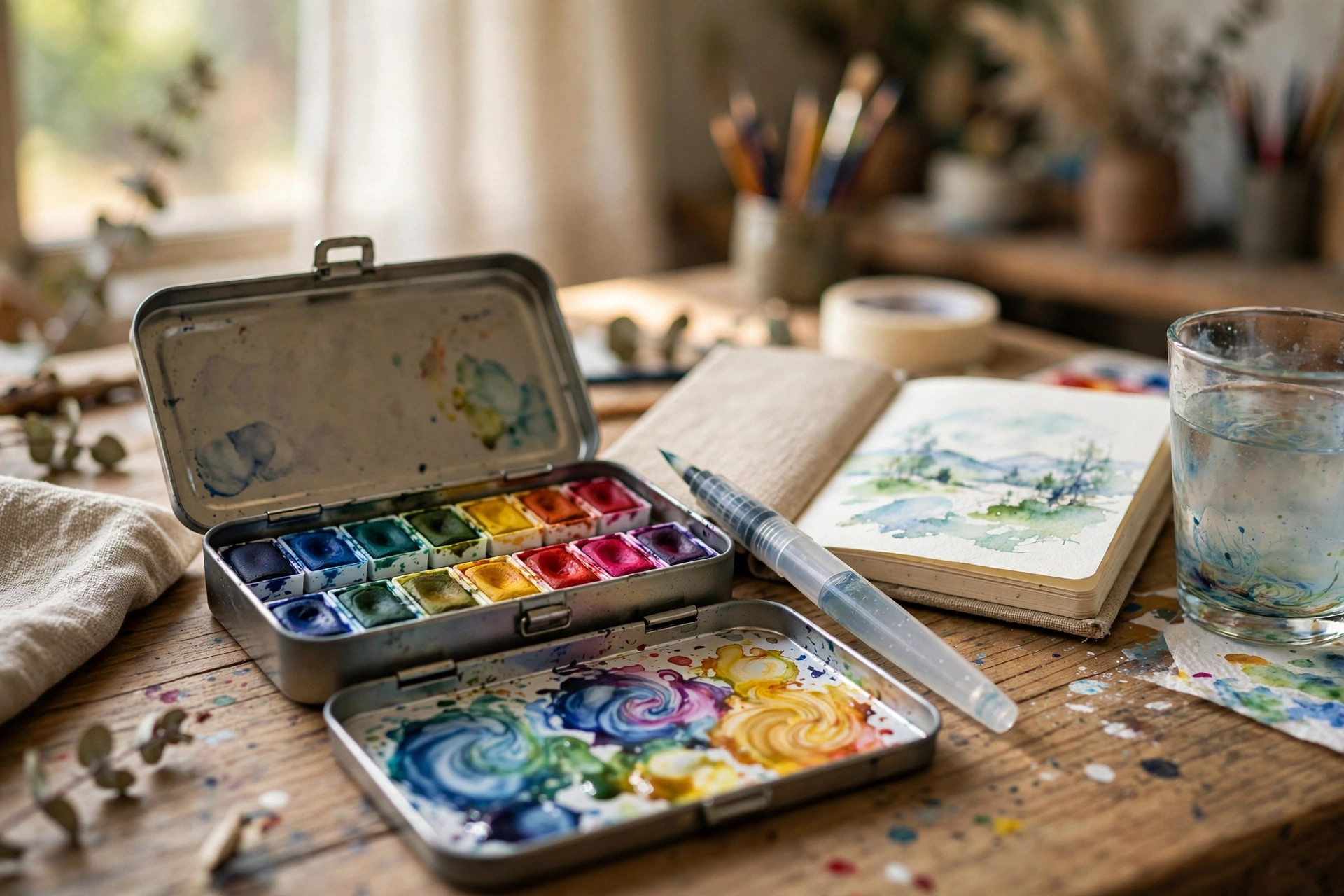

Painting on the road asks for less, not more. A traveler who wants to paint needs a kit that fits in a jacket pocket or a day bag, opens fast, and closes without a mess. The best watercolor set for travel painting art does all three. It carries its own paints, a water cup or water brush, and a mixing space, and it stays small enough that you will actually bring it along. This guide walks through what to look for, the kinds of kits sold today, what they cost, and how to keep yours working for years.
Why a Travel Set Is Worth Having
A full studio watercolor kit is too large for a trip. Tubes take space. Palettes are fragile. Bottles of water spill in bags. Many painters give up painting on trips because the gear is a burden.
A travel set fixes that. The paints sit in small pans inside a metal or plastic box. The box often holds a brush with a water tank in the handle. Some kits even hold a small folding cup. You open the box, touch wet paint with the brush, and paint. When you finish, the paint dries in its pans and the box closes. Nothing leaks. Nothing breaks in normal use.
Travel painting also changes how you see a place. A painter on a park bench looks longer and harder than a tourist with a camera. Light, shape, and color stick in the mind. Even a quick ten minute sketch teaches you something. A small kit makes that habit easy to keep.
What to Look for in a Travel Set: Best Watercolor Set for Travel Painting Art
Paint quality comes first
Paint matters more than the case. Cheap sets use chalky color that looks dull and fades fast. Good sets use rich pigment that stays bright on the paper. Look for sets that say “artist grade” or “professional.” These cost more, but the color is worth it.
Student grade sets are fine for a beginner. They cost less. The colors are weaker, but a new painter may not notice. If you paint often, spend the extra money for artist grade paint.
The case should be small and tough
Most travel sets come in a metal tin. The tin holds half pans of paint. A lid with a small mixing tray inside works as your palette. Pick a tin that latches shut. It should survive a fall from a table without popping open.
Some sets come in plastic. Plastic is lighter but can crack in cold weather. Metal lasts longer. A good travel set is about the size of a deck of cards. Bigger than that, and you will leave it at home.
Brushes and water
Many sets include a small brush. Travel brushes often fold or come apart so they fit in the tin. The finest travel sets include a water brush, which is a brush with a hollow handle that holds water. You squeeze the handle and water flows to the tip. This removes the need for a separate cup.
A water brush is a joy on the road. You can paint on a train, on a trail, or in a cafe without spilling a cup. If your set does not include one, buy one separately. They are cheap and they change the whole experience.
Number of pans
Travel sets hold anywhere from 8 to 48 pans of paint. For travel, 12 to 24 pans is the sweet spot. Twelve colors can mix nearly any color you need if you know basic mixing. Twenty four gives you more convenience colors so you mix less.
A giant set with 48 pans looks impressive in a store. On the road, it is heavy and slow. Keep it simple. You can always add a single extra pan of a color you love.
Mixing space
You need room to mix. A lid that doubles as a mixing tray is the standard answer. Some tins have a second folding palette. Check that the mixing area is big enough for at least two or three mixes at once. Tiny mixing wells slow you down.
Types of Travel Watercolor Sets
Pocket tin sets
The classic choice. A small metal tin with half pans, a folding brush, and a mixing lid. These fit in a coat pocket. They suit sketchers who paint quick scenes. Most cost between 10 and 40 dollars. They are the best start for a new travel painter.
Water brush sets
Some kits are built around a water brush. The tin holds the paint pans, and the water brush sits in a slot. You fill the brush handle once and paint for an hour. These are great for flights and cars where a cup of water is risky.
Sketchbook kits
A few makers sell kits that clamp onto a small sketchbook. Paint, brush, and paper all live in one unit. These are handy but heavier. They suit a painter who works in one place for a while, like a beach or a park bench.
Wooden box sets
Wooden travel boxes look beautiful and last for years. They cost more, often 50 to 150 dollars. They hold full pans or half pans. Serious painters love them. For a first kit, a metal tin is enough.
Refillable pan sets
Some tins come empty and let you fill them from tubes of paint you already own. This is a good path for a studio painter who wants to travel. You squeeze your own colors into empty half pans, let them dry, and you have a custom travel kit.
Cost and Price
A useful travel set can be bought for 15 dollars. At that price you get a tin, a dozen student grade pans, and a brush. It will paint fine for a beginner.
A mid range set of 25 to 60 dollars adds better paint and a water brush. This is where most travel painters settle. The paint is richer, the tin latches better, and the brush lasts longer.
A top end set of 70 to 150 dollars gives artist grade pigment in a sturdy tin or wooden box. The color goes further, so each pan lasts longer. A working artist who paints daily on trips will notice the difference.
Extra items add to the bill. A good water brush costs 8 to 15 dollars. A travel sketchbook with watercolor paper costs 10 to 25 dollars. A small folding cup costs about 5 dollars. None of these are required on day one.
Shoppers comparing paint options often look at acrylic paint sets for beginners to weigh one medium against another. Those who craft on the move may also like a mini sewing machine for travel for stitch work on trips, and a small craft storage organizer keeps supplies tidy at home between trips.
Paint from trusted art sellers is worth the small extra cost. The BLICK art materials site sells travel kits in many sizes. Michaels and JOANN stock travel sets in stores across the country, which is handy when you need one before a trip. General stores like Target and Walmart carry basic kits at low prices.
Care and Upkeep
A travel set needs little care, but a few habits keep it in good shape for years.
Let the pans dry before you close the tin. Wet paint will stick to the mixing lid. A few minutes of air drying is enough. If you must pack fast, lay a scrap of paper over the pans first.
Rinse the mixing tray after each use. Dried paint builds up and stains. A damp cloth or a quick rinse under a tap does the job. Metal tins can rust if left wet, so dry the tin before closing it.
Water brushes need care too. Rinse the tip until the water runs clear. Do not store the brush with dirty water in the handle. Algae can grow in a forgotten water tank. Once a month, wash the brush tip with mild soap.
Refill empty pans instead of buying a new kit. Many travel sets sell single replacement pans. A painter who loves one brand can keep the same tin for a decade. Fill empty pans from tubes and let them dry overnight before use.
Store the set out of heat. A tin left on a car dashboard in summer can cook the paint. Some colors crack or bleed in high heat. Keep the kit in a cool bag.
Keep extra paper with the kit. A small watercolor block or a travel sketchbook fits next to the tin in a bag. Painters who carry paper always paint more. Home project sites like This Old House and Family Handyman often cover simple DIY storage builds, and hobby writers at Bob Vila review craft gear from time to time. Large retailers such as Amazon and Home Depot also list travel kits with buyer reviews, which help you judge a set before you buy.
Safety
Watercolor is one of the safest art mediums. The paints are water based and wash off skin and clothes. Still, a few simple rules apply.
Do not drink the rinse water. It looks like tea, but it holds pigment and binder. Keep drinking water in a separate bottle from painting water.
Some pigments hold small amounts of metals like cadmium or cobalt. These are safe on paper and skin, but do not eat paint and wash your hands before meals. Children should use sets labeled non toxic. Many travel kits carry the ACMI non toxic seal, which means they passed safety tests.
Watch your brush around small children and pets. A wet brush looks like a toy. Keep paint out of reach of toddlers.
Flying with paint is allowed. Solid pan watercolors are fine in carry on bags. They are not liquids, so the liquid rules do not apply. A water brush with an empty handle is fine too. Fill it after you pass security.
Frequently Asked Questions
How many colors do I need in a travel set? Twelve is enough. With twelve well chosen colors you can mix almost anything. Many painters travel with twelve pans for years and never feel short. Twenty four pans add ease, not need.
Are travel sets good enough for serious painting? Yes. The paint in a good travel set is the same paint sold in studio sets. The tin is just smaller. Many working artists paint finished pieces from travel kits. Paper quality matters more than kit size.
Can I take a watercolor set on an airplane? Yes. Pan watercolors are solids. They pass through security without trouble. Keep a water brush empty until you board. Some painters fill the brush from a drinking fountain after security.
What paper works best with a travel set? Use paper made for watercolor. Cheap paper buckles and pills when wet. A small block of 140 lb cold press paper is the standard choice. Some painters carry a bound watercolor journal so loose sheets never blow away.
Should I buy student grade or artist grade paint? A beginner can start with student grade. The price is low and the colors are pleasant. Move to artist grade when you can tell the difference. Artist grade paint mixes cleaner and stays bright for decades without fading.
How do I clean a travel tin? Wipe the mixing tray with a damp cloth after each session. Wash the tin in warm soapy water once in a while. Dry it fully before closing. Keep the hinges free of dried paint so the lid closes tight.
A Short Final Word
The best watercolor set for travel painting art is the one you will carry every day. Do not chase the biggest kit or the longest color list. Pick a small tin with paint you trust, add a water brush, and keep paper with it. Then paint. A quick sketch from a train window is worth more than a perfect kit that stays in a drawer. Travel light, paint often, and the set will pay for itself many times over.
References
Amazon. (n.d.). Online shopping. https://www.amazon.com Blick Art Materials. (n.d.). Art and craft supplies. https://www.dickblick.com Bob Vila. (n.d.). Home improvement advice. https://www.bobvila.com Family Handyman. (n.d.). DIY home repair and maintenance. https://www.familyhandyman.com JOANN. (n.d.). Fabric and craft supplies. https://www.joann.com Michaels. (n.d.). Arts and crafts supplies. https://www.michaels.com Target. (n.d.). Retail store. https://www.target.com The Home Depot. (n.d.). Home improvement products. https://www.homedepot.com This Old House. (n.d.). Home renovation guidance. https://www.thisoldhouse.com Walmart. (n.d.). Everyday low prices. https://www.walmart.com
Was this guide helpful?

About Robert Taylor
The My Garden US editorial team writes practical, in-depth home and garden guides for American homeowners — tested advice, no fluff.
You May Also Like
Air Dry Clay Kit for Pottery at Home: The Simple Way to Make Real Pottery Without a Kiln
March 6, 2026 0 views
The Best Craft Table Foldable for Small Apartments: A Practical Guide
February 19, 2026 0 views
Origami Paper Kit for Kids Crafts Beginners
April 7, 2026 0 views