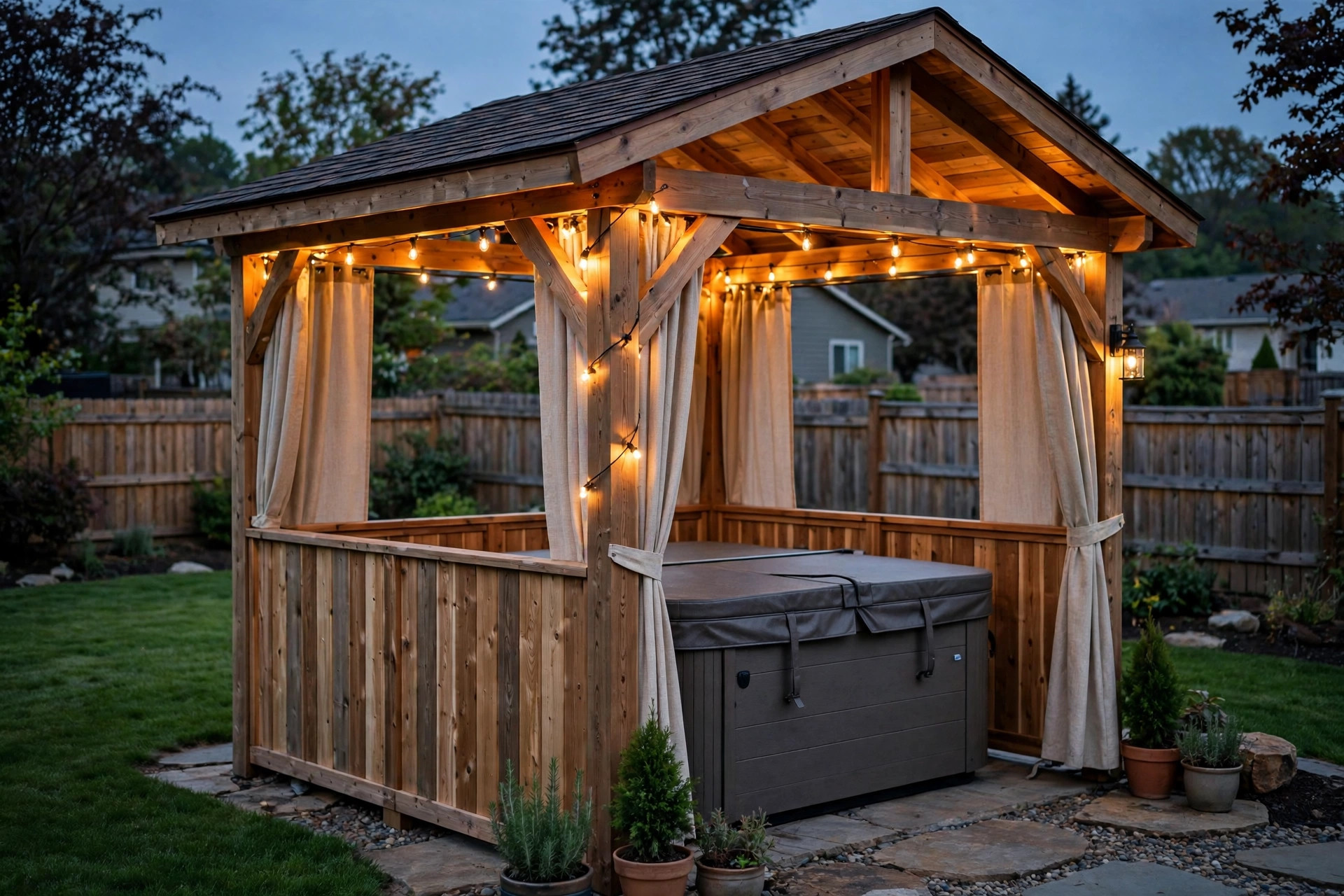

A hot tub is meant for rest. Steam rises off the water. The jets hum. But when the neighbors can see straight into the yard, the rest goes away. That is why many owners look for the best hot tub gazebo for privacy. A good gazebo gives shade, shelter, and a screen from curious eyes all at once. This guide walks through what matters when you pick one, the types that work best, what they cost, and how to keep them standing for years.
Why Privacy Matters Around a Hot Tub
Soaking in warm water is a private thing. Most people wear little when they step into a hot tub. They also talk, laugh, and relax with family in ways they would not do in public. When a fence is low or a second floor window looks down on the deck, comfort drops fast.
A privacy gazebo fixes this without a tall fence all around the yard. It wraps the spa on three or four sides. Walls or curtains block the view from the street and from nearby homes. It also cuts wind, which keeps the water warm longer and saves on heat bills. On a cool night, that wind block is worth a great deal. For those who want to learn more about water care at the same time, guides on salt cell replacement cost for pools sit in the same world of backyard water care.
What to Look for When You Choose: Best Hot Tub Gazebo for Privacy
The best hot tub gazebo for privacy is not the prettiest one in a catalog. It is the one that fits your tub, your yard, and your need for seclusion. Start with these points.
Solid Walls or Curtains
Some gazebos have wood or vinyl half walls. These block sight lines all the time and hold up in wind. Others come with fabric curtains that tie back in the day and pull shut at night. Curtains give choice. You can open one side to the garden and close the side that faces the street. Many buyers pair a half wall with curtains for the best of both.
Size and Head Room
Measure your hot tub first. Most spas are seven or eight feet across. Add two to three feet on each side for the cover lifter and for room to walk with towels. A ten by ten foot gazebo fits a standard tub with room to spare. Twelve by twelve gives room for steps and a bench. Head room matters too. A roof at least seven feet high keeps steam from getting trapped.
Wood, Metal, or Vinyl
Cedar and redwood look warm and hold up well outside. They need stain every couple of years. Metal frames of aluminum or steel are strong and light, but the panels may dent. Vinyl and composite posts never rot and need almost no care, though they cost more up front. Any of the three can be the best hot tub gazebo for privacy if the design closes off sight lines.
A Roof That Lets Steam Out
Hot tubs make steam, especially in winter. A closed roof with no vent can drip water back down on you. Look for a cupola, a vent ridge, or a small gap under the eaves. Some owners leave one top panel off on purpose. Warm air must have a way out.
Types of Gazebos That Give the Most Privacy
Wooden Gazebos With Half Walls
A classic cedar gazebo with knee walls is a strong pick. The lower half of each wall is solid wood. The upper half can be open railing, lattice, or curtains. From a neighbor’s window, the sight line hits wood first. These buildings feel like a small cabin. They cost more than kits but last ten to twenty years with care. If you like natural wood near water, you will find this style in most big home stores like Home Depot.
Metal Gazebos With Privacy Curtains
Aluminum and steel gazebo kits ship with mesh netting and fabric curtain panels. The curtains hang on tracks, so you can slide them shut in seconds. This type suits renters and budget buyers because most kits bolt together in a day. The weak point is wind. Tie the curtains back on stormy days or they can tear at the seams. Buyers who want heavy-duty options can compare frames at retailers such as Lowe’s.
Vinyl and Composite Builds
Vinyl gazebos look like painted wood but never need stain. Composite boards resist rot and insects. These structures often come with full louvered walls or privacy screens built in. They are the low-care choice. The price is higher, and the color range is smaller, but for a family that wants to set it up and forget it, this is hard to beat.
Pergola With Add-On Screens
A pergola is not a full gazebo, but many owners add side screens, roll-down shades, or planted trellises to it. Climbing vines on two sides give living privacy that gets better each year. This is the slowest path to seclusion, but it is also the prettiest. A mix of a wood pergola and tall planters works well in gardens where a solid wall would feel harsh.
Cost and Price
Prices vary with size and material. A basic metal gazebo kit with curtains runs about 300 to 900 dollars. These are light and easy to move. A mid-range cedar kit with half walls runs about 1,500 to 4,000 dollars. Custom-built wood or vinyl gazebos, put up by a contractor, run 5,000 to 12,000 dollars or more.
Do not forget the hidden costs. A level pad of gravel, pavers, or concrete is a must. Electrical work for the spa must meet local code, and a permit may be needed for a roofed structure. Delivery and assembly can add a few hundred dollars. Get a full quote before you buy so the project does not stall half done.
Care and Upkeep
A gazebo over a hot tub lives in a damp place. Moisture is the main enemy. Wood posts should sit on metal feet or concrete piers, never straight in the soil. Stain or seal cedar every two to three years. Check metal joints once a year and tighten bolts. Wash curtains in spring to stop mildew. Trim plants back from the posts so air can move.
Inside the structure, wipe down rails now and then. Bromine and chlorine in the air can dull finishes over time. A small fan under the roof helps move steam out and keeps the air fresh. Once a season, walk the whole frame and look for soft spots in wood, rust on metal, or frayed curtain hems. Catching small wear early is cheap. A loose bolt or a split board is a small fix today and a big repair next year. Hot tub care guides, such as those on Swim University, also cover how steam and chemicals touch nearby wood and fabric.
Safety Around Your Hot Tub Shelter
Safety comes first with any structure over water and heat. Keep these rules in mind.
Keep the electrical parts of the spa away from the wood frame. Wiring should be done by a licensed electrician and kept to code. Never run an extension cord to the tub under the gazebo. The U.S. Consumer Product Safety Commission publishes plain advice on pool and spa barriers and safe use.
Do not block the tub cover lifter. In an emergency, the cover must open fast. Leave room to walk all the way around the spa. Do not hang heavy items from the roof beams unless the frame is rated for the load.
Ventilation matters in a closed shelter. A small vent at the top of the roof lets steam escape. On cold nights, open one curtain panel a little so air moves. Never use a gas heater or fire pit inside the gazebo. Carbon monoxide is a silent danger.
Check the roof after heavy snow. Snow load can bend light metal frames. A broom with a soft head takes the weight off in minutes.
Where to Place It
Placement changes how private the gazebo feels. Set it so the open side faces your house and the closed sides face the neighbors. A corner of the lot is often best, with two sides already near fences or hedges. Keep the door of the house in sight of the tub if children use the yard, or add a gate alarm on the fence.
Think about the sun too. Morning shade is kind on hot days. In the north, a south-facing opening catches winter sun and melts snow faster. Look at the yard at different hours before you pick the spot. Hot tub makers like Hot Spring and Bullfrog Spas both note that wind shelter and sun exposure change heating costs, so the spot affects the bills.
Frequently Asked Questions
How big should a hot tub gazebo be? For most spas, a ten by ten foot gazebo is the smallest good size. It fits a seven-foot tub plus room to walk and lift the cover. Go up to twelve by twelve if you want a bench, steps, or a towel shelf inside.
Do I need a permit for a hot tub gazebo? Often yes. Many towns treat a roofed gazebo as an accessory structure and ask for a permit. Rules differ by town, so call the local building office before you buy. The store guides at Leslie’s Pool Supplies remind buyers that local rules can add steps to any backyard water project.
Can a gazebo really block a second-floor view? A gazebo helps a great deal, but a tall window straight above can still see in. For upper windows, pick a gazebo with a solid or louvered roof and add tall side screens on that face. Planting a fast-growing tree on that side is a good long-term fix.
Will the curtains last in bad weather? Good outdoor curtains last several years if you tie them back in storms. Cheaper fabric may fade in one summer. Look for solution-dyed fabric that resists sun. In winter, take the curtains down and store them dry to double their life.
Is wood or metal better over a hot tub? Both work. Wood looks warm and feels solid, but it needs stain and care. Metal kits are cheaper and faster to build, but light frames can rattle in wind. If privacy is the top goal, pick the design with the most wall coverage, not the material.
Can I build my own privacy gazebo? Yes, if you have basic carpentry skill. Plans for simple post-and-beam shelters are easy to find. Be sure the posts stand on proper footings and the roof can shed rain. If the spa wiring must change, call an electrician. Pool project suppliers like Pool Warehouse sell parts and kits that fit common spa sizes.
A Short Final Word
The best hot tub gazebo for privacy is the one that fits your tub, blocks the right sight lines, and stands up to your weather. Start with the size. Then pick walls or curtains. Then pick a material you will care for. Do that, and the yard gains a quiet room with steam and stars instead of a tub on open display.
Families with larger water plans may also read about best above ground pool for families before they commit to one big project. Those who want to cut weekly scrubbing time can look at best pool vacuum for steps and benches. For plain how-to advice on yards and structures, Bob Vila and The Spruce both keep large home guides worth a visit.
References
Bob Vila. (n.d.). Home improvement advice. https://www.bobvila.com Bullfrog Spas. (n.d.). Hot tubs and spas. https://www.bullfrogspas.com Hot Spring Spas. (n.d.). Hot tubs and spas. https://www.hotspring.com Leslie’s Pool Supplies. (n.d.). Pool supplies and equipment. https://www.lesliespool.com Lowe’s. (n.d.). Home improvement products. https://www.lowes.com Pool Warehouse. (n.d.). Pool equipment and supplies. https://www.poolwarehouse.com Swim University. (n.d.). Pool and hot tub care guides. https://www.swimuniversity.com The Home Depot. (n.d.). Home improvement products. https://www.homedepot.com The Spruce. (n.d.). Home and garden advice. https://www.thespruce.com U.S. Consumer Product Safety Commission. (n.d.). Product safety information. https://www.cpsc.gov
Was this guide helpful?

About Michael Thompson
The My Garden US editorial team writes practical, in-depth home and garden guides for American homeowners — tested advice, no fluff.
You May Also Like
The Best Hot Tub for Sore Muscles: How to Choose One
April 4, 2026 0 views
Hot Tub Chemicals for Sensitive Skin: How to Soak Without the Itch
July 27, 2026 0 views
Pool Fence Installation Cost Near Me: A 2026 Homeowner Guide
June 3, 2026 0 views