A pool is only as clean as its dirtiest spot. For most pool owners, that spot is the steps. Dirt settles on the wide stairs by the entry. It collects on the built-in benches along the wall. Standard pool cleaners roll past these areas. Many never climb onto them at all. This is why finding the best pool vacuum for steps and benches matters so much.
The good news is that several good options exist. Some are simple hand tools. Others are smart robots that climb walls and scrub stairs. Each has its place. The right choice depends on your pool, your budget, and how much work you want to do yourself. This guide walks through the choices in plain terms.
Why Steps and Benches Stay Dirty
Pool steps and benches sit at odd angles. Most steps slope or curve. Benches run flat along the pool wall, often just below the waterline. Water flow is weak in these spots. The main circulation pushes debris to the floor drain, but the stairs and ledges miss most of that flow.
Sand, fine silt, and pollen settle there first. Leaves drift into the corners where steps meet the wall. Body oils and sunscreen leave a slick film on tanning ledges. Algae can take hold in the still water over a bench long before it shows on the pool floor.
Most automatic cleaners are made for flat floors. Suction-side cleaners drag across the bottom and rarely lift onto a step. Even many pressure-side cleaners skip the stairs. If you rely only on your regular cleaner, the steps will slowly grow a thin, gritty layer of dirt.
What to Look for in a Step-and-Bench Vacuum: Best Pool Vacuum for Steps and Benches
Not every vacuum handles stairs well. When you shop, look for a few clear features.
Climbing ability. The vacuum should lift its front edge onto the first step. Robotic models with good track grip do this best. Check that the maker lists stair climbing as a feature, not just wall climbing. The two are different.
Soft, flexible brushes. Hard plastic brushes can scratch vinyl liners and fiberglass steps. Look for soft rubber or gentle bristle brushes. They clean well without marking the surface.
Strong suction or scrubbing. A wide intake mouth pulls in sand and small leaves fast. Some models add active scrubbing brushes that loosen stuck dirt before it is sucked up.
Fine filtration. Sand and silt on steps are tiny grains. A coarse filter bag lets them pass back into the pool. Look for fine-mesh baskets or cartridge filters rated for small debris.
Light weight and easy handling. If you clean by hand, the tool should be easy to push and lift out of the water. Heavy vacuums tire your arms fast.
Corner reach. Steps have corners where two flat surfaces meet. A triangular brush head or a flexible edge reaches into those corners better than a wide flat head.
Types of Pool Vacuums for Steps and Benches
Manual Vacuum Heads and Brushes
The manual vacuum head is the oldest and cheapest answer. It clips onto a standard telescopic pole. You connect it to your skimmer with a vacuum hose. Then you push it slowly across the steps and benches.
Pros. A manual head costs little, often under fifty dollars for the head itself. It gives you full control. You can spend extra time on the worst spots. It reaches every corner a machine cannot.
Cons. The work is slow and physical. You must prime the hose and work slowly so dirt does not drift away before it is sucked up. A full step-and-bench cleaning can take twenty to thirty minutes.
Manual heads work best as a backup tool. Even if you own a robot, keep one on hand for spot cleaning. For related manual cleaning topics, many pool owners also read our piece on the best pool vacuum for leaves reviews when heavy leaf loads are the main problem.
Suction-Side Cleaners
Suction-side cleaners plug into your skimmer line and move by themselves. The pool pump powers them. They wander the pool floor in a random pattern.
Most suction cleaners do a poor job on steps. They lack the drive to climb. Some newer models lift one step with a special wing, but they rarely clean benches. If stairs are your main worry, a suction cleaner alone will not solve the problem.
They do help by keeping the floor clean, which keeps some dirt from drifting onto the steps. Pairing a suction cleaner with weekly manual step cleaning is a common low-cost setup.
Robotic Pool Cleaners
A robotic cleaner is its own machine. It plugs into a power supply at the poolside and runs on a low-voltage cord. It does not use your pool pump at all.
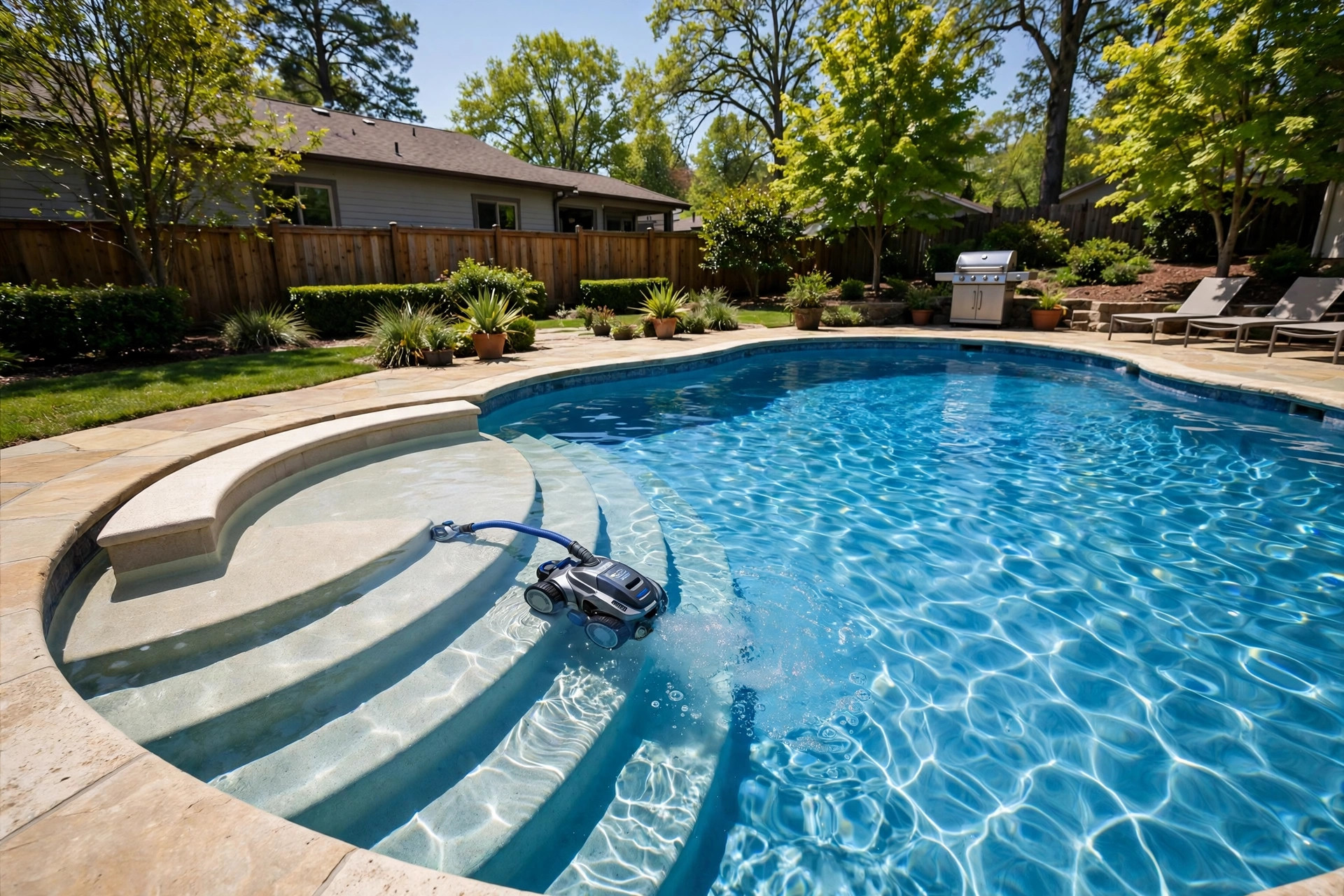
Good robots are the top pick for the best pool vacuum for steps and benches. Many models climb walls and lift onto stairs. Their tracks grip the step edge and pull the unit up. Twin scrubbing brushes wash the step surface as they go.
What to check before you buy. Read the model details for stair coverage. Some makers say “stairs” but mean only the bottom step. Look for reviews from owners of pools with wide wedding-cake steps or long benches. Those shapes are the real test.
Robots cost more, often three hundred to a thousand dollars. They save a lot of time. Many owners run the robot two or three times a week and hand-vacuum the steps only once a month. If you are comparing robot styles, our guide to the best robotic pool cleaner for vinyl covers models that are gentle on soft liner surfaces.
Handheld Battery Vacuums
Handheld battery vacuums are small, cordless, and light. You hold the unit itself, not a pole. You guide it along the steps and benches. They run on a rechargeable battery, usually for forty-five to sixty minutes.
Pros. They are fast to grab and easy to use. No hose to prime. No cord to untangle. They are great for quick touch-ups, like cleaning the steps before guests arrive.
Cons. Their filters are small and fill fast. Their suction is weaker than a full-size vacuum. They handle sand and silt well but struggle with large leaves or heavy debris.
A handheld unit is a strong partner to a robot. The robot does the deep clean. The handheld does the quick daily pass.
Cost and Price Guide
Prices vary by type and by brand. The ranges below reflect common United States retail prices in recent years.
– Manual vacuum head: twenty to sixty dollars. Add a hose and pole if you do not own them. – Handheld battery vacuum: one hundred to three hundred dollars. – Suction-side cleaner: two hundred to five hundred dollars. – Robotic cleaner with stair climbing: three hundred to one thousand dollars or more.
Think in terms of cost per use. A robot that runs three times a week for five years costs less per clean than most owners expect. A manual head is cheap to buy but costs your time every week. Pick the mix that fits your budget and your schedule.
Replacement parts matter too. Brushes wear out. Filter baskets crack. Hose cuffs split. Before you buy, check that parts are easy to find. A cheap cleaner with no spare parts is no bargain. Retailers such as The Home Depot carry common replacement heads, hoses, and poles in most markets.
How to Clean Steps and Benches the Right Way
Good tools help, but method matters too. These steps make any vacuum work better.
1. Brush first. Use a pool brush on the steps and benches before you vacuum. Brushing lifts stuck dirt into the water. Then the vacuum picks it up. Work from the top step down to the floor.
2. Move slowly. Fast moves stir up dirt instead of catching it. Push the vacuum head at a slow, steady pace. Overlap each pass by half the head width.
3. Work top to bottom. Start at the highest step. Clean each step, then the bench, then the floor below. Dirt you knock loose falls down and gets cleaned on the next pass.
4. Empty the filter often. A full filter cuts suction. For a robot, rinse the basket after every run. For a manual head, watch the pump basket and empty it when half full.
5. Clean the waterline. The line where water meets the step edge collects a sticky film. Wipe it with a damp cloth or a tile brush during your vacuum session.
Pool care guides from Swim University and Leslie’s explain these basics in more depth and offer product lines built for routine step care.
Care and Upkeep of Your Vacuum
A vacuum lasts longer with simple care.
Rinse the unit with fresh water after each use. Pool chemicals wear down rubber and plastic over time. A quick rinse slows that wear.
Store the vacuum out of the sun. Sunlight cracks hoses and fades plastic. A shaded shed or a storage bin works well. Coil hoses in wide loops. Tight coils kink and restrict water flow.
Check brushes every month. Worn brushes clean poorly and can leave marks. Most brands sell brush kits for a small price. Swap them at the first sign of wear.
For battery models, charge the unit after each use. Do not leave it on the charger for days. Store it at room temperature in the off-season.
Check cords and connections for damage before each season. A cracked cord on a robotic cleaner is a safety risk. Replace damaged parts before the unit goes back in the water.
Safety Tips
Pool equipment is safe when used with care. Keep these points in mind.
Never swim while a robotic cleaner or suction cleaner is running. Remove the unit before anyone enters the water. This is a basic rule in every maker manual.
Keep electrical parts dry and away from the pool edge. The power supply for a robot should sit at least ten feet from the water. Never handle plugs with wet hands.
Prime hoses fully before manual vacuuming. Air in the line can make the pump lose prime. That can damage the pump if it runs dry.
Store chemicals away from vacuum parts. Chlorine and acid damage rubber seals and hoses. Keep a clear space between your chemical shelf and your equipment shelf.
Read the safety guidance from the U.S. Consumer Product Safety Commission for general pool and spa safety rules. Their pool safety pages cover drains, covers, and electrical equipment near water.
FAQ
Can a robotic pool cleaner really clean steps?
Yes, many can. Look for models that list stair climbing in their specs. The best ones lift onto wide steps and scrub benches. They may miss the very top step or tight corners. A quick manual pass once a month covers those spots.
What is the best pool vacuum for steps and benches on a budget?
A manual vacuum head on a telescopic pole is the cheapest full solution. It costs under sixty dollars for the head. It takes more effort, but it reaches every step and corner. Many owners start here and upgrade to a robot later.
How often should I vacuum my pool steps?
Vacuum the steps once a week in swim season. In heavy pollen or dust periods, twice a week is better. Benches and tanning ledges need the same schedule. Skim the surface daily so floating debris does not sink onto the steps.
Why does sand keep coming back on my steps?
Sand returns for a few reasons. Wind blows it in. Swimmers track it in on their feet. A broken filter part can leak sand back into the pool. Rinse feet before swimming. Check your filter for damage. Use a fine-mesh filter in your vacuum so the sand is caught, not returned.
Do suction-side cleaners clean benches?
Most do not. They lack the power and grip to climb onto benches. A few newer designs lift one step. If benches are your main problem, choose a robotic model with stair climbing or a handheld unit instead.
Will a vacuum scratch my vinyl liner steps?
Not if you choose the right one. Use soft brushes and rubber wheels. Avoid stiff bristle heads on vinyl. Many robot models are made for vinyl and list it in their specs. Handheld units with soft heads are also safe.
A Short Final Word
Clean steps and benches change how a pool feels. The water looks clearer. The entry feels safer underfoot. Guests notice.
The best pool vacuum for steps and benches is the one you will use on a regular schedule. For many owners, that is a robotic cleaner with real stair climbing. For others, it is a simple manual head and a steady weekly habit. Either path works when you pair the right tool with the right method.
Start by brushing the steps once a week. Vacuum slowly, top to bottom. Keep your filter clean. Small habits keep the stairs bright all season long. For more on keeping the whole pool surface clean, see our guide to the best pool skimmer for inground pools, and check pool supply guides from Pool Warehouse and The Spruce for product comparisons. Spa owners with attached benches may also find bench-care tips at Hot Spring and Bullfrog Spas.
References
Bullfrog Spas. (n.d.). Hot tubs and spas. https://www.bullfrogspas.com Hot Spring Spas. (n.d.). Hot tubs and spas. https://www.hotspring.com Leslie’s Pool Supplies. (n.d.). Pool supplies and equipment. https://www.lesliespool.com Pool Warehouse. (n.d.). Pool equipment and supplies. https://www.poolwarehouse.com Swim University. (n.d.). Pool and hot tub care guides. https://www.swimuniversity.com The Home Depot. (n.d.). Home improvement products. https://www.homedepot.com The Spruce. (n.d.). Home and garden advice. https://www.thespruce.com U.S. Consumer Product Safety Commission. (n.d.). Product safety information. https://www.cpsc.gov
Was this guide helpful?

About Lisa Anderson
The My Garden US editorial team writes practical, in-depth home and garden guides for American homeowners — tested advice, no fluff.