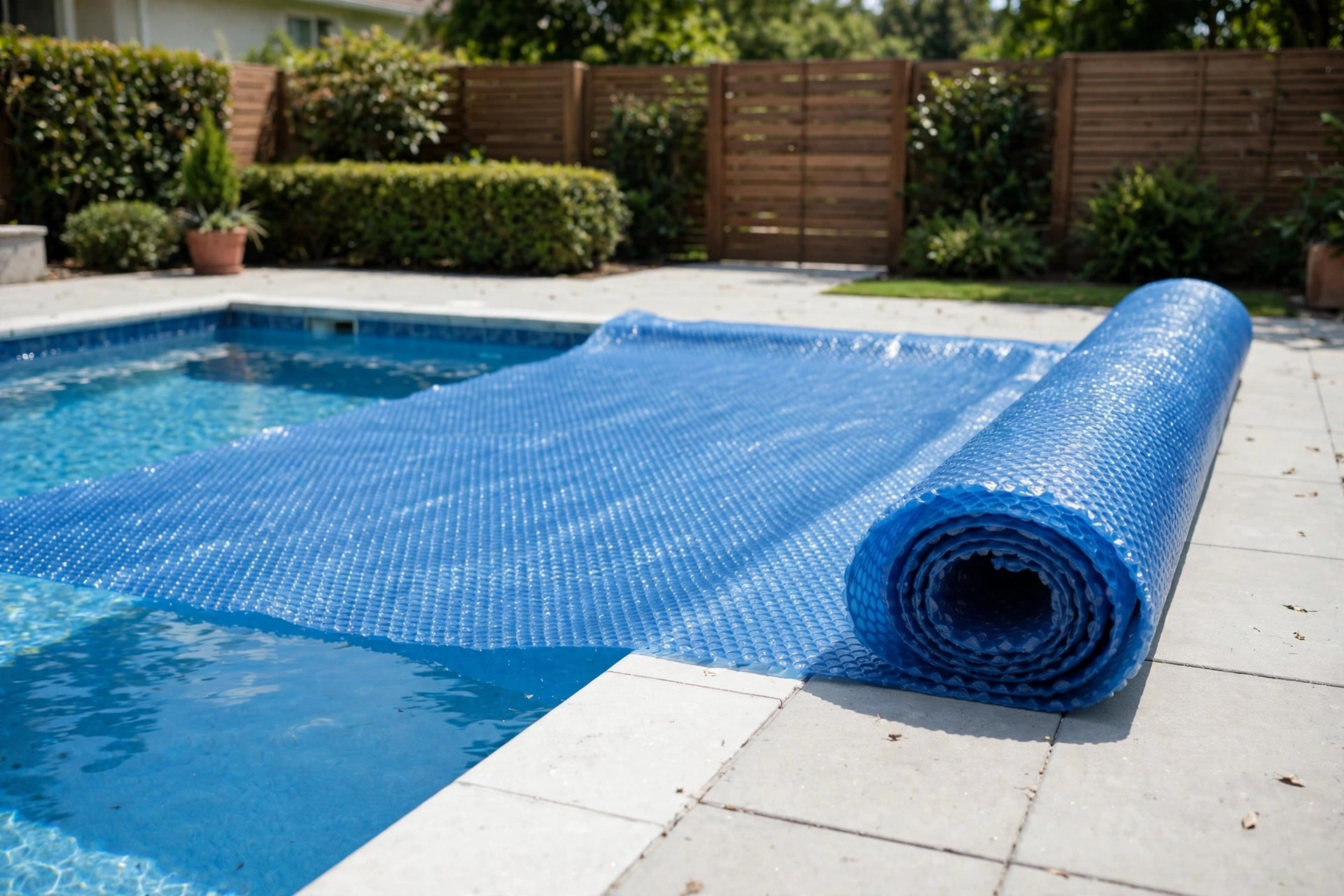
A pool solar cover is a simple tool with a big job. It sits on the water and warms the pool with heat from the sun. It also cuts water loss from wind and heat. But dirt, leaves, oils, and algae build up on its surface over time. When owners ask how to clean pool solar cover material the right way, the answer is plain: wash it gently, rinse it well, and dry it in the sun. This guide walks through each step, from the first inspection to safe storage, so the cover lasts as long as it should.
Why a Clean Solar Cover Matters
A dirty solar cover works poorly. Dust and film on the bubbles block sunlight, so the cover traps less heat. Many owners report that a cloudy cover can raise pool temperature by only a degree or two, while a clean one may add several degrees on a sunny week. Water balance suffers as well. Oils and grime that sit on the cover wash back into the pool each time it goes on and off. That can push up chemical demand and make the water cloudy.
There is also the matter of cost. A good solar cover is not cheap. Replacements add up fast for a household budget. Cleaning the cover twice a season is a small chore that adds years to its life. Owners who clean their covers often keep them for five or more seasons. Owners who ignore them may replace a thin, brittle cover after only two. For advice on heat and water loss, general pool care guides from sources like Swim University explain how covers cut evaporation and heat waste.
Dirt also invites algae. The small air pockets of a solar cover hold moisture and warmth, which algae love. A green film under the bubbles can spread to pool walls if the cover is left unwashed for months. Regular cleaning breaks that cycle before it starts.
What You Need Before You Start: How to Clean Pool Solar Cover
Gather the supplies first so the job goes smoothly. You will need:
– A mild dish soap or a gentle pool cleaner made for vinyl and plastic – A soft-bristle brush or a soft deck broom with gentle bristles – A garden hose with a spray nozzle – One or two large clean towels or a soft sponge – A flat, clean surface such as a pool deck, driveway, or patio – Optional: white vinegar for mineral stains, and a pool reel or helper to move the cover
Do not use bleach, strong acids, or pressure washers. Bleach can eat through the plastic bubbles and break down the seams. A pressure washer can pop bubbles and tear the thin material. Mild soap and soft brushes do the job without harm. Many retailers and pool supply sites, such as Leslie’s Pool Supplies, carry gentle vinyl-safe cleaners that work well for this task.
Choose a warm, sunny day for the work. The sun helps dry the cover fully before storage. Wind can be a bother, so a calm morning is best. If the cover is very large, ask another person to help. Solar covers are light but awkward, and a second pair of hands keeps the bubbles from folding and creasing.
Step-by-Step: How to Clean Pool Solar Cover
Follow these steps in order. The whole job takes about thirty to sixty minutes for a standard home pool cover.
Step 1: Take the Cover Off the Pool
Pull the cover onto the deck with the bubble side up. Many owners find a solar reel makes this quick and tidy. Shake off loose leaves and twigs first. A quick shake keeps most of the loose dirt from smearing during washing. Check the cover for tears, thin spots, or popped bubbles. Note any damage now so you can decide if a patch is needed.
Step 2: Lay It Flat on a Clean Surface
Spread the cover bubble side up on a clean deck or driveway. The surface below should be free of sharp stones or grit that could scratch the flat side. If your deck is dirty, hose it off first. This small step stops new dirt from working its way into the cover while you wash the top.
Step 3: Hose Off Loose Dirt
Rinse the whole cover with a garden hose. Use a steady spray, not a jet. Work from one end to the other and push the dirty water off the far edge. This first rinse removes pollen, dust, and loose grime. For covers that sit under trees, this rinse alone can take off most of the visible dirt.
Step 4: Wash with Mild Soap
Mix a few drops of mild dish soap in a bucket of warm water. Dip the soft brush and scrub the bubble side in small sections. Use light pressure and move in the direction of the bubble rows. The soap lifts body oils, sunscreen film, and faint algae that a rinse leaves behind. Pay extra care to spots near the pool steps, where oils tend to gather. Some owners prefer a pool cover brush from a home store with soft bristles made for delicate surfaces.
For stubborn mineral stains or a light film of algae, mix one part white vinegar with four parts water and dab it on the stain. Let it sit for five minutes, then scrub gently. Rinse the spot well. Never mix vinegar and soap in the same pass, and never use acid-based cleaners meant for tile or concrete.
Step 5: Rinse It Clean
Rinse the full cover a second time with the hose. Soap left behind can foam in the pool and dull the plastic. Rinse until the water runs clear and the surface feels smooth, not slick. This step matters more than most owners think. Leftover soap film blocks heat just like dirt does.
Step 6: Dry It in the Sun
Leave the cover flat in the sun for one to two hours. Flip it once so both sides dry. A fully dry cover stores safely and will not grow mildew. Do not fold or roll the cover while it is damp. If clouds roll in, move the cover to a covered patio and let it air dry fully before storage.
Step 7: Inspect and Store
Once dry, fold or roll the cover loosely. Keep it out of direct sun when it is not on the pool. A storage bag or a reel keeps it safe from sharp edges and pests. Many owners store the rolled cover on a reel under a shade cloth during the swim season. If you also use a winter pool cover pump on your winter cover, keep the two covers in separate spots so they do not rub or tear each other.
How Often Should You Clean It
Clean the solar cover at least twice per swim season: once in spring when the pool opens, and once in fall when it closes. Owners with heavy tree cover or dusty yards may need a third mid-season wash. A quick monthly hose rinse takes only ten minutes and keeps grime from setting in.
Watch for signs that a wash is due. A cloudy or sticky feel, a faint green tint under the bubbles, or a cover that no longer warms the pool well are all signals. If the cover smells musty, wash it right away and dry it fully before it goes back on the water.
Care and Upkeep Through the Season
Small habits keep the cover in good shape between deep cleans. Trim pool chemistry first. Water that is too low in sanitizer or too high in pH leaves film on the cover. Test water twice a week and keep levels steady. A weekly hot tub water care routine shows the same habit of small, steady checks that works for pools too. For broader seasonal pool care plans, home guides such as The Spruce cover weekly tasks from skimming to filter cleaning.
Keep the cover on a reel when it is not on the pool. Dragging it across rough concrete tears the bubbles. When placing it back on the water, lay it bubble side down. The bubbles face the water to trap heat. Bubble side up is only for washing. Setup tips from guides like those at Hot Spring Spas apply the same logic: covers last longest when they rest on a smooth support, not rough ground.
Watch the cover for wear. Small popped bubbles are normal over time. Large torn sections or a cover that feels thin and brittle may be past saving. Most solar covers last three to five seasons with steady care. Thicker covers, often sold in mil ratings like 12 or 16 mil, tend to last longer than thin ones.
Safety Notes
Safety matters when working around a pool and its cover. A wet cover is slick. Wear shoes with good grip on the deck. Keep children and pets away while the cover lies flat, since a wet cover on a deck is a slip risk. Never let a child play with or under a solar cover. The Consumer Product Safety Commission warns that pool covers of any kind can pose a danger to small children if used or handled in unsafe ways.
Soap in the pool is also a concern. Rinse the cover fully before it goes back on the water. Soap film can cause foaming and may upset water balance. If foam appears after the cover goes back on, run the filter and skim the surface until it clears.
Store cleaning supplies away from the pool edge. Buckets and hoses left near the water are trip risks. Keep vinegar and soap bottles sealed and out of reach of children.
Cost and Price Facts
Cleaning a solar cover is one of the cheapest pool chores. A bottle of mild dish soap costs only a few dollars and lasts many washes. A soft brush or deck broom runs from ten to twenty-five dollars at most home stores. White vinegar costs even less. All told, each cleaning costs under five dollars in supplies.
Compare that to the price of a new cover. A solar cover for a typical home pool often costs between seventy-five and two hundred dollars, depending on size and thickness. Covers for large pools can cost more. Replacing a cover every two years instead of every five adds real money over time. The half hour spent washing pays for itself many times over.
Owners planning wider pool work may also weigh costs like a pool pump replacement estimate before big repair seasons. Small upkeep jobs like cover cleaning keep those larger bills further apart.
Common Mistakes to Avoid
– Using a pressure washer, which pops bubbles and voids many cover warranties – Using bleach or harsh acids, which eat through plastic and seams – Scrubbing with stiff wire brushes or brooms, which scratch the bubble surface – Folding the cover while it is still damp, which invites mildew and odor – Storing the cover in direct sun off-season, which bakes and cracks the plastic – Skipping the second rinse, which leaves soap film that dulls heat gain
FAQ
How often should I wash my solar cover? Twice a season is enough for most owners: spring opening and fall closing. Add a quick monthly rinse if trees or dust dirty the pool fast.
Can I use bleach to clean a solar cover? No. Bleach breaks down the plastic bubbles and can tear seams. Use mild dish soap or a vinyl-safe pool cleaner instead. A diluted vinegar mix handles mineral stains.
Does a dirty cover really change pool temperature? Yes. Dirt and film block sunlight from the bubbles, so the cover traps less heat. A clean cover can warm a pool by several degrees more than a cloudy one on sunny days.
Should the bubbles face up or down? Bubbles face down on the water. The flat side faces the sky. Lay the cover bubble side up only when washing and drying it on the deck.
Can I leave the cover on during shocking? No. High chlorine from shocking can damage the plastic. Take the cover off before shocking the pool and put it back only after chlorine levels return to normal.
How do I know when to replace it? Replace the cover when large sections of bubbles are popped, the plastic feels brittle or flakes, or it no longer warms the pool even when clean. Guides from makers like Bullfrog Spas and pool retailers such as Pool Warehouse note that steady care stretches cover life.
Final Word
Learning how to clean pool solar cover material is a small skill with a large payoff. Gentle soap, soft brushes, a full rinse, and a sunny dry keep the cover working at its best. Two cleanings a season, a quick monthly rinse, and dry storage add years to its life and keep pool water warmer and cleaner. The work takes less than an hour, and the reward is a cover that does its job season after season.
Related guides on this site include best above ground pool for families, how to open pool for summer season, and best pool pump for inground pools.
References
Best pool cover pump for winter. (n.d.). Home and garden information. https://www.best-pool-cover-pump-for-winter/ Bullfrog Spas. (n.d.). Hot tubs and spas. https://www.bullfrogspas.com Hot Spring Spas. (n.d.). Hot tubs and spas. https://www.hotspring.com Hot tub water care routine weekly. (n.d.). Home and garden information. https://www.hot-tub-water-care-routine-weekly/ Leslie’s Pool Supplies. (n.d.). Pool supplies and equipment. https://www.lesliespool.com Pool pump replacement cost estimate. (n.d.). Home and garden information. https://www.pool-pump-replacement-cost-estimate/ Pool Warehouse. (n.d.). Pool equipment and supplies. https://www.poolwarehouse.com Swim University. (n.d.). Pool and hot tub care guides. https://www.swimuniversity.com The Home Depot. (n.d.). Home improvement products. https://www.homedepot.com The Spruce. (n.d.). Home and garden advice. https://www.thespruce.com U.S. Consumer Product Safety Commission. (n.d.). Product safety information. https://www.cpsc.gov
Was this guide helpful?

About David Wilson
The My Garden US editorial team writes practical, in-depth home and garden guides for American homeowners — tested advice, no fluff.