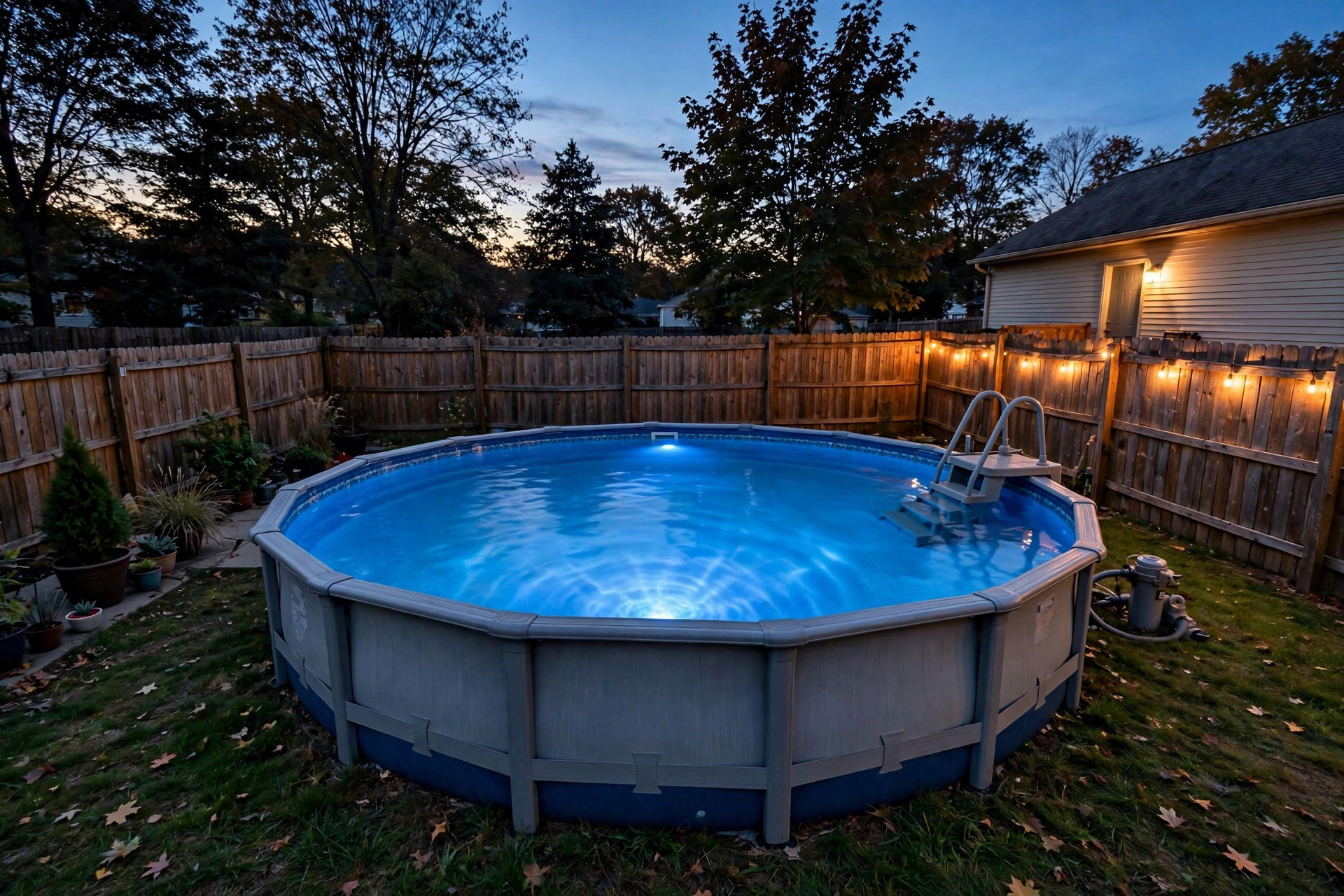

Summer evenings are made for swimming. The heat of the day fades. The yard cools down. The water looks calm and blue. But when the sun sets, an above ground pool without light goes dark fast. You cannot see the bottom. You cannot see the steps. The fun ends early. This is why so many owners search for the best pool light for above ground pools. A good light extends the swimming day. It makes the pool safer at night. It adds a warm glow to the backyard. This guide walks through what matters when you choose one, the main types on the market, what they cost, how to keep them working, and the safety rules every owner should know.
Why Good Lighting Matters
A pool light does more than look nice. It is first a safety tool. Most pool accidents happen in the evening or at night. Poor light hides the ladder, the edge, and the depth. Swimmers cannot see where to place their feet. Children cannot be watched well in dark water. A bright light on the water surface or under the surface changes this. It marks the steps. It shows the shallow end. It helps adults watch the whole pool.
Lighting also extends the hours you can use the pool. Many families can only swim after work or after dinner. In the middle of summer, that means swimming in the dark. A light lets the family enjoy the pool from dusk until a reasonable bedtime. The pool becomes part of the evening, not just the afternoon.
There is also the matter of looks. A lit pool is the center of the yard at night. It glows through the liner. It reflects on the water. Guests notice it. It makes cookouts and quiet evenings better. Pool care guides online often note that simple upgrades like lighting give the biggest visible change for the money.
Finally, good light helps with cleaning. Algae and dirt show up better under bright light. You can spot a cloudy patch or a stain before it spreads. An evening check with the light on takes two minutes and can save hours of work later.
What to Look for When You Choose: Best Pool Light for Above Ground
Not all pool lights suit above ground pools. In-ground pool lights are larger and need different wiring. Above ground models are made for thin walls and simple setups. When you shop, keep these points in mind.
Brightness and Coverage
Brightness is measured in lumens. Small pools up to fifteen feet across need about 1,000 to 2,000 lumens. Larger pools up to twenty-four feet do better with 2,000 to 3,000 lumens or more. One strong light placed in the middle of one wall usually covers the whole pool. Very large pools may need two lights on opposite sides. The color of the liner matters too. A dark blue liner absorbs light. A light blue or white liner reflects it and looks brighter. Independent testing groups advise buyers to match brightness to pool size rather than buying the strongest model on the shelf.
Power Source and Wiring
Above ground pool lights run on three main power sources. Low-voltage lights plug into a transformer and then into a regular outlet. They are the most common and the safest. Battery lights need no cord at all. They are easy to place but the batteries must be charged or changed. Solar lights charge during the day and turn on at dusk. They cost nothing to run but give less light and depend on sunshine.
Never run a standard 120-volt light in an above ground pool unless it is rated for that use and installed by a qualified electrician. Low voltage is the right choice for almost every owner. The transformer should stay dry and sit away from the pool edge.
Water Rating and Build
Any light that touches pool water must be waterproof. Look for an IP68 rating. This means the unit can sit under water without leaking. The housing should be sealed with a strong gasket. Check that the light is made for pool chemicals. Chlorine and salt water can wear down cheap plastic over time. Metal parts should be stainless steel or coated against rust.
Types of Above Ground Pool Lights
The market offers several styles. Each has strengths and limits. Here are the main options.
Magnetic LED Lights
Magnetic lights are the most popular choice for above ground pools. Two strong magnets hold the unit on either side of the pool wall. No holes. No tools. No damage to the liner. You place the light where you want it and move it any time. Most run on batteries or a low-voltage cord. Many offer several colors and remote control. Home and garden writers often rank magnetic LED lights among the easiest upgrades a pool owner can make.
The main limit is brightness. A single magnetic light works well for small and medium pools. A large pool may need two. Battery models also need regular charging, which some owners find a chore.
Through-Wall Lights
Some lights fit into the return jet or a wall opening. These give a clean, built-in look. They sit flush with the liner and light the water from within. Through-wall models are usually wired to a transformer and give steady, bright light every night without battery care.
The trade is installation. You must open a wall fitting or cut the liner, so this type suits owners who are comfortable with basic pool work or who plan to add the light during setup. If you already have the liner in place and want no risk of leaks, a magnetic light is simpler.
Floating Lights
Floating lights drift on the surface. They are simple and cheap. Many use solar power and glow in soft colors. Children enjoy them. They suit owners who want mood light rather than strong light.
Floating lights do not light the bottom of the pool. They can drift into swimmers. They work best as decoration beside a main underwater light, not as the only source of light.
Solar Wall Lights
Solar lights clip to the top rail or hang on the side of the pool. They charge all day and switch on at night. They cost nothing to run and need no wiring. Their light is softer than LED underwater models. They work best in sunny regions where panels get full afternoon sun. Federal energy guidance notes that solar-powered outdoor lights cut energy use to zero, which appeals to owners watching their electric bills.
String and Landscape Lights
Some owners light the pool area instead of the water. String lights on a fence or pergola give warm light over the whole yard. Landscape spotlights aimed at the pool wall make the pool visible from the house. This approach does not help swimmers see under water, but it makes the yard safe to walk around and pleasant to sit in. It pairs well with one underwater light.
Cost and Price
Prices vary by type. Battery magnetic LED lights usually cost between twenty and sixty dollars. Solar floating lights cost between fifteen and forty dollars. Wired through-wall LED lights run from sixty to one hundred fifty dollars, plus the cost of a transformer if you do not own one. String lights and landscape lights for the yard range from twenty to eighty dollars depending on length and quality.
Running costs are small. LED lights use very little power. A wired LED light left on for four hours a night costs only a few dollars per year to run. Battery lights cost more over time if they use disposable batteries. Rechargeable models save money after the first season.
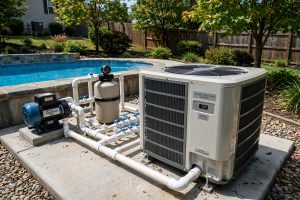
Look at the total cost, not just the price tag. A cheap light that fails after one summer costs more than a mid-priced light that lasts five. Major home improvement stores and large home center chains carry lights at every price point, so compare warranties before you buy. A two-year warranty is a good sign. Also think about the rest of your setup. A pool heater for above ground pools extends your swimming season, and night swimming in warm water is far more pleasant than in cold water.
Care and Upkeep
Pool lights need little care, but a small routine keeps them bright. Wipe the lens with a soft cloth once a month. A film of algae or mineral scale can dim the light by half. Do not use rough pads or strong cleaners on the lens. They scratch the surface and scatter the light.
Check the seals each season. Open the unit if the maker allows it. Look at the gasket. If it is cracked or flat, replace it before it leaks. Keep the charging contacts on battery models clean and dry. Store battery and solar lights indoors during winter if you close the pool. Cold and ice shorten battery life.
For wired lights, check the transformer and cord once a year. Look for cracks, frayed spots, or loose plugs. Keep the transformer under cover. If the light flickers or dims, the problem is often a weak battery or a loose connection, not a dead light. Pool supply retailers and local pool shops stock replacement gaskets, batteries, and remotes for common models.
Safety
Electricity and water demand respect. Follow these rules with every pool light.
First, use only lights rated for pool use. A garden light or a fish-tank light is not the same. Pool lights must carry the right waterproof rating and meet electrical standards.
Second, keep transformers and plugs dry and away from the pool. The cord should not lie in a puddle. Do not run extension cords across wet grass to reach the pool.
Third, ground fault protection matters. A GFCI outlet cuts power in a fraction of a second if current leaks. Plug all pool lights into GFCI-protected outlets. Test the GFCI each month with its test button.
Fourth, the federal safety commission warns that all pool equipment must be installed to code. If you are unsure about wiring, hire an electrician. The cost of one visit is small compared with the risk.
Fifth, remember that light does not replace supervision. A lit pool is still a pool. Children need active watching. A fence with a locking gate and a pool alarm add layers of safety. And before night swimming, make sure swimmers can get out easily. A sturdy pool ladder for above ground or safe pool steps for above ground matters as much as light.
Spa manufacturers point out that the same rules apply to hot tubs. Low-voltage lighting, GFCI outlets, and dry transformers keep spa evenings safe too.
Frequently Asked Questions
Can I use any LED light in my above ground pool? No. Use only lights made and rated for pool water. Other lights can leak, corrode, or create shock risk. Check for an IP68 rating and pool-safe marks on the box.
How many lights does my pool need? One good underwater light is enough for most pools up to twenty-four feet round. Oval pools longer than twenty-four feet may need two, one at each end. Start with one and add a second if dark corners remain.
Are battery pool lights any good? Yes, for small and medium pools. They are easy to install and move. Their limits are brightness and battery life. Rechargeable models are better than models that use throwaway batteries. For nightly use all summer, a wired low-voltage light is more dependable.
Do solar pool lights work well? They work best in sunny yards. They give soft light, not strong light. They suit decoration and mood. If you want to see the pool bottom clearly at night, choose an LED underwater light instead.
Can I leave the pool light on all night? You can, but it wastes power and wears the unit faster. Four to six hours per night covers most evening swimming. A timer on the transformer turns the light off on its own.
Will a pool light damage my liner? Magnetic and floating lights do not damage liners. Through-wall lights use existing fittings, so they are safe when installed right. Avoid any light with sharp edges or rough mounts that could rub the liner.
A Final Word
The best pool light for above ground pools is the one that fits your pool size, your budget, and your habits. A magnetic LED light suits most owners. A through-wall light suits those who want a built-in look. Solar and floating lights suit those who want simple decoration. Whichever type you choose, put safety first, keep the light clean, and enjoy the longer evenings. A lit pool turns an ordinary backyard into a place the whole family looks forward to after dark.
References
Consumer Reports. (n.d.). Product reviews and ratings. https://www.consumerreports.org Hot Spring Spas. (n.d.). Hot tubs and spas. https://www.hotspring.com Leslie’s Pool Supplies. (n.d.). Pool supplies and equipment. https://www.lesliespool.com Lowe’s. (n.d.). Home improvement products. https://www.lowes.com Pool Warehouse. (n.d.). Pool equipment and supplies. https://www.poolwarehouse.com Swim University. (n.d.). Pool and hot tub care guides. https://www.swimuniversity.com The Home Depot. (n.d.). Home improvement products. https://www.homedepot.com The Spruce. (n.d.). Home and garden advice. https://www.thespruce.com U.S. Consumer Product Safety Commission. (n.d.). Product safety information. https://www.cpsc.gov U.S. Department of Energy. (n.d.). Energy efficiency and renewable energy. https://www.energy.gov
Was this guide helpful?

About James Carter
The My Garden US editorial team writes practical, in-depth home and garden guides for American homeowners — tested advice, no fluff.
You May Also Like
Salt Water Pool Filter Cleaning Guide
July 17, 2026 0 views
Best Pool Toys for Teenagers Reviews: A Practical Guide for Families
April 27, 2026 0 views
Best Pool Thermometer Floating Reviews: A Plain Buyer’s Guide
February 8, 2026 0 views