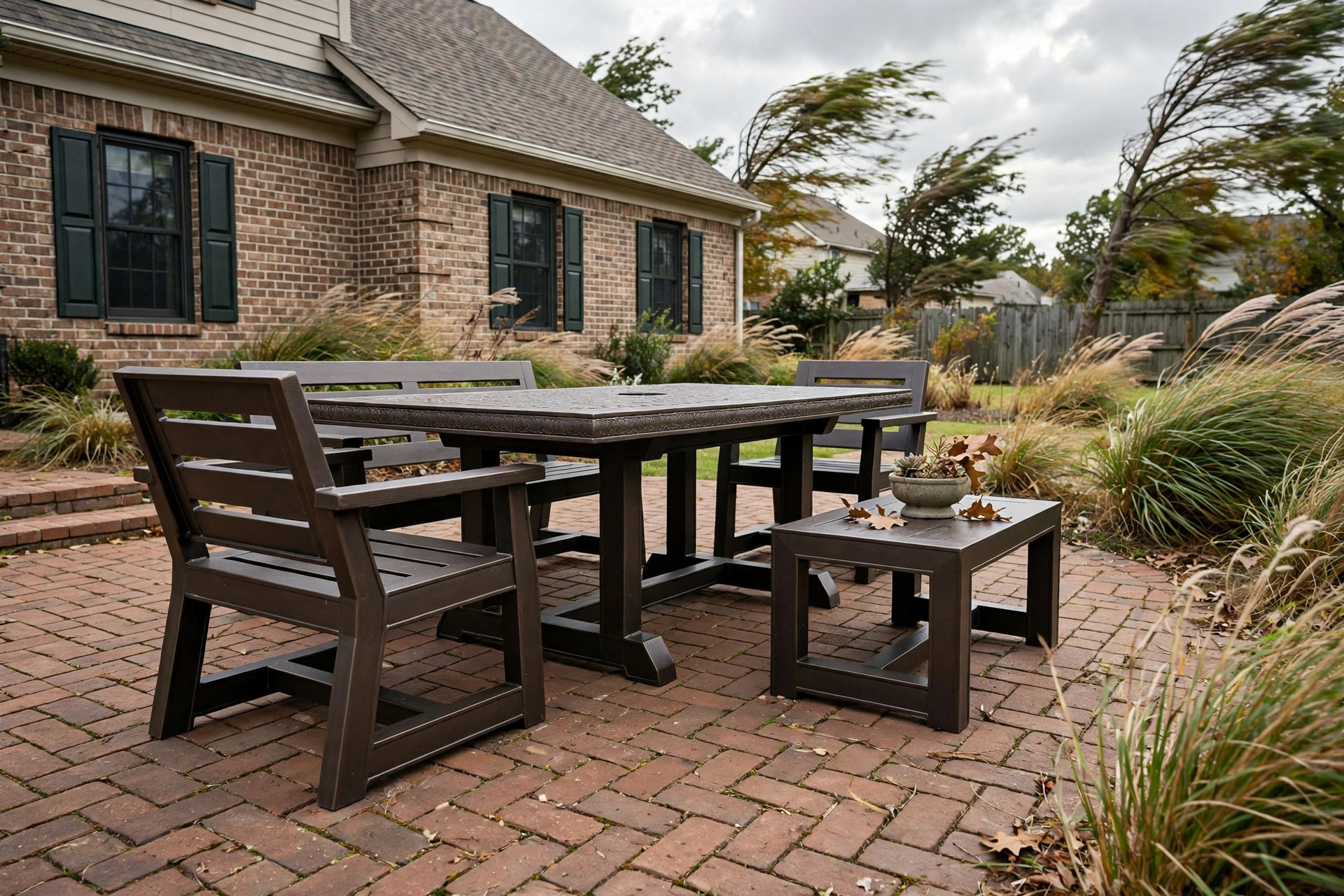

Anyone who lives where the wind never quite rests knows the problem well. You set out your patio chairs in the morning, and by noon they have wandered across the yard. Umbrellas turn into kites. Light tables slide and tip. These patio furniture for windy areas reviews exist for exactly that reason: to help you choose pieces that stay where you put them, hold up to the weather, and still look like something you want to sit in.
Wind is not a small annoyance. It is one of the main forces that destroys outdoor furniture. A strong gust can throw a chair into a fence, crack a tabletop, or rip an umbrella clean off its pole. The right furniture does not fight the wind. It works with it, or it is simply too heavy and too low to move. What follows is a plain guide to the pieces that reviewers and long-term owners say hold up best when the air will not sit still.
Why Wind Matters for Patio Furniture
Most patio furniture is built for calm backyards. Makers assume still air, level ground, and a roof nearby. Many homes do not offer any of those things. Hilltops, coastal lots, open plains, and high-rise balconies all see gusts that calm yards never feel.
Wind attacks furniture in three ways. First, it pushes on flat surfaces. A wide chair back or a broad tabletop acts like a sail. Second, it lifts light objects. Anything under about twenty pounds can become airborne in a real gust. Third, it wears things down over time. Constant motion loosens bolts, frays fabric, and grinds feet into rough spots on the deck.
The cost of the wrong choice is not just money. A tipping umbrella can injure a child or a guest. A chair that slides across wet concrete can crack a sliding glass door. Reviewers return to one point again and again: in a windy spot, stability is a safety issue, not just a comfort issue.
Good news follows. Furniture made for wind exists, and much of it costs no more than ordinary patio sets. You simply need to know what to look for and what to avoid.
What to Look for When You Choose: Patio Furniture for Windy Areas Reviews
Weight Is the First Defense
Weight is the single most reliable answer to wind. A heavy chair does not move. A heavy table does not tip. Cast aluminum, wrought iron, and teak all bring real heft. Aluminum sounds light, but cast aluminum frames are thick and dense. They hold their ground in gusts that send resin chairs tumbling.
Look at the weight of each piece before you buy. A dining chair under fifteen pounds is a risk on an exposed patio. A chair near thirty pounds is far safer. Side tables should weigh at least twenty pounds. If the maker does not list weights, that is itself a warning sign.
Low Profiles and Open Frames
Wind needs something to push against. Furniture with tall backs, wide solid seats, and big flat arms catches more air. Pieces with low profiles and open frames let wind pass through. A slatted chair catches far less wind than a solid-backed one. A mesh sling chair catches less than a padded one.
Reviewers of wind-rated patio umbrella reviews make the same point about shade. A vented umbrella canopy lets gusts pass through the top instead of catching them. The same logic applies to every piece you buy.
Frames That Hold Together
Wind shakes furniture constantly. Cheap bolts loosen. Plastic joints crack. Look for welded frames or heavy-duty hardware. Stainless steel fasteners resist rust and hold their grip far longer than plain steel screws. Check how the legs meet the seat. A leg that bolts on with one small screw will wobble within a year. A leg that is welded or held by a full bracket will last.
Fabrics That Do Not Act Like Sails
Cushions are a classic problem. Loose cushions blow away, soak up rain, and flap until their seams fail. In windy areas, choose tie-on cushions with real straps, or better yet, choose furniture that needs no cushions at all. Sling fabric stretched over a frame cannot blow away. Neither can a teak bench or a metal chair with a shaped seat.
If you must have cushions, store them when storms come. A storage box on the patio makes this a one-minute job instead of a chore.
Types and Options for Windy Areas
Wrought iron and cast iron. The classic answer to wind. Very heavy, very stable, and long lasting when the finish is kept up. Downsides are rust and weight. Moving a wrought iron set is a two-person job. But on a windy patio, that weight is exactly what you want.
Cast aluminum. Nearly as stable as iron at a fraction of the weight. It will not rust. Powder-coated finishes hold up for years. Many reviewers call cast aluminum the best balance of stability, looks, and care for windy patios. It costs more than steel, but it lasts longer with less work.
Teak and dense hardwoods. Teak is heavy, strong, and weathers to a handsome gray if left alone. It is expensive, and cheaper woods like acacia do not match its strength. Hardwood benches and tables stay put well, though chairs should still be checked for weight.
Steel. Powder-coated steel is affordable and reasonably heavy. The risk is rust at chips and welds. In coastal wind with salt spray, steel needs regular touch-ups. Inland, it performs well for the price.
Resin and plastic. Usually too light for windy areas. A few heavy resin pieces exist, but most will move or tip. Reviewers consistently warn against plastic chairs on exposed decks. If you love the look, keep these sets close to the house wall, out of the main wind path.
Concrete and stone. For side tables, fire pit surrounds, and planters, nothing beats stone for stability. Concrete side tables are cheap, handsome, and utterly immobile. Use them to anchor seating areas.
Umbrellas deserve a special note. A standard market umbrella is a liability in wind. If you want shade, read a proper umbrella base weight guide before you buy, and choose a vented canopy with a base rated for high wind. Many owners in windy zones skip umbrellas entirely and build a fixed shade sail or pergola instead.
Cost and Price
Wind-ready furniture costs a bit more than the cheapest sets, but not as much as you might fear. Here is a rough picture of American retail prices.
A four-chair cast aluminum dining set runs about 600 to 1,200 dollars. Wrought iron sets in the same size run 800 to 1,800 dollars. Teak sets start near 1,500 dollars and climb fast. Steel sets are the budget pick at 300 to 700 dollars, though you will spend more on rust care.
Chairs alone tell the story. A basic resin chair costs 30 to 60 dollars. A sturdy cast aluminum chair costs 120 to 250 dollars. The difference buys weight, welded joints, and a finish that survives weather.
Anchoring gear is cheap insurance. Heavy umbrella bases run 50 to 150 dollars. Furniture anchors and ground stakes cost under 30 dollars for a full set. Heavy duty furniture covers add 40 to 120 dollars per piece but protect your investment through storm season.
When you compare prices, divide by expected life. A 200-dollar steel set that rusts out in three years costs more per year than a 900-dollar cast aluminum set that lasts fifteen. Wind shortens the life of weak furniture and leaves strong furniture alone. Spend once on weight and build, and you will not buy twice.
Care and Upkeep
Windy patios punish furniture, so a small care routine pays off. Tighten every bolt twice a year, in spring and fall. Wind vibration loosens hardware, and a loose bolt soon becomes a broken joint. Keep a wrench near the storage box so the job takes ten minutes.
Wash frames with mild soap and water each season. Salt spray, dust, and pollen eat into finishes. Touch up paint chips on steel and iron the same week you spot them. Bare metal rusts fast in damp air.
Oil teak once a year if you want to keep its honey color. If you prefer the silvered look, simply clean it and leave it be. Teak does not rot either way, which is why it costs what it does.
Bring cushions in before storms. This single habit adds years to fabric life. Use IKEA outdoor collections or Wayfair patio buying guides for storage boxes that match your set and hold cushions dry through a windy winter.
Check umbrella bases every month during the season. Water-filled bases leak. Sand settles. A base that was heavy in May can be light by August. Refill and reseat as needed.
Safety
Safety comes first with wind and furniture. Never leave an umbrella open when you leave the house or when storms are forecast. Close and tie every umbrella at night. This is the advice every reviewer gives, and it prevents most injuries.
Anchor what you can. Furniture straps that tie chairs to a fixed rail or to each other stop the domino effect where one tipping chair knocks over three more. Ground anchors work well for gazebos and heavy tables on soil or grass.
Keep heavy pieces away from glass doors and windows on the windward side. If a gust ever does move a chair, you want it to hit a fence, not a sliding door. On balconies, keep all furniture well inside the railing line, and never place light items where wind can take them over the edge.
Check local guidance before major storm seasons. Consumer Reports product testing publishes outdoor safety notes, and your city may have rules about securing patio items during hurricane or high-wind warnings. Follow them. A flying chair is a danger to neighbors as well as to you.
Frequently Asked Questions
What is the best material for patio furniture in windy areas? Cast aluminum is the most common answer from reviewers. It is heavy enough to stay put, will not rust, and needs little care. Wrought iron is heavier still but demands rust prevention. Teak wins for wood lovers who accept the price.
How heavy should patio furniture be for wind? Aim for dining chairs of at least twenty pounds each, side tables of twenty pounds or more, and dining tables above sixty pounds. Umbrella bases should weigh at least seventy-five pounds, and one hundred is safer for exposed spots.
Can I keep my current furniture and just anchor it? Often, yes. Furniture straps, ground anchors, and heavier umbrella bases can stabilize a set you already own. Anchoring works best for tables and chairs with solid frames. Very light plastic chairs may still be unsafe, since the plastic itself can crack under wind load even when tied down.
Are patio umbrellas safe in windy areas? Only with care. Use a vented canopy, a heavy base, and close the umbrella whenever wind picks up or you leave. In very windy zones, many owners replace umbrellas with fixed shade structures that cannot catch a gust.
Should I cover my furniture during windstorms? Covers protect against rain and debris, but a loose cover becomes a sail itself. Use fitted covers with straps and tie-downs, and remove them before the worst gusts. Never let a cover flap loose in a storm.
Does wind damage furniture even when nothing tips over? Yes. Constant motion wears joints, loosens bolts, and grinds finishes. That is why the care routine above matters. Furniture that survives the wind still needs its bolts checked and its finish kept up.
A Final Word
Choosing patio furniture for a windy area is simpler than it looks. Buy heavy. Buy low and open rather than tall and flat. Choose welded frames and stainless hardware. Tie down what can move, cover what can wear, and close the umbrella when you walk away. Follow those rules, and your patio will still be standing straight after the next big blow, chairs in place and ready for the calm evening that follows.
References
IKEA. (n.d.). Outdoor furniture and accessories. https://www.ikea.com Wayfair. (n.d.). Patio and garden furniture. https://www.wayfair.com Consumer Reports. (n.d.). Product ratings and buying guides. https://www.consumerreports.org
Was this guide helpful?

About Jennifer Lee
The My Garden US editorial team writes practical, in-depth home and garden guides for American homeowners — tested advice, no fluff.
You May Also Like

Best Rectangular Patio Umbrella for Table: A Plain Guide to Shade
May 21, 2026 0 views
Best Rattan Patio Set for Conservatory: What to Know Before You Buy
August 9, 2026 0 views
Outdoor Dining Set With Umbrella Hole: A Practical Guide for the American Patio
August 23, 2026 0 views