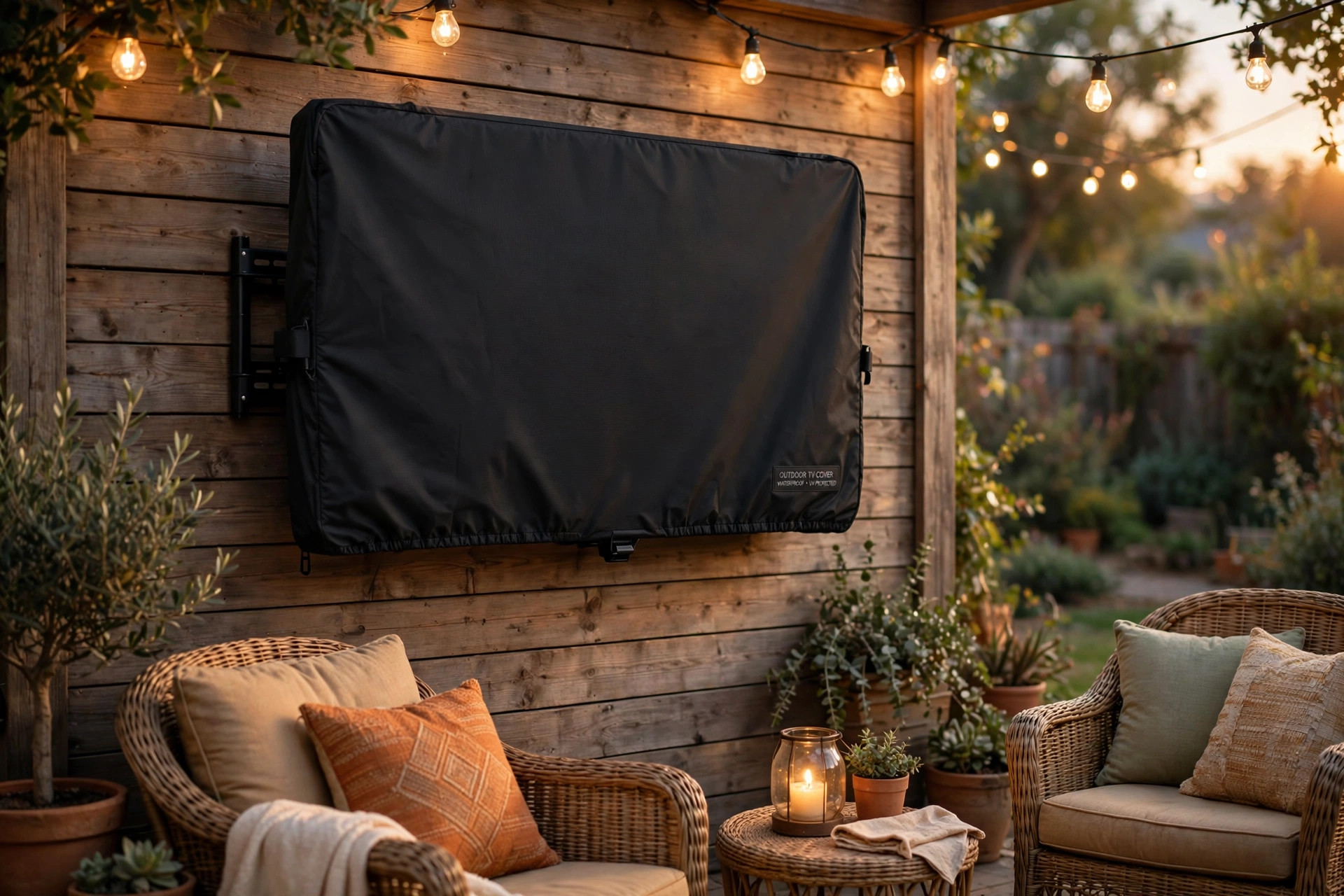

More Americans watch television outside the house than ever before. Backyard movie nights and game days on the porch are now common. A television left on a patio faces rain, sun, dust, and wind. The best outdoor tv cover for patio use is the simplest way to guard that investment. This guide explains what matters, what to look for, and how much to spend.
Why It Matters
An indoor television is built for a dry living room. It is not sealed against water. Moisture can reach the circuit boards and ruin the set in a single season. Dust builds up inside the vents and causes heat to rise. Sun fades the screen and cracks plastic parts. Even humidity from a summer night can shorten the life of a television.
A good cover solves these problems for a small price. It keeps rain off the screen and the back panel. It blocks dust between uses. It cuts sun damage during the day. Many owners find that a covered set lasts as long as one kept indoors. Major home improvement stores sell outdoor covers in many sizes, which shows how common this need has become (Home Depot, Lowe’s).
Protection also matters for resale value. A television with water spots inside the screen is worth little. A clean, well-kept set can be sold or moved to a guest room. Spending a few dozen dollars on a cover guards a purchase of several hundred dollars. That is sound household sense.
What to Look For: Best Outdoor Tv Cover for Patio
Not all covers are equal. A cheap thin cover may cost less but tear in one season. A well-made cover lasts for years. Here are the points that count.
Material
The body of the cover should be waterproof, not only water resistant. Waterproof fabric keeps rain out in a downpour. Water resistant fabric may leak after long rain. Look for terms like PVC-coated polyester or heavy-duty oxford cloth. Double stitching at the seams keeps the fabric strong.
UV resistance is also important. Sun breaks down weak fabric. A cover rated for UV exposure will not fade or crack fast. Some covers add a reflective coating to bounce heat away. This keeps the television cooler on hot days. Outdoor living advice columns often stress fabric choice as the first test of a cover (The Spruce).
Fit and Size
The cover must match the size of the television. Covers are sold by screen size ranges, such as 40 to 43 inches or 55 to 58 inches. Measure the full width, height, and depth of the set, including any mount. A cover that is too tight will strain the seams. A cover that is too loose will catch the wind.
Deep covers fit sets on swing mounts. Thin covers fit wall-mounted sets. Check the depth number on the product page before buying. Many buyers also buy covers a size up for winter, so extra blankets can fit inside.
Ventilation and Moisture Control
A cover must keep rain out but let damp air escape. Trapped moisture breeds mold and corrodes ports. Good covers include small air vents near the bottom. Some come with a soft inner lining that wicks dampness away from the screen.
Do not buy a cover that is sealed tight with no vent. On a warm day, heat builds up fast inside a sealed cover. That heat can damage the panel. Vent flaps placed low on the sides work best, since hot air rises out and rain cannot blow in from above.
Closures and Fasteners
The cover stays on only if it closes well. Velcro strips are quick but weaken over time. Drawstrings are simple and cheap. Heavy covers use buckles with straps that hook under the set. The best models combine two methods, such as Velcro plus a buckle strap.
Wind is the true test. A storm can peel off a loose cover in minutes. Strap closures at the back and bottom give the best grip. Some covers also have elastic hems that hug the frame. Check buyer reviews for wind performance before you buy.
Types of Outdoor TV Covers
Covers come in several styles. Each suits a different setup.
Standard dust covers are light cloth shells. They stop dust and light sun but not heavy rain. They work for a screened porch or a covered patio where rain never reaches. These cost the least.
Waterproof covers are the middle and most common choice. They use coated fabric with sealed seams. They stand up to rain, snow, and strong sun. Most buyers choose this type for an open patio. A waterproof TV cover for outdoor television sets is the standard pick for uncovered decks.
Hard enclosures are boxes of metal or heavy plastic that close around the set. They give the most protection and resist theft as well. They cost the most and take work to install. They suit year-round outdoor kitchens and pool houses.
Bottom-open and full-enclosure covers are two shapes. Bottom-open covers slip over the top and leave the bottom loose for air flow. Full-enclosure covers zip all the way around. Full enclosure guards better against dust and bugs, but it needs vents to avoid trapped heat. Home advice sites compare these shapes often (Bob Vila).
Some covers add a clear front window. The window lets the family watch through the cover in light rain. This sounds handy, but the window can scratch or cloud over time. Most experts favor removing the cover to watch and putting it back after.
Cost and Price
Prices run from about fifteen dollars to over one hundred. A simple dust cover costs fifteen to twenty-five dollars. A mid-range waterproof cover costs thirty to sixty dollars. Heavy-duty covers with thick fabric and strong straps cost sixty to one hundred dollars or more. Hard enclosures run from one hundred fifty to four hundred dollars.
Price follows material and brand. Thicker fabric and double stitching cost more. Larger sizes for 75-inch sets cost more than small ones. A well-known outdoor living brand may charge a premium for its name (Frontgate).
Do not judge by price alone. Read the fabric weight, often given in denier or grams per square meter. Higher numbers mean tougher fabric. Check the warranty. A cover with a two-year warranty is worth more than one with none. For a television worth five hundred dollars, a fifty-dollar cover is a fair trade. Replacing the set costs ten times more.
Sales follow the season. Stores clear patio goods in late summer. Buying in August or September can save a third of the price. Online furniture stores run similar sales (Wayfair, Article).
Care and Upkeep
A cover lasts longer with basic care. Wipe it down each month with a damp cloth. This removes pollen and dust that wear the coating. Let it dry fully before putting it back on the set. A damp cover invites mold.
Wash the cover once a season with mild soap and cool water. Do not use bleach or strong cleaners. They eat the waterproof coating. Hang it in the shade to dry. Heat from a dryer can shrink it.
Check the seams and straps each spring. Restitch loose threads before they run. Replace frayed straps. Small repairs add years of life. When snow or ice builds up, brush it off gently. Never pull a frozen cover, since the fabric may tear.
Clean the television itself too. Wipe the screen with a dry soft cloth after removing the cover. Clear dust from the vents with a soft brush. Clean ports with a dry cotton swab once a year. Corrosion starts where dust meets damp air.
For full patio care, it helps to keep the whole space clean. Learn how to clean outdoor furniture cushions and use weatherproof patio furniture covers so the entire patio stays in good shape. Many owners also plan patio furniture storage ideas for winter before the cold months arrive.
Safety
Safety matters when electricity meets the outdoors. Plug the television into an outlet rated for outdoor use. The outlet should have a ground fault protector. This cuts power fast if water reaches the wiring. Never run a plain indoor power strip outside.
Keep the cover off the set while it plays. Screens and electronics give off heat. A cover traps that heat and can cause a fire risk in extreme cases. Put the cover on only after the set cools down.
Mount the set strong enough for storms. A wall mount should hold far more than the television’s weight. Tighten bolts once a year. In high winds, face the screen toward the wall or take the set down. Outdoor furniture makers remind owners that wind loads rise fast with screen size (IKEA).
Keep children and pets clear of cords. Run cables through a covered raceway. Unplug the set during lightning storms. No cover guards against a direct lightning strike.
Frequently Asked Questions
Can I leave my TV outside all year with a cover?
A good waterproof cover guards well in mild weather. In harsh winters with heavy snow and ice, it is safer to bring the set inside. Cold can crack screens and damage circuits. The cover stops rain, but it does not heat the set. Owners in the northern states often store the television indoors from December to March.
Will any cover fit a curved TV?
Curved sets need a deeper cover than flat ones. Measure the depth at the center of the curve, where it stands out most. Buy a cover one size larger than the screen size suggests. Some makers sell covers shaped for curved sets. Check the product specs for the word curved before ordering.
Can I watch TV while the cover is on?
No. Remove the cover before turning the set on. The screen needs clear air to cool. The picture looks dull through fabric or plastic windows. Covers with clear fronts exist, but the image suffers. Take the cover off, enjoy the show, and put it back when the set is cool.
How do I stop the cover from blowing away?
Use every strap and buckle the cover provides. Tighten the bottom drawstring. Hook straps under the set or around the mount arm. In storm season, add a bungee cord across the back. A cover that fits snugly blows off less than a loose one. Reviews of outdoor entertaining setups often mention wind as the main complaint (HGTV).
Do outdoor TV covers work in salt air?
Salt air is hard on everything near the coast. Rinse the cover with fresh water each month to wash off salt. Salt eats fabric coatings and metal straps. A 55 inch outdoor TV cover with plastic buckles holds up better than one with metal parts near the sea. Expect a shorter life at the beach and replace the cover sooner.
Is a cheap cover better than no cover?
Yes, but only slightly. A cheap thin cover stops dust and light sun. It will not survive a hard storm. If money is tight, buy the cheapest waterproof cover you can find, then upgrade within a year. No cover at all leaves the set open to every rain and dust storm.
A Final Word
The best outdoor tv cover for patio use is the one that fits well, sheds rain, and stays on in the wind. Spend a little time measuring your set. Choose thick waterproof fabric with vents and strong straps. Care for the cover each season. With this small effort, your patio television can serve for many summers of movies, games, and quiet evenings outside.
References
Article. (n.d.). Modern furniture. https://www.article.com Bob Vila. (n.d.). Home improvement advice. https://www.bobvila.com Frontgate. (n.d.). Outdoor furniture and decor. https://www.frontgate.com HGTV. (n.d.). Home and garden ideas. https://www.hgtv.com IKEA. (n.d.). Home furnishings. https://www.ikea.com Lowe’s. (n.d.). Home improvement products. https://www.lowes.com The Home Depot. (n.d.). Home improvement products. https://www.homedepot.com The Spruce. (n.d.). Home and garden advice. https://www.thespruce.com Wayfair. (n.d.). Furniture and home goods. https://www.wayfair.com
Was this guide helpful?

About Emily Rodriguez
The My Garden US editorial team writes practical, in-depth home and garden guides for American homeowners — tested advice, no fluff.
You May Also Like
Outdoor Dining Chairs Stackable Set of Six: A Plain Guide
June 11, 2026 0 views
Patio Furniture for Windy Areas: Reviews of the Best Choices
July 13, 2026 0 views
The Best Outdoor Glider Bench for Porch Sitting: A Plain Guide
May 4, 2026 0 views