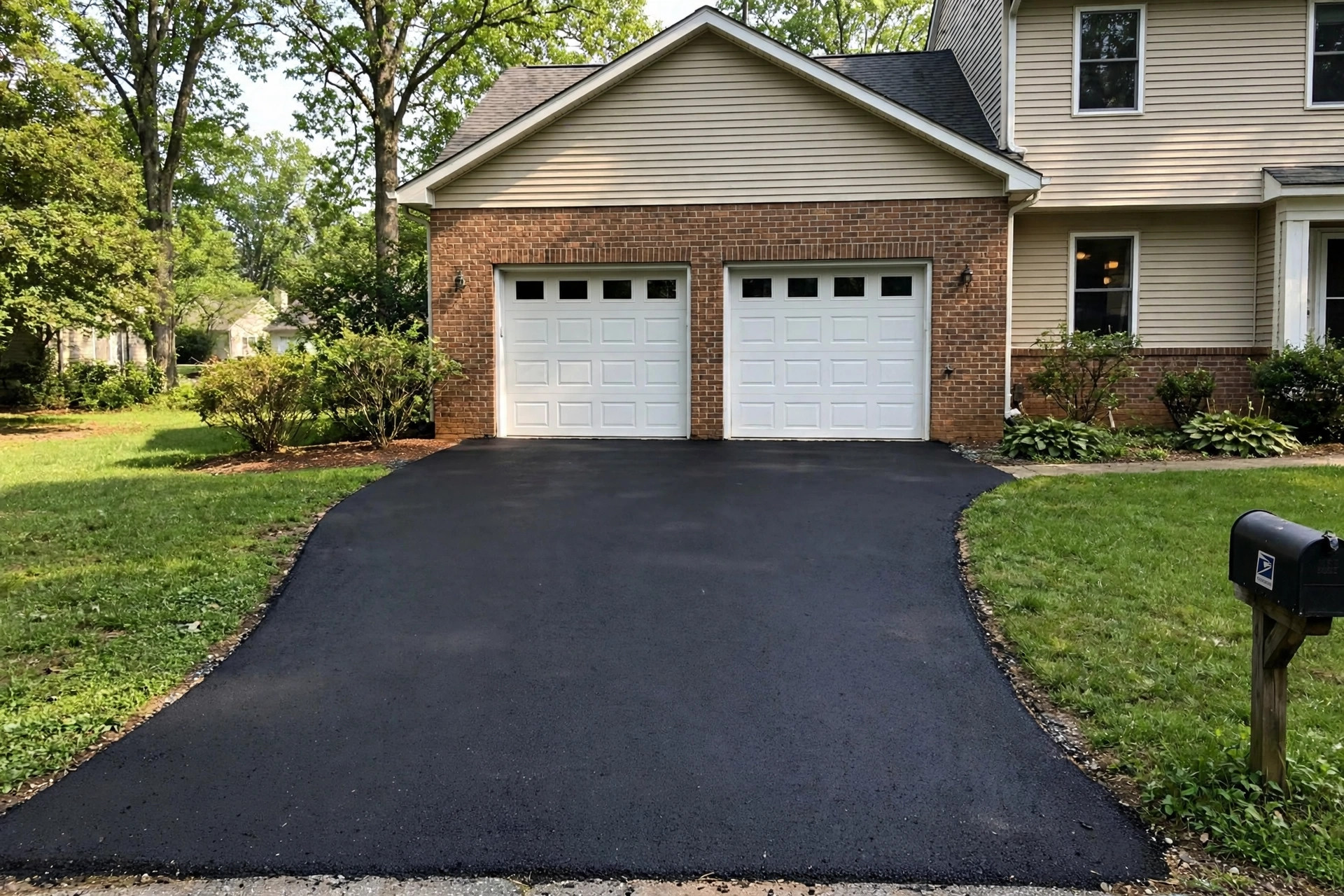

An asphalt driveway takes a beating. Cars roll over it every day. Sun heats it until it softens. Rain soaks into its pores. Ice forces its way into small cracks and breaks them open. Within a few years, a brand new driveway can look tired and worn. That is why many homeowners read top rated asphalt driveway sealing reviews before they spend money. A good sealer slows this damage. It fills the pores. It blocks water. It gives the surface a fresh dark color. But not every product works well, and reviews can be hard to judge. This guide walks through what the reviews say, what matters when you buy, what sealing costs, and how to get the best result for your home.
Why Asphalt Driveway Sealing Matters
Asphalt is made of small stones glued together with a sticky binder. Over time, sun and air dry out that binder. The surface turns gray. Small cracks appear. Water seeps in. In winter, that water freezes and grows, and the cracks grow with it. What starts as a hairline split can become a hole in two seasons.
Sealing puts a thin protective coat over the asphalt. It restores the black color. It blocks ultraviolet light. It keeps water on the surface instead of letting it soak in. Most experts say a seal coat can add years to the life of a driveway. It does not fix deep cracks or soft spots. It is a shield, not a repair. But for a driveway in fair shape, it is one of the cheapest ways to protect a large investment.
What the Top Rated Asphalt Driveway Sealing Reviews Have in Common
Read enough top rated asphalt driveway sealing reviews and patterns appear. The products that earn the highest marks share a few traits. First, they cover well. A single five-gallon pail should spread evenly over about 250 to 300 square feet. Reviews complain most about thin products that need three coats to look dark. Second, the best sealers dry to a true black finish, not a washed-out gray. Third, they last. Homeowners give top marks when the coat still looks good after two full summers. Fourth, they are easy to apply with a brush or squeegee. Thick, gritty formulas get low scores because they are hard to spread.
Reviews also warn about a few common problems. Some cheap sealers flake off within a year. Some leave tire marks on hot days. Some never fully dry in shady spots. The most trusted reviewers test the product for a full year before they write. When you read driveway sealant reviews, look for writers who mention how long they waited. A review written the day after application tells you about color, not about wear.
A few well-known home improvement sites publish tested roundups. The how-to guides at This Old House and Family Handyman explain the sealing process step by step. The product testing at Consumer Reports follows sealers through real seasons. Homeowners trust Bob Vila and The Spruce for plain talk about which products hold up.
How to Choose the Best Asphalt Driveway Sealer
The best asphalt driveway sealers for homeowners are not all alike. They come in different formulas, and each one fits a different need. Here is how to sort them.
Coal Tar Based Sealers
Coal tar sealers have protected driveways for decades. They go on dark. They resist oil stains and gas spills better than most other types. They are tough. The drawback is the smell, which is strong during application. Some states and towns now limit or ban coal tar products because of health concerns. Before you buy, check your local rules. If your area allows them, coal tar sealers still rank high in asphalt driveway sealer reviews for long wear.
Asphalt Based Sealers
Asphalt based sealers use the same family of materials as the driveway itself. They are made with refined asphalt mixed with fillers and additives. They go on smooth. They look natural because they match the driveway. They cost less than coal tar in most areas. They do not resist oil as well, so a leaky car can leave marks. For a driveway in normal home use, they are a solid choice.
Water Based Versus Solvent Based
Most sealers sold to homeowners today are water based. They clean up with soap and water. They smell less. They are safer to store. Solvent based products go on thick and dry fast, but they cost more and need careful handling. For a weekend job at home, a water based product is the simple pick.
Types and Options on the Market
Walk into a store and you will see several kinds of containers. Each one suits a different driveway.
Filler sealers contain sand or fine grit. The grit adds body and helps fill tiny surface pores. These work well on older driveways with a rough texture. They also give tires more grip on slopes.
Rubberized sealers include latex or rubber additives. They flex a little as the driveway moves. That makes them a good match for areas with wide temperature swings. They cost a bit more, but reviews say they crack less.
Fast dry sealers promise a surface you can drive on in a few hours. They suit busy households where the driveway cannot stay closed for two days. They cost more per pail, and some reviewers say they wear faster than standard formulas.
Crack fillers are a separate product, not a sealer. They come in tubes or pourable bottles. You fill cracks first, let the filler set, then seal over it. Skipping this step is the most common reason sealing jobs fail.
Retailers like Home Depot and Lowe’s carry all these types in store and online. Their customer reviews, taken over hundreds of buyers, give a good picture of how a product performs across many driveways.
Cost and Price of Asphalt Driveway Sealing
Sealing is one of the cheapest driveway jobs. A five-gallon pail of good sealer costs between 25 and 60 dollars at most stores. A standard two-car driveway needs four to six pails. Add brushes, a squeegee, and crack filler, and a do it yourself job runs 150 to 400 dollars in materials.
Hiring a contractor costs more but saves a weekend. Professional sealing runs about 0.15 to 0.30 dollars per square foot in most parts of the country. A 600 square foot driveway might cost 120 to 200 dollars for labor and materials. Prices rise in cities and fall in small towns. Always get two or three quotes. Ask what product the crew will use. Some cheap crews thin the sealer with water to stretch it. A thin coat wears off fast.
How often should you seal? Most makers say every two to three years. Sealing too often builds up thick layers that peel. Sealing too rarely lets the surface dry out. A good rule is simple. When water stops beading on the surface and soaks in, it is time to seal again.
If your driveway has more damage than a sealer can hide, you may need bigger work. Our guide to best concrete driveway resurfacing near me covers options for worn concrete drives.
Do It Yourself or Hire a Professional
Sealing a driveway is a job many homeowners can do. It needs no special skill, only time and care. Here is the basic process.
First, clean the driveway. Sweep it well. Pressure wash the surface to lift dirt and old loose material. A guide to top rated house power washing services near me can help if you prefer to hire out the cleaning.
Second, repair cracks. Fill any crack wider than a pencil line with crack filler. Let it dry as the label says.
Third, protect the edges. Tape or paper the garage floor, curbs, and walkways. Sealer stains concrete and stone.
Fourth, apply the sealer. Start at the top of the driveway and work down. Pour a line of sealer and spread it with a squeegee in smooth strokes. Work in small sections. Do not let the edge dry before you start the next section, or you will see lines.
Fifth, let it cure. Keep cars off for at least 24 hours, and 48 is better. Keep people and pets off until it is dry to the touch. Plan the job for a dry spell with mild temperatures. Most sealers need air above 50 degrees to cure right.
A contractor makes sense when the driveway is large, badly cracked, or on a steep slope. Pros also own commercial sprayers that lay down an even coat fast. If you hire, ask for references and a written quote.
Care and Upkeep After Sealing
A fresh seal coat needs gentle care in its first weeks. Avoid sharp turns with power steering while the car is parked. The tires can scuff the new surface. Do not park a leaky car on it. Oil eats through the coat.
Clean the driveway with a broom or leaf blower. Avoid harsh chemicals. In winter, use sand for grip instead of rock salt when you can. Salt is hard on sealers. Plow blades can scrape the coat, so keep the blade slightly raised.
Check the surface each spring. Look for thin spots and small new cracks. Touch up small areas with leftover sealer. Catching wear early means you can wait longer before the next full coat.
The roof over your home needs the same kind of regular care. See our article on top rated asphalt shingle roofing for usa homes for a similar guide.
Safety Tips to Follow
Sealer is safe when you treat it with respect. Wear old shoes, long pants, and gloves. The material stains skin and clothes. Work in the open air. If you feel dizzy, step away and breathe fresh air.
Keep children and pets away until the surface is fully dry. Read the label on the pail. Follow the maker’s directions for drying time. Store leftover sealer in a cool place out of reach of children. Never pour leftover sealer down a drain or into a yard. Let the pail dry out and throw it away with household trash, following your town’s rules.
Some older coal tar products carry stronger warnings. If you choose a coal tar sealer, read every line of the label. The building science articles at James Hardie and CertainTeed discuss how exterior products age and what homeowners should watch for.
Frequently Asked Questions
How long does driveway sealer last? A good coat lasts two to three years. Heavy traffic, harsh sun, and hard winters shorten its life. Light use and mild weather stretch it.
When is the best time of year to seal a driveway? Late spring and early fall are best. The air should stay above 50 degrees for at least two days. Avoid hot afternoons. Sealer dries too fast in strong heat and leaves marks.
Can I seal a driveway that has oil stains? Yes, but clean the stains first. Scrub them with a degreaser and rinse well. Let the spots dry fully. Some stains may still show through. A second coat over the stain can help.
Is one coat enough, or do I need two? One good coat is enough for most driveways. Two thin coats last longer than one thick coat, but they double the drying time. On a rough old driveway, a second coat on the thin spots is a good idea.
How soon can I drive on a sealed driveway? Wait at least 24 hours. In cool or damp weather, wait 48 hours. Driving too soon leaves tire tracks that never fade.
Does sealing fix cracks? No. Sealer is a surface coat. It cannot bridge wide cracks or fill holes. Repair cracks with a filler first. Deep damage needs a paving contractor.
A Final Word
Reading top rated asphalt driveway sealing reviews is a smart first step. The reviews point to products that cover well, dry dark, and last more than one season. But the product is only half the job. Clean the driveway well. Fix the cracks. Apply the sealer on a mild dry day. Give it time to cure. Follow these steps and your driveway will look like new for years. It is a simple job, and the payoff is plain to see every time you pull into the garage.
References
Bob Vila. (n.d.). Home improvement advice. https://www.bobvila.com CertainTeed. (n.d.). Building materials and exterior products. https://www.certainteed.com Consumer Reports. (n.d.). Product reviews and ratings. https://www.consumerreports.org Family Handyman. (n.d.). DIY home repair and maintenance. https://www.familyhandyman.com James Hardie. (n.d.). Fiber cement siding and exterior products. https://www.jameshardie.com Lowe’s. (n.d.). Home improvement products. https://www.lowes.com The Home Depot. (n.d.). Home improvement products. https://www.homedepot.com The Spruce. (n.d.). Home and garden advice. https://www.thespruce.com This Old House. (n.d.). Home renovation guidance. https://www.thisoldhouse.com
Was this guide helpful?

About James Carter
The My Garden US editorial team writes practical, in-depth home and garden guides for American homeowners — tested advice, no fluff.
You May Also Like
Energy Efficient Fiberglass Entry Doors Buying Guide
September 30, 2026 0 views
Professional Grade Exterior Lighting Fixtures for California Apartments
January 13, 2026 0 views
Paver Walkway Installation Cost Guide for USA Homeowners
February 12, 2026 0 views