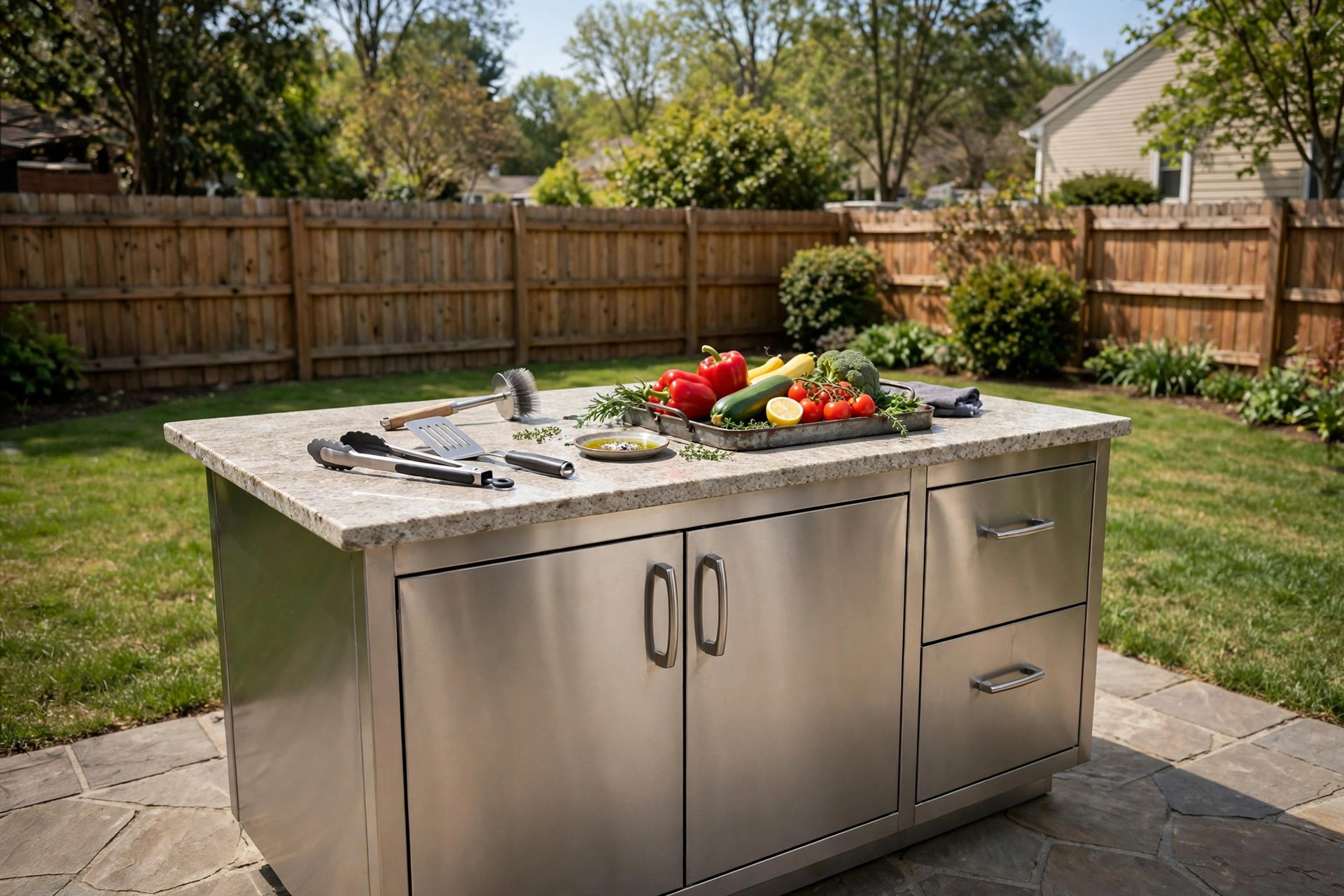

An outdoor kitchen island with storage has become a fixture on the American patio. It gives the cook a work counter out of doors, and it gives pots, fuel, and tools a home of their own. No more trips back to the kitchen for tongs, spices, and serving trays.
This guide gathers what outdoor kitchen island with storage reviews keep saying, year after year. The best units share the same traits: a heavy frame, weatherproof panels, and storage that closes tight against rain and pests. The worst share others: thin sheet metal, flimsy hinges, and a paint coat that peels after one wet summer. Read the reviews with these points in mind, and you will spend your money once, not twice.
Why It Matters
Cooking outside is older than the kitchen itself, but the modern patio cook works with more gear than a campfire ever needed. Gas bottles, charcoal bags, rub shakers, thermometers, skewers, sheet pans, and covers all pile up. Without a proper home, they end up in the garage, and every meal starts with a treasure hunt.
An island solves the clutter. It stands beside the grill as a prep surface, a serving ledge, and a store room in one. Reviews from long-time owners make the same point: the island changes how often they cook outside. When everything sits at arm’s length, a Tuesday chicken breast becomes a ten-minute job instead of a project.
Storage also protects your gear. A propane tank left on the deck rusts and weathers. Tools left in the open grow spots of mold. Sealed cabinets keep out rain, dust, and the curious raccoon. Many reviewers note that their spices and rubs last longer outdoors once they move into a dry island cabinet.
There is a safety angle too. Loose gas bottles roll. Loose bags of charcoal sit in the rain. A closed island keeps fuel upright, dry, and out of the way of children and pets. That alone makes it worth serious thought for any household that grills more than a few times a year.
How to Choose: Outdoor Kitchen Island with Storage Reviews
Start with size. Measure your patio before you shop. A full island runs four to six feet wide and about two and a half feet deep. You need at least three feet of clear space on the working sides, so the cook can move without squeezing past the railing. Tape the outline on the deck and live with it for a day. If it blocks the path to the grill or the back door, pick a smaller unit or a mobile cart.
Next, look at the frame. Reviews reward stainless steel with a high grade, usually 304, because it stands up to rain, grease, and sun without rusting through. Powder-coated aluminum costs less and weighs less, which suits renters and movers. Stone and concrete islands look grand and last decades, but they are permanent. Set them once and they stay.
Check how the storage is built. Doors should swing true and latch shut. Drawers should slide on metal runners, not plastic ones that warp in the heat. Look for a vented compartment for the propane tank. Gas bottles need air flow, and a solid box without vents is a hazard. The best reviews praise soft-close hinges and gaskets that keep water out of the cabinet seams.
Weight and wind matter more than most buyers expect. A light island walks across the patio in a storm. Heavy masonry units do not move. Freestanding metal islands should have leveling feet and anchor points. If you live where hurricanes or plains winds hit, bolt it down.
Think about the work top. Granite, concrete, and thick stainless steel take heat and knife work. Tile tops look nice but grout stains and cracks in a freeze. Thin laminate peels. Reviewers who cook daily almost always favor stone or steel tops and say they would never go back.
Matching the Island to Your Grill
Buy the island to fit your cooking style. A gas griller needs a wide prep counter and a vented tank bay. A charcoal cook needs a heat-proof top corner for the chimney starter and a metal bin for ash. A smoker owner needs room for wood chunks and a surface that will not stain when drippings fall. Write down what you actually cook, then match the storage to it.
Types and Options
Fixed Masonry Islands
These are built on site from block, stone, or brick, with a poured concrete or granite top. They cost the most and last the longest. Owners report twenty or more years of service with little upkeep. The drawback is the price and the permanence. Once the mason leaves, the island is where it is.
Freestanding Stainless Steel Carts
These are the workhorses of the market. A steel cart with doors and drawers costs a fraction of masonry and can be moved if you rearrange the yard. High-end models use thick steel, sealed welds, and commercial casters. Budget models use thin panels that dent. Reviews split sharply on this point, so read the one-star reviews as well as the five-star ones.
Modular Cabinet Systems
Some makers sell outdoor cabinets in sections, like indoor kitchen cabinets but rated for weather. You pick a sink cabinet, a drawer bank, and a tank bay, and bolt them together. The idea appeals to planners who want a custom layout without a mason. The catch is the cost, which adds up fast, and the need for a perfectly level pad.
Wood and Hybrid Units
Treated cedar and teak frames with stone tops give a warm look that suits farmhouse and cabin yards. Wood needs oil and care, and it will not outlive stone. Hybrids with aluminum frames and wood-look panels try to split the difference. They work well in dry climates and poorly in wet ones.
Cost and Price
Prices run wide. A basic steel prep cart with two doors sells for a few hundred dollars. A mid-range stainless island with drawers, a tank bay, and a stone top runs in the low thousands. A built masonry island with plumbing and a sink can reach five figures before the mason sends the last bill.
What drives the price is material, not marketing. Thick 304 stainless costs real money. Stone tops cost real money. Cabinet interiors with drawers cost more than empty boxes. Labor for masonry is the single biggest line on any built-in project.
Plan for the extras too. Delivery of a heavy island may carry a surcharge. A gas fitter is needed if you tie the island into a natural gas line. If you add a sink, a plumber and a drain line enter the bill. Reviews are full of buyers who priced the island and forgot the installation. Get the full figure before you sign.
A note on value: the cheapest units often cost the most in the end. Reviewers who bought twice tell the same story. The first island rusted in three years. The second, bought with lessons learned, is still standing. Buy the best frame and top you can afford, even if the cabinets start simple.
Care and Upkeep
Outdoor furniture lives a hard life, and an island is no different. Wash the top after each cooking session with warm soapy water. Grease left overnight bakes on by morning. Rinse with a hose, not a pressure washer, which can force water into seams and under panels.
Oil or seal the surfaces on a schedule. Stainless steel benefits from a yearly pass with a food-safe mineral oil or a dedicated steel polish. Stone tops want resealing once or twice a year, depending on your rain. Wood parts need teak oil or an exterior stain before the season starts.
Mind the hardware. Tighten screws and bolts each spring. Hinges and drawer runners last longer with a drop of outdoor lubricant. Check the tank bay vents for spider nests and leaves, which block air flow.
Cover it in winter. Even weatherproof islands last longer under a fitted cover. Outdoor loveseat with storage box reviews make the same point about covers for all patio storage: a cheap cover adds years. Sweep snow off rather than letting it pile and melt into the seams.
Empty the cabinets before a hard freeze if you store anything that can burst. Clean out old charcoal dust, which holds moisture. Air the doors open on a dry day now and then to keep mustiness away.
Safety
Gas safety comes first. Store propane tanks upright in a vented bay, never in a sealed box. Check hoses and fittings each season for cracks and loose joints. Keep a fire extinguisher within reach of the cooking area, and make sure everyone in the house knows where it is.
Heat discipline matters. Never place a hot chimney starter or a lit burner directly against a non-rated surface. Keep a stone or steel landing zone for hot tools. Keep children and pets clear of the working side when the grill runs, and set outdoor bar stools for patio counter height on the far side of the island so guests gather away from the heat.
Electrical safety counts too. If your island has lights or an outlet, the circuit must be ground-fault protected and rated for outdoor use. Extension cords are a stopgap, not a plan. Have an electrician run a proper line.
Finally, think about stability. An island loaded with a stone top is heavy, but it can still tip if a drawer bank full of gear is pulled out on uneven ground. Level the feet, anchor the unit if the maker provides points, and teach children not to climb the drawers like stairs.
FAQ
What is the best material for an outdoor kitchen island with storage? Thick stainless steel and masonry rate highest in reviews for long life. Stainless resists rust and cleans easily. Masonry never moves and shrugs off weather. Powder-coated aluminum suits smaller budgets and lighter duty.
Do I need a plumber or gas fitter? You need a licensed gas fitter if the island ties into natural gas or if you move a fixed gas line. A freestanding propane tank you connect yourself is standard. You need a plumber if you add a working sink with water and drain lines.
Can the island stay outside all winter? Yes, if it is built for weather and covered. Stainless, stone, and sealed aluminum units winter over fine. Empty the cabinets of anything that freezes or bursts, keep the cover snug, and sweep off snow.
How wide should the island be? Four to six feet wide suits most families. The deciding factor is your patio. Leave three feet of clear walkway on every working side. Measure and mark before you order.
Is a mobile cart as good as a fixed island? A good cart is excellent for renters and for small patios. It will not match masonry for stability, weight, or life span, but a well-built steel cart with locking casters serves for many years. Check the wheel locks and the frame thickness in the reviews before you buy.
What should I look for in storage compartments? Tight-closing doors with gaskets, metal drawer runners, adjustable shelves, and a vented bay for fuel. Reviewers prize soft-close hinges and interiors that wipe clean. An outdoor coffee table with fire pit may share your patio, but the island is where the tools should live, dry and locked away.
A Short Final Word
The lesson of outdoor kitchen island with storage reviews is simple. Buy for weather, not for showroom shine. A heavy frame, a hard top, and storage that shuts tight will serve you for a decade or more. A thin, pretty unit will not. Measure twice, read the critical reviews, and set your island up once, properly, and then get on with the cooking.
Retailer sites such as Wayfair carry a wide range of freestanding islands, and flat-pack makers such as IKEA offer modular storage that suits covered patios. Testing groups such as Consumer Reports publish outdoor product ratings that help separate solid builds from thin ones.
References
IKEA. (n.d.). Outdoor furniture and patio storage. https://www.ikea.com Wayfair. (n.d.). Outdoor furniture and patio. https://www.wayfair.com Consumer Reports. (n.d.). Product reviews and ratings. https://www.consumerreports.org
Was this guide helpful?

About Robert Taylor
The My Garden US editorial team writes practical, in-depth home and garden guides for American homeowners — tested advice, no fluff.
You May Also Like

Outdoor Pouf for Patio Seating Reviews: What Buyers Say Before You Buy
March 21, 2026 0 views
Outdoor Fire Table Propane Reviews: How to Choose the Right One
April 23, 2026 0 views
Outdoor Loveseat Glider for Porch Reviews: What to Know Before You Buy
September 22, 2026 0 views