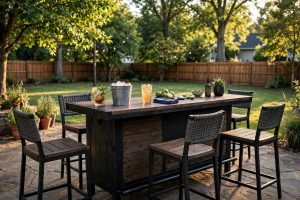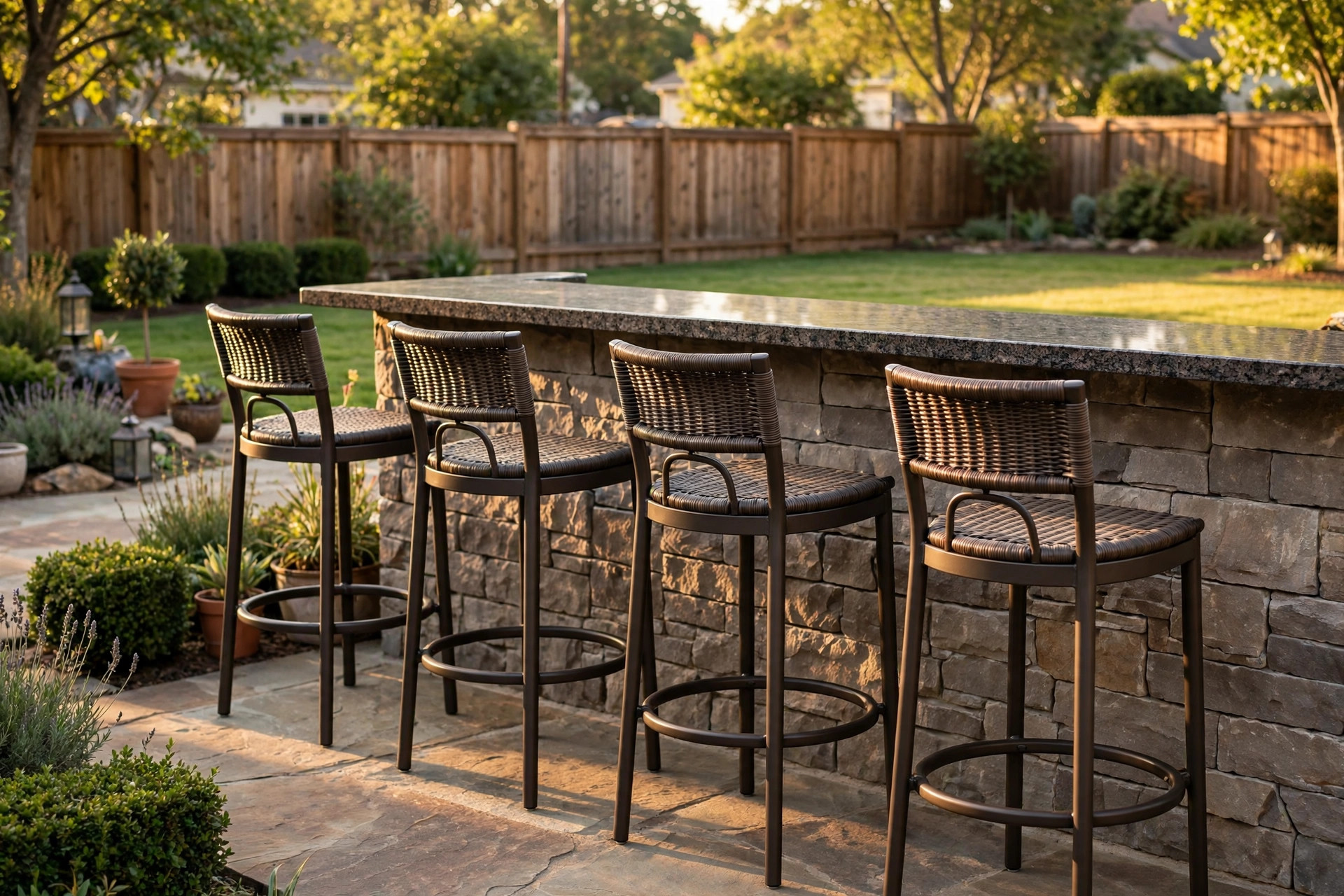
A patio bar or raised counter can turn a plain backyard into a place where family and friends gather on summer evenings. The one piece of furniture that decides whether that space works is the stool. Outdoor bar stools for patio counter height seating must fit the height of the counter, stand up to rain and sun, and stay comfortable through a long meal. Many buyers pick the wrong height or choose a frame that rusts after one season. This guide explains how to measure correctly, which materials to trust, what the options cost, and how to keep the stools in good shape for years.
Why Counter Height Matters for the Patio
Not every raised seat is the same. In patio furniture, three heights are common. Dining height seats stand about 17 to 19 inches off the ground. Counter height seats stand about 24 to 26 inches. Bar height seats stand about 28 to 32 inches. Each height is meant to pair with a counter or table of a matching height.
Most home patio bars and outdoor kitchen counters are built at counter height, which means a work surface of about 36 inches. Outdoor bar stools for patio counter height counters therefore need a seat height of about 24 to 26 inches. That gap of 10 to 12 inches between the seat and the top of the counter gives the average adult room for the legs and a comfortable place to rest the arms.
Getting this wrong causes real trouble. A stool that is too tall forces guests to squeeze their knees under the counter. A stool that is too short leaves them reaching up to a plate that sits above their chest. Both mistakes make meals feel awkward. Before you shop, measure the counter from the ground to the top of the surface. Write the number down. Then subtract 10 to 12 inches. That result is the seat height you need.
The seat depth matters too. A seat depth of 15 to 18 inches suits most adults. Too deep pushes the sitter too far back; too shallow feels like a perch. Armrests add comfort, but measure the space under the counter and between the stools before you choose stools with arms.
What to Look for When You Choose: Outdoor Bar Stools for Patio Counter Height
Seat Height and Footrests
Start with the numbers. For a 36-inch counter, look for a seat height between 24 and 26 inches. If your counter is a little taller or shorter, adjust by the same 10 to 12 inch rule. Stools with adjustable height can help when the counter is not standard, but adjustable parts add weak points that can wear out in outdoor use.
A footrest is not a luxury. It is a need. Sitting with the feet dangling for an hour strains the legs and the back. A well placed footrest sits about 18 inches below the seat. Ring footrests suit round stools and bar footrests suit square frames. Test the footrest in the store. It should feel solid, not springy.
Frame Materials
The frame decides how long the stool lasts outdoors. Aluminum is the most practical choice for most patios. It does not rust, it is light enough to move, and it handles rain without complaint. Look for powder coated finishes, which add a hard shell of color that resists chips.
Wrought iron and steel are strong and heavy. That weight helps in windy yards where light chairs blow over. But iron and steel rust. If you choose iron or steel, check that every joint is sealed and touch up chips at once with paint made for metal.
Teak and other dense hardwoods look warm and classic on a patio. Teak holds up to weather better than pine or cedar because its natural oils fight rot. Wooden stools need oil or sealer once or twice a year. Without it, they turn gray and crack.
Wicker and rattan, real or resin, give a relaxed look. Real wicker rots outdoors. Resin wicker wrapped over an aluminum frame gives the look without the rot. Check that the weave is tight and even. Loose ends are a sign of poor work.
Plastic and resin stools are the cheapest option. Good ones use thick, UV stabilized plastic that keeps its color. Cheap thin plastic cracks in the sun within a year or two. Sit on the stool in the store. If it flexes or creaks, walk away.
Seats and Cushions
Seats come in two broad kinds: open slats or solid, and cushioned. Slatted seats drain rain and dry fast. Solid seats feel firmer and can hold water after a storm. Cushions add comfort but demand care. If you want cushions, choose ones made for outdoor use with solution dyed fabric. This fabric holds its color in strong sun far longer than printed cotton.
Removable cushions are worth the extra cost. You can bring them inside during a storm or wash them at the end of the season. Look for ties or straps that hold the cushion to the seat. Loose cushions blow off the patio in the first strong wind. Pair your stools with waterproof outdoor throw pillows for patio use to add color without worry about rain.
Weight capacity is printed on most spec sheets. Standard outdoor stools carry 250 pounds. Heavy duty models carry 300 to 400 pounds. Buy above your needs, not at the edge of them. A stool used at its limit every day will loosen at the joints.
Types of Outdoor Bar Stools
Stationary stools. Four legs, no moving parts. Simple, sturdy, and often the cheapest. Best for a permanent patio bar.
Swivel stools. The seat turns on a central post. Swivel outdoor bar stools in counter height are popular because guests can turn to talk without moving the whole stool. The swivel joint needs a sealed bearing to survive dust and rain. Cheap swivels squeak and seize. Test the turn in the store. It should glide, not grind.
Stools with backs. A low or mid back supports the spine during long dinners. Counter height outdoor bar stools with backs cost more and take more storage space, but most people find them far more comfortable than backless seats. Full backs block the view a little. Half backs give support without the bulk.
Backless stools. Clean lines and easy storage. Backless stools slide under the counter, which keeps walkways clear. They suit small patios where every inch counts, and they pair well with a best outdoor sectional sofa for small patios layout that keeps each seating zone clear.
Folding stools. Hinge flat for storage in winter. Handy if your patio is small or you clear the yard each fall. Check the hinge for a locking pin. A stool that can fold by accident is a hazard.
Bar stool sets. Many stores sell aluminum outdoor bar stools in sets of four. Buying a set usually cuts the price per stool by 10 to 20 percent. Check that each stool in the set meets the same spec, since some sets pair a good frame with thin cushions to hit a price.
If your patio also needs a place for full meals, read about an affordable outdoor dining table for eight to plan the whole layout at once.
Cost and Price
Prices for outdoor bar stools for patio counter height seating vary widely. At the low end, simple resin or steel stools sell for 40 to 80 dollars each. These work for a season or two of light use. Mid range aluminum or resin wicker stools run 100 to 200 dollars each. This is the sweet spot for most buyers. The frames last five to ten years with basic care. High end teak, marine grade polymer, or designer metal stools cost 250 to 500 dollars each. They suit buyers who want the stools to last a decade or more and match high end patio kitchens.
Sets of four often price between 300 and 700 dollars in the mid range. Watch for hidden costs. Cushions sold separately can add 25 to 50 dollars per stool. Covers add another 10 to 30 dollars each. Compare the total cost of ownership, not just the sticker price. A 60 dollar stool replaced every two years costs more over a decade than a 180 dollar stool that lasts eight.
Sales cluster around holidays. Memorial Day, the Fourth of July, and Labor Day bring the deepest cuts on patio furniture in the United States. Large home stores such as IKEA and Wayfair advertise these sales weeks ahead, so watch their flyers. End of season clearance in September can save 30 to 50 percent.
Care and Upkeep
Outdoor furniture lives a hard life. Sun, rain, pollen, and bird droppings all attack it. A simple routine keeps stools looking good.
Wash the frames twice a year with mild soap and water. Use a soft brush on textured finishes. Rinse well. For aluminum, this is usually enough. For iron or steel, dry the frame after washing and check for chips in the coating. Touch up bare spots at once. Rust spreads fast once it starts.
Wooden stools need oil or sealer. Clean the wood first and let it dry fully. Apply teak oil or an exterior wood sealer with a cloth, following the grain. Wipe off the excess. One coat in spring and one in late summer is enough in most climates.
Cushions need their own care. Brush off loose dirt. Wash removable covers by hand or on a gentle machine cycle, as the label allows. Let them dry fully before you put them back on the seat. Never store damp cushions. Mildew grows in days.
Covers are the cheapest insurance. A good cover keeps off rain, sun, and tree sap. Choose covers made for bar stools, not generic chair covers. They should fit snug with a drawstring or buckle. In winter, bring the stools under a roof if you can. A garage, shed, or covered porch adds years to any frame. If they must stay out, cover them and tilt them so water drains off the seats.
Safety
Safety starts with stability. Place stools on flat, level ground. Pavers, concrete, and deck boards work well. Grass and gravel shift under weight and make stools rock. If the patio slopes for drainage, place the stools where the slope is gentlest.
Check weight limits and respect them. Overloaded stools bend at the joints. The bend may be small at first, then sudden. Teach children not to stand on stools or rock back on two legs. Swivel stools tempt children to spin. A simple rule, feet on the footrest, prevents most falls.
Inspect the stools each spring. Tighten bolts and screws. Look for cracks in plastic, rust on metal, and rot in wood. Replace worn glides under the legs. Glides protect the patio surface and keep the stool from sliding. If a weld cracks or a leg bends, retire the stool. Repairs on load bearing joints are not worth the risk.
Keep the area around the bar clear. Leave at least 24 inches of space behind each stool for guests to get up. Do not place stools where they block a door or stand near a hot grill. The U.S. Consumer Product Safety Commission publishes general outdoor furniture safety guidance, which is worth a read before the season starts.
Frequently Asked Questions
What seat height do I need for a 36 inch patio counter? Look for a seat height of 24 to 26 inches. The rule is simple. Measure the counter, then subtract 10 to 12 inches. That gives the right seat height for comfortable legroom.
Are counter height and bar height the same? No. Counter height seats are about 24 to 26 inches. Bar height seats are about 28 to 32 inches. A bar height stool at a counter height counter leaves the sitter too high. Always match the stool to the counter.
Can outdoor bar stools stay out in the rain? Most can, but rain shortens their life. Aluminum and resin handle rain best. Iron, steel, and wood need covers or shelter. Cushions should come inside during storms, since standing water breeds mildew.
How many stools fit along a patio bar? Allow 24 to 30 inches of counter width per stool. A six foot counter seats three comfortably. Crowding stools closer makes elbows bump and guests feel cramped. Measure before you buy.
Do I need stools with backs? Backs add comfort for long meals. Backless stools store easier and slide under the counter. If your family eats dinner at the patio bar most nights, choose backs. If the bar is for drinks and quick snacks, backless is fine. Before you spend, check independent product reviews to see which models hold up best.
What is the best material for windy patios? Heavy materials win in wind. Wrought iron, steel, and solid wood stay put. Light aluminum stools may tip or slide. If you love aluminum, choose models with a wide base and add weight with sand filled bases where the design allows. Anchor points on a deck can hold them in storms.
A Final Word
The right outdoor bar stools for patio counter height seating are the ones that fit your counter, suit your weather, and get used every week. Measure first, choose a frame that fights your climate, and spend a little more for comfort if the bar hosts dinner. With simple care, the stools will serve your patio for many seasons.
References
IKEA. (n.d.). Outdoor furniture. https://www.ikea.com Wayfair. (n.d.). Patio furniture. https://www.wayfair.com Consumer Reports. (n.d.). Product reviews and ratings. https://www.consumerreports.org U.S. Consumer Product Safety Commission. (n.d.). Home safety information. https://www.cpsc.gov
Was this guide helpful?

About James Carter
The My Garden US editorial team writes practical, in-depth home and garden guides for American homeowners — tested advice, no fluff.