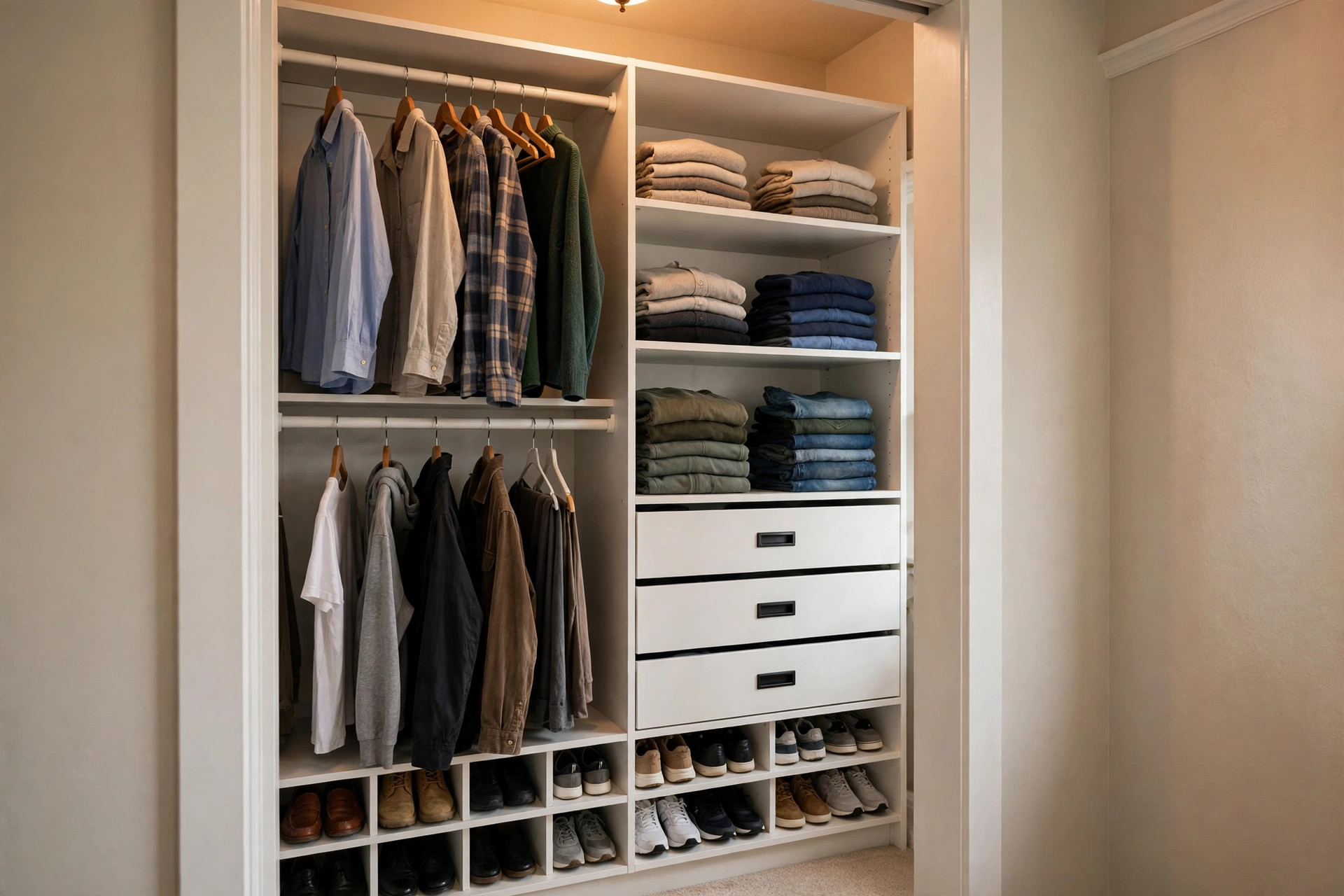

A neat closet changes a morning. Clothes hang in order. Shoes sit in rows. Nothing falls on your head when you reach for a shirt. This closet organizer systems reviews and buying guide explains how to choose the right system for your home. It covers the main types, the materials, the costs, and the small details that make a system last. Read on before you buy. A little study now saves money and trouble later.
Why Closet Organizer Systems Matter
Most closets start with one rod and one shelf. That setup wastes space. A single rod leaves half the closet empty. One shelf becomes a pile of folded clothes that topple over. A closet organizer system fixes this by using the full height and width of the closet. Double rods double hanging space. Shelves hold sweaters and bags. Drawers keep small items out of sight.
Reviews of closet organizer systems often point to the same result. Homeowners say they finally use every inch of the closet. Morning routines get faster. Clothes stay pressed because they are not crushed together. The system also protects the home. A good unit anchors to the wall and spreads weight across the frame. Cheap freestanding racks, by contrast, tip over and spill clothes on the floor.
An organized closet also cuts clutter in the bedroom. When the closet has a place for everything, dressers and chairs stay clear. Many buyers report that they buy fewer clothes once they see what they own. A visible wardrobe is an honest wardrobe.
The Main Types of Closet Organizer Systems: Closet Organizer Systems Reviews and Buying Guide
Wire Systems
Wire systems are the most common and the least costly. They use coated metal shelves and rods. The wire lets air move, which keeps clothes fresh. Lint falls through, so the closet stays clean. Installation is simple. Most kits hang from a wall rail and need only a drill and a level.
The drawback of wire is strength. Heavy sweaters can dent the coating. Wire edges can leave marks on knit shirts. Some buyers also dislike the look. Wire reads as basic, not fine. For a linen closet or a guest room, though, wire is hard to beat for value.
Laminate and Wood Composite Systems
Laminate systems use pressed board covered with a printed finish. They look like wood at a lower price. Colors run from white to walnut. These systems include shelves, drawers, and towers in one box. Many come as kits sized for standard reach-in closets.
Composite units weigh more than wire. They also hold more. Drawers glide on metal slides. Shelves carry stacks of jeans without sagging. The weak point is moisture. In a damp closet, pressed board swells. Keep these systems dry and they serve for years.
Solid Wood and Premium Systems
Solid wood systems cost the most. Pine, maple, and oak kits bring a furniture look to the closet. Joinery is stronger. Finish resists scratches. Some brands sell modular parts, so the owner can add shelves or drawers later.
Wood systems suit large walk-in closets and master suites. They also add to home value. A real estate agent may list a custom wood closet as a feature. For a rental unit or a small spare bedroom, wood is more than most people need.
Custom and Semi-Custom Designs
Custom closets are built to exact measurements. A designer visits the home, draws a plan, and orders parts. Semi-custom kits use standard parts in many sizes. The owner picks the layout and trims parts to fit. Both approaches beat off-the-shelf kits for odd spaces. Corner closets and sloped ceilings often need a custom touch.
What to Look for When You Buy
Measure First
Measure the closet before you shop. Record width, depth, and height. Note the door swing and any baseboards, outlets, or vents. A system that blocks a door or a vent causes daily trouble. Draw a simple plan on paper. Mark where long coats hang and where shelves go. This plan is your best tool in the store.
Check the Weight Rating
A closet holds a lot of weight. A rod of coats can weigh fifty pounds. Stacks of denim weigh more. Check the weight rating of each shelf and rod. Wall-mounted parts should screw into studs or use heavy-duty anchors. Freestanding towers need a wide base so they do not tip. If the maker does not list ratings, treat the system with doubt.
Count the Storage Parts
Compare kits by parts, not by price alone. Count rods, shelves, drawers, shoe racks, and baskets. A cheap kit with few parts may cost more once you add pieces. A kit with extra shelves lets you change the layout as needs change. Flexibility is worth paying for.
Study the Assembly
Some systems need only a screwdriver. Others need a drill, a saw, and a level. Read reviews for words like “easy install” and “took all day.” If you rent your home, pick a system that leaves small holes. Wall rail systems hang from one rail and patch with ease.
Reviews of Popular Closet Organizer Systems
Budget Wire Kits
Budget wire kits sell for low prices at big home stores. Buyers praise the price and the simple setup. One rail holds the whole unit. The shelves adjust by moving brackets up or down. Complaints focus on wobble. Light anchors in drywall give way over time. Use the studs and the system stays firm.
Mid-Range Laminate Kits
Mid-range kits earn the most balanced reviews. Owners like the finished look and the smooth drawers. Setup takes a few hours. Most kits fit closets six to eight feet wide. Reviews warn about cutting parts to fit. A trim piece cut short leaves a gap. Measure twice and cut once.
Premium Wood and Custom Units
Premium units get strong marks for looks and strength. Reviewers say the drawers glide like furniture drawers. The cost draws the only real complaint. A full walk-in setup can cost several thousand dollars. Many owners say the price was worth it. The closet feels like part of the bedroom, not a bare box.
Closet Design Services
Design services get mixed reviews. Happy buyers love the personal plan and the clean finish. Unhappy buyers cite long waits and high fees. If you hire a service, get the design in writing. Check the schedule and the warranty before you sign.
Cost and Price Breakdown
Closet organizer systems span a wide price range. A basic wire kit for a reach-in closet costs under a hundred dollars. Mid-range laminate kits run a few hundred dollars. Premium wood systems start near a thousand dollars and rise with size. Full custom designs for large walk-ins can cost several thousand.
Installation adds to the total. Do-it-yourself installation costs nothing but time. A handyman may charge a few hundred dollars for a day. A full design service bundles design, parts, and labor in one price. Always get two quotes when you hire help.
There are hidden costs to watch. Trim pieces, end caps, and extra shelves add up. Some makers sell anchors and brackets apart from the kit. Read the box contents list with care. A kit that looks cheap may need costly add-ons.
Care and Upkeep
Closet systems need little care. Dust the shelves now and then. Wipe laminate with a damp cloth. Do not soak pressed board. Tighten wall anchors once a year. Clothes add weight slowly, and screws can loosen.
Check drawer slides for smooth motion. A drop of silicone spray helps metal slides. For wire systems, look for rust at cut ends. Touch up bare spots with matching paint. Keep the closet dry. A dehumidifier helps in damp climates.
Rotate seasonal clothes to protect the system. Heavy winter coats strain rods all year. Move them to storage in spring. The rod lasts longer and the closet breathes.
Safety Notes
Anchor every tall unit to the wall. A child can pull a tower over in seconds. Use the tip-over straps that come in the box. Keep heavy items on low shelves. Place breakable boxes out of reach of small hands.
Do not overload rods. Spread coats across two rods when the closet runs full. Check anchors in old plaster walls. They crumble with age. A trusted consumer testing group reminds buyers to verify weight limits before loading a new system.
Leave room for air. A closet packed tight grows musty. Leave a gap between clothes and the back wall. A small light, wired safely or battery-powered, helps you see and keeps the space dry in feel. Follow local rules for any wiring work.
Fitting Organizers Into the Rest of the Home
Closet systems work best as part of a whole-home plan. A neat closet pairs well with tidy rooms nearby. If your entryway collects coats and shoes, a mudroom bench with storage keeps that mess out of the bedroom. Kitchens benefit from the same thinking: rotating turntables bring order to deep cabinets. And in family homes, lidded toy bins keep playthings off the floor. When every room has a place for its goods, the whole house stays calm.
Good design advice is easy to find. Home improvement sites like This Old House and Bob Vila publish closet planning guides with photos. Decor sites such as Apartment Therapy and The Spruce show real closets before and after the makeover. Retailers like IKEA and The Container Store offer online planners that draw the layout for you. Big stores like The Home Depot and Wayfair carry wide ranges of kits with buyer reviews. The Family Handyman site offers step-by-step install tips for do-it-yourself owners.
Frequently Asked Questions
How much does a closet organizer system cost?
A simple wire kit costs under a hundred dollars. Mid-range laminate kits cost a few hundred. Premium wood and custom designs run from one thousand dollars to several thousand. Labor adds more if you hire help.
Are closet organizer systems hard to install?
Most are not. Wire kits hang from a single rail in under an hour. Laminate kits take a few hours and basic tools. Custom designs take longer. Always read the manual and check the parts list before you start.
Which material lasts longest?
Solid wood lasts longest with good care. Laminate comes next in a dry closet. Wire lasts well but can rust at cut ends in damp air. Keep any system dry and anchored and it will serve for many years.
Can I install a closet system in a rental home?
Yes. Pick a rail-mounted or freestanding system. These leave small holes that patch with ease. Avoid systems that need many large screws in the wall. Keep the original rod and shelf so you can restore the closet at move-out.
How do I measure my closet for a system?
Measure width, depth, and height with a tape. Note doors, windows, vents, outlets, and baseboards. Sketch the closet on paper and mark zones for long hang, double hang, shelves, and drawers. Bring the sketch to the store or the planner tool.
Do closet organizers add home value?
A clean, fitted closet helps a home show well. Buyers notice storage. A custom wood closet can lift the sale price of a master suite. Even a neat laminate kit makes a listing photo look better. Keep receipts in case the buyer asks.
A Short Final Word
A closet organizer system is a small project with a big payoff. It costs less than most room makeovers. It takes a weekend at most. And it pays back every morning in saved time and calm. Measure your closet, pick the type that fits your budget, anchor it well, and enjoy the order. The tidy closet you want is closer than you think.
References
Apartment Therapy. (n.d.). Home design ideas and inspiration. https://www.apartmenttherapy.com Bob Vila. (n.d.). Home improvement advice. https://www.bobvila.com Consumer Reports. (n.d.). Product reviews and ratings. https://www.consumerreports.org Family Handyman. (n.d.). DIY home repair and maintenance. https://www.familyhandyman.com IKEA. (n.d.). Home furnishings. https://www.ikea.com The Container Store. (n.d.). Storage and organization products. https://www.containerstore.com The Home Depot. (n.d.). Home improvement products. https://www.homedepot.com The Spruce. (n.d.). Home and garden advice. https://www.thespruce.com This Old House. (n.d.). Home renovation guidance. https://www.thisoldhouse.com Wayfair. (n.d.). Furniture and home goods. https://www.wayfair.com
Was this guide helpful?

About James Carter
The My Garden US editorial team writes practical, in-depth home and garden guides for American homeowners — tested advice, no fluff.
You May Also Like

Affordable Toy Storage Bins for Sale: A Parent’s Guide
September 25, 2026 0 views
Patio Cushion Storage Bags Reviews and Buying Guide
January 25, 2026 0 views
Waterproof Wall Mounted Storage Shelves for Sale: A Complete Buying Guide
April 28, 2026 0 views