
Introduction
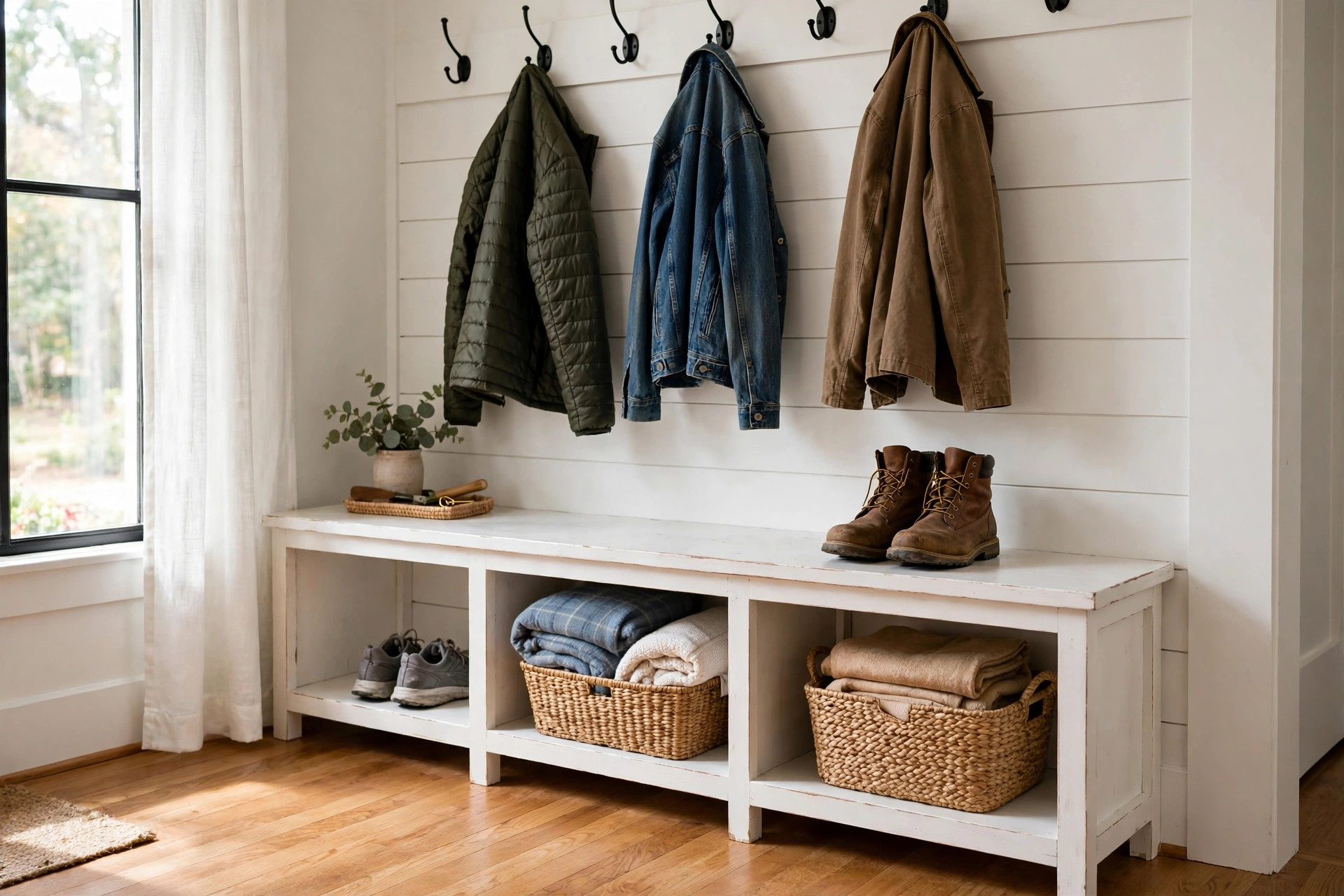
A mudroom is the room that takes the beating so the rest of the house does not. Wet boots, muddy shoes, backpacks, coats, umbrellas, and dog leashes all land there first. Without a plan, that small space turns into a pile of clutter within a week. This affordable mudroom storage benches buying guide is written to help you choose a bench that gives you a place to sit, a place to store, and a tidier entry hall, all without spending more than you need to.
A storage bench is one of the simplest pieces of furniture you can buy for a mudroom. It serves two jobs at once. You can sit on it to put on shoes, and you can hide shoes, hats, gloves, and gear inside it. When money is tight, that double duty matters. One well-chosen bench can replace a shoe rack, a chair, and a cluttered basket in the corner.
This guide walks through why these benches matter, what to look for before you buy, the main types on the market, what they cost, how to care for them, and how to keep them safe for your family. Read it through once, and you will shop with clear eyes.
Why an Affordable Mudroom Storage Bench Matters: Affordable Mudroom Storage Benches Buying Guide
The entry of a home sets the tone for everything inside it. When a guest steps into a mudroom and finds a clean bench with tidy cubbies, the house feels calm and cared for. When the same space is a heap of shoes and wet jackets on the floor, the whole home feels rushed and messy. A storage bench is the backbone of an orderly mudroom, and it does not have to cost much.
Shoe storage bench options for mudrooms come in many shapes, but the idea is the same: give every family member a cubby or a bin of their own. Children learn fast when they have one labeled space. Adults find their shoes faster in the morning. The bench also protects the floor, since wet footwear sits inside the unit instead of pooling water on wood or tile.
There is a money angle too. A bench that costs under two hundred dollars can save you the price of a separate shoe rack and hallway chair. It can also protect your floors from salt, sand, and water damage, which cost far more to repair than a bench costs to buy.
What to Look for When Choosing a Bench
Size and Fit
Measure your space before you shop. Write down the width, depth, and height of the wall where the bench will stand. Leave at least two feet of clear walkway in front of it so doors can open and people can pass. A bench that is too wide will crowd the room. A bench that is too shallow may not hold winter boots.
Think about who will use it. A family of five needs more cubbies than a single person. If children will use the bench, pick a seat height of fifteen to eighteen inches so small legs can reach the floor. Adults are comfortable with a seat around eighteen to twenty inches.
Storage Layout
Some benches open from the top like a chest. Others have open cubbies on the front. Still others hold pull-out baskets or sliding drawers. Open cubbies are best for shoes because air can move and dampness can dry. Lift-top chests hide clutter and double as toy storage, which helps in a busy family mudroom. Drawers are fine for small items like gloves and scarves but cost more to build.
Count the openings. Two cubbies may be enough for a couple. A family of four or more should look for four to six openings. It is better to have one spare opening than to be one short.
Materials and Build Quality
Solid wood benches last the longest, but they cost the most. Many budget-friendly mudroom benches use engineered wood, such as MDF or particleboard with a laminate or veneer skin. These look fine and hold up well in a dry mudroom. Check the weight rating of the seat. A good bench should hold at least two hundred pounds, and three hundred is better for a house where adults and children pile on.
Look at the joints. Screwed and dowelled joints beat staples and thin cam locks. If you buy a flat-pack bench, take the time to tighten every bolt firmly and check them again after a month of use.
Finish and Water Resistance
Mudrooms get wet. Pick a finish that can handle moisture. Painted surfaces wipe clean and resist stains. Laminate tops shrug off puddles. Raw unfinished wood soaks up water and stains, so seal it with polyurethane or a water-based varnish before you use it. If the bench will sit near the door where rain blows in, water resistance is not a luxury. It is a need.
Types and Options
Hall Trees with Benches
A hall tree joins a bench to a tall back panel with hooks for coats and hats. It is the all-in-one answer for a mudroom, and budget models exist at big retailers. The bench gives you seating and cubbies, while the hooks keep coats off the floor. Measure your ceiling height first, since most hall trees stand six feet tall or more.
Cubby Benches
Cubby benches are low, wide units with square or rectangular openings. They are the most common affordable choice. You can slide fabric bins or baskets into the openings for a neat look. If you need more room later, two cubby benches can sit side by side along a wall.
Lift-Top Storage Chests
A lift-top chest looks like a simple bench, but the seat lifts to reveal a deep compartment inside. These are great for hiding winter gear, sports equipment, or cleaning supplies. The hinge should be strong enough to hold the seat open safely. Cheap piano hinges can pinch fingers, so look for a soft-close or safety hinge.
Corner and Narrow Benches
Small mudrooms need slim answers. Narrow benches, some only twelve inches deep, fit in tight hallways. Corner benches use the dead space where two walls meet. If your mudroom is little more than a wide hallway, a narrow bench with two cubbies may be all you need.
DIY and Secondhand Options
If your budget is very tight, look at secondhand stores, garage sales, and online marketplaces. A solid old bench can be sanded and painted for the price of a can of paint. Simple building plans for plywood cubby benches are also widely shared by woodworkers, and a basic bench is a fair weekend project for a beginner with a saw and a drill. The family handyman site offers step-by-step woodworking guides that suit this kind of project.
Cost and Price
Affordable mudroom storage benches usually fall into three price bands. Small two-cubby benches made of engineered wood start around forty to eighty dollars. Mid-size benches with three to five cubbies, or a lift-top chest, run from about ninety to one hundred eighty dollars. Larger hall trees with bench, hooks, and cubbies start near one hundred fifty dollars and can pass three hundred.
Watch for hidden costs. A bench that needs baskets to look finished adds twenty to fifty dollars for the bins. Delivery fees for heavy furniture can add up too, so check whether the store offers free pickup. Assembly takes one to two hours for most flat-pack models; factor in your time or a handyman fee if you will not build it yourself.
Prices move with the seasons. Late summer and early fall, when families set up for the school year, bring sales on entry furniture. After the holidays, clearance deals appear as stores make room for spring stock. If you can wait a month or two, you may catch the same bench for twenty percent less.
To compare value, divide the price by the number of storage openings. A one-hundred-twenty-dollar bench with six cubbies costs twenty dollars per opening, which beats an eighty-dollar bench with only two. The same price-per-opening math works for other storage furniture; our pantry shelving units price comparison usa shows how it plays out in the kitchen. Also check the warranty. Even budget benches should carry at least a one-year warranty against defects.
Care and Upkeep
A mudroom bench works hard, so give it a little care. Wipe the top and shelves once a week with a damp cloth. Salt from winter boots leaves white marks; a cloth dampened with a mild vinegar and water mix removes them. Dry the surface after wiping so moisture does not sit on the finish.
Vacuum the cubbies once a month. Sand, pet hair, and small stones collect in the corners. If your bench holds baskets, pull them out and shake them outside. Wash fabric bins twice a year or as the label directs.
Check the hardware twice a year. Tighten any loose bolts. Look for cracks in the seat board or the legs. If the finish starts to wear on the seat edge, a light sanding and a fresh coat of polyurethane will renew it in an afternoon.
Keep a drip tray or a boot mat under the bench in wet months. This one habit does more for the bench’s life than anything else. Standing water is the enemy of engineered wood, and a ten-dollar tray can add years to a bench’s life. Home Depot and Lowe’s carry boot trays and entry mats in many sizes.
Safety
A storage bench must be safe for the whole family. Anchor tall units, such as hall trees, to the wall with the anti-tip hardware that comes in the box. Children climb. An unanchored tall unit can fall forward and cause serious harm. This step takes ten minutes and matters more than any other.
Check the weight limit on the seat and do not exceed it. If the bench will hold two adults, buy one rated for the load. Sit-test the bench in the store if you can, or read weight ratings carefully online.
Mind the hinges. Lift-top seats can slam shut on fingers. Look for lids with safety hinges, slow-close pistons, or a lid stay that holds the seat open. If your bench did not come with one, a lid support arm is a cheap add-on.
Ventilation matters for damp shoes. Benches with fully enclosed backs can trap moisture and grow mildew. Open cubbies or backs with air slots dry faster. If your bench has a solid back, leave a small gap between the bench and the wall so air can move behind it.
Small parts are a risk for toddlers. Baskets with loose handles, drawer pulls that unscrew, and casters that pop off can all become choking hazards. Check them now and then, and keep tiny items out of low bins that small children can reach.
Where to place toy bins is a related question for families with young kids; our note on where to buy toy storage bins in texas may help if you are shopping for a household with children.
FAQ
How much should I spend on an affordable mudroom storage bench?
Most buyers do well in the sixty to one hundred eighty dollar range. Under sixty dollars, build quality drops sharply. Over two hundred dollars, you are paying for solid wood or designer names rather than basic function. Match the price to the size of your family and the wear the bench will take.
What is the best material for a cheap mudroom bench?
Engineered wood with a laminate or painted finish gives the best value. It resists moisture better than raw wood and costs far less than solid hardwood. Solid pine is a good step up if your budget allows, since it can be sanded and refinished many times.
How wide should a mudroom bench be?
Allow about eighteen to twenty-four inches of seat width per person. A couple can share a thirty-six-inch bench. A family of four should look for forty-eight to sixty inches, or two smaller benches side by side. Always measure your wall and walkway first.
Can I use a storage bench outdoors on a covered porch?
Only if it is rated for outdoor use. Indoor benches will swell, warp, and grow mold in damp air, even under a roof. Look for benches made of cedar, teak, or weatherproof resin if the spot is not fully enclosed and heated.
How do I stop the bench from smelling like old shoes?
Airflow is the cure. Keep cubbies open rather than sealed, and do not pack wet shoes tight against dry ones. Sprinkle baking soda in the cubbies once a month and vacuum it out the next day. Cedar blocks or sachets also help, and replacing insoles in the worst offenders does more than any spray.
Final Word
Choosing an affordable mudroom storage bench comes down to three simple steps. Measure your space. Pick a layout with enough openings for your family. Buy the sturdiest bench your budget allows, and protect it from water. Do those three things and the bench will serve you for years.
Start your search at large home stores where you can see the benches in person and test the seat. IKEA and Wayfair offer wide ranges of budget entry benches online, and decorating sites like Apartment Therapy and The Spruce show real mudrooms for layout ideas. For repair and building advice, This Old House is a steady reference.
A tidy mudroom is not about spending a fortune. It is about giving every shoe and coat a home. The right bench does that job quietly, day after day, for less than the cost of a nice dinner out. And if you are planning storage projects elsewhere in the house, our premium attic storage solutions buying guide covers higher-end choices. Buy once, buy right, and enjoy the calm.
References
Apartment Therapy. (n.d.). Home design ideas and inspiration. https://www.apartmenttherapy.com Family Handyman. (n.d.). DIY home repair and maintenance. https://www.familyhandyman.com IKEA. (n.d.). Home furnishings. https://www.ikea.com Lowe’s. (n.d.). Home improvement products. https://www.lowes.com The Container Store. (n.d.). Storage and organization products. https://www.containerstore.com The Home Depot. (n.d.). Home improvement products. https://www.homedepot.com The Spruce. (n.d.). Home and garden advice. https://www.thespruce.com This Old House. (n.d.). Home renovation guidance. https://www.thisoldhouse.com Wayfair. (n.d.). Furniture and home goods. https://www.wayfair.com
Was this guide helpful?

About Lisa Anderson
The My Garden US editorial team writes practical, in-depth home and garden guides for American homeowners — tested advice, no fluff.
You May Also Like
Bed Frames With Drawers Price Comparison USA: A Plain Buyer Guide
September 14, 2026 0 views
Corner Closet Organizers Reviews and Buying Guide
August 25, 2026 0 views
Lockable Freestanding Wardrobe Closets With Free Shipping
August 12, 2026 0 views