
A Simple Guide for Texas Families
If you are wondering where to buy toy storage bins in texas, you are not alone. Toys seem to multiply on their own. One day the living room floor is clear, and the next it is covered in blocks, dolls, toy cars, and puzzle pieces. A good set of toy storage bins brings order back. This guide walks you through what to look for, the types you can buy, where to shop across the state, what you will pay, and how to keep children safe. Everything is written in plain words so you can decide with confidence.
Why Toy Storage Bins Matter for a Busy Home: Where to Buy Toy Storage Bins in Texas
A home with children is a home with toys. Toys are good for growth, but loose toys create problems. Small parts end up underfoot and cause falls. Pieces of one set get mixed with pieces of another. Clean-up takes longer than play. Storage bins solve these problems in a simple way.
With bins, each toy has a place. Children learn to put things back when the system is easy to use. A bin at child height with a picture label works for a three-year-old. A row of stackable bins works for a school-age child with many collections. Parents save time because they do not search the whole house for one missing piece.
Texas homes also face their own conditions. Summer heat is strong in much of the state. Garages and attics get very hot, and cheap plastic can warp. If you plan to store bins in a garage, choose sturdy plastic that can take heat. Indoor closets and playrooms are kinder to bins and keep toys within easy reach.
What to Look For When You Choose Toy Bins
Size and Shape
Start by looking at your toys. Big stuffed animals need large bins. Small building bricks need small ones. A mix of sizes usually works best. Measure your shelves or closet before you shop. A bin that does not fit the shelf is no use. Rectangular bins use space better than round ones. Low, wide bins slide under beds. Tall, narrow bins fit closet corners.
Material
Plastic bins are the most common choice. They wipe clean, resist spills, and last for years. Fabric bins are lighter and soft, which is nice for small children. They fold flat when not in use. Wicker and rattan baskets look warm and suit a living room, though they cost more and are harder to clean. Wooden crates are sturdy and handsome but heavy for a child to carry.
For families who want something natural in the living room, wicker storage baskets can hold toys while looking like part of the decor. For soft playthings, fabric storage cubes are light enough for young hands. Some families pair toy bins with seating, and ottoman storage benches give children a place to sit and a hidden space for toys.
Lids or Open Tops
Open bins invite quick clean-up. A child can toss toys in fast. Open bins also let you see what is inside at a glance. Bins with lids keep dust out and stack neatly. For long-term storage in a garage or attic, lids are better. For daily use in a playroom, open bins are easier. Many families use both: open bins for daily toys, lidded bins for seasonal or outgrown toys.
Labels and Color
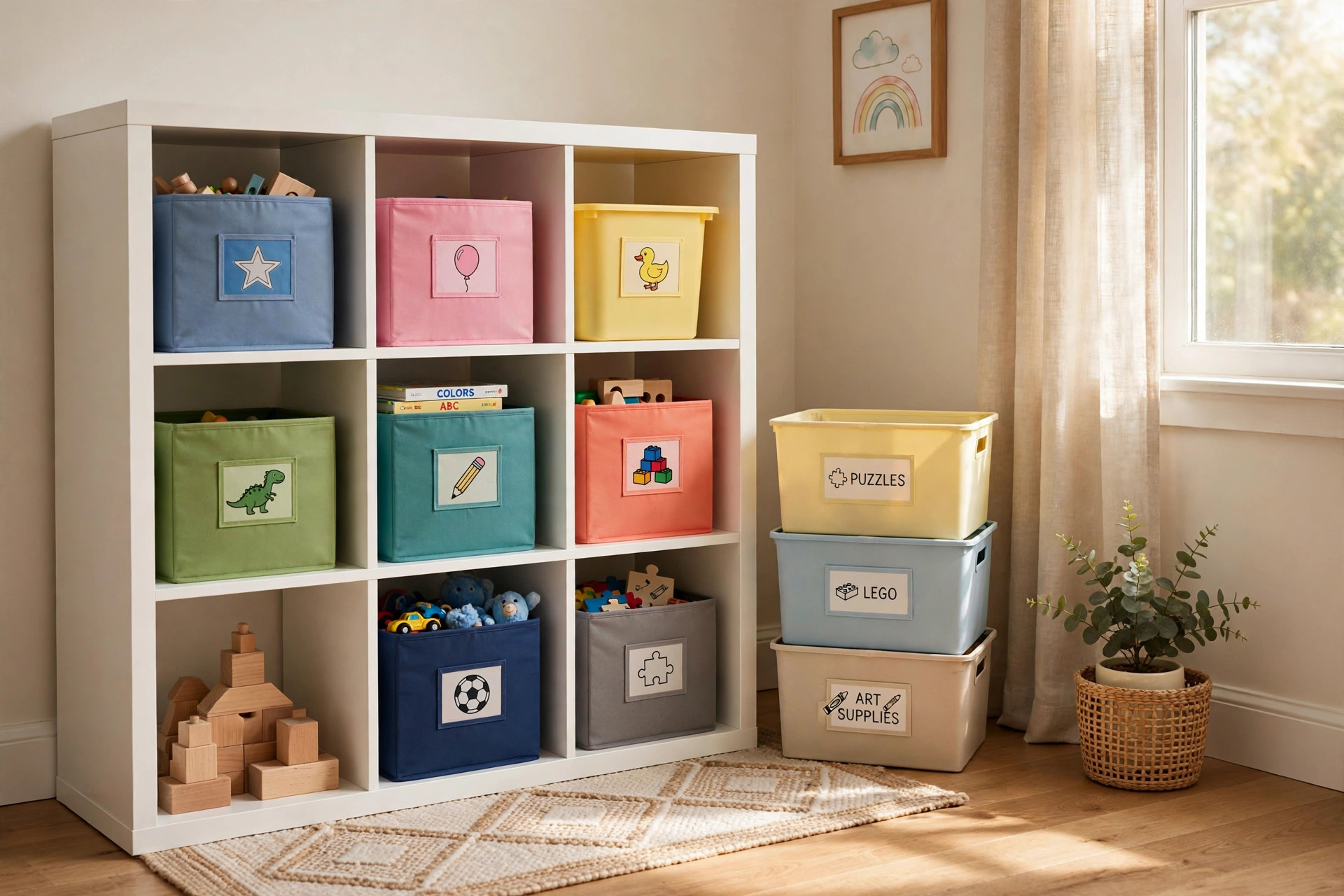
Labels make the system work. Use pictures for children who cannot read yet. Use words for older children. Color-coding helps too. One color for art supplies, another for cars, another for dolls. Clear bins are useful because you can see the contents without opening them.
Types of Toy Storage Bins You Can Buy
The market offers many styles. Here are the main ones.
Stackable plastic bins. These are the workhorses. They come in many sizes, stack safely, and last for years. Brands sold at big home stores across Texas make this the easiest choice.
Fabric storage cubes. Soft, light, and cheap. They fit standard cube shelving units. They work well for stuffed animals, dress-up clothes, and soft balls. They fold flat for storage or moves.
Under-bed bins. Long and flat, made to slide under a bed. They use space that often goes to waste. Good for board games, puzzles, and art sets.
Rolling carts with bins. A cart on wheels with several small bins. A child can wheel it from room to room. Good for craft supplies and small toys.
Toy chests and trunks. One large box with a hinged lid. Holds a lot. Choose one with a safety hinge so the lid cannot slam on small fingers.
Storage ottomans and benches. Furniture that hides toys inside. They suit living rooms where you want toys out of sight when guests come.
Hanging organizers. Pockets that hang on a door or wall. Good for small toys, shoes, and craft items in tight spaces.
When you browse ideas for arranging them, home magazines such as Apartment Therapy show real rooms with toy storage that looks good. For hands-on build and repair advice, Family Handyman has clear project guides.
Where to Shop: Stores and Websites in Texas
Texas is a large state, and shoppers have many options. The right place depends on your budget, your timeline, and whether you want to see the bins in person first.
Big Home Stores
Large home improvement stores carry a wide range of bins in many sizes. You can see the bins, test the lids, and take them home the same day. The Home Depot has stores across Texas, from Houston to El Paso, and also sells online with delivery or store pickup.
Furniture and Home Goods Stores
If you want toy storage that matches your decor, furniture stores are worth a visit. IKEA has stores in Houston, Dallas, Round Rock, and San Antonio, plus online ordering. Their cube shelving and fabric bins are popular with families. Wayfair sells a huge range online with delivery to Texas addresses, and sale events often cut prices.
Big-Box Retailers
For low prices and fast pickup, big-box stores are hard to beat. Walmart and Target both stock plastic bins, fabric cubes, and toy chests, with same-day pickup at many Texas locations.
Specialty Storage Stores
If you want expert help and a deep selection, The Container Store is a strong choice. The company started in Texas, and its Dallas-area stores carry everything from small bins to full closet systems. Staff can help you plan a whole playroom.
Guides and Reviews
Before you buy, it helps to read buying guides. The Spruce publishes clear reviews of storage products written in plain language. Reading a few guides can save you from buying bins that crack, warp, or do not stack well.
Cost and Price: What You Will Pay
Prices vary by size, material, and brand. Here is a rough guide to what Texas shoppers can expect.
Small plastic bins (under 5 gallons): about 3 to 8 dollars each. Good for craft supplies, small cars, and game pieces.
Medium plastic bins (6 to 15 gallons): about 8 to 18 dollars each. The most useful size for general toys.
Large plastic bins (16 gallons and up): about 15 to 30 dollars each. Good for stuffed animals and big sets.
Fabric storage cubes: about 5 to 15 dollars each. Often sold in packs of four or six, which lowers the price per cube.
Under-bed bins: about 10 to 20 dollars each.
Toy chests: about 40 to 150 dollars, depending on size and material. Wooden chests cost the most.
Storage ottomans: about 40 to 120 dollars each.
Sets and multi-packs: buying a set of six or eight bins often costs 20 to 40 percent less per bin than buying singles.
Watch for sales. Back-to-school season, January clearance, and spring cleaning sales bring good deals. Online sellers sometimes offer free shipping to Texas on orders over a set amount, which matters because bins are bulky.
Care and Upkeep
Toy bins need little care, but a few habits keep them in good shape.
Wipe plastic bins with a damp cloth and mild soap when they look dusty or sticky. Dry them fully before putting toys back, so moisture does not build up. Fabric bins can be vacuumed or wiped; check the label before washing, since some shrink. Wicker baskets can be dusted with a dry cloth; keep them dry, because water weakens the weave.
Once or twice a year, go through the bins with your children. Take out broken toys and toys they have outgrown. Give away or donate what still works. Fewer toys mean less clutter, and the bins last longer when they are not overfilled. Do not stack heavy bins on top of thin fabric cubes, or the cubes will sag.
Texas heat deserves a note. If you store bins in a garage, shed, or attic, expect summer temperatures above 120 degrees Fahrenheit in some areas. Thin plastic can soften and warp. Store heat-sensitive toys, such as crayons and some plastics, inside the air-conditioned house instead.
Safety Notes for Families
Storage bins are simple, but safety still matters.
Mind the lids. Heavy lids can pinch fingers or fall on a child. Choose bins with light lids or safety hinges. Toy chests should have lids that stay open and close slowly.
Watch small parts. Bins do not make small toys safe for babies. Keep bins of small parts out of reach of children under three.
Avoid tipping. Tall stacks of bins can topple if a child climbs them. Anchor tall shelving units to the wall. Keep the heaviest bins at the bottom.
Check for sharp edges. Cheap bins sometimes have rough edges from the mold. Run your hand along the rim before you buy. Sand or return any bin with sharp spots.
Ventilation for chests. Old-style toy chests with airtight lids can be a hazard if a child climbs inside. Modern chests have ventilation holes and safety hinges. If you inherit an old chest, drill air holes and add a safety hinge, or use it only for items a child cannot reach.
Frequently Asked Questions
How many toy bins does a family need? It depends on how many toys you have. Start with four to six medium bins and sort by type. Add more only when bins overflow. Fewer, fuller bins beat many half-empty ones.
What is the best bin for a small apartment? Under-bed bins and hanging organizers use space well. A cube shelving unit with fabric cubes fits a corner and holds a lot without looking messy.
Are fabric bins or plastic bins better? Plastic lasts longer and wipes clean, which suits messy toys and garages. Fabric is lighter, softer, and cheaper, which suits bedrooms and young children. Many families use both.
Where can I find cheap toy storage bins in Texas? Big-box stores and discount chains usually have the lowest prices. Watch for back-to-school and January sales. Buying multi-packs online can also cut the cost per bin.
How do I get children to use the bins? Keep the system simple. Use picture labels for young children. Put bins at child height. Make clean-up a short daily habit, not a big weekly chore. Praise the effort.
Can I store toy bins in a Texas garage? Yes, but choose sturdy lidded plastic and keep heat-sensitive toys inside the house. Check bins once a year for warping or cracks from heat.
A Short Final Word
Finding where to buy toy storage bins in Texas is the easy part. The state is full of stores, from big home centers to specialty shops, and online sellers deliver to every corner. The harder part is choosing bins that fit your space, your toys, and your children. Measure first, pick sturdy bins, label them clearly, and keep the system simple. Do that, and the toys will find their way home.
References
Apartment Therapy. (n.d.). Home design ideas and inspiration. https://www.apartmenttherapy.com Family Handyman. (n.d.). DIY home repair and maintenance. https://www.familyhandyman.com IKEA. (n.d.). Home furnishings. https://www.ikea.com Target. (n.d.). Retail store. https://www.target.com The Container Store. (n.d.). Storage and organization products. https://www.containerstore.com The Home Depot. (n.d.). Home improvement products. https://www.homedepot.com The Spruce. (n.d.). Home and garden advice. https://www.thespruce.com Walmart. (n.d.). Everyday low prices. https://www.walmart.com Wayfair. (n.d.). Furniture and home goods. https://www.wayfair.com
Was this guide helpful?

About Sarah Mitchell
The My Garden US editorial team writes practical, in-depth home and garden guides for American homeowners — tested advice, no fluff.
You May Also Like
Space Saving Corner Closet Organizers for Southern States: A Practical Guide
March 19, 2026 0 views
Pantry Shelving Units Reviews and Buying Guide
February 10, 2026 0 views
Garage Ceiling Storage Racks Reviews and Buying Guide
September 23, 2026 0 views