A laundry room shelving price comparison usa search turns up hundreds of products at very different prices. Some shelves sell for twenty dollars. Others sell for five hundred. Most shoppers find this range confusing. This guide lays out the real price ranges for 2026, explains why prices differ, and shows how to pick shelves that fit your room and your budget.
Why Shelving Prices Matter in the Laundry Room
The laundry room is one of the hardest working rooms in the house. It holds detergent, stain removers, fabric softener, and drying racks. It holds baskets of clean clothes waiting to be folded. Without good shelves, all of these things end up piled on top of the washer and dryer.
A smart shelf layout saves time. You reach up, grab the detergent, and get on with the wash. You do not dig through bags and boxes.
Price matters because shelving is a long term buy. Good shelves last ten to fifteen years. Cheap shelves sag, rust, or pull out of the wall after two. The laundry room shelving price comparison usa market rewards shoppers who compare cost against quality, not just cost against cost. A forty dollar shelf that lasts three years costs more per year than a ninety dollar shelf that lasts twelve.
What to Look For Before You Compare Prices: Laundry Room Shelving Price Comparison Usa
Start with your wall space. Measure the width of the wall where the shelves will go. Measure from the floor to the ceiling. Note the spot of the washer and dryer, the sink if you have one, and the door swing. Most laundry rooms are small, so every inch counts.
Next, think about weight. A gallon of liquid detergent weighs about ten pounds. A stack of bath towels can weigh fifteen pounds or more. A shelf that holds laundry supplies must carry real weight every day. Check the load rating on the box before you buy. As a rule, look for shelves rated for at least thirty to fifty pounds per foot of length.
Think about damp air too. Laundry rooms get warm and wet. Steam from the dryer raises the moisture in the air. Plain steel shelves can rust in this setting. Wood shelves can swell and warp. Good laundry shelves use sealed wood, stainless steel, coated wire, or plastic that stands up to damp air.
Also think about depth. Shelves that are twelve inches deep hold most laundry supplies. Sixteen inch shelves hold big detergent bottles and folding baskets. Shelves deeper than eighteen inches make it hard to see what sits at the back.
Types of Laundry Room Shelving and Their Prices
Wire Shelving Units
Wire shelves are the most common choice in American laundry rooms. They come in chrome, white epoxy, or black finishes. A four foot wide, four tier wire unit on its own legs costs between sixty and one hundred forty dollars. Wall-mounted wire shelves run about twenty to sixty dollars per shelf.
Wire shelves suit damp rooms well. Air flows through them, so moisture does not sit on the surface. They are also easy to wipe down.
Wall-Mounted Bracket Shelves
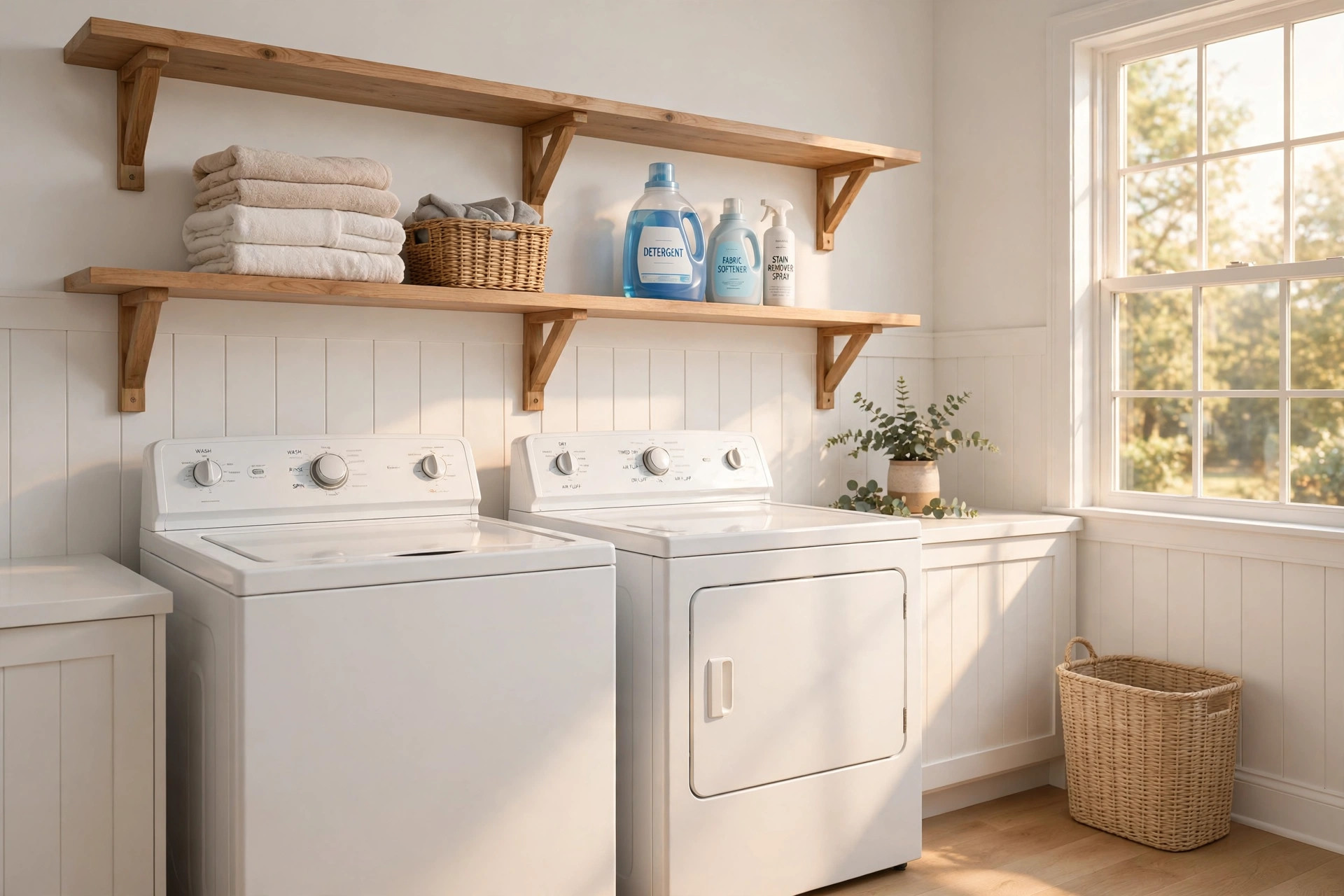
These are wood or melamine boards that sit on metal brackets. They give the room a clean, finished look. A set of two four foot shelves with brackets costs between forty and one hundred twenty dollars, depending on the board material. Solid pine costs more than particle board with a laminate face.
Wood shelves match home decor better than wire. They look warm and tidy. They need care in damp rooms though. Unsealed edges soak up water and swell. Choose sealed edges and wipe spills fast. For shoppers comparing heavy duty laundry room shelving buying guide options, bracket shelves with solid boards are a middle ground between cost and looks.
Freestanding Shelving Racks
A freestanding rack stands on its own feet. It does not need wall mounting. This helps renters, who often cannot drill into walls. A five tier plastic rack, about three feet wide, costs between thirty and eighty dollars. A metal garage style rack of the same size costs between one hundred and two hundred fifty dollars.
Freestanding racks are easy to move. You can pull the rack out to clean behind it. The trade is floor space. In a small laundry room, a rack that sits on the floor can block the path to the washer. Measure your floor space with care before you choose this type.
Cabinet Style Storage
Wall cabinets with doors cost the most. A single two door wall cabinet, about three feet wide, costs between eighty and two hundred fifty dollars. Full cabinet sets for a laundry room can run from three hundred to over one thousand dollars.
Cabinets hide clutter. The room looks neat even when the shelves behind the doors are full. They also keep dust off your supplies. But they cost more and take more time to install. They work best in larger laundry rooms or in homes where the room doubles as a mudroom.
Over the Washer and Dryer Shelves
Some shelves are made to fit in the gap between the top of the machines and the ceiling. These kits cost between fifty and one hundred eighty dollars. They often come with a work surface or a rod for hanging clothes. They are a smart buy for narrow rooms where the wall space is mostly above the machines.
Laundry Room Shelving Price Comparison USA: Real Numbers for 2026
The table below sums up the price ranges you will see at stores across the country this year. These are shelf prices only. They do not include installation.
| Shelving Type | Budget Range | Mid Range | High End | |—|—|—|—| | Wire shelf unit (freestanding) | $30 – $60 | $60 – $100 | $100 – $140 | | Wall-mounted wire shelf | $20 – $35 | $35 – $50 | $50 – $70 | | Bracket and board shelf (pair) | $40 – $60 | $60 – $90 | $90 – $120 | | Freestanding plastic rack | $30 – $50 | $50 – $70 | $70 – $90 | | Metal garage style rack | $100 – $150 | $150 – $200 | $200 – $250 | | Wall cabinet (single) | $80 – $120 | $120 – $180 | $180 – $250 | | Over machine shelf kit | $50 – $90 | $90 – $130 | $130 – $180 |
A full set of shelves for a normal size laundry room usually lands between one hundred fifty and four hundred dollars. A simple setup with two wire shelves and a small rack can cost under one hundred. A fully fitted room with cabinets and work surfaces can pass one thousand.
Prices shift with the store and the season. Big home improvement chains run sales in the spring and in January. Online stores compete hard on wire and plastic racks. Shoppers who watch for sales can save twenty to forty percent off the list price. Sites like The Home Depot and Wayfair list current prices side by side, which makes the laundry room shelving price comparison usa task much easier.
Why the Same Shelf Costs Different Amounts
Material is the main driver. Solid wood costs more than particle board. Stainless steel costs more than plain chrome. Coating adds cost too. A rust proof epoxy coating can add ten to twenty dollars to a wire shelf.
Brand name adds cost as well. Store brands cost less than name brands for the same size. The gap runs about fifteen to thirty percent. In many cases the store brand holds up just as well. Read the load rating and the warranty, not just the brand.
Shipping can change the real price. A heavy metal rack may ship free from one store and cost thirty dollars in freight from another. Bulk stores like Amazon list shipping at checkout, so compare the total, not just the shelf price. Always add tax and shipping before you decide which deal is best.
How to Choose the Right Shelves
Match the Shelf to the Load
Light loads suit most shelves. Detergent, dryer sheets, and spray bottles are light. Heavy loads need strong shelves. Cases of water softener, big jugs of bleach, and stacks of wet towels are heavy. If your shelf will hold more than fifty pounds per foot, step up to heavy duty brackets or a steel rack. Many buyers start with a pegboard wall organizers price comparison usa mindset and then find that solid shelves carry more weight for the same price.
Think About the Look
Open wire shelves look practical. Wood bracket shelves look warm. Cabinets look neat and finished. Pick the look that fits the rest of your home. If guests pass through the laundry room to reach the garage, a tidier look may matter to you. If the room is behind a closed door, function can come first.
Plan for Growth
Families grow. A shelf plan that just fits today will be too small in two years. Leave one empty shelf, or buy a unit with one more tier than you need. Modular systems from stores like IKEA and The Container Store let you add parts later. This costs a little more up front but saves a full rebuild down the road.
Check the Wall First
Not all walls hold shelves the same way. Drywall over wood studs holds the most weight. Concrete block holds well with the right anchors. Plaster walls in older homes need care when you drill. If your wall is hollow with no stud where you want the shelf, use toggle bolts or snap toggles. They grip the back of the drywall and spread the load. A shelf is only as strong as the wall that holds it.
Care and Upkeep
Shelves last longer with small, steady care. Wipe wire shelves with a damp cloth once a month. This stops dust and lint from building up. Dry the shelf after wiping. Standing water is the main cause of rust on coated wire.
Wood shelves need a check of the finish each year. Look for worn spots near the front edge where you grab items. Touch up worn spots with a coat of polyurethane or paint. This takes ten minutes and adds years to the shelf.
Tighten brackets and bolts once a year. The vibration of the washer can loosen wall anchors over time. A quick check with a screwdriver keeps shelves firm. If a shelf starts to pull away from the wall, stop loading it and re-anchor it right away.
Keep bleach and harsh cleaners off shelf surfaces. Bleach can eat through paint and coatings. If bleach spills, rinse the spot with water and dry it well. Store bleach in a tray so spills stay off the shelf.
Safety in the Laundry Room
Falling shelves hurt people. Anchor every wall shelf into studs or use proper wall anchors. Never guess. Use a stud finder, which costs about twenty dollars, to find the wood behind the drywall.
Keep heavy items low. Store the big detergent jug on the lowest shelf. Keep light items up high. This lowers the center of gravity and makes the shelf less likely to tip or pull out.
Do not overload. Every shelf has a load rating. Add up the weight of what you plan to store and stay under the rating.
Keep the path clear. Do not let baskets pile up under the shelves where people walk. A clear floor means fewer trips and falls, which matter in a room where floors can get wet.
For more home safety ideas, guides at Family Handyman and The Spruce walk through room by room checklists that include the laundry space.
Frequently Asked Questions
How much should I budget for laundry room shelving?
For a basic setup, plan on one hundred to two hundred dollars. This covers two to three wall shelves or one wire rack. For a full makeover with cabinets and work surfaces, plan on four hundred to one thousand dollars. Most American households land in the two hundred to four hundred dollar range.
Are wire shelves or wood shelves better for laundry rooms?
Wire shelves handle damp air better and cost less. Wood shelves look better and hide less dust. For heavy use, wire wins. For looks, wood wins. Many rooms use both. Wire goes near the washer where steam is worst. Wood goes on the far wall where looks matter more.
Can I install laundry room shelves myself?
Yes, in most cases. A pair of wall shelves takes about one to two hours with a drill, a level, and a stud finder. Freestanding racks need no tools at all. Wall cabinets take longer and may need two people. If your walls are plaster or brick, allow extra time for the right anchors.
How much weight can a laundry shelf hold?
It depends on the shelf and the wall. A standard wire shelf on brackets holds about twenty to thirty pounds per foot. Heavy duty bracket shelves hold forty to sixty pounds per foot. Steel racks hold one hundred fifty to three hundred pounds per shelf. Always check the rating on the box and stay under it.
Do I need rust proof shelves in the laundry room?
It helps. The air in a laundry room carries more moisture than most rooms. Coated wire, stainless steel, plastic, and sealed wood all stand up well. Plain unfinished steel will rust within a year or two.
Where can I find the best prices?
Compare at least three stores before you buy. Home improvement chains, online marketplaces, and warehouse clubs all carry the same popular models at different prices. Lowe’s and IKEA often price basic units low, while Apartment Therapy rounds up reader tested picks across stores. Shoppers who also compare floating shelves for living rooms price comparison usa styles often find that living room shelf lines sell cheaper for the same board size.
A Short Final Word
The laundry room shelving price comparison usa market gives you many choices at many prices. The right shelf is not always the cheapest or the priciest. It is the one that fits your wall, holds your load, stands up to damp air, and stays inside your budget.
References
Amazon. (n.d.). Online shopping. https://www.amazon.com Apartment Therapy. (n.d.). Home design ideas and inspiration. https://www.apartmenttherapy.com Family Handyman. (n.d.). DIY home repair and maintenance. https://www.familyhandyman.com IKEA. (n.d.). Home furnishings. https://www.ikea.com Lowe’s. (n.d.). Home improvement products. https://www.lowes.com The Container Store. (n.d.). Storage and organization products. https://www.containerstore.com The Home Depot. (n.d.). Home improvement products. https://www.homedepot.com The Spruce. (n.d.). Home and garden advice. https://www.thespruce.com Wayfair. (n.d.). Furniture and home goods. https://www.wayfair.com
Was this guide helpful?

About Lisa Anderson
The My Garden US editorial team writes practical, in-depth home and garden guides for American homeowners — tested advice, no fluff.