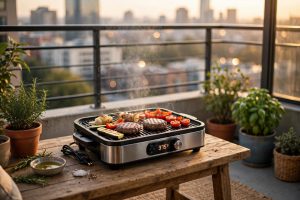

An outdoor griddle is a fine tool. It cooks breakfast, lunch, and dinner on one wide steel plate. But a griddle is only as good as its care. If you want to know how to clean outdoor griddle after cooking, you are asking the right question. A good cleaning habit keeps the surface smooth, stops rust, and protects the seasoning that gives food its rich flavor.
Many new owners scrub too hard, use soap at the wrong time, or leave the plate wet. These mistakes shorten the life of the griddle. The good news is that proper cleaning takes only a few minutes. It fits into your cooking routine as naturally as the cook itself.
This guide walks you through every step. It covers what tools to use, how to clean while the plate is still hot, and how to protect it between cooks. Follow these steps and your griddle will serve you well for many years.
Why Cleaning Matters
A flat top griddle is made of steel or cast iron. Both metals react with water and air. If food and grease sit on the plate, they turn into a hard crust. That crust burns into the surface during the next cook. It spoils the taste of food and makes sticking worse.
Regular cleaning also guards the seasoning. Seasoning is a thin layer of baked-on oil that makes the plate slick. A gentle clean after each cook keeps this layer intact. A harsh clean strips it away, and you must start over.
Rust is the worst enemy of a griddle. Even a thin film of rust spreads fast outdoors. A clean, oiled plate resists rust much better. So when you learn how to clean outdoor griddle after cooking, you are really learning how to protect your investment.
What You Need Before You Start: How to Clean Outdoor Griddle After Cooking
You do not need fancy gear. A small kit handles the job well.
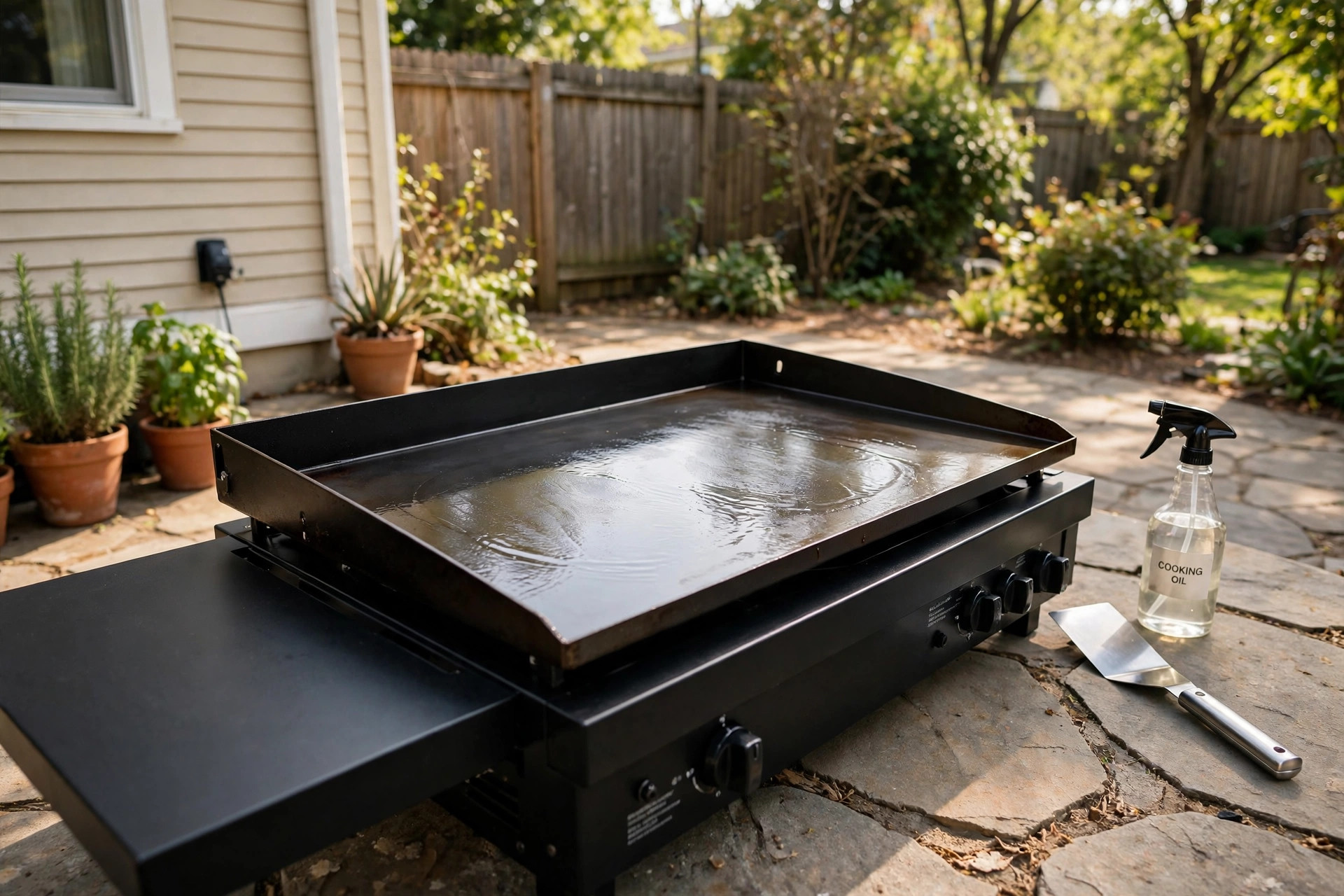
– A flat metal scraper or spatula – A stiff griddle brush or a stainless steel scouring pad – Paper towels or clean shop rags – A spray bottle of plain water – Cooking oil with a high smoke point, such as canola or avocado oil – Tongs for handling hot items
Keep these tools near the griddle. Proper storage of grilling tools keeps them dry and ready.
Avoid harsh oven cleaners and heavy soaps for routine cleaning. They eat into the seasoning. Plain water and heat do most of the work.
Step by Step: How to Clean Outdoor Griddle After Cooking
The best time to clean is right after cooking, while the plate is still hot. Do not wait until it cools. A hot plate releases stuck food much more easily.
Step 1: Scrape While Hot
Turn the burners off or to low. While the plate is still warm, use the flat metal scraper. Push all crumbs, bits of food, and loose grease toward the grease trap at the edge of the plate. Work from back to front in long strokes. Do not gouge the plate with sharp corners.
Step 2: Wipe With a Towel
Fold a few paper towels. Hold them with tongs so you do not burn your hand. Wipe the warm plate to lift the loose grease and fine crumbs. Throw the dirty towels away. Repeat until the plate looks mostly clear.
Step 3: Steam With Water
Fill the spray bottle with plain water. Spray a light mist over the warm plate. The water will hiss and steam. This steam lifts stuck spots without harsh scrubbing. Wait a few seconds, then scrape again with the flat tool. Wipe once more with fresh towels held in tongs.
For stubborn spots, add a second light mist. Never pour a large amount of cold water on a very hot plate. A sudden shock can warp the steel.
Step 4: Scrub Stuck Spots Gently
If dark spots remain, use the stiff griddle brush or scouring pad. Scrub only the spots, not the whole plate. Keep your strokes flat and even. The goal is to smooth the surface, not to dig into it. Most spots come off with light pressure and a little steam.
Step 5: Wipe Dry
Wipe the whole plate with dry towels until no moisture remains. This step is vital. Water left on steel causes rust spots fast, even overnight. Many owners skip this step and find orange spots in the morning.
Step 6: Apply a Thin Coat of Oil
Pour a small amount of cooking oil onto the warm plate. Spread it thin with a fresh paper towel. Cover the whole surface, edge to edge, including the sides of the plate. The layer should look like a thin shine, not a pool. Extra oil turns sticky and rancid.
Let the griddle cool with the lid open. Once cool, you may cover it. A fitted cover for outdoor cooking equipment keeps dust and rain off the plate.
How to Season Your Griddle
Cleaning and seasoning go hand in hand. Seasoning is what makes a steel griddle nonstick over time. If your plate is new, or if the seasoning looks dull and patchy, give it a fresh season.
1. Clean the plate well and dry it fully. 2. Apply a very thin coat of high-smoke-point oil. 3. Heat the griddle on medium-high for 10 to 15 minutes until the oil smokes lightly and bakes in. 4. Let it cool a little, then repeat the oil and heat two or three more times.
A well-seasoned plate turns dark brown or black.
Types of Outdoor Griddles
Not all griddles are the same. The cleaning steps above work for all types, but some details change.
Tabletop Griddles
These sit on a table or a tailgate. They are small and light. Their plates heat fast and cool fast, so clean them promptly. Their grease cups are small, so empty the cup after every cook.
Freestanding Griddles
These stand on their own legs with built-in shelves. They often have two to four burners. The plates are larger and hold heat longer, which gives you more time to clean. Check the grease trap each time. A full trap drips grease down the back of the unit.
Built-In Griddles
Some outdoor kitchen designs include a griddle as a permanent station. Cleaning is the same, but rust protection matters more. A built-in plate is harder to replace, so keep it oiled and covered.
Electric Griddles
A few outdoor griddles run on electricity. For these, unplug the unit before cleaning. Do not pour water over the electric parts. Use a damp cloth on the plate after it cools slightly, then dry and oil it.
Cost of Cleaning Supplies
A full starter kit costs less than a tank of propane. You will spend more on propane and food than on cleaning.
– Flat metal scraper: about 8 to 15 dollars – Griddle brush or scouring pads: about 6 to 12 dollars – Spray bottle: a few dollars – A bottle of canola oil: a few dollars and lasts many cleanings – Paper towels or shop rags: you likely own these already
You will spend more on propane and food than on cleaning. That is as it should be. A low-maintenance tool gets used more often. Many grill owners compare the running costs of outdoor cookers before they buy, and griddles rank well.
Common Cleaning Mistakes
Even careful owners make mistakes. Here are the most common ones and how to fix them.
Using Dish Soap Every Time
A little soap once in a while will not ruin a griddle. But daily soap baths strip seasoning. Stick to water, heat, and scraping for routine cleans.
Soaking the Plate
Never soak a griddle plate in water. Steel and cast iron rust fast when wet. Always dry the plate at once and oil it.
Cleaning Only When Cold
Cold grease is hard. It clings to the plate and needs heavy scrubbing. Clean while warm and the grease wipes away with ease.
Forgetting the Grease Trap
The grease trap fills up fast on a griddle. A full trap spills grease onto the ground or the deck. Empty it after every cook and wash it with warm soapy water. Grease buildup near a burner is a fire risk you can avoid with one small habit.
Scrubbing With a Wire Grill Brush
Wire brushes shed small bristles. On a flat plate they are not needed, and loose bristles can end up in food. Use a flat scraper and a scouring pad made for griddles.
Deep Cleaning a Neglected Griddle
Sometimes a griddle sits unused for months. Rust forms, and the plate looks ruined. It is usually not ruined. Here is how to bring it back.
1. Heat the griddle on medium for a few minutes to loosen the rust. 2. Scrub the rusty areas with a scouring pad and a little water. Work until the orange spots turn to bare metal. 3. Wipe clean and dry the plate fully. 4. Reseason the plate with three or four thin coats of oil, heating between coats.
For heavy rust, a paste of coarse salt and oil works as a mild abrasive. Rub it in circles with a cloth. Avoid power tools and harsh chemicals, which can damage the plate. Restoration tips from experienced cooks follow this same gentle path.
Once the plate is smooth and dark again, return to the normal after-cook routine. A rescued griddle can cook as well as a new one.
Caring for the Rest of the Unit
The plate is the star, but the rest of the griddle needs care too.
– Burners: Brush off crumbs and check that the flame burns even. Uneven heat often means a blocked burner. – Grease tray and cup: Wash with warm soapy water after each cook. – Frame and shelves: Wipe down with a damp cloth. Check for rust spots on legs and touch them up. – Propane hose: Look for cracks or wear once a season. – Cover: Use a fitted cover when the unit is cool. Keep the cover clean so it does not trap dirt against the plate.
A unit that is cleaned as a whole lasts longer and cooks more evenly. If you own several kinds of outdoor cookers, give each the same basic care.
Cooking and Cleaning Go Together
Smart cooks plan cleaning into the cook. They keep the scraper and water bottle within reach. They scrape between batches, such as between pancakes and bacon. This keeps flavors clean and cuts the final cleanup to minutes.
If you are new to flat top cooking, try some simple griddle recipes for beginners first. Easy meals mean less mess while you learn. Pair your griddle with the right flat top grill for your outdoor kitchen setup, and keep a few easy griddle recipes for newcomers on hand.
Storage and Seasonal Care
When grilling season ends, give the griddle a full clean and a slightly heavier oil coat. Cover it well. Store it in a dry spot if you can. Check on it once a month during winter. A quick wipe and a fresh oil film stop rust before it starts.
In spring, heat the griddle to burn off the storage oil, wipe it down, and apply a fresh thin coat. It will be ready for the first cookout of the year. This seasonal routine mirrors the care other outdoor cooking appliances need.
Safety Tips
Cleaning a hot plate brings heat, steam, and grease together. A few habits keep you safe.
– Wear heat-resistant gloves when working close to a hot plate. – Hold paper towels with tongs, not your fingers. – Keep water use light. Steam burns are real burns. – Let children and pets stay a few feet back during cleaning. – Make sure the grease trap is empty before you light the burners.
A griddle is simple, but it is still a cooking appliance. Treat it with the same respect you give any hot surface.
FAQ: How to Clean Outdoor Griddle After Cooking
Should I use soap to clean my griddle?
For daily cleaning, no. Water, heat, and a scraper do the job and protect the seasoning. You can use a little mild soap once in a while if the plate feels greasy or sticky. Rinse well, dry fully, and reapply oil.
Can I use a wire brush on a griddle?
A flat scraper and a scouring pad work better on a flat plate. Wire brushes can leave bristles behind, and they do not match the shape of the surface. Save the wire brush for grill grates.
How often should I reseason my griddle?
If you clean gently after each cook, a full reseason is rarely needed. Reseason when food starts sticking more than usual, or when the plate looks dull and patchy. Most owners reseason once or twice a year.
Is it okay to leave my griddle outside?
Yes, if it is covered and the plate is oiled. A fitted cover keeps rain off. Check the plate every few weeks in wet weather. An uncovered griddle rusts fast, even a good one.
What oil is best for a griddle?
Use a cooking oil with a high smoke point, such as canola, avocado, or grapeseed oil. These bake into a hard, slick seasoning. Avoid butter or olive oil for seasoning, since they burn at low heat and turn sticky.
How do I fix rust on my griddle?
Scrub the rust off with a scouring pad and a little water, dry the plate, and reseason it with thin coats of oil. Light rust comes off in minutes. Heavy rust takes more scrubbing, but the plate almost always recovers.
A Final Word
Learning how to clean outdoor griddle after cooking takes one cook to learn and a lifetime to enjoy. Scrape while hot. Steam with a little water. Dry the plate. Oil it thin. Cover it cool. These five habits keep the surface smooth, the seasoning strong, and the food tasting right.
A well-kept griddle rewards you every time you light it. Breakfast comes off clean. Burgers sear even. Cleanup takes minutes, not hours. Take care of the plate, and the plate will take care of your meals.
References
AmazingRibs.com. (n.d.). Barbecue and grilling science. https://www.amazingribs.com Big Green Egg. (n.d.). Kamado grills and outdoor cooking. https://www.biggreenegg.com Broil King. (n.d.). Gas and charcoal grills. https://www.broilkingbbq.com Char-Broil. (n.d.). Gas and charcoal grills. https://www.charbroil.com Consumer Reports. (n.d.). Product reviews and ratings. https://www.consumerreports.org Napoleon. (n.d.). Fireplaces, grills, and heating products. https://www.napoleon.com The Home Depot. (n.d.). Home improvement products. https://www.homedepot.com The Spruce Eats. (n.d.). Recipes and cooking guides. https://www.thespruceeats.com Weber. (n.d.). Grills and outdoor cooking. https://www.weber.com
Was this guide helpful?

About Sarah Mitchell
The My Garden US editorial team writes practical, in-depth home and garden guides for American homeowners — tested advice, no fluff.
You May Also Like
Outdoor Bar Sink for Grill Station: A Complete Buyer’s Guide
July 29, 2026 0 views
How to Season Cast Iron Grill Grates: A Plain, Step-by-Step Guide
May 13, 2026 0 views
Best Outdoor Paper Towel Holder for Grill: What to Buy and Why
September 13, 2026 0 views