Why Grow Garlic at Home
Few crops give so much for so little work. Garlic bulbs planting USA online deals make it cheap to start, and a handful of bulbs can turn into a full harvest of heads by summer. Garlic grows in a corner of a bed, asks for little water, and keeps well in the pantry for months. Many home gardeners find it one of the most rewarding plants they grow.
Fresh garlic tastes sharper and richer than store bulbs. Home-grown heads also come in types you will never find at the market: hardneck types with tall flower stalks, and softneck types that braid into neat ropes. A seed catalog will show more kinds than most gardeners have ever heard of.
Buying seed garlic online has made this crop open to everyone. A gardener in a city can order bulbs in fall and have them at the door in a few days. Online sellers list dozens of types with notes on flavor, size, and hardiness. Prices often drop in late fall when sellers clear stock. With care, you can find garlic bulbs planting USA online deals that cut the cost in half.
Hardneck and Softneck: The Two Main Types: Garlic Bulbs Planting Usa Online Deals
Hardneck Garlic
Hardneck garlic sends up a stiff flower stalk called a scape in early summer. Most growers cut it off so the plant puts energy into the bulb. The scapes are a treat in their own right: they taste like mild garlic and cook well in butter.
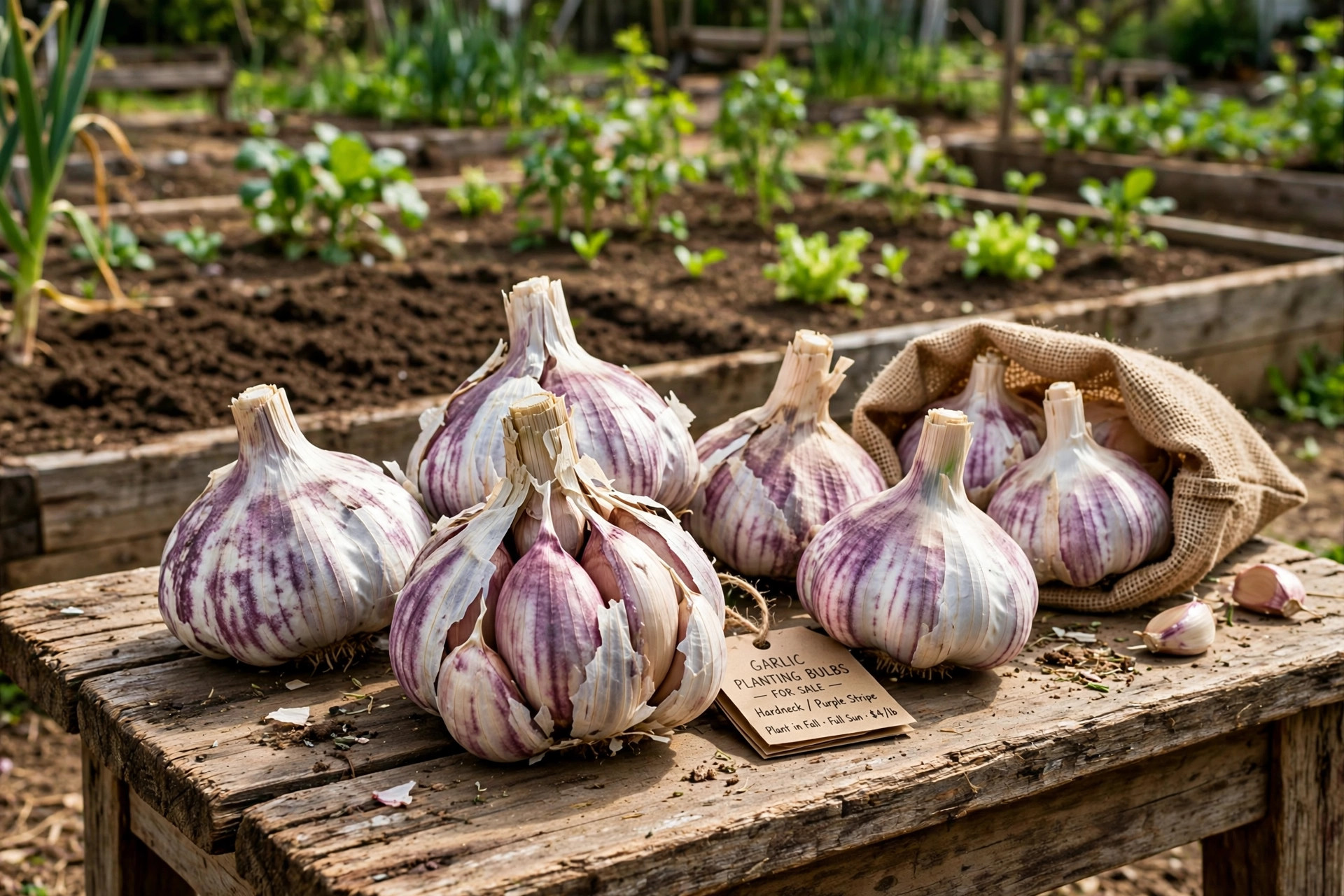
Hardneck types do best where winters are cold. They need a long chill to form full heads. Flavors run strong and rich. Cloves are few and large, which makes peeling easy. Storage is shorter than softneck. Most hardneck keeps four to six months in a cool, dry place.
Good choices for northern gardens include Music, German Extra Hardy, and Chesnok Red. These names turn up often in online shops that serve cold zones. If you live north of the Mason-Dixon line, hardneck is usually the safer pick.
Softneck Garlic
Softneck garlic has no stiff stalk. Its neck stays soft, so heads can be braided into strings that hang in the kitchen. Softneck does well in warm and mild winters. It is the type most often sold in stores.
Cloves run smaller and there are more of them in each head. Flavor is mild and steady. Storage is the great strength of softneck. Some heads keep ten months or more if stored well. For gardeners in the South and the warm West, softneck is the natural choice. Silverskin and Artichoke types are the common names to look for.
Elephant Garlic
Elephant garlic is not true garlic. It is a kind of leek. It grows huge cloves with a mild, sweet taste. It needs the same planting care as true garlic.
How to Choose the Right Bulbs
Buy Seed Garlic, Not Store Garlic
Store garlic is meant for cooking, not planting. It may carry disease. It may also come from a warm climate and grow poorly in your soil. Seed garlic sold for planting is checked for health and sized for strong growth. Always buy seed stock from a seller that grows or handles garlic for gardens.
Check the Bulb Size
Big bulbs hold big cloves, and big cloves grow into big heads. Sellers often sell by the pound or by the bulb. Price per bulb matters more than price per order.
Match the Type to Your Winter
Cold states need hardneck. Warm states need softneck. The middle zones can grow either. A seller in Maine knows hardneck. A seller in Texas knows softneck. Read the seller’s notes before you order. The USDA plant hardiness zone maps, discussed at length by the extension programs of the National Institute of Food and Agriculture, can help you pin down your zone if you are unsure.
Read the Fine Print on Deals
A low price can hide high shipping costs. Check the ship date too. Garlic must ship in fall, near planting time.
Look for sellers that list the harvest year. Fresh stock from the current year grows best. Also check reviews. A seller with many happy gardeners is safer than a seller with no track record.
Finding Garlic Bulbs Planting USA Online Deals
When to Shop
Fall is the season. Most sellers open orders in August and ship from late September to November. Early orders get the best choice of types. Late orders get the best prices, since sellers mark down what is left. If you know what you want, order early. If you hunt bargains, watch for sales in October and November.
Some sellers run clearance weeks after their main season ends. Sign up for a few mailing lists in summer. The Burpee seed catalog and similar large houses often post fall bulb sales to their lists first. Small farms do the same.
Where to Look
Large seed houses carry garlic each fall. Park Seed’s online store lists seed garlic alongside its famous flower and vegetable lines. Gurney’s, at gurneys.com, is another long-standing name with a fall garlic section. Both ship across the country and give clear planting notes.
White Flower Farm, known for fine plants at whiteflowerfarm.com, sometimes carries garlic and other edibles in its fall offerings. Monrovia, whose nursery plants are sold nationwide through monrovia.com, is a name many garden centers carry, and their retailer network can point you to local stock when online deals run dry.
Small garlic farms often give the best value. They sell what they grew, and they know each type well. Search for farms in your region. Shipping is shorter, and the garlic is already suited to your climate.
How to Compare Offers
Make a short list of what each seller offers: type, count, weight, price, shipping cost, and ship date. Add price and shipping together and divide by the number of bulbs. That gives the true cost per bulb. The cheapest sticker price is not always the cheapest deal.
Free shipping thresholds matter. If a seller gives free shipping over a set amount, it can pay to add extra seed stock to the same order. Fall bulbs ship together well.
Planting Garlic Step by Step
Pick the Right Time
Plant garlic four to six weeks before the ground freezes hard. In the North, that means late September or October. In the South, it may mean November or even December.
The Old Farmer’s Almanac, at almanac.com, posts planting calendars by zip code that many gardeners trust for timing. Local extension offices give the same advice free of charge.
Ready the Bed
Garlic likes full sun and loose soil. Work the bed eight to ten inches deep. Mix in two or three inches of compost or well-rotted manure. Garlic feeds well and grows poorly in packed, hungry soil.
Good drainage is a must. Garlic rots in wet ground. Raised beds work well where soil stays soggy. A soil test helps, but garlic is not fussy. A pH near neutral, between 6.0 and 7.0, suits it fine.
Plant the Cloves
Break each bulb into cloves just before planting. Plant each clove point up, two inches deep. Space cloves six inches apart in rows one foot apart. Water the bed well after planting.
Mulch for Winter
Cover the bed with four to six inches of straw or shredded leaves. Mulch keeps the soil from freezing and thawing in turns, which can push cloves out of the ground. It also stops weeds in spring. In mild climates, two to three inches is enough.
Care Through the Seasons
Water and Feed
Garlic needs steady water in spring while leaves grow. About an inch a week from rain or the hose is enough. Stop watering when the lower leaves start to yellow. Wet soil near harvest can stain the heads and invite rot.
Feed once in early spring. A balanced fertilizer or a side dressing of compost gives the plants what they need. Too much nitrogen late in the season grows leaves at the cost of bulbs. One feeding is enough for most soils.
Cut the Scapes
On hardneck types, cut the curly scapes when they make one full loop. Snap or cut them off near the top leaf. This sends the plant’s strength down into the bulb. Cook the scapes like green beans or chop them into butter. They keep a week in the fridge.
Watch for Weeds
Garlic hates weeds. Its roots are shallow, and weeds steal water and food. Hand weed often, but weed with care. A hoe can nick the bulbs. Mulch helps a great deal. Keep the mulch through spring and pull weeds as they show.
Gardening Know How, at gardeningknowhow.com, keeps plain guides on weed control and garlic pests that suit a home garden. The Spruce, at thespruce.com, also posts step-by-step garlic care notes with photos.
Harvest and Curing
Know When to Dig
Garlic is ready when the lower third of the leaves has turned brown but the top is still green. Dig a test bulb first. The head should feel full, with the cloves pressing against the skin. If you wait too long, the skins split and the heads store poorly.
Loosen the soil with a fork and lift the plants by hand. Do not pull hard. Bruised bulbs rot in storage.
Cure the Heads
Lay the plants in a shady, airy spot for two to four weeks. Keep rain off the curing garlic. When the necks feel dry and papery, trim the roots and cut the tops to an inch or two.
Store the cured heads in a cool, dry place with good air flow. Mesh bags work well.
Cost and Price Guide
Seed garlic costs more than eating garlic, but a little goes far. Expect to pay roughly eight to twenty dollars a pound from online sellers. A pound plants about twenty to thirty feet of row.
Shipping adds to the bill. Flat-rate shipping runs about ten to fifteen dollars from many sellers. Heavy orders cost more. Compare the full cost, not just the bulb price. Late-season garlic bulbs planting USA online deals can drop prices by a third or more, which makes a big order much cheaper.
Save your own seed to cut costs to zero. Keep the biggest heads from each harvest and plant their cloves in fall.
For a deeper look at buying seed stock, our garlic bulbs planting buying guide walks through seed grades and bulb counts in more detail.
Care and Upkeep of Stored Garlic
Store cured garlic at 60 to 65 degrees with low humidity. A pantry shelf or a cool closet works. Do not store garlic in the fridge. Cold and damp cause sprouting and mold. Keep heads whole until you need them. A broken head dries out fast.
Check stored garlic once a month. Use any soft or sprouting heads first. Properly cured softneck can last into the next summer. Hardneck should be used or planted by midwinter.
Safety in the Garden
Garlic is safe to handle and safe to eat in normal amounts. A few points still matter.
Wash your hands after working with soil and compost. Soil can hold germs that cause illness. Wear gloves if you have cuts on your hands.
Some people get skin rashes from handling large amounts of garlic. This is rare in home gardens. If your skin reddens, wear gloves while planting.
Keep garlic plantings away from dogs that dig. Large amounts of garlic can harm dogs if eaten. A simple low fence or a raised bed keeps pets out.
Tools should be clean and sharp. Clean tools between beds to stop the spread of soil disease.
Frequently Asked Questions
Can I plant garlic from the grocery store?
It is possible, but it is not the best plan. Store garlic may carry disease, and it may be a type that grows poorly in your climate. Seed garlic from a garden seller is checked for health and matched to growing zones. For the small extra cost, seed stock gives far better results.
How many garlic bulbs should I order?
A pound of seed garlic plants about twenty to thirty feet of row. A family of four that cooks often may want two to three pounds.
What is the difference between seed garlic and regular garlic?
Seed garlic is grown and handled for planting. It is graded for size, checked for disease, and sold with the type name and growing notes. Regular garlic is grown for eating. It may be sprayed to stop sprouting, which also stops good growth in the garden.
When do online garlic deals appear?
The best garlic bulbs planting USA online deals show up in two waves. Early-bird sales run in late summer with the best choice of types. Clearance sales run in October and November when sellers mark down leftovers. Sign up for seller mailing lists to hear about both.
Can I grow garlic in pots?
Yes. Use a pot at least eight inches deep and twelve inches wide. Fill it with good potting soil mixed with compost. Plant three or four cloves per pot, spaced well apart. Water through fall and spring, and move pots to a sheltered spot in very cold winters.
How do I know my garlic is cured?
The neck should feel dry and stiff, and the outer skins should rustle like paper. Cut a head open if you are unsure. The cloves should feel firm and the center should show no dampness. When in doubt, give it another week in the airy shade.
A Final Word
Garlic asks little and gives much. A fall afternoon of planting turns into a summer harvest of full, fragrant heads. Shopping for garlic bulbs planting USA online deals makes the start easy and cheap. Pick the right type for your winter, plant at the right time, mulch well, and let the cold do its quiet work.
Start with a pound or two of a type suited to your zone. Save your best heads for seed. In a few years you will have garlic perfectly at home in your soil, and you will wonder why you ever bought it at the store. For more on fall planting plans, see our notes on fall tulip bulbs and dahlia bulbs in bulk, which ship in the same season and round out a full garden order. For the kitchen garden, onion sets for planting pair well with garlic in the same fall order.
References
Burpee. (n.d.). Seeds, plants, and gardening supplies. https://www.burpee.com Gardening Know How. (n.d.). Gardening guides and plant care. https://www.gardeningknowhow.com Gurney’s Seed & Nursery Co. (n.d.). Seeds, plants, and garden supplies. https://www.gurneys.com Monrovia. (n.d.). Plants for home gardens. https://www.monrovia.com National Institute of Food and Agriculture. (n.d.). Food and agriculture research. https://nifa.usda.gov Park Seed. (n.d.). Seeds, plants, and gardening supplies. https://www.parkseed.com The Old Farmer’s Almanac. (n.d.). Gardening calendars and advice. https://www.almanac.com The Spruce. (n.d.). Home and garden advice. https://www.thespruce.com White Flower Farm. (n.d.). Plants, bulbs, and garden supplies. https://www.whiteflowerfarm.com
Was this guide helpful?

About James Carter
The My Garden US editorial team writes practical, in-depth home and garden guides for American homeowners — tested advice, no fluff.