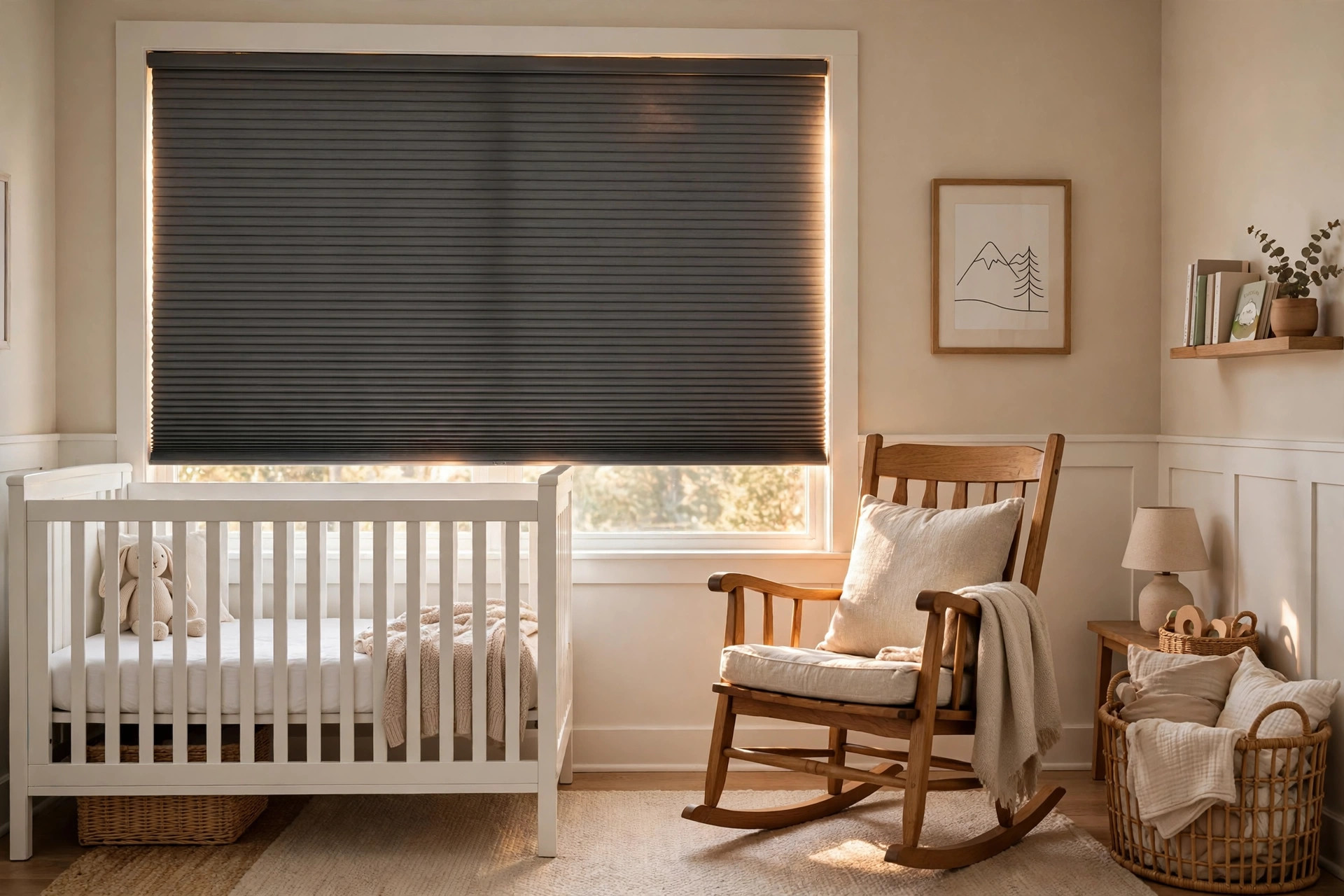

A good nap is worth its weight in gold to a new parent. Many Colorado families find that one of the best ways to help a baby sleep well during the day is to buy nursery room darkening shades online in colorado and fit them before the little one comes home. Light is a strong signal to a baby’s body. When the room is dark, the brain sends out the sleep hormone melatonin, and the baby falls asleep more easily and stays asleep longer.
Online shopping makes this job easy. You can compare styles, read reviews from other parents, and have the shades sent straight to your door in Denver, Boulder, Colorado Springs, or a small mountain town. This guide walks you through why these shades matter, what to look for, the types on the market, what they cost, how to care for them, and how to keep them safe around children. It also answers common questions parents ask.
Why Darkening Shades Matter in a Nursery
Babies sleep in short cycles. Even small amounts of light can wake them between cycles. A room that looks dim to an adult may still let in enough light to disturb an infant. Room-darkening shades block most of the incoming light and create a sleep-friendly space at any hour.
Colorado adds its own reasons. The state enjoys more than 300 days of sunshine a year. That is a gift for hikers and skiers, but it means bright morning sun and long summer evenings in the nursery. At high altitude, the sun feels even stronger. Many homes also have large picture windows to take in the mountain views. A darkening shade tames all that light without giving up the view when you want it.
Temperature is another factor. West-facing windows can turn a nursery into a warm box on a summer afternoon. Darkening and blackout shades often add a layer of insulation that keeps heat out in July and keeps warmth in during January nights. This steadier room temperature helps a baby sleep through.
How to Choose: What to Look For: Buy Nursery Room Darkening Shades Online in Colorado
Light Blocking Level
Shades come in different levels of light control. Light-filtering shades soften the sun but still let a glow through. Room-darkening shades block 95 to 99 percent of light. Blackout shades block nearly all of it. For a nursery, most sleep experts suggest room-darkening or full blackout. When you buy nursery room darkening shades online in colorado, read the product details and look for a stated light-blocking percentage rather than a vague promise.
Cordless Operation
This is the single most important safety feature in a nursery. Cords and loops are a serious strangulation hazard for small children. Choose cordless shades or motorized shades that raise and lower with a push or a remote. Federal safety guidance from the U.S. Consumer Product Safety Commission urges parents to use cordless window coverings in homes with young children. Many online stores now make cordless the standard, not an upgrade.
Fabric and Material
Cellular (honeycomb) shades trap air in their cells and give good insulation. Roller shades give a clean look and roll up small when you want daylight. Roman shades bring a soft, tailored style. For light control, a darker fabric or a fabric with a light-blocking liner works best. Light-colored shades with a blackout lining can darken the room while still looking airy. Look for fabrics labeled GREENGUARD or free of PVC if low emissions matter to you.
Size and Fit
Inside-mount shades fit within the window frame and give a neat look. Outside-mount shades cover the trim and block more light at the edges. For a nursery, outside mounting often wins, because light leaking around the edges can still wake a light sleeper. Measure every window at the top, middle, and bottom, and use the smallest width for inside mounts. Online retailers offer clear measuring guides and printable templates.
Ease of Cleaning
Nurseries see their share of dust, spit-up, and sticky fingers. Choose fabrics that wipe clean with a damp cloth. Avoid shades with deep pleats that collect dust if you want low upkeep. Many parents also like shades that can be removed from their brackets for a deeper wash.
Types of Nursery Darkening Shades
Cellular (honeycomb) blackout shades. The top pick for many Colorado parents. The honeycomb shape traps air, which helps with the cold nights in the mountains and the hot afternoons on the plains. Cordless versions are common, and the soft pleats look warm and friendly in a nursery.
Blackout roller shades. Simple, tidy, and often the cheapest option. A single sheet of fabric rolls down from a slim tube. Pair one with a valance or side channels to cut the last bit of light at the edges. These work well if you like a modern, clean nursery style.
Roman blackout shades. A fabric shade with a bonded blackout liner folds into soft horizontal pleats when raised. They look beautiful in a classic nursery. Make sure to order cordless or motorized operation, since older Roman styles used cords.
Layered options. Some parents pair a darkening roller shade with light curtains on top. The curtains add style and a little extra darkness, while the shade does the heavy lifting. This is also a good way to soften the look of a very plain blackout roller.
Portable and temporary shades. If you live in a rental in Fort Collins or Aurora, suction-cup or adhesive blackout panels can darken the windows without drilling. They are cheap and easy to move, though they rarely look as neat as fitted shades.
Parents comparing styles may also find it useful to look at top rated blackout curtains for bedrooms for sale for layering ideas, or to check a blackout roller shades price comparison usa before deciding between roller and cellular types. Cordless fans often like to review top rated cordless cellular shades for american homes as well.
Cost and Price: What to Expect
Prices vary with size, fabric, and brand, but the ranges below give a fair picture of the U.S. online market in 2026.
– Budget roller blackout shades: about $25 to $60 per window. Big-box retailers such as The Home Depot and Lowe’s sell ready-made sizes that fit standard windows. – Cordless cellular blackout shades: about $50 to $120 per window for standard sizes. Custom sizes cost more. – Made-to-measure Roman blackout shades: about $100 to $250 per window. – Motorized blackout shades: about $150 to $400 per window, plus any smart-home hub you may need.
Shipping to Colorado is usually free or low-cost from major online stores. Many retailers, including Wayfair and Blinds.com, ship to the whole state, though delivery to high mountain towns can take a few extra days. Watch for sales around Memorial Day, Labor Day, and Black Friday, when window coverings are often 20 to 40 percent off.
Budget Tips
Start with the windows that matter most, usually the one nearest the crib. One well-fitted shade beats three cheap ones that leak light at the edges. If money is tight, a temporary blackout panel can cover the second window until the budget allows a fitted shade. Buying all shades for the nursery from one store can also unlock a multi-window discount.
Installation: DIY or Pro?
Most online shades are made for do-it-yourself fitting. A cordless roller or cellular shade usually needs only a drill, a level, and about 20 minutes per window. Brackets snap in, and the shade clicks into place. Online stores post video guides that walk you through each step.
You may want a pro if your windows are arched, very tall, or set in stone or concrete walls common in older Denver homes. Many stores offer a measure-and-install service for a flat fee. When in doubt, ask the retailer’s chat line before you order. A wrong measurement is the most common cause of a return.
A Note on Rentals
Colorado renters can ask their landlord before drilling. Many landlords agree to small bracket holes. If not, tension-rod or adhesive options keep the walls untouched. Keep the original blinds or shades that came with the rental so you can put them back when you move out.
Care and Upkeep
Dust the shades once a week with a microfiber cloth or the brush head of a vacuum. Wipe spots with a damp cloth and a mild soap, then let the fabric dry fully before rolling it up. Never soak a cellular shade, since trapped water can leave marks. For fabric shades, a lint roller picks up pet hair and fuzz fast.
Check the brackets and the raise-lower mechanism twice a year. Tighten any loose screws. If a cordless shade stops holding its position, most brands let you reset the spring by raising and lowering it fully a few times. Keep the instruction sheet that comes in the box, since each brand resets a little differently.
In Colorado’s dry climate, static dust builds up quickly. Running a room humidifier in winter can cut dust and also keeps the nursery air more comfortable for a baby’s nose. Just keep the humidifier away from the window so moisture does not settle on the shade fabric.
Safety in the Nursery
Safety comes before style in a nursery, and window coverings are one area where the rules are clear.
1. Go cordless. No cords, no loops, no beaded chains within a child’s reach. This is the advice of the U.S. Consumer Product Safety Commission and of every major child-safety group. 2. Mount firmly. Use the screws and wall anchors supplied. A shade that falls is a hazard in itself. 3. Keep the crib away from the window. Place the crib on an inside wall. This keeps little hands off the shade and also avoids drafts and direct sun on the baby. 4. Check for small parts. Some shades ship with cord cleats, plastic clips, or remote controls. Keep these out of reach. 5. Watch the temperature. Dark shades absorb heat. On a hot Colorado afternoon, make sure the nursery does not overheat. A simple room thermometer takes the guesswork out.
Parents who want design ideas alongside safety notes can browse nursery looks at IKEA and Pottery Barn, and read room-by-room guides at The Spruce and HGTV. For independent test results on shades and fabrics, Consumer Reports is a solid source.
Shopping Online: A Step-by-Step Plan
1. Measure each nursery window. Record width and height in inches. Note whether you want an inside or outside mount. 2. Pick your type. Cellular for insulation, roller for value, Roman for style. 3. Filter for cordless. Use the store’s filter tools to show only cordless or motorized shades. 4. Read parent reviews. Look for reviews that mention a nursery, a baby, or light blocking at nap time. Photos from buyers are gold. 5. Order samples. Many stores mail free fabric swatches. Hold them up to a bright window to test darkness before you commit. 6. Check the return policy. A good store gives at least 30 days. Custom sizes are often final sale, so measure twice. 7. Install and test. Fit the shades, then sit in the room at midday with the lights off. If you see light leaking, add side channels or a second layer.
FAQ
How dark should a nursery be for naps? Aim for a room dark enough that you can barely see your hand at arm’s length. You do not need total pitch black, but the darker the room, the easier it is for a baby to link sleep cycles. Room-darkening or blackout shades get you there.
Are blackout shades safe for babies? Yes, as long as they are cordless and mounted firmly. Choose low-emission fabrics, keep the crib away from the window, and make sure the room stays at a safe temperature. Dark fabrics absorb heat, so check the room on sunny afternoons.
What is the difference between room-darkening and blackout shades? Room-darkening shades block about 95 to 99 percent of light. Blackout shades block nearly 100 percent. For most nurseries, either one works well. True blackout is best for very light sleepers or rooms with streetlights outside.
Can I install the shades myself? In most cases, yes. Standard shades need only basic tools and under half an hour per window. Custom shapes, very large windows, or stone walls may call for a professional installer.
How long does shipping to Colorado take? Ready-made shades usually arrive in 3 to 7 business days. Custom-made shades take 2 to 4 weeks, plus shipping. Mountain addresses may add a few days. Order early if the baby is due soon.
Do darkening shades help with heat as well as light? Yes. Cellular shades in particular add insulation that can lower heat gain in summer and heat loss in winter. This is a real plus in Colorado, where day-night temperature swings are large.
A Short Final Word
A dark, calm nursery is one of the kindest gifts you can give a tired baby and a tired parent. When you buy nursery room darkening shades online in colorado, take your time with the measurements, choose cordless for safety, and pick a fabric that suits your home and your budget. The sun will keep shining over the Rockies. With the right shades, your little one can sleep right through it.
References
Blinds.com. (n.d.). Window blinds, shades, and shutters. https://www.blinds.com Consumer Reports. (n.d.). Product reviews and ratings. https://www.consumerreports.org HGTV. (n.d.). Home and garden ideas. https://www.hgtv.com IKEA. (n.d.). Home furnishings. https://www.ikea.com Lowe’s. (n.d.). Home improvement products. https://www.lowes.com Pottery Barn. (n.d.). Furniture and home decor. https://www.potterybarn.com The Home Depot. (n.d.). Home improvement products. https://www.homedepot.com The Spruce. (n.d.). Home and garden advice. https://www.thespruce.com U.S. Consumer Product Safety Commission. (n.d.). Product safety information. https://www.cpsc.gov Wayfair. (n.d.). Furniture and home goods. https://www.wayfair.com
Was this guide helpful?

About Lisa Anderson
The My Garden US editorial team writes practical, in-depth home and garden guides for American homeowners — tested advice, no fluff.
You May Also Like
Thermal Sheer Voile Panels With Free Shipping: A Plain Buying Guide
March 1, 2026 0 views
How to Choose Thermal Window Film Privacy Tint with Free Shipping
April 7, 2026 0 views
Thermal Shutter Installation Services for Homeowners: A Plain Guide
September 20, 2026 0 views