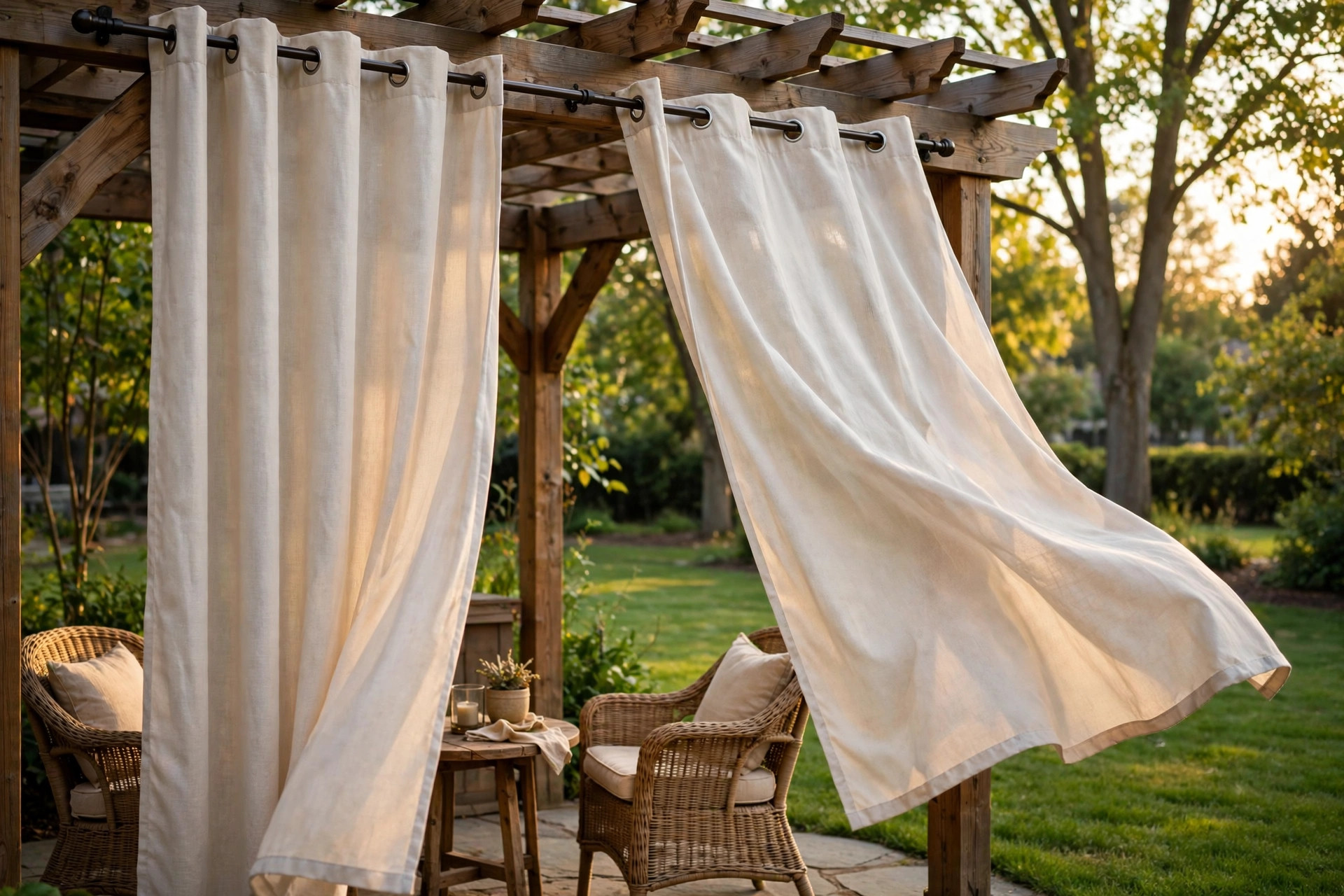

This outdoor patio curtains reviews and buying guide will help you shop with confidence. A good set of outdoor curtains can turn a plain patio into a room that feels private, cool, and finished. Many homeowners in the United States now treat the patio as a second living room, and curtains are one of the simplest ways to dress it up. They add shade, block the view of neighbors, and soften wind. The market is full of choices, from cheap polyester panels to heavy canvas curtains made for hotels. This guide sorts through the options so you know what to look for, what to avoid, and what a fair price looks like.
Why Outdoor Patio Curtains Matter
An open patio is nice on a mild day, but most yards are too bright, too windy, or too exposed to enjoy for long. Curtains fix all three problems at once. A panel hung across one side of a pergola can cut the afternoon sun and lower the temperature under the roof by several degrees. On a windy porch, the same panel steadies the air enough that napkins stay on the table. In a neighborhood where houses sit close together, curtains give you a soft screen that keeps the neighbors from watching dinner.
There is also a simple design reason. Bare posts and railings can look plain. Fabric adds color, texture, and movement. Even one pair of panels tied back at the corners of a deck makes the space feel planned. Real estate agents in many parts of the country note that a staged outdoor room helps a home photograph well, and curtains are an easy part of that look.
For renters, outdoor curtains are a gift. They hang from a rod or a wire and leave no marks, so you can take them down when you move. Compared with a fixed awning or a new fence, they cost very little. If you are still deciding which set to order, read a few outdoor patio curtains reviews and compare fabrics before you spend your money.
Types of Outdoor Patio Curtains: Outdoor Patio Curtains Reviews and Buying Guide
Most outdoor curtains fall into a few clear groups. Knowing the groups helps you read product reviews with a sharp eye.
Sheer voile panels. These are light, thin panels that let air and light pass through. They are made for looks more than for shade. They billow nicely in a breeze and work well on porches that already have a roof. They do not block much sun and they tear more easily than heavier fabrics.
Solid polyester panels. This is the most common type sold in stores. The panels are opaque, keep the sun out, and dry fast after rain. Many are treated with a water-resistant coating. They are the cheapest choice and they come in many colors.
Canvas and cotton duck panels. Heavy cotton canvas has a classic, natural look. It drapes well and feels like real fabric instead of plastic. It is not water proof by nature, so it must be treated or brought in during storms. It is also heavier to hang and slower to dry.
Solution-dyed acrylic panels. This is the premium fabric, sold under brand names like Sunbrella and others. The color is dyed through the fiber, so it resists fading in strong sun for years. These panels handle rain, mildew, and washing better than most. They cost the most, but they last the longest.
Mesh or privacy-screen panels. These look like fine netting. They block the view and some sun while letting air move through. They are popular for Florida and Gulf Coast homes where heat is the main problem and air flow must continue.
Tab-top, grommet, and rod-pocket styles. This refers to how the panel hangs. Grommet tops slide easily and look modern. Rod pockets give a soft gathered look. Tab tops look casual. For a windy spot, grommet panels with a heavy bottom hem stay in place best.
How to Choose: What to Look For
A good review should answer the same questions you would ask in a store. Use this list when you read outdoor patio curtains reviews and when you shop in person.
Fabric weight and denier. Look for the fabric weight in the listing. Light fabrics blow hard in wind and need tie-backs. Heavier fabrics hang straighter. A tight weave blocks more light. If a listing never names the fabric, that is a warning sign.
UV and fade rating. Sun is the hardest thing on outdoor fabric. Better brands publish a UV rating or state that the fabric is solution-dyed. Plain polyester fades in one or two summers. Acrylic fabric keeps its color for five years or more. If your patio faces west or south, fade resistance should be near the top of your list.
Water resistance. Outdoor panels should shed light rain and dry fast. Many polyester panels have a coating for this. Canvas panels often do not. Check whether the listing says water resistant, water repellent, or waterproof. These words mean different things. Waterproof panels keep heavy rain out; water resistant panels handle mist and light showers.
Mildew treatment. Any fabric left damp will grow mildew. Better panels are treated to resist it. Even with treatment, you must let panels dry after storms. Panels that stay wet under a covered porch are the most likely to mildew.
Size and length. Measure from your rod to the ground or deck before you order. Most panels come in 84-inch or 108-inch lengths. For a patio, floor-grazing panels look best, but they will pick up dirt and splash. A length that stops one or two inches above the deck is easier to keep clean. For width, plan on one and a half to two times the width of the opening for a full, gathered look.
Hardware and hanging. Check what the panels need. A ceiling-mounted track gives the smoothest pull. A tension rod or a cable wire works for renters. Make sure the header style matches your rod. Also check the weight rating of your rod or track, since wet panels are much heavier than dry ones.
Color and light. Dark panels block more sun and look rich, but they absorb heat and show dust. Light panels reflect heat and look fresh, but they show mildew stains more. Neutral shades like ivory, sand, and gray go with most furniture. Bright colors can be fun but fade faster.
Care needs. Read the washing directions before you buy. Many polyester panels can go in the washing machine on gentle. Canvas and acrylic panels often need a hose and mild soap. If you do not want to take panels down each season, pick a fabric that washes easily.
Fabric Guide at a Glance
When you compare outdoor patio curtains reviews side by side, the fabric is the fact that matters most. Here is a short guide to the common choices.
Polyester is the workhorse. It is cheap, strong, and quick to dry. Coated polyester sheds rain well. Its weak points are fading and a somewhat shiny, plastic look.
Solution-dyed acrylic is the top pick for sunny climates. The color goes all the way through the fiber, so it resists fading far better than surface-dyed cloth. It costs two to four times as much as polyester, but it can last five to eight seasons.
Cotton canvas is the natural choice. It looks and feels like real fabric, and it drapes in soft folds. It is not naturally water resistant, and it can mildew if it stays damp. Treated canvas does better.
Sheer polyester voile is for decoration. It softens the space and moves in the breeze, but it gives little shade and tears in strong wind.
Cost and Price
Prices vary widely, and reviews help you see what each price level buys. The ranges below are typical for United States stores in 2026.
Budget, under twenty dollars per panel. Thin polyester panels in standard sizes. They work for one season and fade fast. Fine for a party or a test run. Many shoppers who want affordable panels with free shipping start here.
Mid-range, twenty to sixty dollars per panel. Better polyester with coatings, thicker weave, and nicer hems. Most homeowners buy here. A set of four to six panels for a pergola runs about one hundred to three hundred dollars.
Premium, sixty to one hundred fifty dollars per panel. Solution-dyed acrylic or heavy treated canvas. Fade resistance and mildew treatment are much better. A full patio set can cost three hundred to seven hundred dollars, but the panels last years longer.
Hardware. Do not forget the rod or track. A basic tension rod costs under twenty dollars. A ceiling track kit for a pergola runs thirty to eighty dollars. Stainless steel hardware costs more but will not rust.
A fair rule is to spend more on fabric for south- and west-facing patios, where sun damage is worst, and less for covered porches that see little direct sun.
Where to Shop
Most shoppers buy online because the color choice is wider. Big home stores carry the common sizes in stock, which lets you see the fabric in person. Read both the star rating and the written reviews, with extra weight on reviews from buyers in hot, sunny states. You can browse current options at Home Depot, Lowe’s, Wayfair, Overstock, and IKEA. Sunbrella publishes fabric facts for its acrylic cloth, Frontgate sells premium outdoor panels, and Blinds.com carries custom sizes. For design ideas, HGTV and The Spruce both run patio and porch guides.
Care and Upkeep
Outdoor curtains last longer with a little care. Brush off dust and pollen once a month with a soft broom. After rain, spread the panels so they dry fully. Do not leave them bunched and wet for days, since mildew starts fast in that state.
Wash panels at least once a season. Most polyester panels can go in the machine on a gentle cycle with mild soap, then air dry. Never put them in a hot dryer, since heat can warp the coating. For acrylic and canvas, hose them down, scrub lightly with a soft brush and mild soap, rinse well, and hang to dry in the sun. Bleach is not safe for most outdoor fabrics; it breaks down the water-resistant coating.
Take panels down before a storm with high winds. A wet panel in a gust can pull a rod right out of its brackets. In winter, store panels in a dry bag or bin. Many homeowners in the North bring panels inside from late fall to early spring. In warm states, panels can stay up year round, but give them a deep wash in spring.
If mildew spots appear, treat them early. A mix of water and white vinegar, or a cleaner made for outdoor fabric, removes light spots. Rinse well and dry in the sun. Deep-set mildew that has been there for months may not come out, so early care matters.
Safety
Safety gets less attention than it should in outdoor patio curtains reviews, so this section covers it directly.
Fire. Keep curtains away from grills, fire pits, tiki torches, and heaters. Most outdoor fabrics are not fire proof. Leave at least three feet of space between a panel and any open flame. Never hang curtains directly above a grill.
Wind. A sudden gust can turn a long panel into a sail. Use tie-backs on windy days. Make sure rods and brackets are rated for the weight of wet panels, which can weigh twice as much as dry ones. The Consumer Product Safety Commission publishes general guidance on safe outdoor products and recalls.
Cords and children. If your panels hang from cords or chains, keep them out of the reach of small children. Use cord cleats to wrap up long cords. This is the same rule used for indoor blinds and shades.
Mold and health. Mildewed panels can bother people with allergies. Wash panels at the first sign of spots and let them dry in full sun.
Frequently Asked Questions
Do outdoor patio curtains really block the sun? Yes, if you pick an opaque fabric. Solid polyester and canvas panels block most direct sun and lower the heat under a pergola. Sheer panels give shade only in a light sense. For real cooling, choose a dark or medium opaque panel.
Can outdoor curtains stay out in the rain? They can, but they do best with limits. Water-resistant polyester dries fast and handles rain well. Canvas should come in during heavy storms. No fabric should stay bunched and wet for days. After rain, open the panels so air reaches both sides.
How long do outdoor patio curtains last? Budget polyester lasts one to three seasons. Mid-range coated polyester lasts three to five. Premium acrylic lasts five to eight or more. Sun exposure is the main factor. A panel on a shaded north porch lasts much longer than the same panel in full south sun.
What size should I buy for a pergola? Measure the width of each open side, then multiply by one and a half to two for fullness. Measure from the mounting point to the deck for length. Most buyers choose panels that end one to two inches above the deck to stay clean.
Are outdoor curtains worth the money compared to a shade sail? They serve different needs. A shade sail blocks sun from above at a lower cost. Curtains block sun from the side and add privacy and style. Many homeowners use both: a sail or roof for the top, and curtains on one or two sides.
Can I use indoor curtains outside? It is not a good idea. Indoor fabrics are not treated for sun, rain, or mildew. They fade in weeks and mildew in damp weather. True outdoor panels cost a little more but last far longer.
A Short Final Word
The best outdoor patio curtains are the ones that match your sun, your wind, and your habits. A shaded porch needs only light panels for looks. A sunny, windy deck needs heavy, fade-proof fabric and strong hardware. Read reviews with the checklist in this guide in mind, measure twice, and buy a fabric you are willing to wash once a season. Do that, and your patio will feel like a room you actually want to live in.
References
Blinds.com. (n.d.). Window blinds, shades, and shutters. https://www.blinds.com Frontgate. (n.d.). Outdoor furniture and decor. https://www.frontgate.com HGTV. (n.d.). Home and garden ideas. https://www.hgtv.com IKEA. (n.d.). Home furnishings. https://www.ikea.com Lowe’s. (n.d.). Home improvement products. https://www.lowes.com Overstock. (n.d.). Furniture and home decor. https://www.overstock.com Sunbrella. (n.d.). Performance outdoor fabrics. https://www.sunbrella.com The Home Depot. (n.d.). Home improvement products. https://www.homedepot.com The Spruce. (n.d.). Home and garden advice. https://www.thespruce.com U.S. Consumer Product Safety Commission. (n.d.). Product safety information. https://www.cpsc.gov Wayfair. (n.d.). Furniture and home goods. https://www.wayfair.com
Was this guide helpful?

About Lisa Anderson
The My Garden US editorial team writes practical, in-depth home and garden guides for American homeowners — tested advice, no fluff.
You May Also Like
Machine Washable Window Treatment Installation Services Near Me: A Homeowner’s Guide
March 1, 2026 0 views
Luxury Bay Window Curtain Rods Buying Guide
August 4, 2026 0 views
Light Filtering Roller Shades Price Comparison USA: A Full Guide to Costs, Types, and Smart Buying
July 9, 2026 0 views