
Introduction
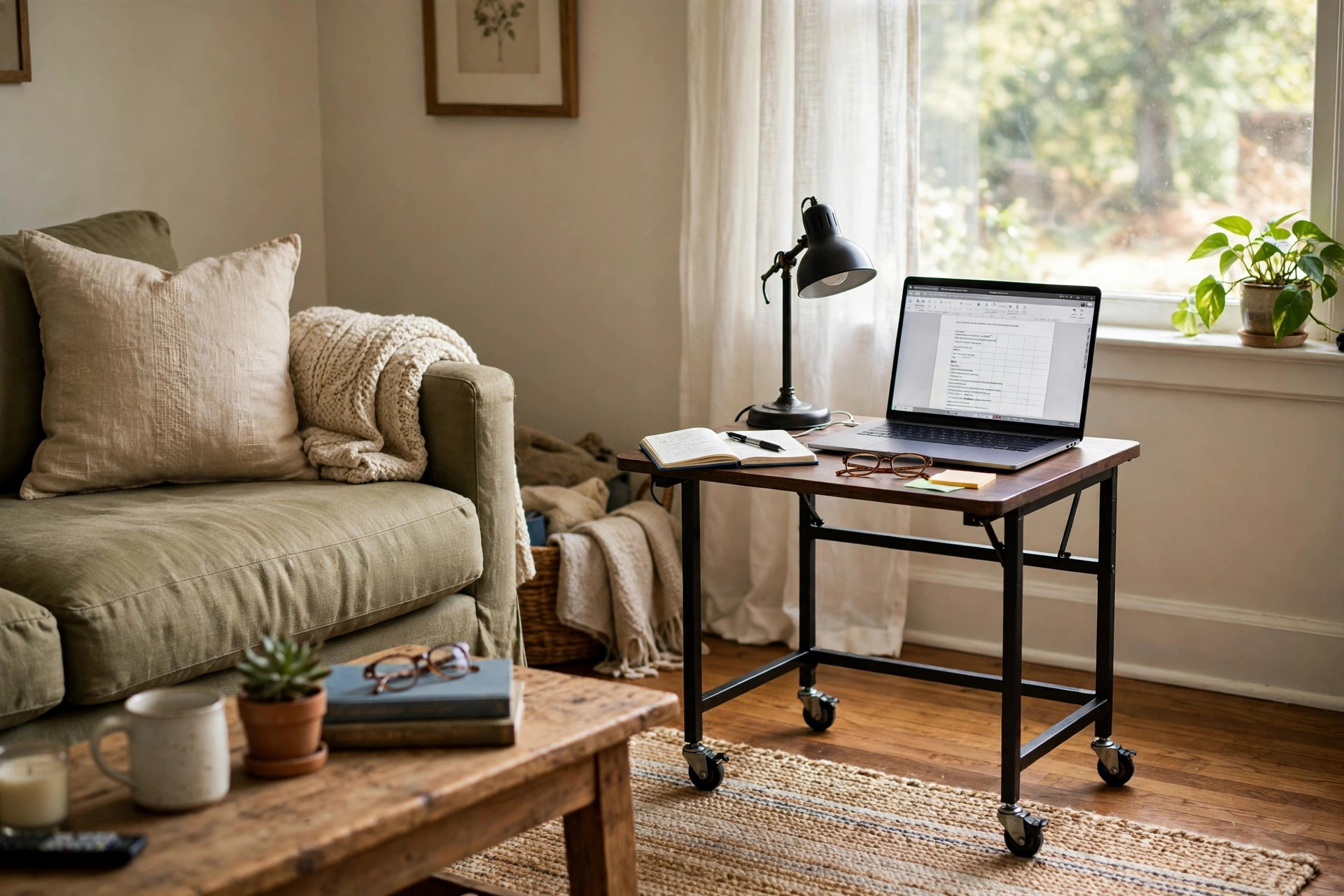
A small rolling desk for laptop in living room settings has become a common sight in American homes. More people now work from home for part or all of the week. Not every home has a spare room for a full office. The living room often serves two roles. It is the place for rest in the evening and the place for work during the day. A small desk on wheels fits this double role well. It rolls to the spot where it is needed. It rolls away when the workday ends.
This guide covers everything a buyer should know. It explains why these desks matter. It lists what to look for before buying. It describes the main types. It covers cost, care, and safety. It ends with answers to common questions. The goal is simple. Help the reader choose a desk that lasts and works well in a real living room.
Why a Rolling Laptop Desk Matters in the Living Room: Small Rolling Desk for Laptop in Living Room
Space Is Limited in Most Homes
Many apartments and small houses lack a dedicated office. A fixed desk takes up floor space all the time. A small rolling desk takes up space only when it is in use. When the day is done, it can roll into a corner, a closet, or beside the couch. This matters in living rooms that must serve family life, guests, and work.
Work Habits Have Changed
Remote work is now a normal part of American life. People answer email from the couch. They join video calls at the kitchen table. A portable standing desk for working from anywhere shows the same trend. Workers want tools that move with them. A rolling laptop desk follows this trend. It gives a steady surface wherever the user sits.
Posture and Comfort Improve
A laptop on the lap is fine for short spells. Over hours, it strains the neck and the back. The screen sits too low. The hands rest at a bad angle. A rolling desk raises the screen to a better height. It gives the wrists a flat surface. Over a long workday, this small change makes a real difference. Many guides on office comfort stress the same point. Ergonomic advice from makers such as Herman Miller often starts with screen height and neutral wrist position.
What to Look for When Choosing One
Size of the Desktop
The desktop must hold the laptop with room to spare. A 13-inch laptop needs about 14 inches of width. A 15 or 16-inch laptop needs about 17 inches. If the user wants a mouse beside the laptop, add six more inches. Measure first. Many buyers guess and end up with a top that is too narrow.
Height matters too. The best height depends on where the user sits. A person on a low sofa needs a lower desk. A person in a tall armchair needs more height. An adjustable-height model solves this problem. Look for a range of at least 8 inches of travel.
Wheels and Locking Casters
The wheels are the whole point of this desk. They should roll smooth and quiet on the floor. Hard plastic wheels can scratch wood floors. Rubber or soft-tread wheels are kinder to hard surfaces. On carpet, larger wheels roll more easy than small ones.
Locking casters are a must. At least two of the wheels should lock. Without locks, the desk drifts while typing. Test the lock before buying if possible. A good lock holds firm with one press.
Stability and Weight Capacity
A desk that wobbles is worse than no desk. Check the weight rating. Most small rolling desks hold 20 to 40 pounds. That is enough for a laptop, a lamp, and a few papers. A heavier frame feels more solid. Steel tube frames tend to be steadier than thin aluminum ones.
The shape of the base matters. A C-shaped base slides under a chair or sofa. A four-leg base stands more stable but fits fewer spots. Think about where the desk will sit during use.
Surface Material and Finish
Common tops are wood laminate, MDF with a veneer, tempered glass, and metal. Wood laminate is warm and easy to clean. Glass looks light but shows every smudge. Metal is tough but can feel cold. For a living room, the finish should match or blend with the room. A dark walnut top fits many American living rooms. A white top fits a bright modern room.
Types of Small Rolling Desks
C-Frame Side Table Desks
The C-frame is the most common type for living rooms. The top sits on one side of the base. The base slides under the sofa or chair. The user pulls it close like a tray. These are light and easy to move. They cost less than most other types. The trade-off is a smaller top and less height range.
Adjustable-Height Mobile Workstations
These desks use a gas lift or a hand crank to change height. They work for sitting and for perching on a high stool. They often have a larger top than C-frame models. They cost more. For people who share the desk with others of different heights, this type is the best pick. Some designs borrow ideas from UPLIFT Desk, a company known for height-adjustable workstations.
Fold-Down and Nesting Models
Some rolling desks fold flat. Others nest under a larger table. These suit very tight spaces. The top may be smaller. The frame may be lighter. For a studio apartment, a folding model can be the only workable choice. A floating shelf desk for tiny bedroom office is another space-saving option worth a look.
Desks With Built-In Storage
Some models add a small drawer or a side shelf. A drawer holds pens, chargers, and sticky notes. A lower shelf holds a printer or a bag. Storage adds weight and size. For a living room that must stay tidy, it can be worth it. Pair the desk with a rolling file cabinet for home office organization if papers need a home nearby.
Cost and Price Ranges
Prices for a small rolling desk for laptop in living room use vary with size, material, and brand. Budget models start around 40 dollars. These are simple C-frame tables with fixed height. They do the job but may wobble under a heavy laptop.
Mid-range models run from 70 to 150 dollars. This is the sweet spot for most buyers. Desks in this band have locking casters, a sturdier frame, and often some height adjustment. Finishes look better. They blend into a living room instead of looking like office gear.
Premium models cost 150 to 300 dollars or more. These have smooth gas-lift height adjustment, heavy steel frames, and large tops. Some come from ergonomic furniture brands. For daily full-time use, the extra cost buys real comfort and a longer life.
Where to shop matters too. Large retailers such as IKEA, Wayfair, Target, and Costco all carry rolling laptop desks. Office supply stores such as Office Depot carry them as well. Shoppers who like to compare specs can check review sites such as Wirecutter and PCMag. Home advice sites such as The Spruce also publish buying guides for small-space furniture.
What Drives the Price Up
Three things raise the price most. First, height adjustment with a gas lift. Second, a larger or thicker desktop. Third, a brand name with a long warranty. Decide which of these matter for the use at hand. A student who types for two hours a day does not need the same desk as a full-time remote worker.
Hidden Costs to Watch
Some desks ship flat and need assembly. That costs time, not money, but it counts. Replacement casters cost 10 to 20 dollars a set. A floor mat to protect wood floors costs 20 to 40 dollars. Add these to the budget when planning.
Setting Up the Desk in the Living Room
Picking the Right Spot
Place the desk near a power outlet. Laptops run on batteries, but chargers, lamps, and monitors need plugs. A spot near a window gives good daylight. Good light cuts eye strain. Avoid placing the desk where it blocks walkways. The living room must still work as a living room.
Cable Management
A rolling desk moves. Cables must move with it or stay out of the way. Use a short power strip on the desk itself. Run one cord from the strip to the wall. Velcro ties keep cords neat. Loose cords on the floor are a trip hazard. They also snag when the desk rolls.
Pairing With Seating
The desk works with the seating the user already owns. A sofa, an armchair, or a recliner can all serve as the office chair. Add a firm cushion for back support if the seat is soft. A laptop stand on the desk raises the screen further. An external keyboard and mouse complete the setup for long sessions.
Care and Upkeep
Daily and Weekly Care
Wipe the top with a soft damp cloth once a week. Dry it right after. This stops dust and coffee rings from building up. Keep food and open drinks in spill-proof cups. A laptop and a spilled drink are a costly pair.
Wheel Maintenance
Dust and hair gather around caster wheels. This makes them roll rough. Flip the desk over every few months. Pull out the tangled hair and wipe the wheels. A drop of light oil on each axle keeps them turning smooth. If a wheel cracks, replace it. Most casters unscrew by hand or with a simple wrench.
Tightening and Checks
Screws loosen with movement. That is the nature of a rolling desk. Check all bolts twice a year. Tighten what is loose. A small Allen key set handles most desks. If the height mechanism starts to slip, check the maker’s guide before forcing anything.
Protecting Floors
Rolling desks cross floors many times a day. On hardwood, use soft-tread wheels or a clear chair mat. On carpet, vacuum the path often. Grit under wheels grinds into carpet fibers. A rug pad under a low rug keeps the rug flat while the desk rolls over it.
Safety in the Living Room
Tip-Over Risk
A tall desk with a heavy laptop on top can tip. This is a real risk in homes with small children or pets. Choose a desk with a wide stable base. Keep the heaviest items low. Never let children climb on the desk. Lock the wheels when the desk is in use. Product safety guidance from sources such as the U.S. Consumer Product Safety Commission covers tip-over hazards for household furniture.
Cord and Trip Hazards
Cords that stretch across the floor can trip anyone. Route cords along the wall or under a rug made for that purpose. When the desk is not in use, roll it to its parking spot and coil the cord. Teach everyone in the home where the desk lives.
Heat and Ventilation
Laptops vent heat through the bottom and sides. Do not set the laptop on a soft pad that blocks the vents. A hard flat top is best. If the laptop runs hot, add a simple cooling stand. Keep the desk away from heating vents and direct sun for long hours.
Fire Safety Basics
Do not overload power strips. One strip per desk is enough for a laptop, a lamp, and a charger. Unplug chargers that feel hot. Keep paper stacks away from lamps with hot bulbs. These are simple habits. They matter most in a room where people relax and may forget the desk is work gear.
Frequently Asked Questions
Will a small rolling desk damage my hardwood floors?
It can if the wheels are hard plastic and the floor has grit on it. Choose soft rubber wheels or lay down a clear mat. Sweep the rolling path often. With these steps, most desks leave no marks.
Can I use a rolling desk while sitting on a sofa?
Yes. That is what the C-frame design is for. The base slides under the sofa. The top rests over the lap. Set the height so the elbows bend at about 90 degrees. Lock the wheels before typing.
How much weight can these desks hold?
Most hold 20 to 40 pounds. That covers a laptop, a notebook, a lamp, and a drink. Check the maker’s rating before loading it up. A monitor arm plus a large monitor may push past the limit on small models.
Are rolling desks good for video calls?
Yes, with one caution. Lock the wheels so the frame does not drift mid-call. Set the laptop on a stand so the camera sits near eye level. Good light from a window or lamp facing the user helps the picture.
Can the desk double as a side table?
Many owners use it that way. Roll it beside the sofa for a lamp and a book in the evening. Roll it back for work in the morning. A wood-look finish makes it blend in as living room furniture.
What is better, a rolling desk or a lap desk?
For short sessions, a lap desk is fine and costs less. For daily work of more than an hour, a rolling desk wins. It gives better screen height, a steadier surface, and room for a mouse. The back and neck feel the difference within a week.
Final Word
A small rolling desk for laptop in living room use is a small buy with a large effect. It turns any seat into a workstation. It keeps the living room a living room when work ends. The best choice is not the priciest one. It is the one that fits the space, holds steady, rolls smooth, and locks firm. Measure the spot. Set a budget. Check the wheels and the weight rating. With those steps done, the desk will serve well for years.
References
Costco. (n.d.). Wholesale retailer. https://www.costco.com Herman Miller. (n.d.). Office furniture and ergonomic seating. https://www.hermanmiller.com IKEA. (n.d.). Home furnishings. https://www.ikea.com Office Depot. (n.d.). Office supplies and furniture. https://www.officedepot.com PCMag. (n.d.). Technology product reviews. https://www.pcmag.com Target. (n.d.). Retail store. https://www.target.com The Spruce. (n.d.). Home and garden advice. https://www.thespruce.com U.S. Consumer Product Safety Commission. (n.d.). Product safety information. https://www.cpsc.gov UPLIFT Desk. (n.d.). Standing desks and ergonomic office furniture. https://www.uplift-desk.com Wayfair. (n.d.). Furniture and home goods. https://www.wayfair.com Wirecutter. (n.d.). Product reviews from The New York Times. https://www.nytimes.com/wirecutter
Was this guide helpful?

About Robert Taylor
The My Garden US editorial team writes practical, in-depth home and garden guides for American homeowners — tested advice, no fluff.
You May Also Like

Desk Side File Drawer Unit on Wheels: A Buyer’s Guide
July 3, 2026 0 views
Small Desk Organizer With Phone Charging Dock: A Complete Guide
January 10, 2026 0 views
Ergonomic Seat Cushion for Wooden Office Chair: A Plain Guide to Sitting in Comfort
September 19, 2026 0 views