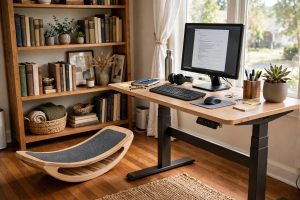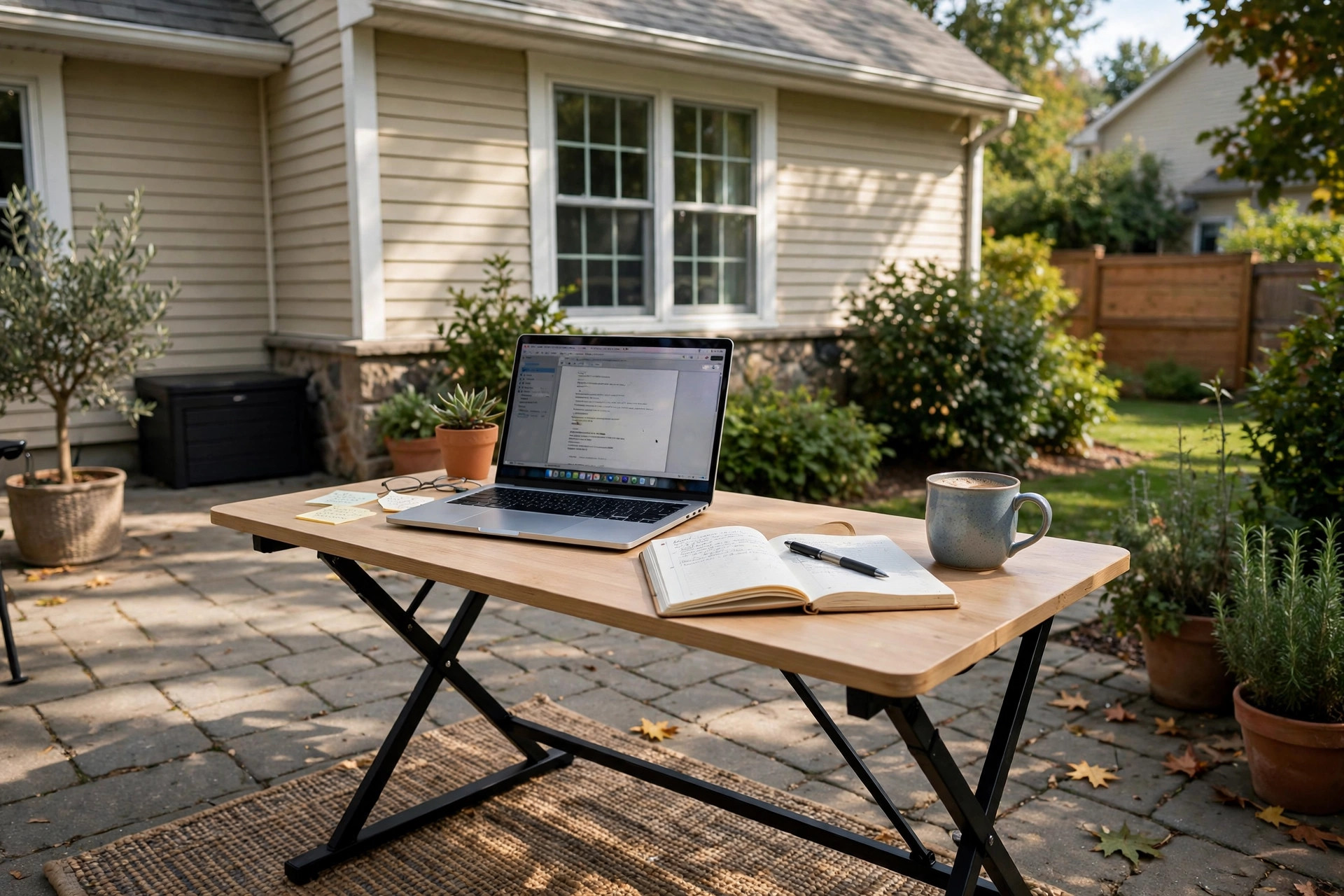

A portable standing desk for working from anywhere is a desk you can carry, fold, and set up in any place you choose. It lets you stand while you work, even when you are far from a fixed office. More people now work from homes, cars, parks, and hotel rooms. A desk that travels with you can make that life easier and healthier. This guide explains what these desks are, how to pick one, what they cost, and how to use one with care.
Why a Portable Standing Desk Matters
Most of us sit too long. A normal workday keeps a person in a chair for six, eight, or even ten hours. Doctors have warned for years that long hours of sitting can stiffen the neck and back, slow the blood flow in the legs, and drain energy. A standing desk lets you break that pattern. When you stand for part of the day, your posture improves and your legs move more.
A portable standing desk for working from anywhere takes that idea one step further. It does not chain you to one room. You can work in the kitchen in the morning, on the porch in the afternoon, and in a spare bedroom at night. Travelers use them in hotel rooms. Students use them in small dorms. Field workers use them at job sites. The desk goes where you go.
There is also a simple comfort in standing. Many people say they think more clearly on their feet. Short tasks, phone calls, and reading all feel lighter when you are not sunk into a chair. A portable desk makes that shift possible without a costly office remodel. It also pairs well with a best laptop stand for standing desk posture, which raises the screen to eye level and saves the neck from strain.
What to Look for When You Choose One: Portable Standing Desk for Working From Anywhere
Not every portable desk is built the same. Some fold like a suitcase. Some telescope like a camera tripod. Some are simple laptop trays on legs. Before you buy, study the details below.
Weight and Folded Size
A desk meant for travel must be light. Look for models under fifteen pounds if you plan to carry it far. Check the folded size too. A desk that folds flat will slide into a car trunk or a closet with ease. Some come with a carry handle or a shoulder strap. Others pack into a bag. If you fly often, note the length; a very long desk may not fit in a car boot or under a hotel bed.
Height Range and Stability
The whole point of a standing desk is to raise your work to the right height. Look for a desk that adjusts to match your height. Most adults need a surface between about thirty-eight and forty-eight inches from the floor. Shorter users may need less. Test the locking parts. The desk should feel firm when you type. A desk that wobbles will tire your wrists and annoy you fast. Read the maker’s notes on how the frame locks, and give the desk a firm shake in the store if you can.
Surface Space and Weight Limit
Think about what you place on the desk. A laptop alone needs little room. A laptop plus a notebook, a mug, and a mouse needs much more. Measure your gear before you shop. Also check the weight limit. Many portable desks carry ten to twenty pounds with ease. That is enough for a laptop and small extras. It is not enough for a heavy desktop monitor. Stay within the stated limit, or the frame may bend or fail.
A good rule is to keep the surface clear of clutter. A desk converter for your existing table can be a fine choice if you mostly work at home and only sometimes travel. It sits on a table you already own and lifts your laptop to standing height, though it does not travel as well as a true folding desk.
Types and Options
Portable standing desks come in several forms. Each suits a different kind of worker.
Folding frame desks. These have legs that fold flat under the top. They open in seconds and close just as fast. They are the most common type. They suit people who move the desk from room to room each day.
Telescoping post desks. These use one or two posts that slide up and down, like a music stand or a tripod. The top is often small, made for a laptop only. They are very light and pack down to a thin tube. They suit travelers and people with little storage space.
Laptop table trays. These are simple trays on short folding legs, much like a hospital bed table. They are cheap and light. They suit reading, light typing, and use on a couch or in bed. They are less sturdy for long workdays.
Rolling standing desks. Some desks have small wheels so you can roll them from room to room. These are heavier and less suited to travel, but they are a fine pick if you move the desk around one house or office. Makers such as UPLIFT Desk and Steelcase offer sturdy adjustable options in this class.
Materials vary too. Aluminum frames are light and resist rust. Steel frames are heavier but very strong. Bamboo and wood tops look warm and feel pleasant to the touch. Plastic tops are cheap and easy to wipe clean. If you work outdoors, pick a frame that resists rain and sun.
Cost and Price
Prices run wide. A simple folding laptop tray may cost thirty to sixty dollars. A mid-range folding standing desk often costs eighty to one hundred and fifty dollars. Sturdy, well-made models with smooth height locks can cost one hundred and fifty to three hundred dollars. Premium desks from ergonomic brands may cost more.
What drives the price up? Smooth adjustment parts, strong frames, large tops, and brand names all add cost. What drives it down? Smaller tops, fewer adjustment steps, and plastic parts. A higher price does not always mean a better desk for you. A cheap tray may be perfect if you only stand for an hour a day. A dearer desk may pay for itself if you stand for half your workday.
Shop with care. Retailers such as IKEA and Wayfair carry many small desks and trays, and their listings often show real buyer reviews. Guides from The Spruce and Wirecutter test desks in real homes and report on wobble, ease of setup, and build quality. PCMag also reviews workspace gear with a focus on daily use.
Care and Upkeep
A portable desk lasts longer with a little care. Wipe the top each week with a damp cloth and mild soap. Dry it well. Do not let water sit on a wood or bamboo top, or it may swell and warp. Check the folding joints once a month. Tighten any loose screws with the tool that came in the box. A drop of light oil on stiff hinges keeps them moving smooth.
When you fold the desk, do it gently. Forcing a locked joint can crack a plastic latch or bend a thin leg. Store the desk in a dry place. Heat and damp air in a garage can rust steel parts and weaken glue. If the desk has a fabric carry bag, keep the bag clean and dry too.
If you stand for long spells, your feet will thank you for a soft surface. An anti-fatigue mat for hardwood floors under your desk eases the pressure on your heels and knees. It is a small add-on that makes long standing days far more pleasant.
Safety
A portable desk is safe when you use it with sense. Keep these points in mind.
First, place the desk on flat, firm ground. A desk on soft grass or a sloped driveway can tip. If you work outdoors, test the footing before you set your laptop down.
Second, respect the weight limit. Do not stack books, printers, or heavy boxes on a desk made for a laptop. Overloading can snap a leg or send the whole desk down.
Third, lock every joint before you work. Most folding desks have latches or pins that hold the legs open. Make sure each one clicks into place. A leg that folds shut under load can drop your laptop to the floor.
Fourth, watch cords. A charging cable that trails across the floor is a trip risk. Route cords up the back of the desk and keep them off walkways.
Fifth, mind the sun. A laptop left in direct sun can overheat, and the screen may be hard to read. Work in shade when you can. If you must work in bright light, a simple sun shade or a hat with a brim helps.
Sixth, take breaks. Standing all day is no better than sitting all day. Shift between sitting and standing through the day. A timer on your phone can remind you to change position every thirty to sixty minutes. Ergonomic research from makers like Herman Miller has long held that movement, not one fixed posture, is the real goal.
Frequently Asked Questions
Can I really stand and work anywhere with one of these desks? Yes, within reason. You need flat ground, a power source for your laptop if the battery runs low, and shelter from rain. Parks, porches, hotel rooms, and spare rooms all work well. Very windy spots are less ideal, since papers and light desks can blow.
How tall should the desk be for me? Your elbows should rest at about a right angle when your hands are on the keyboard. Your eyes should meet the top third of the screen without bending your neck. For most adults, that means a surface height near forty-two to forty-six inches, but bodies differ, so adjust to what feels right.
Is a portable standing desk sturdy enough for daily use? A well-made one is. Look for strong locks, a rigid frame, and good reviews from daily users. Cheap, flimsy models may wobble and wear out fast. If you plan to use it every day, spend a little more for a solid frame.
Will standing all day hurt my feet or back? It can if you overdo it. Start with short standing periods, perhaps twenty to thirty minutes, and build up slowly. Wear supportive shoes, stand on a soft mat, and shift your weight often. Alternate sitting and standing through the day.
Can I use a monitor with a portable standing desk? Most portable desks are made for laptops. A small, light monitor may work if the desk’s weight limit allows it. Heavy monitors are a poor match. If you need a full monitor setup, a fixed standing desk at home is the safer pick.
How do I pack one for travel? Fold it flat, lock the joints, and slide it into its carry bag. Place it where it will not be crushed in the car. Remove your laptop and loose items first. Keep the small parts, such as pins and screws, in a zip pouch so nothing gets lost.
A Short Final Word
A portable standing desk for working from anywhere is a simple tool with a clear promise: your office can be any place you choose. Pick a desk that fits your body, your gear, and your budget. Use it with care, move often, and let it free you from the chair. The best desk is the one you will actually use, day after day, wherever the work takes you.
References
Herman Miller. (n.d.). Office furniture and ergonomic seating. https://www.hermanmiller.com IKEA. (n.d.). Home furnishings. https://www.ikea.com PCMag. (n.d.). Technology product reviews. https://www.pcmag.com Steelcase. (n.d.). Office furniture and workplace research. https://www.steelcase.com The Spruce. (n.d.). Home and garden advice. https://www.thespruce.com UPLIFT Desk. (n.d.). Standing desks and ergonomic office furniture. https://www.uplift-desk.com Wayfair. (n.d.). Furniture and home goods. https://www.wayfair.com Wirecutter. (n.d.). Product reviews from The New York Times. https://www.nytimes.com/wirecutter
Was this guide helpful?

About Emily Rodriguez
The My Garden US editorial team writes practical, in-depth home and garden guides for American homeowners — tested advice, no fluff.
You May Also Like
Best Standing Desk for Short People Under 5ft: A Practical Guide
February 21, 2026 0 views
Adjustable Standing Desk Mat with Massage Bumps
June 8, 2026 0 views
Small Rolling Desk for Laptop in Living Room: A Practical Buying Guide
January 7, 2026 0 views